
 My Inquiry
 My Account


Analog Devices Inc./Maxim Integrated MAX22291CASA/V+
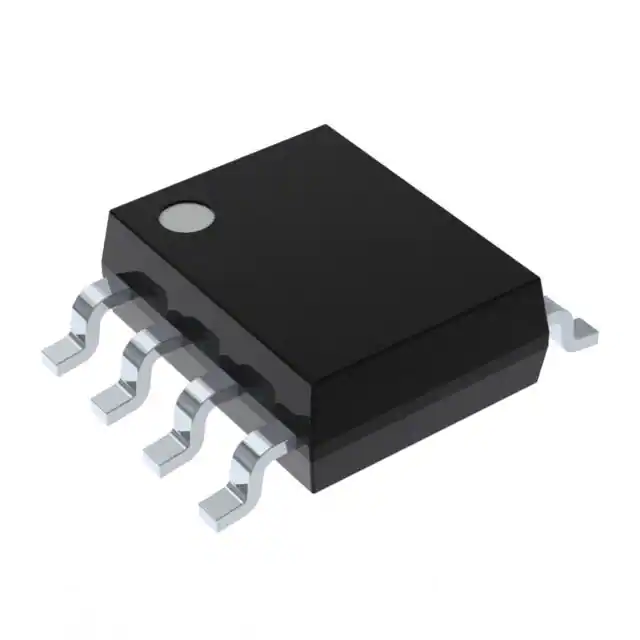
- Part No.:
- MAX22291CASA/V+
- Manufacturer:
- Analog Devices Inc./Maxim Integrated
- Category:
- Digital Isolators
- Package:
- 8-SOIC (0.154", 3.90mm Width)
- Datasheet:
-
 MAX22291CASA/V+.pdf
- Description:
- LOW-POWER 2-CH DIGITAL GALVANIC
- Quantity:
- Payment:

- Shipping:

Inventory:845
Please send an inquiry. Send us your inquiry, and we will respond immediately.
Product details
Overview
MAX22291CASA/V+ from Analog Devices is a reinforced, dual-channel, unidirectional digital isolator with opposite-direction data flow (IN1→OUT2, IN2→OUT1), rated for 200Mbps max data rate, 3kVRMS withstand voltage (60s), and AEC-Q100 qualification. It operates across 1.71V–5.5V supplies on both sides and delivers 7ns typical propagation delay at 3.3V, enabling high-speed isolated communication in automotive BMS and inverters.
For engineers reviewing the MAX22291CASA/V+ datasheet, MAX22291CASA/V+ pinout, MAX22291CASA/V+ application, or MAX22291CASA/V+ equivalent, this page provides verified technical context, real-world design meaning of key specs, validated pin functions, automotive-grade safety compliance, and two confirmed alternative parts with documented functional and application differences.
Technical Context
The MAX22291CASA/V+ implements reinforced galvanic isolation using Analog Devices' proprietary process, supporting independent 1.71V–5.5V VDDA and VDDB supplies for bidirectional level translation. Its channel architecture routes IN1 to OUT2 and IN2 to OUT1-enabling full-duplex transceiver isolation without external logic.
It features 50kV/μs CMTI (typ), ±10kV surge immunity (1.2/50μs), and undervoltage lockout (1.5V–1.66V threshold) that forces outputs to default-high state during supply fault. All parameters are production-tested per AEC-Q100 Grade 0 (−40°C to +125°C).
Key Specifications
| Parameter | Value and Actual Design Meaning |
|---|---|
| Isolation Rating | 3kVRMS for 60s - meets reinforced insulation requirements for automotive high-voltage systems |
| Max Data Rate | 200Mbps - supports isolated CAN FD, RS-485, and SPI up to 100MHz clock rates |
| Propagation Delay | 7ns (typ) at 3.3V - enables sub-10ns timing-critical feedback loops in motor control |
| CMTI | 50kV/μs (typ) - prevents false triggering in noisy inverter gate-drive environments |
| Supply Range | 1.71V–5.5V per side - allows direct interfacing with 1.8V microcontrollers and 3.3V/5V peripherals |
| Surge Withstand | ±10kV (1.2/50μs) between GNDA/GNDB - satisfies IEC 61000-4-5 Level 4 for industrial and automotive transients |
| Default Output State | High - ensures fail-safe logic-high on UART TX/RX lines during power-up or brownout |
Pinout & Package
Package: 8-pin narrow SOIC (S8MS+24), 4mm creepage and clearance, RoHS-compliant, rated for −40°C to +125°C ambient operation.
| Pin/Terminal | Circuit Role | Design Meaning |
|---|---|---|
| 1 - VDDA | Side A power supply input | Bypass with 0.1µF ceramic capacitor to GNDA; sets logic-high level for IN1/IN2 and OUT1/OUT2 reference |
| 2 - OUT1 | Side A output (driven by IN2) | Push-pull driver; no external pull-up needed; compatible with TTL/CMOS loads |
| 3 - IN2 | Side A input (drives OUT1) | Accepts 1.71V–5.5V logic; 410mV hysteresis (MAX2229_C/F) rejects noise on long traces |
| 4 - GNDA | Side A ground reference | Must be isolated from GNDB; forms primary-side return path for VDDA and signal currents |
| 5 - GNDB | Side B ground reference | Must be isolated from GNDA; forms secondary-side return path for VDDB and signal currents |
| 6 - OUT2 | Side B output (driven by IN1) | Push-pull driver; drives isolated microcontroller RX or transceiver RO pin directly |
| 7 - IN1 | Side B input (drives OUT2) | Accepts 1.71V–5.5V logic; enables bidirectional isolation with single device (e.g., UART Tx/Rx) |
| 8 - VDDB | Side B power supply input | Bypass with 0.1µF ceramic capacitor to GNDB; sets logic-high level for IN1 and OUT2 |
Key Features
| Feature | Design Value |
|---|---|
| AEC-Q100 Grade 0 qualified | Validated for automotive use from −40°C to +125°C with 100% production test at both extremes |
| Reinforced insulation (VDE pending) | Meets UL1577 (3kVRMS), cUL (3kVRMS), and DIN VDE V 0884-11 requirements for single protection |
| Low-power operation | 0.78mW/channel @ 1Mbps/1.8V - reduces thermal load in sealed BMS enclosures |
| High-speed timing integrity | 7.5ps RMS clock jitter - preserves timing margins in isolated SPI clock distribution |
| Fail-safe undervoltage response | Outputs default to high during VDDA or VDDB sag - prevents undefined states in safety-critical comms |
Applications
| Automotive Battery Management System (BMS) | Isolated RS-485 Transceiver Interface |
|---|---|
Use Scenario: Isolating cell monitor ICs (e.g., MAX17853) from MCU over daisy-chained UART links in 800V EV battery packs. IC Role / Device Role / Timing Role: Bidirectional digital isolator routing MCU TX to slave RX and slave TX to MCU RX across 445VRMS working voltage barrier. Use Value: Enables reliable 200Mbps full-duplex communication while blocking common-mode transients from pack-level switching noise. | Use Scenario: Isolating RS-485 transceiver (e.g., MAX3535E) from host controller in industrial PLC backplanes exposed to 2kV surges. IC Role / Device Role / Timing Role: Unidirectional channel pair providing galvanic separation for DE/RE control and RO/DI data paths at 25–100Mbps. Use Value: Eliminates ground loops and prevents bus faults from propagating to controller side, meeting IEC 61000-4-5 Level 4. |
| Motor Drive Gate-Driver Isolation | Isolated SPI for High-Voltage ADCs |
Use Scenario: Isolating PWM signals from MCU to isolated gate drivers (e.g., MAX22702E) in traction inverter half-bridges. IC Role / Device Role / Timing Role: Low-propagation-delay isolator delivering synchronized PWM edges with <2ns skew between channels. Use Value: Maintains precise dead-time control under fast dv/dt conditions (50kV/μs CMTI) to prevent shoot-through. | Use Scenario: Isolating SPI interface between MCU and high-voltage isolated ADC (e.g., AD7403) in AC/DC power supply monitoring. IC Role / Device Role / Timing Role: Clock/data isolation for SCLK/MOSI/MISO lines operating up to 20MHz with deterministic timing. Use Value: Preserves 16-bit resolution integrity by eliminating noise coupling from high-side switching domains into ADC digital interface. |
Equivalent & Alternatives
The following parts are listed as comparable options for similar digital isolator applications.
| Alternative Part | Technical Difference | Application Difference | Selection Advice |
|---|---|---|---|
| SI8621ED-B-IS | 2-channel, opposite-direction, 150Mbps max, 5kVRMS isolation, 2.5–5.5V supply only | Lacks AEC-Q100 qualification; not rated for automotive temperature range | Prefer MAX22291CASA/V+ for automotive BMS; SI8621ED-B-IS suitable for industrial RS-485 where AEC-Q100 is not required |
| ISO6721FDWR | 2-channel, same-direction (not opposite), 50Mbps max, 5000VRMS, 1.71–5.5V, default-low outputs | Cannot replace MAX22291's full-duplex topology without adding external logic; different default state affects fail-safe behavior | Use MAX22291CASA/V+ when bidirectional isolation is mandatory; ISO6721FDWR only viable if redesigning transceiver interface to use separate isolators per direction |
Compared with SI8621ED-B-IS and ISO6721FDWR, the MAX22291CASA/V+ uniquely combines AEC-Q100 qualification, 200Mbps opposite-direction capability, and 1.71V low-voltage operation - making it the only drop-in solution for automotive full-duplex isolated communication without layout or firmware changes.
Availability
MAX22291CASA/V+ is available at Aetrix Electronics and suitable for automotive battery management systems, industrial motor drives, and isolated communication interfaces requiring stable component supply, long-term lifecycle support, and AEC-Q100 compliance.
Supply support for MAX22291CASA/V+ includes scheduled delivery planning, volume procurement assistance, BOM continuity management, traceable sourcing, and lifecycle availability coordination for OEM customers, industrial embedded developers, connected-device designers, and electronics production programs.
Manufacturer
Analog Devices, Inc. is a global leader in high-performance analog, mixed-signal, and digital signal processing semiconductors, serving automotive, industrial, communications, and healthcare markets.
The MAX22290/MAX22291 product line delivers reinforced digital isolation optimized for high-reliability automotive and industrial applications, with emphasis on low power, high speed, and robust transient immunity in compact SOIC packages.
FAQ
What is the maximum data rate supported by the MAX22291CASA/V+?
The MAX22291CASA/V+ supports a maximum data rate of 200Mbps under 2.25V–5.5V supply conditions. This is confirmed in the Electrical Characteristics table (page 4) for MAX2229_C/F variants. At lower supplies (1.71V–2.25V), the max rate is 150Mbps. The 200Mbps capability enables isolated SPI, CAN FD, and high-speed UART links without external retiming.
Does the MAX22291CASA/V+ have AEC-Q100 qualification?
Yes, the MAX22291CASA/V+ is AEC-Q100 qualified (Grade 0, −40°C to +125°C), as explicitly stated in the Product Highlights and Detailed Description sections. The "/V+" suffix denotes automotive qualification, and the device undergoes 100% production testing at both +25°C and +125°C per AEC-Q100 requirements.
What is the default output state of the MAX22291CASA/V+ during power-up or undervoltage?
The MAX22291CASA/V+ has default-high outputs, as specified for the "C" variant in the Detailed Description. During undervoltage lockout (VDDA or VDDB < 1.5V), both OUT1 and OUT2 drive high - a fail-safe behavior critical for UART and transceiver interfaces where high = idle state.
How does the MAX22291CASA/V+ differ from the MAX22290 in pinout and functionality?
The MAX22291CASA/V+ uses opposite-direction channel mapping (IN1→OUT2, IN2→OUT1), while MAX22290 uses same-direction (IN1→OUT1, IN2→OUT2). Pin 2 is OUT1 (not IN1) and Pin 7 is IN1 (not OUT1) - confirmed in the Pin Configurations diagram (page 12) and Pin Description table. This makes MAX22291CASA/V+ ideal for transceiver isolation without external logic.
What safety certifications does the MAX22291CASA/V+ hold?
The MAX22291CASA/V+ is certified to UL1577 (3000VRMS), cUL (CSA Bulletin 5A, 3000VRMS), and has pending VDE 0884-11 reinforced insulation certification. These are listed in the Safety Regulatory Approvals section (page 9) and Table 1 (page 8), covering VIOWM = 445VRMS and VIOSM = 6250VPK surge rating.
MAX22291CASA/V+ Specifications
- Product attributes
- Attribute value
- Manufacturer:
- Analog Devices Inc./Maxim Integrated
- Series:
- -
- Package/Case:
- 8-SOIC (0.154", 3.90mm Width)
- Packaging:
- Tube
- Product Status:
- Active
- Technology:
- Capacitive Coupling
- Type:
- CAN, RS232, RS485, SPI
- Isolated Power:
- No
- Number of Channels:
- 2
- Inputs - Side 1/Side 2:
- 1/1
- Channel Type:
- Unidirectional
- Voltage - Isolation:
- 3000Vrms
- Common Mode Transient Immunity (Min):
- 50kV/µs (Typ)
- Data Rate:
- 200Mbps
- Propagation Delay tpLH / tpHL (Max):
- 9.5ns, 9.9ns
- Pulse Width Distortion (Max):
- 2ns
- Rise / Fall Time (Typ):
- 0.8ns, 1ns (Max)
- Voltage - Supply:
- 1.71V ~ 5.5V
- Grade:
- -
- Qualification:
- -
- Operating Temperature:
- -40°C ~ 125°C
- Mounting Type:
- Surface Mount
- Supplier Device Package:
- 8-SOIC
MAX22291CASA/V+ FAQ
1.How can I place an order for MAX22291CASA/V+ through Aetrix?
Please submit a Request for Quotation (RFQ) for MAX22291CASA/V+ on Aetrix. Our sales agent will provide a competitive quotation and guide you through the order confirmation once you accept the terms.
2.Are the price and stock information for MAX22291CASA/V+ reliable?
The price and inventory of MAX22291CASA/V+ are updated periodically and may fluctuate due to market conditions. Stock and pricing data are typically refreshed every 24 hours. Quotation validity for MAX22291CASA/V+ is usually 5 days.
3.What payment methods are accepted for MAX22291CASA/V+?
We accept Wire Transfer, PayPal, Credit Card, Western Union, MoneyGram, and Escrow for MAX22291CASA/V+ transactions.
Note: Certain payment methods may incur a processing fee.
4.How is shipping managed for MAX22291CASA/V+?
MAX22291CASA/V+ orders can be shipped via leading logistics carriers, including DHL, UPS, FedEx, TNT, or Registered Mail.
Once your MAX22291CASA/V+ order is processed, you will receive an email with the shipment details and tracking number.
Note: Tracking information may take up to 24 hours to appear. Express delivery typically takes 3–5 business days.
5.How can I obtain technical support or documentation for MAX22291CASA/V+?
For technical support, including MAX22291CASA/V+ datasheets, pinout diagrams, or application guidance, please contact our engineering support team. They can provide detailed documentation and assistance for your MAX22291CASA/V+ requirements.
6.How does Aetrix verify that MAX22291CASA/V+ is sourced from the original manufacturer or authorized distributors?
All MAX22291CASA/V+ products on Aetrix are procured from qualified distributors and authorized channels. Our dedicated quality assurance team conducts strict verification, including traceability checks and, if necessary, third-party testing. This ensures that MAX22291CASA/V+ meets industry standards.
7.What is the process for return or replacement of MAX22291CASA/V+?
All MAX22291CASA/V+ units undergo pre-shipment inspection (PSI). If there is an issue with MAX22291CASA/V+, returns or replacements are accepted under the following conditions:
1.Quantity discrepancies, incorrect items, or visible external defects (such as breakage or corrosion), acknowledged by Aetrix.
2.The issue is reported within 90 days of delivery.
3.The MAX22291CASA/V+ part is unused and in its original packaging.
Return procedure for MAX22291CASA/V+:
1.Submit a request within 90 days.
2.Obtain a Return Material Authorization (RMA) from Aetrix.
MAX22291CASA/V+ Tags

-
ISO1212DBQR
Texas Instruments
-
ISO6721BDR
Texas Instruments
-
SI8710AC-B-ISR
Skyworks Solutions Inc.
-
ISO7720FDR
Texas Instruments
-
ISO7721DR
Texas Instruments
-
ISO7721FDR
Texas Instruments
-
SI8710CC-B-ISR
Skyworks Solutions Inc.
-
ISO6741FQDWRQ1
Texas Instruments

-
ISO7721DWVR
Texas Instruments
-
ISO7762FDBQR
Texas Instruments

-
ISO7741DWR
Texas Instruments
-
ISO7741FDWR
Texas Instruments
Tech Hub

A practical engineering guide to 3.3V and 5V logic compatibility, input thresholds, resistor dividers, translator ICs, MOSFET level shifting, I2C pull-ups, timing limits and power-sequencing risks.

The 74HC595 uses push-pull logic outputs, while the TPIC6B595 uses 50 V open-drain DMOS sinks for higher-power loads. This guide compares timing, current limits, 3.3 V interfacing, load wiring, thermal…

The 74HC595 converts serial data into eight stable parallel outputs. This guide covers pin functions, shift and storage timing, OE and MR behavior, drive-current limits, cascading, voltage compatibilit…

A technical comparison of level-sensitive latches and edge-triggered flip-flops, covering timing windows, setup and hold limits, master–slave operation, time borrowing, race-through, HDL inference and…

A D latch stores one bit while Enable controls when data can pass. This reference covers gate-level operation, truth tables, transparency, setup and hold timing, LE versus OE, common ICs and practical …

An SR latch stores one bit through cross-coupled feedback. This engineering reference covers NOR and NAND implementations, truth tables, forbidden-state recovery, gated operation, switch debouncing, fa…

Latch circuits retain one bit through feedback. This technical reference covers SR and D latches, truth tables, transparency, timing limits, latch-versus-flip-flop behavior, applications and common log…

An engineering guide to LED driver operation, constant-current and constant-voltage outputs, linear and switching topologies, dimming, IC selection, calculations, replacement compatibility, and fault c…

Operational amplifier guide covering op amp basics, feedback, ideal vs real op amps, common configurations, buffer circuits, offset, bias current, gain-bandwidth, slew rate, rail-to-rail limits and sel…

Jumper cables guide covering safe connection order, red and black clamp placement, final ground connection, cable gauge, length, clamp quality, copper vs CCA cables, jump starter comparison and battery…


