
 My Inquiry
 My Account


Analog Devices Inc./Maxim Integrated MAX2360ECM
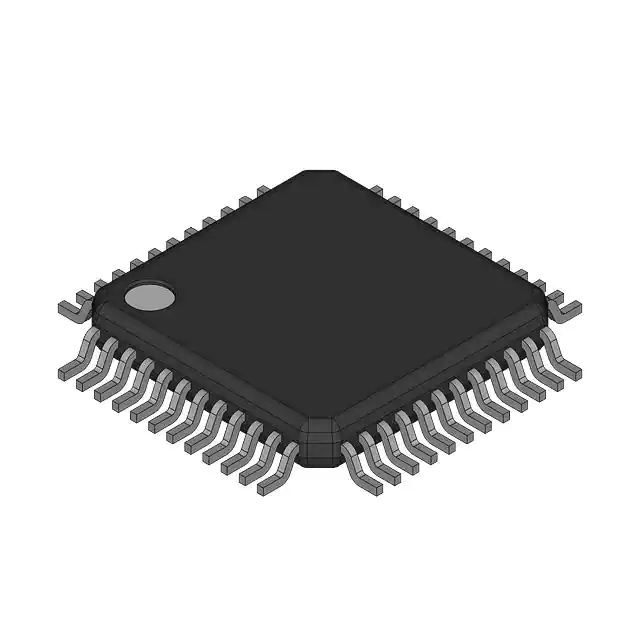
- Part No.:
- MAX2360ECM
- Manufacturer:
- Analog Devices Inc./Maxim Integrated
- Category:
- RF Transmitters
- Package:
- 48-TQFP Exposed Pad
- Datasheet:
-
 MAX2360ECM.pdf
- Description:
- DUAL-BAND QUADRATURE TRANSMITTER
- Quantity:
- Payment:

- Shipping:

Inventory:1,406
Please send an inquiry. Send us your inquiry, and we will respond immediately.
Product details
Overview
MAX2360ECM from Maxim Integrated is a dual-band, triple-mode complete quadrature transmitter IC for cellular handsets, integrating I/Q modulator, dual IF/RF synthesizers, dual on-chip IF VCOs, SSB upconverter, RF VGA, and three PA driver outputs (RFL, RFH0, RFH1). It delivers +7 dBm output power at RFL with –54 dBc ACPR, supports 120–300 MHz IF range and 800–2000 MHz RF bands, and operates from +2.7V to +5.5V. Used in CDMA/PCS/FM mobile transmitters requiring high integration and architectural flexibility.
For engineers reviewing the MAX2360ECM datasheet, MAX2360ECM pinout, MAX2360ECM application, or MAX2360ECM equivalent, key selection considerations include its triple-mode digital/analog FM operation, 100 dB power control range, dual IF VCO architecture enabling split-band PCS filtering, and SPI/QSPI/MICROWIRE-compatible 3-wire serial interface for full programmability of gain, sideband rejection, and standby/shutdown states.
Technical Context
The MAX2360ECM implements a two-stage upconversion architecture: differential I/Q baseband inputs feed a quadrature modulator generating IF (120–300 MHz), which is then filtered externally and fed to an SSB mixer for final RF upconversion (800–1000 MHz / 1700–2000 MHz). Its dual IF VCOs (240–600 MHz) support independent low/high IF band selection, while dual RF synthesizers (LOL/LOH ports) enable simultaneous cellular and PCS band operation.
Gain control is unified via the analog VGC pin (0.5–2.6 V), simultaneously scaling IF VGA (85 dB range) and RF VGA to maintain optimal linearity-noise trade-off across >100 dB total power control. All PLLs (IF/RF), LO buffers, and operational modes-including FM modulation via direct VCO tuning-are configured through a 24-bit SPI/QSPI/MICROWIRE bus with register-mapped control of charge-pump current, turbo-lock, and IF/RF divider ratios.
Key Specifications
| Parameter | Value and Actual Design Meaning |
|---|---|
| Operating Supply Voltage | +2.7V to +5.5V - supports single-cell Li-ion and multi-cell alkaline battery systems without external regulators. |
| RF Output Power (RFL) | +7 dBm - sufficient to drive typical front-end PAs in cellular-band (836 MHz) CDMA applications with –54 dBc ACPR compliance. |
| IF Frequency Range | 120–300 MHz - covers both low-IF (120–235 MHz) and high-IF (180–300 MHz) configurations via dual IFOUTL/IFOUTH ports. |
| Power Control Range | >100 dB - achieved by coordinated IF VGA (85 dB) and RF VGA scaling via single VGC voltage, enabling precise transmit power management. |
| RF Band Coverage | RFL: 800–1000 MHz; RFH0/RFH1: 1700–2000 MHz - enables dual-band operation without external band-switching components. |
| Serial Interface | SPI/QSPI/MICROWIRE-compatible 3-wire bus - allows configuration of all synthesizers, gain, lock detection, and mode control using only CLK, DI, CS signals. |
| Temperature Range | –40°C to +85°C - qualified for extended industrial and mobile handset environments with guaranteed performance across full range. |
Pinout & Package
MAX2360ECM is housed in a 48-pin TQFP-EP (exposed paddle) package, thermally optimized for RF power dissipation in handheld applications. The exposed paddle must be soldered to PCB ground plane using multiple vias for thermal and electrical integrity.
| Pin/Terminal | Circuit Role | Design Meaning |
|---|---|---|
| RFL | Cellular-band RF output | Open-collector port for 800–1000 MHz transmission; requires shunt inductor to VCC as part of matching network and battery connection. |
| RFH0, RFH1 | PCS-band RF outputs | Two independent open-collector outputs (1700–2000 MHz); enable split-band filtering and eliminate up to three external SAW filters. |
| IFINL±, IFINH± | Differential IF inputs | 400 Ω differential input impedance; accept filtered IF signal from external BPF; support low/high IF bands respectively. |
| IFOUTL±, IFOUTH± | Differential IF outputs | 600 Ω differential output impedance; drive external IF bandpass filters; IFOUTL supports direct VCO FM modulation. |
| VGC | Analog gain control | 0.5–2.6 V input controlling both IF and RF VGA stages simultaneously for coordinated gain scaling and noise optimization. |
| CLK, DI, CS | 3-wire serial interface | SPI/QSPI/MICROWIRE-compatible bus; MSB-first 24-bit register writes with 4-bit address; enables full device configuration and real-time mode switching. |
| LOCK | PLL lock indicator | Open-drain output pulled high externally; asserts logic high when both IF and RF PLLs achieve lock, critical for system timing synchronization. |
| TANKL±, TANKH± | IF VCO tank connections | Differential resonator pins for low-band (TANKL) and high-band (TANKH) IF VCOs; require external LC tank components for frequency setting and phase-noise optimization. |
Key Features
| Feature | Design Value |
|---|---|
| Dual IF VCO architecture | Enables independent low/high IF band selection (120–235 MHz / 180–300 MHz) and split-band PCS filtering for improved out-of-band noise suppression. |
| Single-sideband upconversion | Eliminates need for external RF SAW filters by suppressing image and LO feedthrough (≥30 dB carrier suppression, ≥30 dB sideband suppression). |
| Unified VGC gain control | Single analog voltage (0.5–2.6 V) scales both IF and RF VGAs to preserve optimal linearity vs. noise performance across >100 dB power range. |
| Triple-mode operation | Supports IS-95 CDMA, PCS digital, and FM-IQ modes via register-controlled configuration-no hardware changes required between modes. |
| Turbo-lock charge-pump mode | Temporarily boosts RF/IF PLL charge-pump current during frequency acquisition to reduce lock time, then reverts to programmed ICP/RCP values. |
Applications
| CDMA Cellular Handset Transmitter | PCS Dual-Band Mobile Phone |
|---|---|
Use Scenario: Transmit path in dual-mode CDMA handsets operating in 836 MHz cellular and 1880 MHz PCS bands with stringent ACPR requirements. IC Role / Device Role / Timing Role: Complete quadrature transmitter providing I/Q modulation, IF upconversion, SSB RF upconversion, and three PA driver outputs with integrated synthesizers. Use Value: Eliminates three external SAW filters and reduces component count by integrating dual IF/RF PLLs, dual VCOs, and programmable gain control in one 48-pin TQFP. | Use Scenario: Dual-band mobile phone supporting simultaneous cellular and PCS operation with dynamic band switching and FM voice capability. IC Role / Device Role / Timing Role: Triple-mode transmitter enabling seamless transition between CDMA, PCS digital, and FM-IQ modes via SPI register writes without changing clock sources or layout. Use Value: Dual IF VCOs and independent IFOUTL/IFOUTH ports allow use of split-band PCS filters for optimum adjacent-channel rejection and reduced front-end complexity. |
| Wireless Data Modem (WAN/LAN) | Satellite Phone Baseband Transmitter |
Use Scenario: High-speed wireless data modem requiring robust transmit performance across varying channel conditions and battery voltages. IC Role / Device Role / Timing Role: RF transmitter core with 100 dB power control range and supply-current scaling (ICC drops as output power decreases) for extended battery life. Use Value: VGC-controlled gain coordination ensures consistent EVM and ACPR across full output power range, critical for QPSK/16-QAM data transmission. | Use Scenario: Satellite phone terminal needing reliable RF transmission under wide temperature variation (–40°C to +85°C) and low-voltage battery operation. IC Role / Device Role / Timing Role: Fully integrated transmitter with internal bias generation, thermal-stable VCOs, and guaranteed specs over extended temperature range. Use Value: Exposed paddle TQFP-EP package and validated –40°C to +85°C operation ensure mechanical and electrical reliability in harsh satellite link environments. |
Equivalent & Alternatives
The following parts are listed as comparable options for similar quadrature transmitter applications.
| Alternative Part | Technical Difference | Application Difference | Selection Advice |
|---|---|---|---|
| MAX2362ECM | Single-band, single-mode (PCS-only) variant; lacks RFL port and cellular-band support; identical pinout and serial interface. | Only suitable for PCS-band-only devices; cannot replace MAX2360ECM in dual-band or FM-capable designs. | Select MAX2362ECM only when design targets PCS 1900 MHz exclusively and requires lower cost/complexity than dual-band solution. |
| MAX2364ECM | Single-band, dual-mode (cellular FM + digital) variant; includes RFL but omits RFH1; supports FM modulation but not PCS band. | Applicable to legacy cellular handsets requiring FM voice and IS-95 CDMA, but not for PCS or dual-band operation. | Choose MAX2364ECM for cellular-band-only designs with FM capability; not a functional substitute for MAX2360ECM's triple-mode dual-band functionality. |
Compared with MAX2362ECM and MAX2364ECM, the MAX2360ECM uniquely provides true triple-mode (CDMA/PCS/FM) and dual-band (cellular + PCS) operation in a single IC, with three RF outputs and dual IF VCOs-enabling architectural flexibility unattainable with either alternative.
Availability
MAX2360ECM is available at Aetrix Electronics and suitable for mobile handset RF front-ends, wireless data modems, and satellite communication terminals requiring stable component supply, extended temperature operation, and high integration density.
Supply support for MAX2360ECM includes scheduled delivery planning, volume procurement assistance, BOM continuity management, traceable sourcing, and lifecycle availability coordination for OEM customers, industrial embedded developers, connected-device designers, and electronics production programs.
Manufacturer
Maxim Integrated (now part of Analog Devices) is a semiconductor company specializing in high-performance analog, mixed-signal, and RF solutions for communications, computing, and industrial markets.
The MAX2360ECM belongs to Maxim's complete quadrature transmitter product line, designed specifically for highly integrated, low-power, multi-mode cellular radio architectures requiring minimal external components and flexible band/frequency configuration.
FAQ
What is the primary function of the MAX2360ECM in a cellular handset design?
The MAX2360ECM serves as a complete dual-band, triple-mode quadrature transmitter IC, performing baseband I/Q modulation, IF upconversion, SSB RF upconversion, and driving three independent PA outputs (RFL, RFH0, RFH1). In a cellular handset, it replaces discrete modulators, synthesizers, VGAs, and filters-reducing bill-of-materials and PCB area while enabling CDMA, PCS, and FM-IQ operation from a single chip. The MAX2360ECM integrates all critical RF transmit functions except the final PA stage.
How does the MAX2360ECM achieve its >100 dB power control range?
The MAX2360ECM achieves >100 dB total power control by coordinating two gain stages via a single analog control voltage (VGC, 0.5–2.6 V): the IF VGA provides 85 dB range, and the RF VGA adds further attenuation/gain scaling. This unified control preserves optimal linearity versus noise performance across the entire range. Measured data shows ICC drops proportionally as output power decreases, confirming efficient power management. The MAX2360ECM's architecture avoids digital step attenuators that degrade SNR or introduce spurs.
Can the MAX2360ECM operate in FM mode, and how is it configured?
Yes, the MAX2360ECM supports FM-IQ mode via direct VCO modulation using the IFOUTL± ports, which are enabled for FM operation while IFOUTH± are disabled in this mode. Configuration is performed through the SPI/QSPI/MICROWIRE serial interface by setting the MODE bits in the OPCTRL register to "FM" and enabling the IF_SEL bit appropriately. The MAX2360ECM's dual IF VCOs allow FM synthesis across both low and high IF bands, and its integrated charge-pump PLLs ensure stable carrier generation without external loop components beyond the passive filter.
What is the role of the TANKL± and TANKH± pins on the MAX2360ECM?
The TANKL± and TANKH± pins are differential resonator connections for the low-band and high-band IF voltage-controlled oscillators (VCOs), respectively. External LC tank components (inductor + varactor diode) must be connected to these pins to set the oscillation frequency-twice the desired IF frequency (e.g., 260 MHz VCO for 130 MHz IF). These pins determine phase-noise performance and tuning range; Maxim specifies high-Q inductors and varactors to maximize parallel resistance and minimize close-in phase noise. The MAX2360ECM uses these tanks to generate quadrature LO signals for the I/Q modulator.
Does the MAX2360ECM require external RF filters, and how does the SSB architecture help?
No, the MAX2360ECM's single-sideband (SSB) upconverter architecture suppresses image and LO feedthrough by ≥30 dB, eliminating the need for external RF SAW filters at the RF output stage. This is confirmed by measured carrier suppression (30–49 dB) and sideband suppression (30–38 dB) in the datasheet. Instead of filtering after upconversion, the MAX2360ECM performs IF filtering externally before the SSB mixer-reducing component count, insertion loss, and board space. The MAX2360ECM's RFH0 and RFH1 outputs can drive PAs directly after simple matching networks.
MAX2360ECM Specifications
- Product attributes
- Attribute value
- Manufacturer:
- Analog Devices Inc./Maxim Integrated
- Series:
- -
- Package/Case:
- 48-TQFP Exposed Pad
- Packaging:
- Bulk
- Product Status:
- Active
- Programmable:
- Not Verified
- Frequency:
- 1.7GHz ~ 2GHz
- Applications:
- WAN, Wireless LAN
- Modulation or Protocol:
- CDMA
- Data Rate (Max):
- -
- Power - Output:
- 6.6dBm ~ 12dBm
- Current - Transmitting:
- 114mA ~ 132mA
- Data Interface:
- SPI
- Antenna Connector:
- -
- Memory Size:
- -
- Features:
- PLL Frequency Synthesizer and PA
- Voltage - Supply:
- 2.7V ~ 3V
- Operating Temperature:
- -40°C ~ 85°C
- Grade:
- -
- Qualification:
- -
- Mounting Type:
- Surface Mount
- Supplier Device Package:
- 48-TQFP-EP (7x7)
MAX2360ECM FAQ
1.How can I place an order for MAX2360ECM through Aetrix?
Please submit a Request for Quotation (RFQ) for MAX2360ECM on Aetrix. Our sales agent will provide a competitive quotation and guide you through the order confirmation once you accept the terms.
2.Are the price and stock information for MAX2360ECM reliable?
The price and inventory of MAX2360ECM are updated periodically and may fluctuate due to market conditions. Stock and pricing data are typically refreshed every 24 hours. Quotation validity for MAX2360ECM is usually 5 days.
3.What payment methods are accepted for MAX2360ECM?
We accept Wire Transfer, PayPal, Credit Card, Western Union, MoneyGram, and Escrow for MAX2360ECM transactions.
Note: Certain payment methods may incur a processing fee.
4.How is shipping managed for MAX2360ECM?
MAX2360ECM orders can be shipped via leading logistics carriers, including DHL, UPS, FedEx, TNT, or Registered Mail.
Once your MAX2360ECM order is processed, you will receive an email with the shipment details and tracking number.
Note: Tracking information may take up to 24 hours to appear. Express delivery typically takes 3–5 business days.
5.How can I obtain technical support or documentation for MAX2360ECM?
For technical support, including MAX2360ECM datasheets, pinout diagrams, or application guidance, please contact our engineering support team. They can provide detailed documentation and assistance for your MAX2360ECM requirements.
6.How does Aetrix verify that MAX2360ECM is sourced from the original manufacturer or authorized distributors?
All MAX2360ECM products on Aetrix are procured from qualified distributors and authorized channels. Our dedicated quality assurance team conducts strict verification, including traceability checks and, if necessary, third-party testing. This ensures that MAX2360ECM meets industry standards.
7.What is the process for return or replacement of MAX2360ECM?
All MAX2360ECM units undergo pre-shipment inspection (PSI). If there is an issue with MAX2360ECM, returns or replacements are accepted under the following conditions:
1.Quantity discrepancies, incorrect items, or visible external defects (such as breakage or corrosion), acknowledged by Aetrix.
2.The issue is reported within 90 days of delivery.
3.The MAX2360ECM part is unused and in its original packaging.
Return procedure for MAX2360ECM:
1.Submit a request within 90 days.
2.Obtain a Return Material Authorization (RMA) from Aetrix.
MAX2360ECM Tags

-
MICRF113YM6-TR
Microchip Technology
-
PIC12LF1840T39AT-I/ST
Microchip Technology

-
MAX41460GUB+T
Analog Devices Inc./Maxim Integrated
-
SX1230I066TRT
Semtech Corporation
-
SI4010-C2-GS
Silicon Labs
-
CC1070RSQR
Texas Instruments
-
TXM-418-LR
TE Connectivity Linx
-
TXM-433-LR
TE Connectivity Linx
-
TXM-418-KH3
TE Connectivity Linx

-
TX7332ZBX
Texas Instruments
-
MICRF114T-I/OT
Microchip Technology
-
MICRF112YMM-TR
Microchip Technology
Tech Hub

A practical engineering guide to 3.3V and 5V logic compatibility, input thresholds, resistor dividers, translator ICs, MOSFET level shifting, I2C pull-ups, timing limits and power-sequencing risks.

The 74HC595 uses push-pull logic outputs, while the TPIC6B595 uses 50 V open-drain DMOS sinks for higher-power loads. This guide compares timing, current limits, 3.3 V interfacing, load wiring, thermal…

The 74HC595 converts serial data into eight stable parallel outputs. This guide covers pin functions, shift and storage timing, OE and MR behavior, drive-current limits, cascading, voltage compatibilit…

A technical comparison of level-sensitive latches and edge-triggered flip-flops, covering timing windows, setup and hold limits, master–slave operation, time borrowing, race-through, HDL inference and…

A D latch stores one bit while Enable controls when data can pass. This reference covers gate-level operation, truth tables, transparency, setup and hold timing, LE versus OE, common ICs and practical …

An SR latch stores one bit through cross-coupled feedback. This engineering reference covers NOR and NAND implementations, truth tables, forbidden-state recovery, gated operation, switch debouncing, fa…

Latch circuits retain one bit through feedback. This technical reference covers SR and D latches, truth tables, transparency, timing limits, latch-versus-flip-flop behavior, applications and common log…

An engineering guide to LED driver operation, constant-current and constant-voltage outputs, linear and switching topologies, dimming, IC selection, calculations, replacement compatibility, and fault c…

Operational amplifier guide covering op amp basics, feedback, ideal vs real op amps, common configurations, buffer circuits, offset, bias current, gain-bandwidth, slew rate, rail-to-rail limits and sel…

Jumper cables guide covering safe connection order, red and black clamp placement, final ground connection, cable gauge, length, clamp quality, copper vs CCA cables, jump starter comparison and battery…


