
 My Inquiry
 My Account


Analog Devices Inc./Maxim Integrated MAX2829ETN
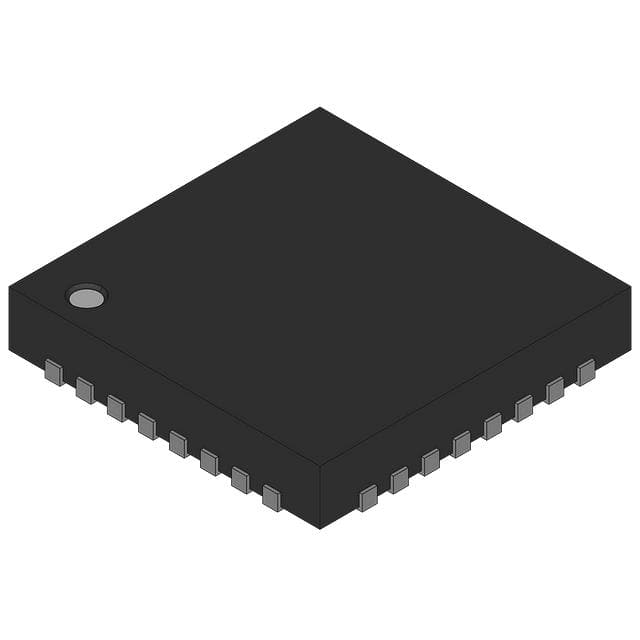
- Part No.:
- MAX2829ETN
- Manufacturer:
- Analog Devices Inc./Maxim Integrated
- Category:
- RF Transceiver ICs
- Package:
- 56-WFQFN Exposed Pad
- Datasheet:
-
 MAX2829ETN.pdf
- Description:
- IC RF TXRX WIFI 56TQFN
- Quantity:
- Payment:

- Shipping:

Inventory:3,320
Please send an inquiry. Send us your inquiry, and we will respond immediately.
Product details
Overview
The MAX2829ETN from Maxim Integrated is a dual-band RF transceiver IC designed for IEEE 802.11a/b/g WLAN systems, covering 2.4–2.5GHz and 4.9–5.875GHz bands. It integrates full Rx/Tx signal paths, on-chip monolithic filters, VCO, frequency synthesizer, and 3-wire serial interface - eliminating external SAW filters and enabling compact front-end designs for MIMO and smart antenna radios.
For engineers reviewing the MAX2829ETN datasheet, MAX2829ETN pinout, MAX2829ETN application, or MAX2829ETN equivalent, this page delivers verified RF performance specs (e.g., −75dBm Rx sensitivity at 54Mbps 802.11g), dual-band frequency coverage, integrated calibration features, and MIMO-compatible LO phase coherence - all critical for 802.11a/b/g radio design and regulatory-compliant RF layout.
Technical Context
The MAX2829ETN implements a direct-conversion architecture with I/Q baseband interface, supporting both OFDM (6–54Mbps) and CCK/DSSS (1–11Mbps) modulation schemes. Its integrated PLL uses a 40MHz reference oscillator and achieves −100dBc/Hz (802.11g) / −95dBc/Hz (802.11a) closed-loop phase noise at 10kHz offset.
It features programmable baseband lowpass filters (nominal, turbo mode 1/2), 93dB (802.11g)/97dB (802.11a) receiver gain-control range, and Tx/Rx I/Q error detection. Coherent LO phase among multiple transceivers enables synchronized MIMO operation without external alignment circuitry.
Key Specifications
| Parameter | Value and Actual Design Meaning |
|---|---|
| Frequency Bands | 2.4–2.5GHz and 4.9–5.875GHz - supports global 802.11a/b/g operation including 4.9GHz public safety band. |
| Rx Sensitivity | −75dBm at 54Mbps (802.11g) - exceeds IEEE 802.11g standard by up to 10dB, enabling robust link budget in noisy environments. |
| Transmit EVM | 1.5% (802.11g), 2% (802.11a) - meets stringent OFDM linearity requirements for 54Mbps data rates. |
| Sideband Suppression | −46dBc (802.11g), −51dBc (802.11a) - reduces adjacent-channel interference without external filtering. |
| Supply Voltage | +2.7V to +3.6V - compatible with single Li-ion or regulated 3.3V system rails. |
| Power Control Range | 30dB Tx power control - enables precise output power management per regulatory mask and link adaptation. |
| Package | 56-pin TQFN-EP (8mm × 8mm) - thermally enhanced exposed paddle for RF power dissipation in compact PCB layouts. |
Pinout & Package
The MAX2829ETN is housed in a 56-pin thin QFN package with exposed thermal paddle (T5688-2), optimized for RF thermal management and high-density routing in WLAN modules.
| Pin/Terminal | Circuit Role | Design Meaning |
|---|---|---|
| VCC (Pins 1,2,4,5,6,8,10,11,12,13,14,15,16,17,18,19,20,21,22,23,24,25,26,27,28,33,34,35,36,37,38,39,40,41,42,43,44,45,46,47,48,49,50,51,52,53,54,55) | Power supply input | Distributed VCC pins minimize IR drop and improve PSRR across RF/analog/baseband sections. |
| GND (Pins 3,7,9,29,30,31,32,56) | Ground reference | Multiple GND pins provide low-inductance return paths for RF, analog, and digital domains. |
| RXRFH (Pin 7) | Receiver RF high-side input | Differential RF input for 2.4GHz/5GHz bands; requires external balun and matching network. |
| TXRFH+/TXRFH− (Pins 9,10) | Transmitter RF differential output | Direct connection to PA input; supports 50Ω differential or single-ended (with balun) RF output path. |
| RXBBI+/RXBBI−/RXBBQ+/RXBBQ− (Pins 43–46) | Receiver baseband I/Q outputs | Low-voltage analog differential outputs (0.8–1.05V common-mode) interfacing directly to ADC or BB processor. |
| TXBBI+/TXBBI−/TXBBQ+/TXBBQ− (Pins 14–17) | Transmitter baseband I/Q inputs | Differential inputs accepting 100mVRMS sine/cosine or OFDM I/Q signals; 60kΩ input impedance minimizes loading. |
| SHDN (Pin 30) | Global shutdown control | Active-high logic input; places device in 1µA shutdown mode for ultra-low-power standby. |
| CS/SCLK/DIN (Pins 27,26,25) | 3-wire serial interface | Configures registers for channel selection, gain control, calibration modes, and power states at up to 40MHz clock rate. |
Key Features
| Feature | Design Value |
|---|---|
| On-chip monolithic RF filters | Eliminates external SAW filters in both Rx and Tx paths - reduces BOM count and board area by ≥3 components per band. |
| Programmable baseband lowpass filters | Three selectable corner frequencies (9.5MHz nominal, 14/18MHz turbo modes) - adapts filter bandwidth to OFDM symbol rate and channel spacing. |
| Coherent LO phase across transceivers | Enables deterministic phase alignment in 2×2/3×3 MIMO systems without external LO distribution or phase calibration. |
| Integrated Tx/Rx I/Q calibration loop | Uses internal LO leakage and sideband detector to correct DC offset and quadrature errors - improves EVM without host MCU intervention. |
| 200ns Rx I/Q DC settling time | Supports fast frame switching in burst-mode 802.11 MAC protocols with minimal inter-frame dead time. |
Applications
| 802.11a/b/g Dual-Band Access Point | 4.9GHz Public Safety Radio |
|---|---|
Use Scenario: Indoor/outdoor enterprise Wi-Fi access point supporting simultaneous 2.4GHz legacy clients and 5GHz high-throughput clients. IC Role / Device Role / Timing Role: Dual-band RF transceiver handling concurrent Rx/Tx on both bands via time-multiplexed or MIMO operation. Use Value: Single-chip integration reduces front-end complexity, eliminates SAW filters, and enables <8mm × 8mm RF section footprint. | Use Scenario: Portable handheld or vehicle-mounted radio operating in FCC Part 90 4.940–4.990GHz public safety band. IC Role / Device Role / Timing Role: High-sensitivity receiver and spectrally clean transmitter meeting stringent out-of-band emission limits. Use Value: −75dBm Rx sensitivity and −51dBc sideband suppression meet public safety link margin and spectral mask requirements. |
| 2.4GHz/5GHz MIMO Client Device | Smart Antenna Beamforming Module |
Use Scenario: Laptop or tablet WLAN adapter using 2×2 MIMO to improve throughput and multipath resilience. IC Role / Device Role / Timing Role: Synchronized dual transceiver providing phase-coherent LO for spatial processing algorithms. Use Value: Coherent LO phase enables real-time beam steering and channel estimation without external phase-locked LO distribution. | Use Scenario: Fixed wireless base station with adaptive antenna array for directional uplink/downlink optimization. IC Role / Device Role / Timing Role: Multi-channel RF front-end with calibrated I/Q paths for digital beamforming and null steering. Use Value: Integrated I/Q calibration loop maintains amplitude/phase accuracy across temperature and aging - critical for stable beam patterns. |
Equivalent & Alternatives
The following parts are listed as comparable options for similar RF transceiver applications.
| Alternative Part | Technical Difference | Application Difference | Selection Advice |
|---|---|---|---|
| MAX2828ETN | Single-band only (4.9–5.875GHz); lacks 2.4GHz support and associated baseband calibration registers. | Restricted to 5GHz-only 802.11a or public safety radios; cannot replace MAX2829ETN in dual-band designs. | Select MAX2828ETN only when 2.4GHz operation is unnecessary and board layout must be optimized for 5GHz-only RF path. |
| AD9361BBCZ | Wideband (70MHz–6.0GHz), software-defined architecture; requires external filters, higher power (1.2W typical), larger 144-pin CSPBGA package. | Suitable for multi-standard (LTE/Wi-Fi/Zigbee) SDR platforms but over-engineered for fixed 802.11a/b/g use cases. | Choose AD9361BBCZ only if future protocol flexibility, tunable bandwidth, or sub-GHz support is required - not for cost- or size-optimized 802.11 radios. |
Compared with MAX2828ETN and AD9361BBCZ, the MAX2829ETN delivers optimal integration for dedicated dual-band 802.11a/b/g radios - combining band-specific RF performance, on-chip filtering, and MIMO-ready timing in a compact 56-pin QFN, avoiding both the band limitation of MAX2828ETN and the complexity/power overhead of AD9361BBCZ.
Availability
The MAX2829ETN is available at Aetrix Electronics and suitable for 802.11a/b/g access points, 4.9GHz public safety radios, and MIMO client devices requiring stable component supply, long-term lifecycle support, and traceable sourcing for industrial and commercial deployments.
Supply support for MAX2829ETN includes scheduled delivery planning, volume procurement assistance, BOM continuity management, traceable sourcing, and lifecycle availability coordination for OEM customers, industrial embedded developers, connected-device designers, and electronics production programs.
Manufacturer
Maxim Integrated (now part of Analog Devices) is a semiconductor company specializing in high-performance analog, mixed-signal, and RF solutions for communications, computing, and industrial markets.
The MAX2829ETN belongs to Maxim's WLAN transceiver product line, engineered specifically to integrate complete 802.11a/b/g RF functionality - including dual-band synthesis, calibrated I/Q paths, and MIMO synchronization - into a single chip for space-constrained, high-volume wireless infrastructure and client devices.
FAQ
What is the operating frequency range supported by the MAX2829ETN?
The MAX2829ETN supports two distinct RF bands: 2.412–2.500GHz for 802.11b/g operation and 4.900–5.875GHz for 802.11a and public safety applications. This dual-band capability allows a single MAX2829ETN to replace separate 2.4GHz and 5GHz transceivers in unified WLAN radios, reducing system complexity and PCB area.
Does the MAX2829ETN require external SAW filters?
No, the MAX2829ETN does not require external SAW filters. It integrates monolithic RF filters in both the receive and transmit paths, explicitly designed to meet IEEE 802.11a/g spectral mask requirements without additional filtering components. This integration reduces bill-of-materials cost, simplifies layout, and improves reliability compared to discrete filter solutions.
How does the MAX2829ETN support MIMO systems?
The MAX2829ETN supports MIMO through coherent LO phase alignment across multiple units - ensuring deterministic phase relationships between transceivers without external LO distribution. Its 3-wire serial interface allows synchronized register writes, and its Rx/Tx calibration loop maintains I/Q accuracy across temperature, enabling robust spatial processing in 2×2 or 3×3 antenna configurations.
What is the receiver sensitivity of the MAX2829ETN at 54Mbps 802.11g?
The MAX2829ETN achieves −75dBm receiver sensitivity at 54Mbps under 802.11g conditions, which is up to 10dB better than the minimum IEEE 802.11g standard requirement. This enhanced sensitivity extends range and improves link robustness in interference-prone environments such as dense urban deployments or industrial facilities.
What package type and thermal characteristics does the MAX2829ETN use?
The MAX2829ETN uses a 56-pin thin QFN package with exposed thermal paddle (T5688-2, 8mm × 8mm). The exposed paddle provides low thermal resistance to the PCB, enabling efficient heat dissipation during continuous Tx operation. Its specified continuous power dissipation is 2500mW at +70°C ambient, derating linearly above that temperature.
MAX2829ETN Specifications
- Product attributes
- Attribute value
- Manufacturer:
- Analog Devices Inc./Maxim Integrated
- Series:
- -
- Package/Case:
- 56-WFQFN Exposed Pad
- Packaging:
- Bulk
- Product Status:
- Active
- Programmable:
- -
- Type:
- TxRx Only
- RF Family/Standard:
- WiFi
- Protocol:
- 802.11a/b/g
- Modulation:
- CCK, DSSS, OFDM
- Frequency:
- 2.4GHz ~ 2.5GHz, 5.875GHz
- Data Rate (Max):
- 54Mbps
- Power - Output:
- -2dBm
- Sensitivity:
- -75dBm
- Memory Size:
- -
- Serial Interfaces:
- SPI
- GPIO:
- -
- Voltage - Supply:
- 2.7V ~ 3.6V
- Current - Receiving:
- 118mA ~ 151mA
- Current - Transmitting:
- 142mA ~ 184mA
- Operating Temperature:
- -40°C ~ 85°C
- Grade:
- -
- Qualification:
- -
- Supplier Device Package:
- 56-TQFN-EP (8x8)
MAX2829ETN FAQ
1.How can I place an order for MAX2829ETN through Aetrix?
Please submit a Request for Quotation (RFQ) for MAX2829ETN on Aetrix. Our sales agent will provide a competitive quotation and guide you through the order confirmation once you accept the terms.
2.Are the price and stock information for MAX2829ETN reliable?
The price and inventory of MAX2829ETN are updated periodically and may fluctuate due to market conditions. Stock and pricing data are typically refreshed every 24 hours. Quotation validity for MAX2829ETN is usually 5 days.
3.What payment methods are accepted for MAX2829ETN?
We accept Wire Transfer, PayPal, Credit Card, Western Union, MoneyGram, and Escrow for MAX2829ETN transactions.
Note: Certain payment methods may incur a processing fee.
4.How is shipping managed for MAX2829ETN?
MAX2829ETN orders can be shipped via leading logistics carriers, including DHL, UPS, FedEx, TNT, or Registered Mail.
Once your MAX2829ETN order is processed, you will receive an email with the shipment details and tracking number.
Note: Tracking information may take up to 24 hours to appear. Express delivery typically takes 3–5 business days.
5.How can I obtain technical support or documentation for MAX2829ETN?
For technical support, including MAX2829ETN datasheets, pinout diagrams, or application guidance, please contact our engineering support team. They can provide detailed documentation and assistance for your MAX2829ETN requirements.
6.How does Aetrix verify that MAX2829ETN is sourced from the original manufacturer or authorized distributors?
All MAX2829ETN products on Aetrix are procured from qualified distributors and authorized channels. Our dedicated quality assurance team conducts strict verification, including traceability checks and, if necessary, third-party testing. This ensures that MAX2829ETN meets industry standards.
7.What is the process for return or replacement of MAX2829ETN?
All MAX2829ETN units undergo pre-shipment inspection (PSI). If there is an issue with MAX2829ETN, returns or replacements are accepted under the following conditions:
1.Quantity discrepancies, incorrect items, or visible external defects (such as breakage or corrosion), acknowledged by Aetrix.
2.The issue is reported within 90 days of delivery.
3.The MAX2829ETN part is unused and in its original packaging.
Return procedure for MAX2829ETN:
1.Submit a request within 90 days.
2.Obtain a Return Material Authorization (RMA) from Aetrix.
MAX2829ETN Tags
-
ESP32-D0WD-V3
Espressif Systems
-
ESP8266EX
Espressif Systems

-
ESP32-S3
Espressif Systems
-
NRF24L01P-R7
Nordic Semiconductor ASA
-
NRF24L01P-R
Nordic Semiconductor ASA
-
ESP32-U4WDH
Espressif Systems
-
DA14531-00000OG2
Renesas Electronics Corporation
-
ESP32-C6FH4
Espressif Systems
-
DA14531-00000FX2
Renesas Electronics Corporation
-
NRF24L01P-T
Nordic Semiconductor ASA
-
NRF52810-QCAA-R
Nordic Semiconductor ASA
-
ESP32-S3FN8
Espressif Systems
Tech Hub

A practical engineering guide to 3.3V and 5V logic compatibility, input thresholds, resistor dividers, translator ICs, MOSFET level shifting, I2C pull-ups, timing limits and power-sequencing risks.

The 74HC595 uses push-pull logic outputs, while the TPIC6B595 uses 50 V open-drain DMOS sinks for higher-power loads. This guide compares timing, current limits, 3.3 V interfacing, load wiring, thermal…

The 74HC595 converts serial data into eight stable parallel outputs. This guide covers pin functions, shift and storage timing, OE and MR behavior, drive-current limits, cascading, voltage compatibilit…

A technical comparison of level-sensitive latches and edge-triggered flip-flops, covering timing windows, setup and hold limits, master–slave operation, time borrowing, race-through, HDL inference and…

A D latch stores one bit while Enable controls when data can pass. This reference covers gate-level operation, truth tables, transparency, setup and hold timing, LE versus OE, common ICs and practical …

An SR latch stores one bit through cross-coupled feedback. This engineering reference covers NOR and NAND implementations, truth tables, forbidden-state recovery, gated operation, switch debouncing, fa…

Latch circuits retain one bit through feedback. This technical reference covers SR and D latches, truth tables, transparency, timing limits, latch-versus-flip-flop behavior, applications and common log…

An engineering guide to LED driver operation, constant-current and constant-voltage outputs, linear and switching topologies, dimming, IC selection, calculations, replacement compatibility, and fault c…

Operational amplifier guide covering op amp basics, feedback, ideal vs real op amps, common configurations, buffer circuits, offset, bias current, gain-bandwidth, slew rate, rail-to-rail limits and sel…

Jumper cables guide covering safe connection order, red and black clamp placement, final ground connection, cable gauge, length, clamp quality, copper vs CCA cables, jump starter comparison and battery…


