
 My Inquiry
 My Account


Analog Devices Inc./Maxim Integrated MAX2982GCD/V+
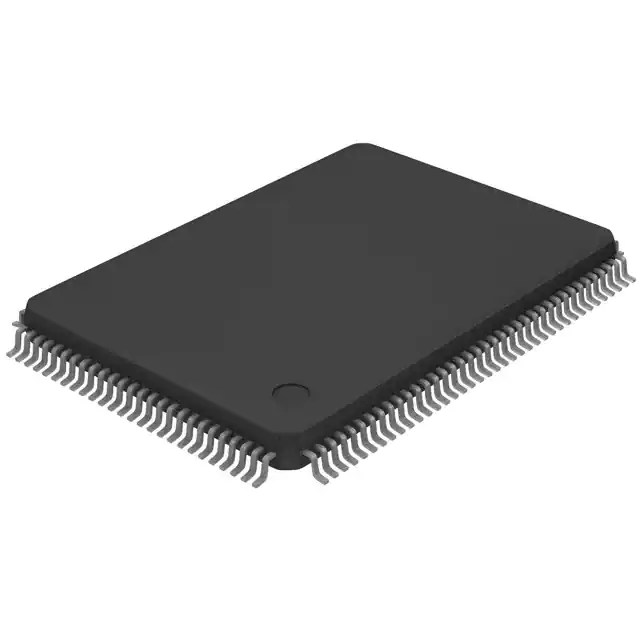
- Part No.:
- MAX2982GCD/V+
- Manufacturer:
- Analog Devices Inc./Maxim Integrated
- Category:
- Telecom
- Package:
- 128-LQFP
- Datasheet:
-
 MAX2982GCD/V+.pdf
- Description:
- IC TELECOM INTERFACE 128LQFP
- Quantity:
- Payment:

- Shipping:

Inventory:2,040
Please send an inquiry. Send us your inquiry, and we will respond immediately.
Product details
Overview
MAX2982GCD/V+ from Maxim Integrated is an industrial broadband power-line transceiver integrating MAC and PHY layers in a single 128-pin LQFP device. It delivers up to 14Mbps data rate using 84-carrier OFDM, supports HomePlug 1.0 compliance, operates from –40°C to +105°C, and features integrated ARM946E-S™ processor, DES encryption, and temperature sensor - enabling robust communication in motor control and remote monitoring over noisy power lines.
For engineers reviewing the MAX2982GCD/V+ datasheet, MAX2982GCD/V+ pinout, MAX2982GCD/V+ application, or MAX2982GCD/V+ equivalent, key selection considerations include its -1dB SNR ROBO mode for harsh line conditions, MII/RMII/UART/Ethernet MAC interface flexibility, spectral shaping capability, and AEC-Q100-REV-G automotive-grade qualification.
Technical Context
The MAX2982GCD/V+ implements a full HomePlug 1.0–compliant PHY with 84-carrier OFDM modulation, supporting DBPSK, DQPSK (1/2 & 3/4 FEC), and enhanced ROBO mode. Its integrated ARM946E-S™ core enables field-upgradable firmware via TFTP and real-time channel adaptation.
It interfaces directly with the MAX2981 analog front-end via dedicated AFECLK, AFETXEN, AFEREN, AFEPDRX, AFERESET, and 10-bit AFEDAD[9:0] signals, while providing IEEE 802.3-compliant MII, RMII, synchronous FIFO, and 10/100 Ethernet MAC connectivity - all operating across industrial temperature range with dual supply domains (VDD33 = 3.3V, VDD12 = 1.2V).
Key Specifications
| Parameter | Value and Actual Design Meaning |
|---|---|
| Data Rate | Up to 14Mbps - enables high-throughput telemetry and control over shared AC wiring without dedicated cabling. |
| OFDM Carriers | 84 carriers - provides frequency diversity and resilience against narrowband interference in industrial power-line environments. |
| Operating Temp | –40°C to +105°C - ensures reliable operation in motor drives, factory automation cabinets, and outdoor building controllers. |
| Modulation Modes | DBPSK, DQPSK (1/2 & 3/4 FEC), ROBO - ROBO mode achieves –1dB SNR threshold for link maintenance under severe attenuation or noise. |
| Interface Standards | MII, RMII, UART, 10/100 Ethernet MAC - simplifies glue-free integration with host microcontrollers and standard network stacks. |
| Encryption | 56-bit DES with key management - secures payload transmission against eavesdropping in multi-node power-line networks. |
| Frequency Band | 4.49MHz to 20.7MHz - avoids AM radio bands and aligns with HomePlug 1.0 spectral mask for global regulatory acceptance. |
Pinout & Package
MAX2982GCD/V+ is housed in a 128-pin lead-free LQFP package (14mm × 14mm, 0.4mm pitch) with exposed thermal pad. Power domains are segregated: VDD33 (3.3V digital), VDD12 (1.2V core), AVDD33/AVDD12 (analog supplies), and dedicated DGND/AVSS grounds. Thermal resistance θJA = 30°C/W.
| Pin/Terminal | Circuit Role | Design Meaning |
|---|---|---|
| ETHTXD[0]/MIIDAT[0]–ETHTXD[3]/MIIDAT[3] | MII Transmit Data / FIFO Data [0–3] | 4-bit parallel MII transmit path or lower nibble of 8-bit FIFO interface - supports direct connection to Ethernet MAC or microcontroller GPIO. |
| ETHRXD[0]/MIIDAT[4]–ETHRXD[3]/MIIDAT[7] | MII Receive Data / FIFO Data [4–7] | 4-bit parallel MII receive path or upper nibble of 8-bit FIFO - enables full-duplex 8-bit synchronous data exchange with host. |
| AFEDAD[0]–AFEDAD[9] | AFE DAC/ADC Interface | 10-bit bidirectional digital interface to MAX2981 AFE - carries sampled baseband symbols and control words for analog signal chain configuration. |
| TEMP_SENS | Analog Temperature Output | Single-ended voltage output (465mV nominal, 7mV/°C) - allows system-level thermal monitoring without external sensor or ADC. |
| GPIO[0]–GPIO[23] | Configurable I/O Bank | 24 general-purpose pins with boot-state control and configurable pull resistors - used for AFE signaling, nonvolatile memory interface, LED status, and boot configuration. |
Key Features
| Feature | Design Value |
|---|---|
| Integrated ARM946E-S™ Core | Enables firmware updates over TFTP, dynamic spectral notching, and real-time interference rejection without external processor. |
| ROBO Mode Performance | –1dB SNR threshold at 10⁻⁴ frame error rate - sustains communication during voltage sags, switching transients, and heavy EMI in industrial plants. |
| Narrowband Interference Rejection | Hardware-accelerated blanking and adaptive filtering - suppresses persistent jammer signals (e.g., PLC harmonics, VFD noise) without CPU overhead. |
| Automatic Channel Adaptation | Real-time tone masking and bit-loading per carrier - maintains throughput as line impedance and noise profile change dynamically. |
| Spectral Shaping & Notching | Programmable bandwidth limits and null insertion - ensures compliance with regional spectral masks (e.g., FCC Part 15, EN 50561) and avoids licensed bands. |
Applications
| Industrial Motor Drives | Remote SCADA Telemetry |
|---|---|
Use Scenario: Real-time torque, speed, and fault status reporting from variable-frequency drives over existing 3-phase power feeders. IC Role / Device Role / Timing Role: Power-line PHY/MAC transceiver handling physical layer encoding, OFDM symbol generation, and Ethernet frame bridging. Use Value: Eliminates RS-485 wiring runs and enables deterministic latency (<10ms round-trip) using ROBO mode's low-SNR robustness. | Use Scenario: Connecting distributed RTUs in water/wastewater treatment plants where conduit space is limited and EMI from pumps is severe. IC Role / Device Role / Timing Role: Secure, authenticated broadband modem interfacing with host MCU via MII and managing AES-encrypted payload framing. Use Value: Achieves 14Mbps aggregate throughput across 32-node mesh, reducing polling cycle time by 60% versus legacy narrowband PLC. |
| Building Energy Management | Smart Grid Distribution Automation |
Use Scenario: HVAC controller coordination and occupancy sensor aggregation across commercial office floors using lighting circuit wiring. IC Role / Device Role / Timing Role: HomePlug 1.0–compliant transceiver performing MAC-layer bridging, DES encryption, and automatic neighbor discovery. Use Value: Leverages installed copper infrastructure; spectral notching avoids interference with DALI lighting control signals on same conductors. | Use Scenario: Fault location and sectionalizing commands sent from substation RTU to reclosers and capacitor banks over medium-voltage distribution lines. IC Role / Device Role / Timing Role: Industrial-grade power-line modem with AEC-Q100 qualification, operating reliably at 105°C ambient near transformers. Use Value: Maintains >99.5% uptime under lightning-induced surges and harmonic distortion due to integrated interference rejection and –40°C to +105°C rating. |
Equivalent & Alternatives
The following parts are listed as comparable options for similar power-line transceiver applications.
| Alternative Part | Technical Difference | Application Difference | Selection Advice |
|---|---|---|---|
| MAX2981GCD/V+ | Analog front-end companion IC only - lacks MAC/PHY, ARM core, and digital interfaces; requires MAX2982GCD/V+ for full functionality. | Not a standalone alternative - must be paired with MAX2982GCD/V+ to form complete modem solution. | Select MAX2981GCD/V+ only when designing custom AFE layout or replacing failed MAX2981 units in existing MAX2982-based systems. |
| ST7580 | Single-chip PRIME-compliant PLC modem (CENELEC A/B bands); no ARM core; max 1.2Mbps; supports only 35–91kHz band. | Targeted at smart metering (AMI), not industrial broadband; incompatible frequency plan and protocol stack. | Choose ST7580 only for CENELEC-regulated utility meter deployments requiring PRIME v1.3.4 compliance - not for HomePlug 1.0 or >10Mbps use cases. |
Compared with MAX2982GCD/V+, MAX2981GCD/V+ is a dependent analog companion, not a functional substitute, while ST7580 serves a distinct low-speed, narrowband smart-grid niche with incompatible modulation and regulatory scope - neither offers drop-in replacement capability.
Availability
MAX2982GCD/V+ is available at Aetrix Electronics and suitable for industrial motor drives, remote SCADA telemetry, building energy management, and smart grid distribution automation requiring stable component supply across extended temperature and long product lifecycles.
Supply support for MAX2982GCD/V+ includes scheduled delivery planning, volume procurement assistance, BOM continuity management, traceable sourcing, and lifecycle availability coordination for OEM customers, industrial embedded developers, connected-device designers, and electronics production programs.
Manufacturer
Maxim Integrated (now part of Analog Devices) designs precision analog, mixed-signal, and power-management ICs for industrial, automotive, and communications applications - emphasizing reliability, integration, and extended temperature performance.
The MAX2982GCD/V+ belongs to Maxim's industrial power-line communication product line, engineered specifically for robust, high-speed data transmission over noisy AC and DC power lines in harsh environments - targeting factory automation, energy infrastructure, and mission-critical control systems.
FAQ
What is the primary function of the MAX2982GCD/V+ in a power-line communication system?
The MAX2982GCD/V+ serves as a fully integrated HomePlug 1.0–compliant power-line transceiver, combining MAC and PHY layers with an ARM946E-S™ processor. It handles OFDM modulation/demodulation, forward error correction, DES encryption, and interfaces directly to Ethernet MACs or microcontrollers via MII/RMII/UART - enabling secure, high-speed (up to 14Mbps) data transmission over unshielded AC wiring. Its design eliminates the need for external processors or protocol stacks in industrial broadband PLC applications.
Does the MAX2982GCD/V+ require an external analog front-end, and if so, which one is specified?
Yes, the MAX2982GCD/V+ requires the MAX2981 analog front-end (AFE) to complete the power-line signal chain. The MAX2982GCD/V+ communicates with the MAX2981 via dedicated signals including AFECLK (50MHz clock), AFETXEN, AFEREN, AFEPDRX, AFERESET, and the 10-bit AFEDAD[9:0] digital interface. This split architecture separates digital baseband processing from high-voltage line driving/receiving functions - a requirement explicitly defined in the MAX2982GCD/V+ datasheet and typical application circuit.
What are the supported interface modes between the MAX2982GCD/V+ and a host processor?
The MAX2982GCD/V+ supports three primary host interface modes: IEEE 802.3-compliant Media Independent Interface (MII), Reduced MII (RMII), and high-speed synchronous FIFO. MII uses 4-bit TX/RX data paths with separate clock and control signals; RMII reduces pin count using 2-bit data and a 50MHz reference clock; the FIFO mode provides glue-free connection to microcontrollers via BUFRD/BUFWR strobes and 8-bit parallel data bus. All modes are selectable via configuration registers and do not require external logic.
How does the ROBO mode in the MAX2982GCD/V+ improve performance in electrically noisy environments?
ROBO mode in the MAX2982GCD/V+ is a robust OFDM modulation scheme achieving a –1dB SNR threshold at 10⁻⁴ frame error rate - significantly lower than standard DQPSK or DBPSK modes. It employs aggressive forward error correction, reduced constellation density, and optimized tone mapping to maintain link integrity during severe power-line disturbances such as motor startup transients, arc faults, or broadband EMI. This mode is automatically engaged under poor channel conditions and is validated for operation across the full –40°C to +105°C range.
Is the MAX2982GCD/V+ qualified for automotive applications, and what standard does it meet?
Yes, the MAX2982GCD/V+ is qualified to AEC-Q100-REV-G Grade 2 standards (-40°C to +105°C), confirming its suitability for automotive powertrain and chassis applications where vibration, thermal cycling, and electrical noise resilience are critical. This qualification covers stress testing for human body model ESD, latch-up, thermal shock, and high-temperature operating life - validating reliability beyond standard industrial requirements. The device's integrated temperature sensor and robust ROBO mode further support automotive use in battery management and ADAS subsystems.
MAX2982GCD/V+ Specifications
- Product attributes
- Attribute value
- Manufacturer:
- Analog Devices Inc./Maxim Integrated
- Series:
- -
- Package/Case:
- 128-LQFP
- Packaging:
- Tray
- Product Status:
- Obsolete
- Function:
- Power Line Communication Modem (PLC)
- Interface:
- MII, RMII
- Number of Circuits:
- 1
- Voltage - Supply:
- 1.14V ~ 1.26V
- Current - Supply:
- 365mA
- Power (Watts):
- -
- Operating Temperature:
- -40°C ~ 105°C
- Grade:
- Automotive
- Qualification:
- AEC-Q100
- Mounting Type:
- Surface Mount
- Supplier Device Package:
- 128-LQFP (14x20)
MAX2982GCD/V+ FAQ
1.How can I place an order for MAX2982GCD/V+ through Aetrix?
Please submit a Request for Quotation (RFQ) for MAX2982GCD/V+ on Aetrix. Our sales agent will provide a competitive quotation and guide you through the order confirmation once you accept the terms.
2.Are the price and stock information for MAX2982GCD/V+ reliable?
The price and inventory of MAX2982GCD/V+ are updated periodically and may fluctuate due to market conditions. Stock and pricing data are typically refreshed every 24 hours. Quotation validity for MAX2982GCD/V+ is usually 5 days.
3.What payment methods are accepted for MAX2982GCD/V+?
We accept Wire Transfer, PayPal, Credit Card, Western Union, MoneyGram, and Escrow for MAX2982GCD/V+ transactions.
Note: Certain payment methods may incur a processing fee.
4.How is shipping managed for MAX2982GCD/V+?
MAX2982GCD/V+ orders can be shipped via leading logistics carriers, including DHL, UPS, FedEx, TNT, or Registered Mail.
Once your MAX2982GCD/V+ order is processed, you will receive an email with the shipment details and tracking number.
Note: Tracking information may take up to 24 hours to appear. Express delivery typically takes 3–5 business days.
5.How can I obtain technical support or documentation for MAX2982GCD/V+?
For technical support, including MAX2982GCD/V+ datasheets, pinout diagrams, or application guidance, please contact our engineering support team. They can provide detailed documentation and assistance for your MAX2982GCD/V+ requirements.
6.How does Aetrix verify that MAX2982GCD/V+ is sourced from the original manufacturer or authorized distributors?
All MAX2982GCD/V+ products on Aetrix are procured from qualified distributors and authorized channels. Our dedicated quality assurance team conducts strict verification, including traceability checks and, if necessary, third-party testing. This ensures that MAX2982GCD/V+ meets industry standards.
7.What is the process for return or replacement of MAX2982GCD/V+?
All MAX2982GCD/V+ units undergo pre-shipment inspection (PSI). If there is an issue with MAX2982GCD/V+, returns or replacements are accepted under the following conditions:
1.Quantity discrepancies, incorrect items, or visible external defects (such as breakage or corrosion), acknowledged by Aetrix.
2.The issue is reported within 90 days of delivery.
3.The MAX2982GCD/V+ part is unused and in its original packaging.
Return procedure for MAX2982GCD/V+:
1.Submit a request within 90 days.
2.Obtain a Return Material Authorization (RMA) from Aetrix.
MAX2982GCD/V+ Tags

-
LMC567CMX/NOPB
Texas Instruments
-
LM567CMX/NOPB
Texas Instruments
-
LM567CM/NOPB
Texas Instruments
-
VSC8531XMW-02
Microchip Technology
-
VSC8531XMW-05
Microchip Technology

-
GPY115C0VI
MaxLinear, Inc.
-
SI32185-A-FMR
Skyworks Solutions Inc.
-
VSC8541XMV-05
Microchip Technology
-
SI32178-B-FM1R
Skyworks Solutions Inc.
-
GPY215C0VI
MaxLinear, Inc.
-
CPC7514ZTR
Littelfuse Inc.
-
VSC8502XML-03
Microchip Technology
Tech Hub

A practical engineering guide to 3.3V and 5V logic compatibility, input thresholds, resistor dividers, translator ICs, MOSFET level shifting, I2C pull-ups, timing limits and power-sequencing risks.

The 74HC595 uses push-pull logic outputs, while the TPIC6B595 uses 50 V open-drain DMOS sinks for higher-power loads. This guide compares timing, current limits, 3.3 V interfacing, load wiring, thermal…

The 74HC595 converts serial data into eight stable parallel outputs. This guide covers pin functions, shift and storage timing, OE and MR behavior, drive-current limits, cascading, voltage compatibilit…

A technical comparison of level-sensitive latches and edge-triggered flip-flops, covering timing windows, setup and hold limits, master–slave operation, time borrowing, race-through, HDL inference and…

A D latch stores one bit while Enable controls when data can pass. This reference covers gate-level operation, truth tables, transparency, setup and hold timing, LE versus OE, common ICs and practical …

An SR latch stores one bit through cross-coupled feedback. This engineering reference covers NOR and NAND implementations, truth tables, forbidden-state recovery, gated operation, switch debouncing, fa…

Latch circuits retain one bit through feedback. This technical reference covers SR and D latches, truth tables, transparency, timing limits, latch-versus-flip-flop behavior, applications and common log…

An engineering guide to LED driver operation, constant-current and constant-voltage outputs, linear and switching topologies, dimming, IC selection, calculations, replacement compatibility, and fault c…

Operational amplifier guide covering op amp basics, feedback, ideal vs real op amps, common configurations, buffer circuits, offset, bias current, gain-bandwidth, slew rate, rail-to-rail limits and sel…

Jumper cables guide covering safe connection order, red and black clamp placement, final ground connection, cable gauge, length, clamp quality, copper vs CCA cables, jump starter comparison and battery…


