
 My Inquiry
 My Account


Analog Devices Inc./Maxim Integrated MAX2990ECB+
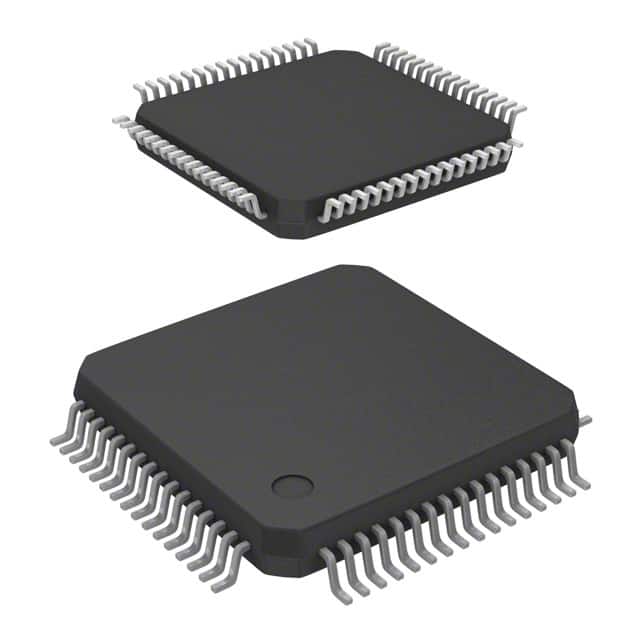
- Part No.:
- MAX2990ECB+
- Manufacturer:
- Analog Devices Inc./Maxim Integrated
- Category:
- Telecom
- Package:
- 64-LQFP
- Datasheet:
-
 MAX2990ECB+.pdf
- Description:
- IC TELECOM INTERFACE 64LQFP
- Quantity:
- Payment:

- Shipping:

Inventory:4,881
Please send an inquiry. Send us your inquiry, and we will respond immediately.
Product details
Overview
The MAX2990ECB+ from Maxim Integrated is a highly integrated power line communication (PLC) baseband modem SoC combining PHY and MAC layers, featuring a 16-bit MAXQ microcontroller core, 32kB flash, 8kB SRAM, and OFDM modulation for robust 100kbps data transmission over AC power lines in industrial and building automation systems.
For engineers reviewing the MAX2990ECB+ datasheet, MAX2990ECB+ pinout, MAX2990ECB+ application, or MAX2990ECB+ equivalent, key selection considerations include CENELEC/FCC/ARIB band compliance, jammer cancellation capability, DES encryption support, CSMA/CA channel arbitration, and SPI/I²C/UART interface integration.
Technical Context
The MAX2990ECB+ implements an OFDM-based PLC transceiver with BPSK modulation and forward error correction (FEC), supporting frequency bands from 10kHz to 490kHz and enabling reliable operation under impulsive noise and group delay spread. It integrates a dedicated AFE with ADC/DAC, LPF/AGC, and line driver for direct AC power line coupling.
Its embedded MAXQ microcontroller provides real-time control with 32kB password-protected flash, 8kB SRAM (4kB shared with PHY), RTC for timestamping, PWM counters, and built-in test mode for channel condition analysis - all coordinated via hardware-accelerated DES and CRC32 engines.
Key Specifications
| Parameter | Value and Actual Design Meaning |
|---|---|
| Data Rate | Up to 100kbps effective rate in 10kHz–490kHz band; 32kbps in CENELEC A (10–95kHz) - enables meter reading and sensor telemetry over legacy wiring. |
| Modulation | OFDM with BPSK - delivers immunity to narrowband interference and frequency-selective fading without equalizers. |
| Encryption | Hardware-accelerated DES engine - provides real-time payload encryption/decryption for secure PLC network traffic. |
| Compliance | CENELEC A/B/C, FCC (10–490kHz), ARIB (10–450kHz) - ensures regulatory acceptance across EU, US, and Japan smart grid deployments. |
| Memory | 32kB flash + 8kB SRAM (4kB dual-access) - supports field-upgradable firmware and concurrent PHY/MCU data buffering. |
| Interfaces | SPI, I²C, UART - allows flexible host processor connectivity for gateway, controller, or sensor node integration. |
| Jammer Cancellation | Dedicated sinusoidal interference removal for FCC/ARIB bands - improves SNR in noisy electrical environments like HVAC or lighting systems. |
Pinout & Package
Package: 64-pin LQFP, RoHS-compliant, rated for -40°C to +85°C operation.
| Pin/Terminal | Circuit Role | Design Meaning |
|---|---|---|
| P0.0–P0.7 | GPIO Port 0 | Configurable digital I/O with interrupt capability; used for status signaling, external sensor polling, or control output. |
| P1.0–P1.7 | GPIO Port 1 | General-purpose I/O with alternate functions including UART TX/RX and I²C SDA/SCL routing. |
| P2.0–P2.7 | GPIO Port 2 | Supports PWM output and external interrupt inputs; commonly assigned to timing-critical control signals. |
| P3.0–P3.8 | GPIO Port 3 | Includes JTAG debug pins (TCK/TMS/TDI/TDO); enables in-system programming and real-time firmware debugging. |
| SCLK/MOSI/MISO | SPI Interface | Full-duplex synchronous serial interface for high-speed configuration and data exchange with host MCU or FPGA. |
| SDA/SCL | I²C Interface | Two-wire interface for low-pin-count connection to sensors, EEPROMs, or PMICs in space-constrained nodes. |
| TX/RX | UART Interface | Asynchronous serial link for diagnostics, command injection, or legacy protocol bridging (e.g., Modbus RTU over PLC). |
| XTAL1A/XTAL2A | Main Crystal Oscillator | Drives 16MHz system clock for MAXQ core and digital subsystem timing. |
| XTAL1S/XTAL2S | 32.768kHz RTC Crystal | Provides precise timekeeping for timestamped event logging and scheduled PLC frame transmission. |
| VDDC / VDDIO / AVDD | Power Supplies | Separate analog (AVDD), core (VDDC), and I/O (VDDIO) rails minimize noise coupling between PHY and digital logic. |
| DGND / AGND | Ground Planes | Digitally isolated ground (DGND) and analog ground (AGND) prevent switching noise from corrupting ADC/DAC performance. |
Key Features
| Feature | Design Value |
|---|---|
| Integrated PHY + MAC SoC | Eliminates need for external protocol stack processing - reduces BOM count and simplifies certification for CENELEC/FCC/ARIB. |
| Hardware DES Engine | Enables end-to-end encrypted PLC frames at full data rate without CPU overhead or latency penalty. |
| CSMA/CA Channel Arbitration | Prevents packet collisions in multi-node networks by dynamically sensing line activity before transmission. |
| ARQ Error Recovery | Automatically retransmits corrupted frames using CRC16 validation - improves reliability in noisy residential or industrial power lines. |
| Built-in Test Mode Engine | Performs real-time channel characterization (SNR, attenuation, noise floor) to optimize OFDM tone allocation per deployment environment. |
Applications
| Automatic Meter Reading | Home Automation |
|---|---|
Use Scenario: Two-way communication with electricity, gas, and water meters over existing AC wiring in multi-tenant buildings. IC Role / Device Role / Timing Role: PLC modem providing PHY/MAC layer functionality with DES-encrypted data framing and ARQ recovery. Use Value: Eliminates dedicated communication infrastructure; supports CENELEC A compliance and 32kbps throughput for daily consumption reporting. | Use Scenario: Centralized control of lighting, blinds, thermostats, and security sensors using household power lines as data backbone. IC Role / Device Role / Timing Role: Embedded PLC node enabling low-latency command delivery and status feedback with jammer cancellation in noisy EMI environments. Use Value: Enables retrofit installation without new cabling; OFDM resilience ensures stable operation during motor startup or dimmer switching events. |
| Building Automation | Industrial Sensor Networks |
Use Scenario: Interconnecting HVAC controllers, occupancy sensors, and energy monitors across commercial facilities using 3-phase power distribution. IC Role / Device Role / Timing Role: Robust OFDM modem with RTC timestamping and CSMA/CA arbitration for deterministic network access. Use Value: Supports FCC/ARIB bands up to 490kHz; jammer cancellation maintains link integrity near variable-frequency drives and UPS systems. | Use Scenario: Distributed temperature, pressure, and vibration monitoring in factory floors where wireless is unreliable and Ethernet runs are cost-prohibitive. IC Role / Device Role / Timing Role: Low-power PLC endpoint with built-in test mode for adaptive tone mapping and CRC32 integrity checking. Use Value: Delivers 100kbps burst telemetry over long branch circuits; shared 4kB SRAM enables concurrent PHY buffering and MCU data preprocessing. |
Equivalent & Alternatives
The following parts are listed as comparable options for similar PLC modem applications.
| Alternative Part | Technical Difference | Application Difference | Selection Advice |
|---|---|---|---|
| ST7580 | ARM Cortex-M0+ core, 128kB flash, supports PRIME and G3-PLC standards; lacks integrated DES engine and jammer cancellation. | Targeted at utility-grade smart grid deployments requiring IPv6 and mesh networking - not optimized for cost-sensitive building automation. | Select ST7580 when G3-PLC compliance and IPv6 stack support are mandatory; MAX2990ECB+ remains preferred for CENELEC/FCC-only, DES-secured, lower-BOM-cost nodes. |
| INT51X1 | OFDM-based PLC SoC with 8051 core, 64kB flash; supports CENELEC A/B/C but no FCC/ARIB bands; includes AES-128 instead of DES. | Focused on European home automation; lacks RTC and built-in test mode engine for channel adaptation. | Choose INT51X1 for legacy DES-free deployments in EU residential markets; MAX2990ECB+ offers broader band coverage and hardware-accelerated DES for North American and Japanese installations. |
Compared with ST7580 and INT51X1, the MAX2990ECB+ uniquely combines FCC/ARIB band support, jammer cancellation, and hardware DES in a single 64-pin LQFP package - making it optimal for global, security-conscious, cost-sensitive PLC endpoints where regulatory flexibility and impulsive noise immunity are critical.
Availability
MAX2990ECB+ is available at Aetrix Electronics and suitable for automatic meter reading, building automation, and industrial sensor networks requiring stable component supply, long-term lifecycle assurance, and regulatory-compliant PLC connectivity.
Supply support for MAX2990ECB+ includes scheduled delivery planning, volume procurement assistance, BOM continuity management, traceable sourcing, and lifecycle availability coordination for OEM customers, industrial embedded developers, connected-device designers, and electronics production programs.
Manufacturer
Maxim Integrated (now part of Analog Devices) designs precision analog, mixed-signal, and power management ICs for industrial, automotive, and communications applications.
The MAX2990ECB+ belongs to Maxim's PLC modem product line, engineered specifically for secure, standards-compliant, noise-resilient data transmission over AC power lines in smart infrastructure and IoT edge devices.
FAQ
What communication standards does the MAX2990ECB+ support?
The MAX2990ECB+ complies with CENELEC A (10–95kHz), CENELEC B (95–120kHz), CENELEC C (120–140kHz), FCC (10–490kHz), and ARIB (10–450kHz) standards. It uses OFDM modulation with BPSK and FEC to meet spectral mask and emission requirements across all supported bands without external filtering or tuning components.
Does the MAX2990ECB+ include an integrated microcontroller?
Yes, the MAX2990ECB+ integrates a 16-bit MAXQ RISC microcontroller core with 32kB password-protected flash memory, 8kB SRAM (4kB dual-access), 5.12kB ROM, and peripherals including timers, GPIO, RTC, and PWM counters - enabling standalone firmware execution without external MCU dependency.
How does jammer cancellation work in the MAX2990ECB+?
The MAX2990ECB+ implements dedicated hardware jammer cancellation that identifies and subtracts constant sinusoidal interference (e.g., from switching power supplies or radio transmitters) within FCC and ARIB bands. This occurs in the analog front-end prior to ADC sampling, improving effective SNR by up to 20dB in high-EMI environments.
What interfaces are available on the MAX2990ECB+ for host processor connectivity?
The MAX2990ECB+ provides SPI, I²C, and UART interfaces for host communication. SPI supports full-duplex, high-speed configuration and data transfer; I²C enables low-pin-count peripheral integration; UART allows diagnostic logging and command-line interaction - all accessible via dedicated GPIO-mapped pins on the 64-pin LQFP package.
Is the MAX2990ECB+ suitable for industrial temperature environments?
Yes, the MAX2990ECB+ is specified for operation from -40°C to +85°C and packaged in a 64-pin LQFP with lead-free finish. Its dual-ground architecture (DGND/AGND), separate power rails (VDDC/VDDIO/AVDD), and robust OFDM PHY make it suitable for deployment in HVAC control panels, factory-floor sensor nodes, and outdoor meter enclosures.
MAX2990ECB+ Specifications
- Product attributes
- Attribute value
- Manufacturer:
- Analog Devices Inc./Maxim Integrated
- Series:
- -
- Package/Case:
- 64-LQFP
- Packaging:
- Tray
- Product Status:
- Active
- Function:
- Power Line Communication Modem (PLC)
- Interface:
- I2C, SPI, UART
- Number of Circuits:
- 1
- Voltage - Supply:
- -
- Current - Supply:
- -
- Power (Watts):
- -
- Operating Temperature:
- -40°C ~ 85°C
- Grade:
- -
- Qualification:
- -
- Mounting Type:
- Surface Mount
- Supplier Device Package:
- 64-LQFP (10x10)
MAX2990ECB+ FAQ
1.How can I place an order for MAX2990ECB+ through Aetrix?
Please submit a Request for Quotation (RFQ) for MAX2990ECB+ on Aetrix. Our sales agent will provide a competitive quotation and guide you through the order confirmation once you accept the terms.
2.Are the price and stock information for MAX2990ECB+ reliable?
The price and inventory of MAX2990ECB+ are updated periodically and may fluctuate due to market conditions. Stock and pricing data are typically refreshed every 24 hours. Quotation validity for MAX2990ECB+ is usually 5 days.
3.What payment methods are accepted for MAX2990ECB+?
We accept Wire Transfer, PayPal, Credit Card, Western Union, MoneyGram, and Escrow for MAX2990ECB+ transactions.
Note: Certain payment methods may incur a processing fee.
4.How is shipping managed for MAX2990ECB+?
MAX2990ECB+ orders can be shipped via leading logistics carriers, including DHL, UPS, FedEx, TNT, or Registered Mail.
Once your MAX2990ECB+ order is processed, you will receive an email with the shipment details and tracking number.
Note: Tracking information may take up to 24 hours to appear. Express delivery typically takes 3–5 business days.
5.How can I obtain technical support or documentation for MAX2990ECB+?
For technical support, including MAX2990ECB+ datasheets, pinout diagrams, or application guidance, please contact our engineering support team. They can provide detailed documentation and assistance for your MAX2990ECB+ requirements.
6.How does Aetrix verify that MAX2990ECB+ is sourced from the original manufacturer or authorized distributors?
All MAX2990ECB+ products on Aetrix are procured from qualified distributors and authorized channels. Our dedicated quality assurance team conducts strict verification, including traceability checks and, if necessary, third-party testing. This ensures that MAX2990ECB+ meets industry standards.
7.What is the process for return or replacement of MAX2990ECB+?
All MAX2990ECB+ units undergo pre-shipment inspection (PSI). If there is an issue with MAX2990ECB+, returns or replacements are accepted under the following conditions:
1.Quantity discrepancies, incorrect items, or visible external defects (such as breakage or corrosion), acknowledged by Aetrix.
2.The issue is reported within 90 days of delivery.
3.The MAX2990ECB+ part is unused and in its original packaging.
Return procedure for MAX2990ECB+:
1.Submit a request within 90 days.
2.Obtain a Return Material Authorization (RMA) from Aetrix.
MAX2990ECB+ Tags

-
LMC567CMX/NOPB
Texas Instruments
-
LM567CMX/NOPB
Texas Instruments
-
LM567CM/NOPB
Texas Instruments
-
VSC8531XMW-02
Microchip Technology
-
VSC8531XMW-05
Microchip Technology

-
GPY115C0VI
MaxLinear, Inc.
-
SI32185-A-FMR
Skyworks Solutions Inc.
-
VSC8541XMV-05
Microchip Technology
-
SI32178-B-FM1R
Skyworks Solutions Inc.
-
GPY215C0VI
MaxLinear, Inc.
-
CPC7514ZTR
Littelfuse Inc.
-
VSC8502XML-03
Microchip Technology
Tech Hub

A practical engineering guide to 3.3V and 5V logic compatibility, input thresholds, resistor dividers, translator ICs, MOSFET level shifting, I2C pull-ups, timing limits and power-sequencing risks.

The 74HC595 uses push-pull logic outputs, while the TPIC6B595 uses 50 V open-drain DMOS sinks for higher-power loads. This guide compares timing, current limits, 3.3 V interfacing, load wiring, thermal…

The 74HC595 converts serial data into eight stable parallel outputs. This guide covers pin functions, shift and storage timing, OE and MR behavior, drive-current limits, cascading, voltage compatibilit…

A technical comparison of level-sensitive latches and edge-triggered flip-flops, covering timing windows, setup and hold limits, master–slave operation, time borrowing, race-through, HDL inference and…

A D latch stores one bit while Enable controls when data can pass. This reference covers gate-level operation, truth tables, transparency, setup and hold timing, LE versus OE, common ICs and practical …

An SR latch stores one bit through cross-coupled feedback. This engineering reference covers NOR and NAND implementations, truth tables, forbidden-state recovery, gated operation, switch debouncing, fa…

Latch circuits retain one bit through feedback. This technical reference covers SR and D latches, truth tables, transparency, timing limits, latch-versus-flip-flop behavior, applications and common log…

An engineering guide to LED driver operation, constant-current and constant-voltage outputs, linear and switching topologies, dimming, IC selection, calculations, replacement compatibility, and fault c…

Operational amplifier guide covering op amp basics, feedback, ideal vs real op amps, common configurations, buffer circuits, offset, bias current, gain-bandwidth, slew rate, rail-to-rail limits and sel…

Jumper cables guide covering safe connection order, red and black clamp placement, final ground connection, cable gauge, length, clamp quality, copper vs CCA cables, jump starter comparison and battery…


