
 My Inquiry
 My Account


Analog Devices Inc./Maxim Integrated MAX3110EEWI
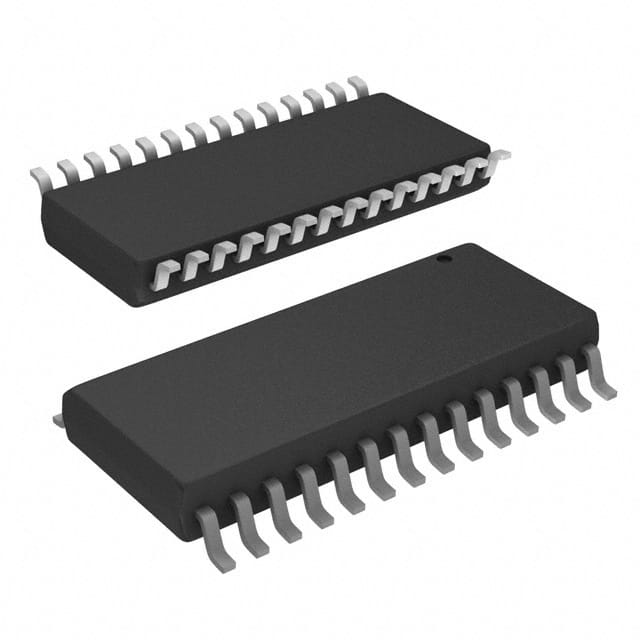
- Part No.:
- MAX3110EEWI
- Manufacturer:
- Analog Devices Inc./Maxim Integrated
- Category:
- Controllers
- Package:
- 28-SOIC (0.295", 7.50mm Width)
- Datasheet:
-
 MAX3110EEWI.pdf
- Description:
- IC TXRX RS232 SPI INT-CAP 28SOIC
- Quantity:
- Payment:

- Shipping:

Inventory:1,076
Please send an inquiry. Send us your inquiry, and we will respond immediately.
Product details
Overview
MAX3110EEWI from Maxim Integrated is a SPI/MICROWIRE-compatible UART with integrated ±15kV ESD-protected RS-232 transceiver, 2-driver/2-receiver interface, internal charge-pump capacitors, and crystal oscillator - all in a single 28-pin wide SO package. It operates from +4.5V to +5.5V, delivers true RS-232 output levels down to VCC = +4.5V, supports up to 230kbps data rate, and consumes only 600µA in active mode. It is used in space-constrained industrial front-panel interfaces requiring low-power serial communication.
For engineers reviewing the MAX3110EEWI datasheet, MAX3110EEWI pinout, MAX3110EEWI application, or MAX3110EEWI equivalent, key selection considerations include its dual-function integration (UART + RS-232), hardware/software shutdown capability (10µA), 8-word receive FIFO, SPI timing compatibility (CPOL=0, CPHA=0), and guaranteed operation across –40°C to +85°C.
Technical Context
The MAX3110EEWI integrates a full-duplex SPI/QSPI/MICROWIRE UART (16-bit frame, CPOL=0/CPHA=0) with an independent 2×RS-232 transceiver sharing only VCC and GND. Its UART includes a programmable baud-rate generator (300–230kbaud), 8-deep FIFO, and four-maskable interrupt sources (R, RA/FE, Pr, IRQ).
The RS-232 section uses proprietary low-dropout drivers enabling ±5.4V outputs at VCC = +4.5V, with ESD protection per IEC 1000-4-2 (±15kV air/contact). Hardware shutdown disables charge pumps while keeping receivers active; software shutdown halts the oscillator and clears FIFO/register states.
Key Specifications
| Parameter | Value and Actual Design Meaning |
|---|---|
| VCC Supply Range | +4.5V to +5.5V - ensures compatibility with standard 5V logic systems and stable RS-232 voltage generation |
| Max Data Rate | 230kbps - guarantees full EIA/TIA-232 compliance at high-speed diagnostic and POS port applications |
| ESD Protection | ±15kV IEC 1000-4-2 air/contact - eliminates need for external TVS diodes on R_IN/T_OUT pins |
| Active Supply Current | 600µA - enables battery-powered handheld equipment with multi-day runtime |
| Shutdown Current | 10µA with receiver interrupt active - allows external device wake-up monitoring without system power-down |
| Receiver Propagation Delay | 150ns (CL = 150pF) - supports deterministic timing in real-time industrial control loops |
| FIFO Depth | 8-word - reduces µC interrupt overhead by >75% compared to single-byte buffering |
Pinout & Package
MAX3110EEWI is housed in a 28-pin Wide SO (SOIC-W) package, 11.5mm × 7.6mm body, 1.27mm pitch, RoHS-compliant, with exposed pad option not specified.
| Pin/Terminal | Circuit Role | Design Meaning |
|---|---|---|
| 1, 2, 5, 6 | R2IN, R2OUT, R1OUT, R1IN | Dual RS-232 receiver input/output pairs - enable simultaneous connection to two legacy serial peripherals |
| 3, 4, 7, 28 | T2IN, T1IN, T1OUT, T2OUT | Dual RS-232 transmitter input/output pairs - support full-duplex bidirectional communication on two channels |
| 8, 27 | VCC, GND | Single 5V supply and ground - simplifies power design; no separate RS-232 or logic rail required |
| 10, 9 | X1, X2 | Crystal oscillator terminals - accept 1.8432MHz fundamental-mode crystal for precise baud-rate generation |
| 13–19, 20–26 | RX, TX, CS, SCLK, DIN, DOUT, IRQ, SHDN, C1+, C1-, C2+, C2-, V+, V- | SPI interface, interrupt, shutdown, and internal charge-pump nodes - all internally connected; no external caps needed |
Key Features
| Feature | Design Value |
|---|---|
| Integrated UART + RS-232 transceiver | Reduces BOM count by 12+ discrete components (drivers, level shifters, caps, crystal) and saves ≥250mm² PCB area |
| Internal charge-pump capacitors | Eliminates 4 external 1µF ceramic capacitors - removes placement sensitivity, layout tuning, and capacitor aging concerns |
| Hardware/software shutdown modes | Enables two-tier power management: 10µA monitoring mode (HW) and full oscillator/FIFO reset (SW) for secure idle states |
| 8-word receive FIFO | Allows burst reception of up to 8 bytes before µC service - prevents data loss at 115.2kbps with 100µs ISR latency |
| SPI interface (CPOL=0, CPHA=0) | Direct drop-in compatibility with ARM Cortex-M SPI peripherals and legacy 8051-based controllers without protocol translation |
Applications
| Point-of-Sale (POS) Terminals | Industrial Front-Panel Interfaces |
|---|---|
Use Scenario: Compact handheld credit card terminal with embedded thermal printer and barcode scanner. IC Role / Device Role / Timing Role: UART handles host-to-peripheral command/response traffic; RS-232 drives printer/scanner serial ports with ±15kV ESD robustness. Use Value: Single-chip solution meets UL 60950 creepage requirements and eliminates external level-shifting ICs in Class II isolated designs. |
Use Scenario: Programmable logic controller (PLC) HMI panel with local diagnostics port and configuration interface. IC Role / Device Role / Timing Role: Provides isolated RS-232 debug port and µC-to-display UART link using shared SPI bus. Use Value: 230kbps throughput enables firmware update over serial in <12 seconds (128KB image), reducing field service time. |
| Telecom Diagnostic Ports | Hand-Held Test Equipment |
Use Scenario: Field-deployable DSLAM line tester with battery backup and RS-232 console port. IC Role / Device Role / Timing Role: Acts as bridge between ARM application processor and legacy telecom management interface (VT100). Use Value: 10µA shutdown current extends 3.7V Li-ion battery life to >18 months in storage without maintenance charging. |
Use Scenario: Portable oscilloscope with PC sync via USB-to-RS-232 adapter and onboard µC logging. IC Role / Device Role / Timing Role: UART buffers acquisition data; RS-232 transceiver connects to external PC for waveform export. Use Value: Internal crystal eliminates clock source dependency - ensures ±0.5% baud accuracy across temperature without calibration. |
Equivalent & Alternatives
The following parts are listed as comparable options for similar UART + RS-232 transceiver applications.
| Alternative Part | Technical Difference | Application Difference | Selection Advice |
|---|---|---|---|
| MAX3222ECAE+ | 2-driver/2-receiver RS-232 only; no integrated UART or SPI interface - requires external µC UART resource | Used where existing MCU has UART peripheral but needs robust RS-232 physical layer | Select when board already implements UART logic and only physical layer upgrade is needed |
| SP3223ECA-L | 3.0V–5.5V supply; 250kbps max; no internal oscillator or FIFO - relies on external clock and software buffering | Targeted at cost-sensitive consumer devices with basic serial connectivity | Select when BOM cost is primary constraint and µC can handle FIFO management in firmware |
Compared with MAX3222ECAE+ and SP3223ECA-L, the MAX3110EEWI uniquely combines UART logic, RS-232 transceivers, crystal oscillator, and FIFO in one package - eliminating external timing components, reducing µC I/O usage, and enabling faster time-to-market for compact embedded serial gateways.
Availability
MAX3110EEWI is available at Aetrix Electronics and suitable for industrial front-panel interfaces, handheld test equipment, telecom diagnostic ports, and point-of-sale terminals requiring stable component supply across extended temperature ranges.
Supply support for MAX3110EEWI includes scheduled delivery planning, volume procurement assistance, BOM continuity management, traceable sourcing, and lifecycle availability coordination for OEM customers, industrial embedded developers, connected-device designers, and electronics production programs.
Manufacturer
Maxim Integrated (now part of Analog Devices) is a semiconductor company specializing in high-performance analog, mixed-signal, and power-management ICs for industrial, communications, and computing markets.
The MAX3110E series was designed to replace multi-chip UART + RS-232 solutions in space- and power-constrained embedded systems - targeting portable instrumentation, ruggedized HMI, and field-service equipment.
FAQ
What is the operating temperature range for MAX3110EEWI?
The MAX3110EEWI is rated for –40°C to +85°C ambient operation, as indicated by the "EE" suffix in the part number. This extended temperature grade ensures reliable UART and RS-232 functionality in industrial enclosures, outdoor kiosks, and automotive under-hood diagnostic tools where thermal cycling exceeds commercial-grade limits. The MAX3110EEWI maintains full 230kbps performance and ±15kV ESD protection across this entire range.
Does MAX3110EEWI require external capacitors for RS-232 voltage generation?
No, the MAX3110EEWI does not require external capacitors for RS-232 voltage generation. It integrates internal charge-pump capacitors (C1+, C1-, C2+, C2-) and generates ±5.4V RS-232 compliant outputs directly from a single +4.5V to +5.5V supply. This eliminates four 1µF external ceramic capacitors, reduces layout complexity, and improves long-term reliability by removing capacitor aging and microphonics concerns associated with discrete charge-pump networks.
How does the hardware shutdown mode affect UART functionality in MAX3110EEWI?
In hardware shutdown mode (SHDN = GND), the MAX3110EEWI disables the RS-232 charge pumps and transmitters while keeping the UART core, crystal oscillator, and receivers fully operational. This allows external RS-232 devices to assert R_IN signals and trigger IRQ interrupts at just 10µA total supply current - enabling wake-on-ring or remote command detection without waking the host µC. The UART remains ready to transmit immediately upon exit from shutdown.
What SPI timing modes are supported by MAX3110EEWI?
The MAX3110EEWI supports SPI mode 0 (CPOL = 0, CPHA = 0) exclusively - meaning data is sampled on the rising edge of SCLK and shifted out on the falling edge. It is also compatible with QSPI and MICROWIRE protocols under this same timing configuration. Attempting CPOL=1 or CPHA=1 will result in communication failure. All register reads/writes require strict 16-bit frames; partial transfers are aborted if CS goes high before bit 15.
Can MAX3110EEWI operate with a 3.3V supply?
No, the MAX3110EEWI is specified only for +4.5V to +5.5V operation. It is the +5V variant of the MAX3110E/MAX3111E family; the +3.3V counterpart is the MAX3111EEWI. Using 3.3V on MAX3110EEWI violates Absolute Maximum Ratings (VCC min = +4.5V) and will prevent proper RS-232 output voltage generation (±5.4V), leading to non-compliant signal levels and potential communication failure with standard RS-232 receivers.
MAX3110EEWI Specifications
- Product attributes
- Attribute value
- Manufacturer:
- Analog Devices Inc./Maxim Integrated
- Package/Case:
- 28-SOIC (0.295", 7.50mm Width)
- Programmable:
- Not Verified
- Protocol:
- RS232, RS485
- Function:
- Controller
- Interface:
- SPI, UART
- Standards:
- -
- Voltage - Supply:
- 4.5V ~ 5.5V
- Current - Supply:
- 600µA
- Operating Temperature:
- -40°C ~ 85°C
- Supplier Device Package:
- 28-SOIC
- Grade:
- -
- Qualification:
- -
MAX3110EEWI FAQ
1.How can I place an order for MAX3110EEWI through Aetrix?
Please submit a Request for Quotation (RFQ) for MAX3110EEWI on Aetrix. Our sales agent will provide a competitive quotation and guide you through the order confirmation once you accept the terms.
2.Are the price and stock information for MAX3110EEWI reliable?
The price and inventory of MAX3110EEWI are updated periodically and may fluctuate due to market conditions. Stock and pricing data are typically refreshed every 24 hours. Quotation validity for MAX3110EEWI is usually 5 days.
3.What payment methods are accepted for MAX3110EEWI?
We accept Wire Transfer, PayPal, Credit Card, Western Union, MoneyGram, and Escrow for MAX3110EEWI transactions.
Note: Certain payment methods may incur a processing fee.
4.How is shipping managed for MAX3110EEWI?
MAX3110EEWI orders can be shipped via leading logistics carriers, including DHL, UPS, FedEx, TNT, or Registered Mail.
Once your MAX3110EEWI order is processed, you will receive an email with the shipment details and tracking number.
Note: Tracking information may take up to 24 hours to appear. Express delivery typically takes 3–5 business days.
5.How can I obtain technical support or documentation for MAX3110EEWI?
For technical support, including MAX3110EEWI datasheets, pinout diagrams, or application guidance, please contact our engineering support team. They can provide detailed documentation and assistance for your MAX3110EEWI requirements.
6.How does Aetrix verify that MAX3110EEWI is sourced from the original manufacturer or authorized distributors?
All MAX3110EEWI products on Aetrix are procured from qualified distributors and authorized channels. Our dedicated quality assurance team conducts strict verification, including traceability checks and, if necessary, third-party testing. This ensures that MAX3110EEWI meets industry standards.
7.What is the process for return or replacement of MAX3110EEWI?
All MAX3110EEWI units undergo pre-shipment inspection (PSI). If there is an issue with MAX3110EEWI, returns or replacements are accepted under the following conditions:
1.Quantity discrepancies, incorrect items, or visible external defects (such as breakage or corrosion), acknowledged by Aetrix.
2.The issue is reported within 90 days of delivery.
3.The MAX3110EEWI part is unused and in its original packaging.
Return procedure for MAX3110EEWI:
1.Submit a request within 90 days.
2.Obtain a Return Material Authorization (RMA) from Aetrix.
MAX3110EEWI Tags
-
PTN5150AHXMP
NXP Semiconductors
-
USB3740B-AI9-TR
Microchip Technology
-
USB3740B-AI2-TR
Microchip Technology
-
USB3300-EZK-TR
Microchip Technology
-
USB3300-EZK
Microchip Technology
-
FUSB340TMX
onsemi
-
FUSB302BMPX
onsemi
-
DP83826IRHBR
Texas Instruments
-
MCP2518FDT-E/QBB
Microchip Technology
-
FUSB302MPX
onsemi
-
MCP2518FDT-E/SL
Microchip Technology
-
FT260Q-R
FTDI, Future Technology Devices International Ltd
Tech Hub

A practical engineering guide to 3.3V and 5V logic compatibility, input thresholds, resistor dividers, translator ICs, MOSFET level shifting, I2C pull-ups, timing limits and power-sequencing risks.

The 74HC595 uses push-pull logic outputs, while the TPIC6B595 uses 50 V open-drain DMOS sinks for higher-power loads. This guide compares timing, current limits, 3.3 V interfacing, load wiring, thermal…

The 74HC595 converts serial data into eight stable parallel outputs. This guide covers pin functions, shift and storage timing, OE and MR behavior, drive-current limits, cascading, voltage compatibilit…

A technical comparison of level-sensitive latches and edge-triggered flip-flops, covering timing windows, setup and hold limits, master–slave operation, time borrowing, race-through, HDL inference and…

A D latch stores one bit while Enable controls when data can pass. This reference covers gate-level operation, truth tables, transparency, setup and hold timing, LE versus OE, common ICs and practical …

An SR latch stores one bit through cross-coupled feedback. This engineering reference covers NOR and NAND implementations, truth tables, forbidden-state recovery, gated operation, switch debouncing, fa…

Latch circuits retain one bit through feedback. This technical reference covers SR and D latches, truth tables, transparency, timing limits, latch-versus-flip-flop behavior, applications and common log…

An engineering guide to LED driver operation, constant-current and constant-voltage outputs, linear and switching topologies, dimming, IC selection, calculations, replacement compatibility, and fault c…

Operational amplifier guide covering op amp basics, feedback, ideal vs real op amps, common configurations, buffer circuits, offset, bias current, gain-bandwidth, slew rate, rail-to-rail limits and sel…

Jumper cables guide covering safe connection order, red and black clamp placement, final ground connection, cable gauge, length, clamp quality, copper vs CCA cables, jump starter comparison and battery…


