
 My Inquiry
 My Account


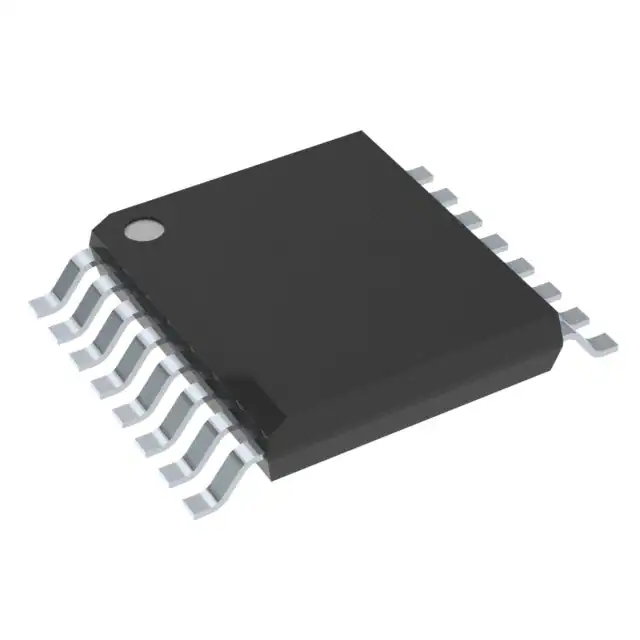
Texas Instruments MAX3232ECDBR
- Part No.:
- MAX3232ECDBR
- Manufacturer:
- Texas Instruments
- Category:
- Drivers, Receivers, Transceivers
- Package:
- 16-SSOP (0.209", 5.30mm Width)
- Datasheet:
-
 MAX3232ECDBR.pdf
- Description:
- IC TRANSCEIVER FULL 2/2 16SSOP
- Quantity:
- Payment:

- Shipping:

Inventory:3,614
Please send an inquiry. Send us your inquiry, and we will respond immediately.
Product details
Overview
MAX3232ECDBR from Texas Instruments is a 3-V to 5.5-V dual-channel RS-232 line driver and receiver IC with ±15-kV IEC 61000-4-2 ESD protection on bus pins, 250 kbit/s data rate capability, 300 μA typical supply current, and integrated dual charge-pump circuit enabling single-supply operation. It serves as the physical-layer interface between UART logic and RS-232 connectors in portable industrial terminals.
For engineers reviewing the MAX3232ECDBR datasheet, MAX3232ECDBR pinout, MAX3232ECDBR application, or MAX3232ECDBR equivalent, this page delivers verified electrical specifications, SSOP-16 package details, functional pin roles, real-world use cases, and validated alternative parts - all aligned to TI's SLLS664E production data sheet (June 2021 revision).
Technical Context
The MAX3232ECDBR implements a dual charge-pump architecture generating ±VCC-derived V+ and V− rails from a single 3-V to 5.5-V input, eliminating need for external ±12-V supplies. Its two drivers convert TTL/CMOS logic levels to true RS-232 voltage levels (±5.4 V), while its two receivers translate RS-232 inputs (±25 V) back to logic-compatible outputs with 1.5 V to 2.4 V input thresholds and 0.3 V hysteresis.
It operates across 0°C to 70°C ambient temperature, supports 3.3-V and 5-V logic compatibility (accepts 5-V DIN inputs at 3.3-V VCC), and features short-circuit protected outputs with ±60 mA driver output current capability. The device meets TIA/EIA-232-F and ITU V.28 standards and includes internal 3–7 kΩ receiver termination.
Key Specifications
| Parameter | Value and Actual Design Meaning |
|---|---|
| Supply Voltage Range | 3.0 V to 5.5 V - Enables direct integration into 3.3-V or 5-V systems without level-shifting or auxiliary supplies. |
| Data Rate | Up to 250 kbit/s - Supports standard serial communication speeds including 115.2 kbit/s and 230.4 kbit/s UART links. |
| ESD Protection | ±15 kV IEC 61000-4-2 air-gap, ±8 kV contact - Protects RS-232 port pins against real-world electrostatic discharge events. |
| Supply Current | 300 μA typical - Minimizes power draw in battery-powered handheld and portable equipment. |
| Driver Output Voltage | ±5.4 V min - Meets RS-232-F minimum swing requirement (±5 V) with margin for cable loss and noise immunity. |
| Receiver Input Threshold | VIT+ = 1.5–2.4 V, VIT− = 0.6–1.5 V - Ensures robust logic-level detection across supply voltages and temperature. |
| Capacitor Requirement | 4 × 0.1 μF (at 3.3 V) - Enables compact, low-BOM-cost implementation using standard ceramic capacitors. |
Pinout & Package
MAX3232ECDBR uses a 16-pin SSOP (Shrink Small Outline Package) with 0.65-mm pitch, 6.20 mm × 5.30 mm body size, and exposed pad not present. This surface-mount package supports automated assembly and offers improved thermal performance over SOIC-D in space-constrained designs.
| Pin/Terminal | Circuit Role | Design Meaning |
|---|---|---|
| C1+, C1−, C2+, C2− | Charge-pump capacitor connections | Interface external 0.1-μF capacitors to generate ±VCC-derived V+ and V− rails for RS-232 level translation. |
| V+, V− | Charge-pump output nodes | Provide internally regulated positive and negative supply rails; not intended for external load connection. |
| DIN1, DIN2 | Logic-level inputs | Accept CMOS/TTL signals from UART TX lines; compatible with 5-V logic even when VCC = 3.3 V. |
| ROUT1, ROUT2 | Logic-level outputs | Drive UART RX inputs with rail-to-rail CMOS outputs (VOL ≤ 0.4 V, VOH ≥ VCC − 0.6 V). |
| RIN1, RIN2 | RS-232 line inputs | Accept ±25 V RS-232 signals; include internal 5-kΩ termination and ±15-kV ESD protection diodes. |
| DOUT1, DOUT2 | RS-232 line outputs | Deliver ±5.4 V RS-232 signals with controlled slew rate (4–30 V/μs); short-circuit protected up to ±60 mA. |
| VCC, GND | Power supply terminals | Single 3-V to 5.5-V input; requires 1-μF bypass capacitor between VCC and GND per IEC ESD compliance. |
Key Features
| Feature | Design Value |
|---|---|
| Dual RS-232 channel integration | Two independent driver/receiver pairs enable full-duplex UART-to-RS232 conversion in one 16-pin SSOP package. |
| Single-supply charge-pump operation | Eliminates need for ±12-V supplies; reduces system BOM count and PCB area versus legacy RS-232 transceivers. |
| IEC 61000-4-2 certified ESD protection | ±8 kV contact / ±15 kV air-gap rating on RIN/DOUT pins ensures field reliability without external TVS diodes. |
| Wide logic-voltage compatibility | Accepts 5-V DIN inputs at 3.3-V VCC - simplifies interface to mixed-voltage systems without external level shifters. |
| Low-power active mode | 300 μA typical ICC enables >1-year battery life in always-on serial diagnostic ports of portable instrumentation. |
Applications
| Industrial Handheld Terminals | Medical Point-of-Care Devices |
|---|---|
Use Scenario: Serial communication between ARM-based controller and legacy RS-232 barcode scanner or printer in battery-operated field terminals. IC Role / Device Role / Timing Role: Physical-layer transceiver converting 3.3-V UART signals to ±5.4-V RS-232 levels with ESD-hardened port interface. Use Value: Enables direct UART-to-RS232 link with no external power rails or discrete protection components, reducing bill-of-materials by 7 parts per channel. |
Use Scenario: Connecting embedded microcontroller to RS-232-enabled patient monitor or lab analyzer in clinical environments. IC Role / Device Role / Timing Role: Isolates sensitive digital logic from noisy RS-232 cabling while meeting IEC 60601-1 ESD immunity requirements. Use Value: Delivers ±15-kV air-gap ESD protection and 250 kbit/s throughput required for real-time vital-sign data streaming without signal integrity degradation. |
| Programmable Logic Controller (PLC) HMI Panels | Test & Measurement Equipment |
Use Scenario: RS-232 debug port on industrial HMI panel operating from 24-V DC supply with local 3.3-V LDO. IC Role / Device Role / Timing Role: Level translator and ESD protector for maintenance/debug interface, supporting hot-plug cable insertion. Use Value: Survives repeated ±8-kV contact ESD events during field service while maintaining 250-kbit/s firmware upload speed. |
Use Scenario: Serial configuration and data logging interface in benchtop oscilloscopes and spectrum analyzers. IC Role / Device Role / Timing Role: Robust physical interface handling long RS-232 cables (up to 15 m) with controlled driver slew rate to minimize reflections. Use Value: 30-V/μs max slew rate prevents signal overshoot on unterminated lines, ensuring reliable command execution and waveform data transfer. |
Equivalent & Alternatives
The following parts are listed as comparable options for similar RS-232 transceiver applications.
| Alternative Part | Technical Difference | Application Difference | Selection Advice |
|---|---|---|---|
| SN65C3232E | Same pinout, identical electrical specs, but rated for –40°C to +85°C industrial temperature range. | Suitable for extended-temperature deployments such as outdoor kiosks or automotive test gear. | Select SN65C3232E when operating ambient exceeds 70°C or wide-temp qualification is required. |
| MAX3232CDR | SOIC-16 package (9.9 mm × 3.91 mm), same electrical performance, 0°C to 70°C rating, NIPDAU lead finish. | Better suited for through-hole prototyping or legacy board designs with SOIC footprints. | Choose MAX3232CDR for manual assembly, rework-friendly layouts, or compatibility with existing SOIC-16 land patterns. |
Compared with MAX3232ECDBR, SN65C3232E extends temperature range without altering pinout or drive strength, while MAX3232CDR retains identical functionality in a larger, more serviceable SOIC package - both offer drop-in replacement paths where thermal or mechanical constraints permit.
Availability
MAX3232ECDBR is available at Aetrix Electronics and suitable for industrial handheld terminals, medical point-of-care devices, and programmable logic controller (PLC) HMI panels requiring stable component supply, long-term lifecycle support, and RoHS-compliant sourcing.
Supply support for MAX3232ECDBR includes scheduled delivery planning, volume procurement assistance, BOM continuity management, traceable sourcing, and lifecycle availability coordination for OEM customers, industrial embedded developers, connected-device designers, and electronics production programs.
Manufacturer
Texas Instruments is a global semiconductor company headquartered in Dallas, Texas, delivering analog and embedded processing solutions for industrial, automotive, and personal electronics markets since 1930.
The MAX3232E product line was designed specifically for cost-sensitive, space-constrained RS-232 interface applications requiring single-supply operation, high ESD immunity, and compatibility with modern 3.3-V logic systems.
FAQ
What is the operating temperature range of the MAX3232ECDBR?
The MAX3232ECDBR is specified for 0°C to +70°C ambient operating temperature. This commercial-grade rating aligns with its "C" suffix designation and is validated per TI's SLLS664E datasheet Section 6.4. It is not rated for extended industrial temperatures (–40°C to +85°C); for that range, consider the MAX3232ECDBRG4.A or SN65C3232E alternatives. Thermal derating is not required within this range under recommended operating conditions.
Does the MAX3232ECDBR require external capacitors, and what values are needed?
Yes, the MAX3232ECDBR requires four external 0.1-μF ceramic capacitors (C1+, C1−, C2+, C2−) when operated at 3.3 V ± 0.3 V, as specified in Table 9-1 of the TI datasheet. At 5 V ± 0.5 V, it requires a 0.047-μF C1 and three 0.33-μF capacitors. A 1-μF bypass capacitor between VCC and GND is mandatory for IEC 61000-4-2 ESD compliance in the DB package.
Is the MAX3232ECDBR pin-compatible with older MAX3232 variants?
Yes, the MAX3232ECDBR is pin-compatible with other MAX3232E variants in the same SSOP-16 (DB) package, including MAX3232ECDBRG4.A and MAX3232EIDBR. Pin functions, spacing, and thermal pad configuration (none) match exactly. However, it is not pin-compatible with SOIC (D) or TSSOP (PW) package variants due to differing footprint dimensions and pad layouts.
What RS-232 standards does the MAX3232ECDBR comply with?
The MAX3232ECDBR meets or exceeds TIA/EIA-232-F and ITU V.28 standards, as explicitly stated in TI's official documentation. It delivers ±5.4 V driver output swing, supports 250 kbit/s data rates, and provides receiver input thresholds and hysteresis compliant with these specifications. Compliance is verified across the full 0°C to +70°C operating range and 3-V to 5.5-V supply range.
Can the MAX3232ECDBR operate with a 3.3-V supply while interfacing with 5-V logic inputs?
Yes, the MAX3232ECDBR accepts 5-V logic-level inputs on DIN1 and DIN2 pins even when powered from a 3.3-V VCC supply. This is confirmed in Section 6.4 of the datasheet, which specifies VIH(DIN) = 2.0 V (min) at VCC = 3.3 V, with absolute maximum input voltage of 6 V. This feature eliminates the need for external level shifters in mixed-voltage UART interfaces.
MAX3232ECDBR Specifications
- Product attributes
- Attribute value
- Manufacturer:
- Texas Instruments
- Series:
- -
- Package/Case:
- 16-SSOP (0.209", 5.30mm Width)
- Packaging:
- Tape & Reel (TR)
- Product Status:
- Active
- Type:
- Transceiver
- Protocol:
- RS232
- Number of Drivers/Receivers:
- 2/2
- Duplex:
- Full
- Receiver Hysteresis:
- 300 mV
- Data Rate:
- 250kbps
- Voltage - Supply:
- 3V ~ 5.5V
- Operating Temperature:
- 0°C ~ 70°C
- Grade:
- -
- Qualification:
- -
- Mounting Type:
- Surface Mount
- Supplier Device Package:
- 16-SSOP
MAX3232ECDBR FAQ
1.How can I place an order for MAX3232ECDBR through Aetrix?
Please submit a Request for Quotation (RFQ) for MAX3232ECDBR on Aetrix. Our sales agent will provide a competitive quotation and guide you through the order confirmation once you accept the terms.
2.Are the price and stock information for MAX3232ECDBR reliable?
The price and inventory of MAX3232ECDBR are updated periodically and may fluctuate due to market conditions. Stock and pricing data are typically refreshed every 24 hours. Quotation validity for MAX3232ECDBR is usually 5 days.
3.What payment methods are accepted for MAX3232ECDBR?
We accept Wire Transfer, PayPal, Credit Card, Western Union, MoneyGram, and Escrow for MAX3232ECDBR transactions.
Note: Certain payment methods may incur a processing fee.
4.How is shipping managed for MAX3232ECDBR?
MAX3232ECDBR orders can be shipped via leading logistics carriers, including DHL, UPS, FedEx, TNT, or Registered Mail.
Once your MAX3232ECDBR order is processed, you will receive an email with the shipment details and tracking number.
Note: Tracking information may take up to 24 hours to appear. Express delivery typically takes 3–5 business days.
5.How can I obtain technical support or documentation for MAX3232ECDBR?
For technical support, including MAX3232ECDBR datasheets, pinout diagrams, or application guidance, please contact our engineering support team. They can provide detailed documentation and assistance for your MAX3232ECDBR requirements.
6.How does Aetrix verify that MAX3232ECDBR is sourced from the original manufacturer or authorized distributors?
All MAX3232ECDBR products on Aetrix are procured from qualified distributors and authorized channels. Our dedicated quality assurance team conducts strict verification, including traceability checks and, if necessary, third-party testing. This ensures that MAX3232ECDBR meets industry standards.
7.What is the process for return or replacement of MAX3232ECDBR?
All MAX3232ECDBR units undergo pre-shipment inspection (PSI). If there is an issue with MAX3232ECDBR, returns or replacements are accepted under the following conditions:
1.Quantity discrepancies, incorrect items, or visible external defects (such as breakage or corrosion), acknowledged by Aetrix.
2.The issue is reported within 90 days of delivery.
3.The MAX3232ECDBR part is unused and in its original packaging.
Return procedure for MAX3232ECDBR:
1.Submit a request within 90 days.
2.Obtain a Return Material Authorization (RMA) from Aetrix.
MAX3232ECDBR Tags

-
ATA6561-GAQW-N
Microchip Technology
-
ATA6561-GBQW-N
Microchip Technology
-
AM26LS32ACDR
Texas Instruments

-
SP485CN-L/TR
MaxLinear, Inc.
-
SP485EN-L/TR
MaxLinear, Inc.
-
SP485EEN-L/TR
MaxLinear, Inc.
-
SP485ECN-L/TR
MaxLinear, Inc.
-
THVD1400DR
Texas Instruments
-
AM26C31IDR
Texas Instruments

-
TLIN1021ADRQ1
Texas Instruments
-
MAX232IDR
Texas Instruments
-
AM26C32IDR
Texas Instruments
Tech Hub

A practical engineering guide to 3.3V and 5V logic compatibility, input thresholds, resistor dividers, translator ICs, MOSFET level shifting, I2C pull-ups, timing limits and power-sequencing risks.

The 74HC595 uses push-pull logic outputs, while the TPIC6B595 uses 50 V open-drain DMOS sinks for higher-power loads. This guide compares timing, current limits, 3.3 V interfacing, load wiring, thermal…

The 74HC595 converts serial data into eight stable parallel outputs. This guide covers pin functions, shift and storage timing, OE and MR behavior, drive-current limits, cascading, voltage compatibilit…

A technical comparison of level-sensitive latches and edge-triggered flip-flops, covering timing windows, setup and hold limits, master–slave operation, time borrowing, race-through, HDL inference and…

A D latch stores one bit while Enable controls when data can pass. This reference covers gate-level operation, truth tables, transparency, setup and hold timing, LE versus OE, common ICs and practical …

An SR latch stores one bit through cross-coupled feedback. This engineering reference covers NOR and NAND implementations, truth tables, forbidden-state recovery, gated operation, switch debouncing, fa…

Latch circuits retain one bit through feedback. This technical reference covers SR and D latches, truth tables, transparency, timing limits, latch-versus-flip-flop behavior, applications and common log…

An engineering guide to LED driver operation, constant-current and constant-voltage outputs, linear and switching topologies, dimming, IC selection, calculations, replacement compatibility, and fault c…

Operational amplifier guide covering op amp basics, feedback, ideal vs real op amps, common configurations, buffer circuits, offset, bias current, gain-bandwidth, slew rate, rail-to-rail limits and sel…

Jumper cables guide covering safe connection order, red and black clamp placement, final ground connection, cable gauge, length, clamp quality, copper vs CCA cables, jump starter comparison and battery…


