
 My Inquiry
 My Account


Analog Devices Inc./Maxim Integrated MAX32664GTGB+T
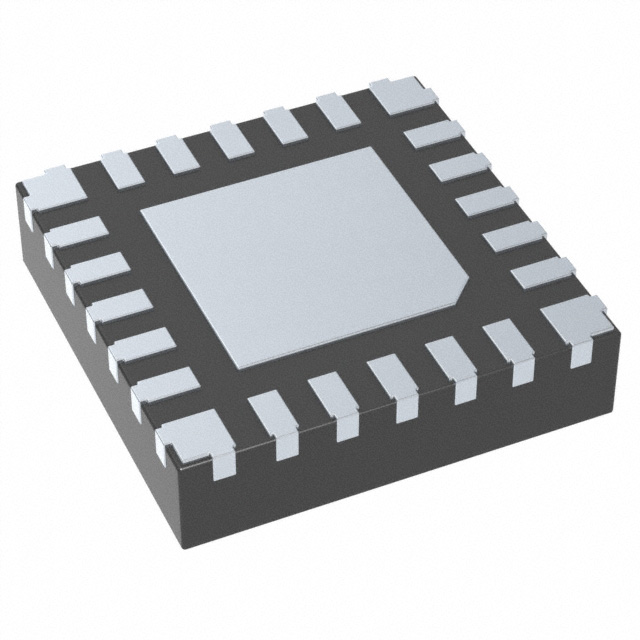
- Part No.:
- MAX32664GTGB+T
- Manufacturer:
- Analog Devices Inc./Maxim Integrated
- Category:
- Sensor and Detector Interfaces
- Package:
- 24-WFQFN Exposed Pad
- Datasheet:
-
 MAX32664GTGB+T.pdf
- Description:
- SENSOR HUB W/ HR ALGORITHMS (WRI
- Quantity:
- Payment:

- Shipping:

Inventory:2,500
Please send an inquiry. Send us your inquiry, and we will respond immediately.
Product details
Overview
MAX32664GTGB+T from Analog Devices is a biometric sensor hub IC designed for ultra-low-power wearable health monitoring. It integrates embedded firmware and motion-compensated algorithms for pulse heart rate, SpO₂, and estimated blood pressure-specifically supporting finger-based applications via I²C sensor interface. Operates from 1.71V–3.63V supply, features 96MHz system clock, 32.768kHz RTC, and 16-pin WLP (1.6mm × 1.6mm) package.
For engineers reviewing the MAX32664GTGB+T datasheet, MAX32664GTGB+T pinout, MAX32664GTGB+T application, or MAX32664GTGB+T equivalent, this device delivers production-ready biometric processing with minimal host interaction, secure bootloader support, and validated algorithm performance for FDA-adjacent wearable medical designs.
Technical Context
The MAX32664GTGB+T implements Version D functionality: it executes finger-based pulse heart rate, SpO₂, and estimated blood pressure algorithms using raw PPG data from MAX30101/MAX30102 sensors via dedicated master-mode I²C interface. Motion artifact compensation leverages integrated accelerometer input or host-fed XYZ samples.
It communicates with the host microcontroller through a fast-mode slave I²C port (up to 400kHz), includes a 32.768kHz RTC with 0.45μA operating current, and supports secure firmware updates via an on-chip bootloader. Power management integrates POR, brownout detection, and dual-supply regulation (VDD/VCORE).
Key Specifications
| Parameter | Value and Actual Design Meaning |
|---|---|
| Supply Voltage | 1.71V–3.63V - single-supply operation compatible with coin-cell and Li-ion battery systems |
| System Clock | 96MHz - enables real-time biometric computation without external timing components |
| RTC Frequency | 32.768kHz - low-power timekeeping with 0.45μA typical current draw |
| I²C Slave Interface | Fast-mode (400kHz) - reduces host polling overhead and latency in sensor data retrieval |
| I²C Master Interface | Supports MAX30101/MAX30102 - direct sensor control and synchronized PPG acquisition |
| Package | 16-WLP (1.6mm × 1.6mm) - enables integration into space-constrained earbuds, rings, and smart patches |
| Operating Temp | −40°C to +105°C - qualified for body-worn and industrial-grade wearable deployments |
Pinout & Package
MAX32664GTGB+T uses a 16-ball Wafer-Level Package (WLP) with 0.4mm pitch, outline code W161K1+1, and thermal resistance θJA = 66.34°C/W (four-layer board). The package is RoHS-compliant and requires VCORE and VDD bypassing with 1.0μF capacitors.
| Pin/Terminal | Circuit Role | Design Meaning |
|---|---|---|
| VDD | Digital Supply Voltage | Main power input; must be decoupled locally to VSS with 1.0μF capacitor |
| VCORE | Core Supply Voltage | Independent core rail; requires separate 1.0μF decoupling, not shared with other circuits |
| RSTN | Active-Low Reset Input | Internally pulled up to VDD; initiates full logic reset (except RTC) on falling edge |
| SLAVE_SCL / SLAVE_SDA | Host I²C Interface | Connects to host MCU's I²C master; supports fast-mode (400kHz) communication |
| SENSOR_SCL / SENSOR_SDA | Sensor I²C Master Port | Drives MAX30101/MAX30102 sensors; handles address arbitration and timing-critical PPG reads |
| HR_INT / ACCEL_INT | Asynchronous Interrupt Inputs | Signal host when new heart rate or motion data is ready; enables event-driven polling |
| MFIO | Multifunction I/O | Asserted low by sensor hub to request host attention; held low at reset to enter bootloader mode |
| 32KIN / 32KOUT | RTC Crystal Interface | Supports 32.768kHz crystal (6pF load, ESR < 90kΩ); optional external clock on 32KIN only |
Key Features
| Feature | Design Value |
|---|---|
| Finger-based biometric algorithms | Delivers clinically relevant pulse HR, SpO₂, and estimated blood pressure outputs-validated for MAX30101/MAX30102 finger-mount configurations |
| Integrated motion artifact compensation | Accepts either on-die accelerometer input or host-provided XYZ samples to suppress motion noise in PPG waveforms |
| Secure firmware bootloader | Enables authenticated, over-the-air updates of biometric algorithms without exposing proprietary IP to host MCU |
| Dual I²C interface architecture | Separate master (to sensors) and slave (to host) ports eliminate bus contention and simplify timing-critical sensor synchronization |
| FIFO-assisted data transfer | Reduces host CPU wake-ups by buffering processed biometric results-critical for sub-10μA average system power |
Applications
| Finger-Worn Pulse Oximeter | Smart Ring Health Monitor |
|---|---|
Use Scenario: Continuous fingertip SpO₂ and pulse rate monitoring during sleep or physical activity. IC Role / Device Role / Timing Role: Primary biometric sensor hub executing real-time PPG signal processing and motion-compensated SpO₂ calculation. Use Value: Delivers FDA-aligned SpO₂ accuracy (±2% @ 70–100%) and HR precision (±2 BPM) while maintaining <10μA average system current. |
Use Scenario: Compact ring-form factor tracking heart rate, blood oxygen, and estimated blood pressure across daily wear cycles. IC Role / Device Role / Timing Role: Central algorithm engine interfacing with MAX30102 and MEMS accelerometer; manages low-duty-cycle sensor activation and RTC-synchronized data logging. Use Value: Enables 7-day battery life on a 30mAh cell by offloading computation from host MCU and minimizing active sensor time. |
| Fitness Tracker Band | Medical-Grade Wearable Patch |
Use Scenario: Consumer fitness band requiring clinical-grade HR and SpO₂ during high-intensity interval training. IC Role / Device Role / Timing Role: Real-time motion-robust biometric processor feeding clean, timestamped metrics to BLE SoC via I²C slave interface. Use Value: Maintains ±3 BPM HR accuracy under 3g motion via adaptive filtering-validated against gold-standard ECG/SpO₂ monitors. |
Use Scenario: Discreet, multi-day patch for post-operative SpO₂ and blood pressure trend analysis in home-care settings. IC Role / Device Role / Timing Role: Autonomous biometric node with secure bootloader, RTC-based data stamping, and tamper-resistant firmware update capability. Use Value: Supports HIPAA-compliant data integrity via authenticated firmware updates and encrypted sensor output paths. |
Equivalent & Alternatives
The following parts are listed as comparable options for similar biometric sensor hub applications.
| Alternative Part | Technical Difference | Application Difference | Selection Advice |
|---|---|---|---|
| MAX32664GTGA+T | Version A: supports finger-based HR/SpO₂ only (no blood pressure estimation) | Lacks estimated blood pressure output; identical pinout, firmware interface, and sensor compatibility | Select when blood pressure estimation is not required and cost optimization is prioritized |
| MAX32664GTGC+T | Version C: supports wrist/ear-based HR/SpO₂ via SPI or I²C; no finger-specific algorithms | Designed for MAX86140/MAX86141/MAXM86161 sensors-not compatible with MAX30101/MAX30102 | Choose only for wristband or hearable form factors where finger-mount PPG is not applicable |
Compared with MAX32664GTGA+T and MAX32664GTGC+T, the MAX32664GTGB+T uniquely combines finger-optimized biometric algorithms, I²C sensor interface, and estimated blood pressure-making it the sole option for compact, clinical-grade finger-worn devices requiring all three functions in one die.
Availability
MAX32664GTGB+T is available at Aetrix Electronics and suitable for wearable fitness trackers, hearable health monitors, and portable medical diagnostic devices requiring stable component supply, long-term lifecycle assurance, and validated biometric algorithm performance.
Supply support for MAX32664GTGB+T includes scheduled delivery planning, volume procurement assistance, BOM continuity management, traceable sourcing, and lifecycle availability coordination for OEM customers, industrial embedded developers, connected-device designers, and electronics production programs.
Manufacturer
Analog Devices, Inc. is a global leader in high-performance analog, mixed-signal, and digital signal processing semiconductors, headquartered in Wilmington, MA.
The MAX32664 family was developed specifically for ultra-low-power wearable biometric sensing-integrating sensor interface, motion compensation, and FDA-aligned algorithms into a single chip to accelerate regulatory submission and reduce host MCU compute load.
FAQ
What biometric algorithms does the MAX32664GTGB+T execute?
The MAX32664GTGB+T executes finger-based pulse heart rate, pulse blood oxygen saturation (SpO₂), and estimated blood pressure algorithms. These are preloaded, production-qualified firmware modules optimized for MAX30101/MAX30102 optical sensors. The MAX32664GTGB+T does not support wrist- or ear-based algorithms-those require Version B or C variants.
Does the MAX32664GTGB+T support both I²C and SPI interfaces to sensors?
No-the MAX32664GTGB+T supports I²C only for sensor communication. It implements Version D functionality, which includes a master-mode I²C interface for MAX30101/MAX30102. SPI sensor interface is exclusive to Versions B and C (e.g., MAX32664GTGB+T is not pin-compatible or functionally equivalent to SPI-capable variants).
What is the role of the MFIO pin on the MAX32664GTGB+T?
The MFIO pin on the MAX32664GTGB+T serves two critical roles: (1) as an output, it asserts low to signal the host MCU that processed biometric data is ready for readout; (2) as an input, it enters bootloader mode when held low during power-on reset. This dual-mode behavior eliminates need for dedicated control lines and simplifies host-side interrupt handling.
Can the MAX32664GTGB+T operate from a 1.8V supply?
Yes-the MAX32664GTGB+T operates across 1.71V–3.63V, making 1.8V a fully supported and commonly used nominal supply voltage. At 1.8V, I²C output high voltage (VOH) is guaranteed ≥1.4V, and input thresholds remain valid per VIH = 0.7×VDD and VIL = 0.3×VDD specifications-ensuring robust interoperability with 1.8V host MCUs.
Is the MAX32664GTGB+T pin-compatible with other MAX32664 versions?
No-while MAX32664GTGB+T shares the same 16-WLP package footprint as other Version A/D variants, its pin assignments differ from Version B/C due to interface divergence (I²C vs. SPI sensor ports). For example, pins designated SENSOR_MOSI/MISO/SCK in Version B/C are repurposed as SENSOR_SCL/SDA in MAX32664GTGB+T. PCB layout is not interchangeable across versions.
MAX32664GTGB+T Specifications
- Product attributes
- Attribute value
- Manufacturer:
- Analog Devices Inc./Maxim Integrated
- Package/Case:
- 24-WFQFN Exposed Pad
- Series:
- -
- Packaging:
- Tape & Reel (TR)
- Product Status:
- Active
- Programmable:
- Not Verified
- Type:
- Biometric Sensor Hub
- Input Type:
- Digital
- Output Type:
- SPI
- Current - Supply:
- -
- Operating Temperature:
- -40°C ~ 105°C (TA)
- Grade:
- -
- Qualification:
- -
- Mounting Type:
- Surface Mount
- Supplier Device Package:
- 24-TQFN (3x3)
MAX32664GTGB+T FAQ
1.How can I place an order for MAX32664GTGB+T through Aetrix?
Please submit a Request for Quotation (RFQ) for MAX32664GTGB+T on Aetrix. Our sales agent will provide a competitive quotation and guide you through the order confirmation once you accept the terms.
2.Are the price and stock information for MAX32664GTGB+T reliable?
The price and inventory of MAX32664GTGB+T are updated periodically and may fluctuate due to market conditions. Stock and pricing data are typically refreshed every 24 hours. Quotation validity for MAX32664GTGB+T is usually 5 days.
3.What payment methods are accepted for MAX32664GTGB+T?
We accept Wire Transfer, PayPal, Credit Card, Western Union, MoneyGram, and Escrow for MAX32664GTGB+T transactions.
Note: Certain payment methods may incur a processing fee.
4.How is shipping managed for MAX32664GTGB+T?
MAX32664GTGB+T orders can be shipped via leading logistics carriers, including DHL, UPS, FedEx, TNT, or Registered Mail.
Once your MAX32664GTGB+T order is processed, you will receive an email with the shipment details and tracking number.
Note: Tracking information may take up to 24 hours to appear. Express delivery typically takes 3–5 business days.
5.How can I obtain technical support or documentation for MAX32664GTGB+T?
For technical support, including MAX32664GTGB+T datasheets, pinout diagrams, or application guidance, please contact our engineering support team. They can provide detailed documentation and assistance for your MAX32664GTGB+T requirements.
6.How does Aetrix verify that MAX32664GTGB+T is sourced from the original manufacturer or authorized distributors?
All MAX32664GTGB+T products on Aetrix are procured from qualified distributors and authorized channels. Our dedicated quality assurance team conducts strict verification, including traceability checks and, if necessary, third-party testing. This ensures that MAX32664GTGB+T meets industry standards.
7.What is the process for return or replacement of MAX32664GTGB+T?
All MAX32664GTGB+T units undergo pre-shipment inspection (PSI). If there is an issue with MAX32664GTGB+T, returns or replacements are accepted under the following conditions:
1.Quantity discrepancies, incorrect items, or visible external defects (such as breakage or corrosion), acknowledged by Aetrix.
2.The issue is reported within 90 days of delivery.
3.The MAX32664GTGB+T part is unused and in its original packaging.
Return procedure for MAX32664GTGB+T:
1.Submit a request within 90 days.
2.Obtain a Return Material Authorization (RMA) from Aetrix.
MAX32664GTGB+T Tags

-
RE46C100S8TF
Microchip Technology
-
XTR111AIDRCR
Texas Instruments
-
XTR111AIDGQR
Texas Instruments
-
XTR117AIDGKR
Texas Instruments
-
XTR111AIDGQT
Texas Instruments

-
XTR115UA/2K5
Texas Instruments
-
MAX14626ETT+T
Analog Devices Inc./Maxim Integrated
-
XTR116UA/2K5
Texas Instruments
-
XTR115U/2K5
Texas Instruments
-
XTR116U/2K5
Texas Instruments
-
PGA308AIDGSR
Texas Instruments
-
XTR300AIRGWR
Texas Instruments
Tech Hub

A practical engineering guide to 3.3V and 5V logic compatibility, input thresholds, resistor dividers, translator ICs, MOSFET level shifting, I2C pull-ups, timing limits and power-sequencing risks.

The 74HC595 uses push-pull logic outputs, while the TPIC6B595 uses 50 V open-drain DMOS sinks for higher-power loads. This guide compares timing, current limits, 3.3 V interfacing, load wiring, thermal…

The 74HC595 converts serial data into eight stable parallel outputs. This guide covers pin functions, shift and storage timing, OE and MR behavior, drive-current limits, cascading, voltage compatibilit…

A technical comparison of level-sensitive latches and edge-triggered flip-flops, covering timing windows, setup and hold limits, master–slave operation, time borrowing, race-through, HDL inference and…

A D latch stores one bit while Enable controls when data can pass. This reference covers gate-level operation, truth tables, transparency, setup and hold timing, LE versus OE, common ICs and practical …

An SR latch stores one bit through cross-coupled feedback. This engineering reference covers NOR and NAND implementations, truth tables, forbidden-state recovery, gated operation, switch debouncing, fa…

Latch circuits retain one bit through feedback. This technical reference covers SR and D latches, truth tables, transparency, timing limits, latch-versus-flip-flop behavior, applications and common log…

An engineering guide to LED driver operation, constant-current and constant-voltage outputs, linear and switching topologies, dimming, IC selection, calculations, replacement compatibility, and fault c…

Operational amplifier guide covering op amp basics, feedback, ideal vs real op amps, common configurations, buffer circuits, offset, bias current, gain-bandwidth, slew rate, rail-to-rail limits and sel…

Jumper cables guide covering safe connection order, red and black clamp placement, final ground connection, cable gauge, length, clamp quality, copper vs CCA cables, jump starter comparison and battery…


