
 My Inquiry
 My Account


Analog Devices Inc./Maxim Integrated MAX3272AEGP-T
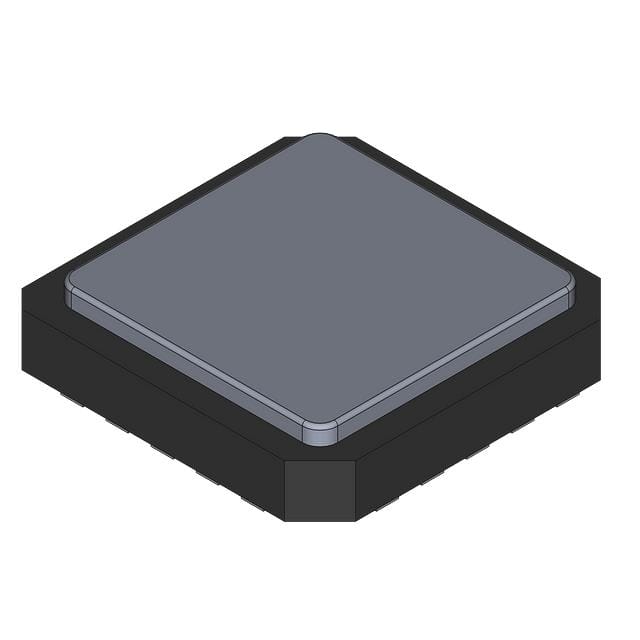
- Part No.:
- MAX3272AEGP-T
- Manufacturer:
- Analog Devices Inc./Maxim Integrated
- Category:
- Special Purpose Amplifiers
- Package:
- 20-VFQFN Exposed Pad
- Datasheet:
-
 MAX3272AEGP-T.pdf
- Description:
- LOW-POWER LIMITING AMPLIFIER
- Quantity:
- Payment:

- Shipping:

Inventory:14,979
Please send an inquiry. Send us your inquiry, and we will respond immediately.
Product details
Overview
MAX3272AEGP-T from Maxim Integrated is a +3.3V, 2.5Gbps current-mode logic (CML) limiting amplifier designed for optical receiver front-ends. It provides constant-level output voltage with 90ps edge speed, 5ps deterministic jitter, and programmable loss-of-signal (LOS) detection. Used in Fibre Channel and Gigabit Ethernet receivers, it interfaces directly with transimpedance amplifiers and drives CML-compatible clock/data recovery (CDR) ICs.
For engineers reviewing the MAX3272AEGP-T datasheet, MAX3272AEGP-T pinout, MAX3272AEGP-T application, or MAX3272AEGP-T equivalent, key selection criteria include its 20-pin QFN package, 33mA supply current, CML output tolerance to inductive connectors, and ESD-protected LOS pins-critical for robust optical link monitoring in industrial and telecom systems.
Technical Context
The MAX3272AEGP-T implements a high-gain (~42dB), wide-bandwidth SiGe bipolar limiting amplifier with integrated power detection and offset-correction loop. Its input stage presents 100Ω differential impedance and accepts 15–1200mVP-P differential signals, while the CML output stage delivers 550–1200mVP-P into 50Ω loads with selectable current (16mA/20mA) via the LEVEL pin.
It features dual LOS outputs (LOS/LOS) with 3.3dB hysteresis, programmable assert/deassert thresholds via external RTH, and configurable squelch activation via TTL-level SQUELCH input. The offset-correction loop uses external CAZ1/CAZ2 capacitors (typically 0.1µF) to set low-frequency cutoff at ~2kHz, ensuring stability against NRZ duty-cycle distortion.
Key Specifications
| Parameter | Value and Actual Design Meaning |
|---|---|
| Supply Voltage | +3.0V to +3.6V - ensures compatibility with standard 3.3V LDOs and noise margin against rail droop |
| Supply Current | 33mA typical - enables low-power optical modules with thermal budget under 110mW at +85°C |
| Data Rate | 2.5Gbps - supports SONET OC-48, Fibre Channel 2GFC, and Gigabit Ethernet physical layer standards |
| Deterministic Jitter | 5psP-P - preserves eye opening for reliable sampling by downstream CDR circuits |
| Input Return Loss | ≥10dB up to 4GHz - minimizes signal reflection and intersymbol interference in high-speed traces |
| Output Edge Speed | 90ps (20%–80%) - balances rise/fall time control with bandwidth preservation for clean signal integrity |
| Differential Input Resistance | 100Ω ±5% - matches standard AC-coupled transmission lines and simplifies PCB layout |
Pinout & Package
The MAX3272AEGP-T is housed in a 20-pin, 4mm × 4mm × 0.8mm thin QFN package (package code T2044-3) with exposed thermal pad (EP) requiring connection to PCB ground for optimal electrical performance and thermal dissipation.
| Pin/Terminal | Circuit Role | Design Meaning |
|---|---|---|
| 1, 4, 17, EP | GND | Supply ground reference and thermal path - all must be low-inductance connected to solid ground plane |
| 2, 3 | IN+, IN- | Differential RF input - 100Ω termination required; DC coupling prohibited to preserve offset correction |
| 5 | TH | LOS threshold programming - external resistor to GND sets assert/deassert voltage levels |
| 6, 12, 15, 20 | VCC | +3.3V supply inputs - each requires local 0.1µF bypass capacitor near pin |
| 7 | CLOS | LOS time-constant capacitor - 0.01µF sets 2.3–100µs response; open for ~1µs default |
| 8 | SQUELCH | TTL-controlled mute - high = enable squelch (outputs forced static); low = normal operation |
| 9, 10 | LOS, LOS | Complementary TTL LOS indicators - MAX3272A version includes on-chip ESD protection |
| 11 | LEVEL | Output current select - open = ~16mA; GND = ~20mA - adjusts drive strength for trace loss compensation |
| 13, 14 | OUT-, OUT+ | CML differential data outputs - 50Ω single-ended to VCC; tolerant of connector inductance |
| 16 | OUTPOL | Polarity inversion control - GND = invert; VCC = non-inverting - eliminates external XOR gates |
| 18, 19 | CAZ2, CAZ1 | Offset-correction loop capacitor terminals - 0.1µF between pins sets fOC ≈ 2kHz |
Key Features
| Feature | Design Value |
|---|---|
| ESD-protected LOS outputs | Integrated protection on both LOS/LOS pins (MAX3272A variant only) eliminates need for external diode arrays in 3.3V-only systems |
| Programmable squelch function | TTL-enabled muting of OUT+/OUT- during LOS assertion prevents false triggering of downstream CDR or decision circuits |
| Selectable output polarity | Single-pin (OUTPOL) inversion control avoids board-level signal routing changes when polarity alignment is required |
| Low deterministic jitter | 5psP-P at 2.5Gbps ensures >30% vertical eye opening margin for 8B/10B encoded signals |
| Wide input dynamic range | 15–1200mVP-P support accommodates varying TIA gain settings without external attenuation or amplification |
Applications
| Fibre Channel 2GFC Receiver | Gigabit Ethernet SFP Module |
|---|---|
Use Scenario: Front-end signal conditioning in 2.125Gbps Fibre Channel optical transceivers with variable input amplitude due to fiber length and connector loss. IC Role / Device Role / Timing Role: Limiting amplifier that converts low-amplitude TIA output to full-swing CML signal for CDR IC input, while providing LOS status to host controller. Use Value: Programmable LOS threshold (via RTH) enables reliable link-down detection across -10dBm to -23dBm optical input range without firmware recalibration. |
Use Scenario: Signal regeneration in small-form-factor pluggable (SFP) modules compliant with IEEE 802.3z, operating over multimode fiber. IC Role / Device Role / Timing Role: High-fidelity limiting stage that restores signal integrity after photodiode/TIA chain, delivering jitter-clean data to PHY serializer. Use Value: 90ps edge speed and 5ps deterministic jitter maintain >0.3UI eye width at 1.25Gbps, meeting Gigabit Ethernet BER <10-12 requirements. |
| SONET OC-48 Line Card | Industrial Optical Backplane Interconnect |
Use Scenario: Clock and data recovery front-end in telecom line cards handling 2.488Gbps SONET/SDH signals with stringent jitter accumulation limits. IC Role / Device Role / Timing Role: Low-jitter limiting amplifier feeding CDR with controlled edge rates to minimize crosstalk-induced jitter in dense backplane layouts. Use Value: Power-supply noise rejection ≥30dB below 2MHz suppresses switching noise from adjacent DC/DC converters, preserving jitter performance. |
Use Scenario: High-reliability optical interconnect between FPGA-based processing blades in ruggedized industrial control chassis. IC Role / Device Role / Timing Role: Robust signal conditioner tolerant of temperature cycling (-40°C to +85°C) and EMI, with fail-safe LOS reporting to system manager. Use Value: ESD-protected LOS pins (MAX3272A) eliminate field failures from handling discharge in uncontrolled environments, reducing warranty returns. |
Equivalent & Alternatives
The following parts are listed as comparable options for similar limiting amplifier applications.
| Alternative Part | Technical Difference | Application Difference | Selection Advice |
|---|---|---|---|
| MAX3272EGP | No ESD protection on LOS/LOS pins; same pinout and electrical specs otherwise | Requires external Schottky clamps (e.g., MAX3202E) for +5V-compatible LOS interfacing | Select when interfacing with legacy 5V logic or when external ESD protection is already present in design |
| MAX3271 | Lower power (28mA), no squelch or polarity control, 16-pin QFN package | Lacks programmable features; suited for cost-sensitive, fixed-function optical receivers | Select when LOS/squelch flexibility is unnecessary and board space allows smaller footprint |
Compared with MAX3272EGP, the MAX3272AEGP-T offers integrated ESD protection enabling simpler, more reliable 3.3V-only LOS monitoring; compared with MAX3271, it adds critical configurability for adaptive optical link management at minimal power penalty.
Availability
MAX3272AEGP-T is available at Aetrix Electronics and suitable for Fibre Channel optical receivers, Gigabit Ethernet SFP modules, and SONET/SDH line cards requiring stable component supply, long-term lifecycle assurance, and lead-free compliance.
Supply support for MAX3272AEGP-T includes scheduled delivery planning, volume procurement assistance, BOM continuity management, traceable sourcing, and lifecycle availability coordination for OEM customers, industrial embedded developers, connected-device designers, and electronics production programs.
Manufacturer
Maxim Integrated (now part of Analog Devices) designs precision analog, mixed-signal, and high-speed interface ICs for communications, computing, and industrial applications.
The MAX3272/MAX3272A product line targets low-power, compact optical receivers-specifically engineered to replace discrete limiting stages with integrated jitter control, LOS monitoring, and CML output drive in 2.5Gbps datacom systems.
FAQ
What is the maximum input voltage range supported by the MAX3272AEGP-T?
The MAX3272AEGP-T accepts differential input voltages from 15mVP-P to 1200mVP-P across the full operating temperature range (-40°C to +85°C). This wide dynamic range allows direct interfacing with transimpedance amplifiers of varying gain without external attenuation or amplification stages, making the MAX3272AEGP-T suitable for diverse optical link budgets.
Does the MAX3272AEGP-T require external components for basic operation?
Yes, the MAX3272AEGP-T requires several external components for full functionality: 0.1µF bypass capacitors on each VCC pin, an RTH resistor from TH to GND to set LOS threshold, and optional capacitors on CLOS (for LOS timing) and CAZ1/CAZ2 (for offset correction). AC-coupling capacitors on IN+/IN- and OUT+/OUT- are also required per application data rate and coding scheme.
How does the squelch function operate in the MAX3272AEGP-T?
The squelch function in the MAX3272AEGP-T is activated when the SQUELCH pin is driven high (TTL level), and the LOS condition is asserted. When active, it forces OUT+ and OUT- to static DC levels, preventing spurious data from propagating to downstream CDR or decision circuitry. The function is disabled when SQUELCH is low or floating, allowing normal data pass-through regardless of LOS state.
What is the significance of the exposed thermal pad (EP) on the MAX3272AEGP-T package?
The exposed thermal pad (EP) on the MAX3272AEGP-T must be soldered to a solid PCB ground plane to ensure both optimal thermal dissipation-critical for maintaining 33mA supply current stability at +85°C-and low-inductance grounding for the internal CML output stage. Failure to connect EP results in elevated junction temperature, degraded jitter performance, and potential reliability issues over extended operation.
Can the MAX3272AEGP-T be used in systems requiring 5V-tolerant LOS signaling?
No, the MAX3272AEGP-T's LOS and LOS pins include integrated ESD protection optimized for 3.3V operation and are not rated for 5V interface. For +5V-compatible LOS signaling, the pin-compatible MAX3272EGP (without ESD protection) should be used with external clamping diodes such as the MAX3202E, as documented in Maxim's typical operating circuits.
MAX3272AEGP-T Specifications
- Product attributes
- Attribute value
- Manufacturer:
- Analog Devices Inc./Maxim Integrated
- Series:
- -
- Package/Case:
- 20-VFQFN Exposed Pad
- Packaging:
- Bulk
- Product Status:
- Active
- Type:
- Limiting Amplifier
- Applications:
- Fiber Optics
- Mounting Type:
- Surface Mount
- Grade:
- -
- Qualification:
- -
- Supplier Device Package:
- 20-QFN (4x4)
MAX3272AEGP-T FAQ
1.How can I place an order for MAX3272AEGP-T through Aetrix?
Please submit a Request for Quotation (RFQ) for MAX3272AEGP-T on Aetrix. Our sales agent will provide a competitive quotation and guide you through the order confirmation once you accept the terms.
2.Are the price and stock information for MAX3272AEGP-T reliable?
The price and inventory of MAX3272AEGP-T are updated periodically and may fluctuate due to market conditions. Stock and pricing data are typically refreshed every 24 hours. Quotation validity for MAX3272AEGP-T is usually 5 days.
3.What payment methods are accepted for MAX3272AEGP-T?
We accept Wire Transfer, PayPal, Credit Card, Western Union, MoneyGram, and Escrow for MAX3272AEGP-T transactions.
Note: Certain payment methods may incur a processing fee.
4.How is shipping managed for MAX3272AEGP-T?
MAX3272AEGP-T orders can be shipped via leading logistics carriers, including DHL, UPS, FedEx, TNT, or Registered Mail.
Once your MAX3272AEGP-T order is processed, you will receive an email with the shipment details and tracking number.
Note: Tracking information may take up to 24 hours to appear. Express delivery typically takes 3–5 business days.
5.How can I obtain technical support or documentation for MAX3272AEGP-T?
For technical support, including MAX3272AEGP-T datasheets, pinout diagrams, or application guidance, please contact our engineering support team. They can provide detailed documentation and assistance for your MAX3272AEGP-T requirements.
6.How does Aetrix verify that MAX3272AEGP-T is sourced from the original manufacturer or authorized distributors?
All MAX3272AEGP-T products on Aetrix are procured from qualified distributors and authorized channels. Our dedicated quality assurance team conducts strict verification, including traceability checks and, if necessary, third-party testing. This ensures that MAX3272AEGP-T meets industry standards.
7.What is the process for return or replacement of MAX3272AEGP-T?
All MAX3272AEGP-T units undergo pre-shipment inspection (PSI). If there is an issue with MAX3272AEGP-T, returns or replacements are accepted under the following conditions:
1.Quantity discrepancies, incorrect items, or visible external defects (such as breakage or corrosion), acknowledged by Aetrix.
2.The issue is reported within 90 days of delivery.
3.The MAX3272AEGP-T part is unused and in its original packaging.
Return procedure for MAX3272AEGP-T:
1.Submit a request within 90 days.
2.Obtain a Return Material Authorization (RMA) from Aetrix.
MAX3272AEGP-T Tags

-
TSM103WIDT
STMicroelectronics

-
LM392M/NOPB
Texas Instruments
-
MCP6S93T-E/UN
Microchip Technology
-
INA137UA/2K5
Texas Instruments
-
INA134UA/2K5
Texas Instruments
-
TS34118CS28 RDG
Taiwan Semiconductor Corporation
-
SI8920BC-IPR
Skyworks Solutions Inc.
-
ADUM3190ARQZ-RL7
Analog Devices Inc.
-
ADUM3190ARQZ
Analog Devices Inc.
-
AMC1311BDWVR
Texas Instruments
-
AMC1350DWVR
Texas Instruments
-
ADUM3190SRQZ-RL7
Analog Devices Inc.
Tech Hub

A practical engineering guide to 3.3V and 5V logic compatibility, input thresholds, resistor dividers, translator ICs, MOSFET level shifting, I2C pull-ups, timing limits and power-sequencing risks.

The 74HC595 uses push-pull logic outputs, while the TPIC6B595 uses 50 V open-drain DMOS sinks for higher-power loads. This guide compares timing, current limits, 3.3 V interfacing, load wiring, thermal…

The 74HC595 converts serial data into eight stable parallel outputs. This guide covers pin functions, shift and storage timing, OE and MR behavior, drive-current limits, cascading, voltage compatibilit…

A technical comparison of level-sensitive latches and edge-triggered flip-flops, covering timing windows, setup and hold limits, master–slave operation, time borrowing, race-through, HDL inference and…

A D latch stores one bit while Enable controls when data can pass. This reference covers gate-level operation, truth tables, transparency, setup and hold timing, LE versus OE, common ICs and practical …

An SR latch stores one bit through cross-coupled feedback. This engineering reference covers NOR and NAND implementations, truth tables, forbidden-state recovery, gated operation, switch debouncing, fa…

Latch circuits retain one bit through feedback. This technical reference covers SR and D latches, truth tables, transparency, timing limits, latch-versus-flip-flop behavior, applications and common log…

An engineering guide to LED driver operation, constant-current and constant-voltage outputs, linear and switching topologies, dimming, IC selection, calculations, replacement compatibility, and fault c…

Operational amplifier guide covering op amp basics, feedback, ideal vs real op amps, common configurations, buffer circuits, offset, bias current, gain-bandwidth, slew rate, rail-to-rail limits and sel…

Jumper cables guide covering safe connection order, red and black clamp placement, final ground connection, cable gauge, length, clamp quality, copper vs CCA cables, jump starter comparison and battery…


