
 My Inquiry
 My Account


Analog Devices Inc./Maxim Integrated MAX327EPE
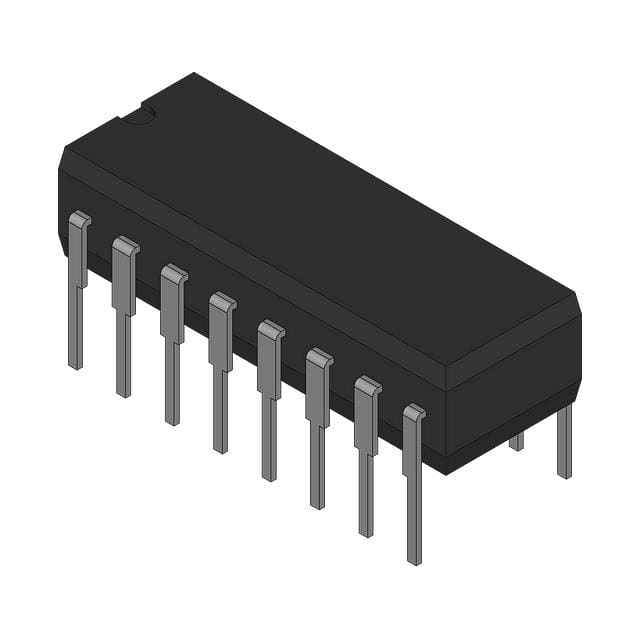
- Part No.:
- MAX327EPE
- Manufacturer:
- Analog Devices Inc./Maxim Integrated
- Package:
- 16-DIP (0.300", 7.62mm)
- Datasheet:
-
 MAX327EPE.pdf
- Description:
- IC SW SPST-NOX4 3.5KOHM 16DIP
- Quantity:
- Payment:

- Shipping:

Inventory:626
Please send an inquiry. Send us your inquiry, and we will respond immediately.
Product details
Overview
MAX327EPE from Maxim Integrated is a dual RS-232 line driver/receiver IC with ±15kV ESD protection, operating from a single +5V supply, supporting data rates up to 120kbps, and rated for -40°C to +85°C industrial temperature range. It interfaces microcontrollers to legacy serial peripherals in embedded control systems.
For engineers reviewing the MAX327EPE datasheet, MAX327EPE pinout, MAX327EPE application, or MAX327EPE equivalent, key selection considerations include single-supply operation, integrated charge-pump voltage converter, true RS-232 output swing (±9V), ESD robustness, and PDIP-16 package compatibility with through-hole prototyping and legacy PCBs.
Technical Context
The MAX327EPE integrates two drivers and two receivers in one PDIP-16 package, using an internal charge-pump to generate ±9V RS-232 compliant output levels from a single +5V input. It features automatic power-down mode when no valid signal is detected on the receiver inputs.
Driver outputs meet RS-232C specifications with ±9V swing into 3kΩ–7kΩ loads, while receiver inputs accept ±30V common-mode range and detect valid logic levels down to ±3V. The device includes TTL/CMOS-compatible inputs and outputs with 0.8V/2.0V thresholds.
Key Specifications
| Parameter | Value and Actual Design Meaning |
|---|---|
| Supply Voltage | +5V ±5% - Enables direct connection to standard logic rails without external regulators. |
| Data Rate | 120kbps - Supports reliable UART communication at typical industrial baud rates including 115.2kbps. |
| ESD Protection | ±15kV HBM - Eliminates need for external TVS diodes in board-level ESD design. |
| Operating Temp | -40°C to +85°C - Qualified for industrial environments without derating or thermal management. |
| Output Swing | ±9V into 3kΩ - Meets RS-232C voltage compliance for interoperability with legacy modems and peripherals. |
| Receiver Input Range | ±30V common-mode - Tolerates ground potential differences between connected devices in noisy factory settings. |
Pinout & Package
MAX327EPE uses a 16-pin plastic DIP (PDIP) package with 0.300" width, per drawing 21-0043D and pkgcode P16-1*. Pin assignments are standardized across the MAX327 family.
| Pin/Terminal | Circuit Role | Design Meaning |
|---|---|---|
| 1 (C1+) | Charge-pump capacitor positive terminal | Connects to external 1µF capacitor to generate negative voltage rail for RS-232 drivers. |
| 2 (C1-) | Charge-pump capacitor negative terminal | Completes charge-pump loop; requires low-ESR ceramic capacitor for stable voltage inversion. |
| 3 (C2+) | Second charge-pump capacitor positive terminal | Supports dual-capacitor charge-pump topology to boost efficiency and reduce ripple. |
| 4 (C2-) | Second charge-pump capacitor negative terminal | Provides return path for second stage of voltage doubling circuit. |
| 5 (T2OUT) | Transmitter 2 output | RS-232 level output (±9V) for secondary serial channel (e.g., RTS/CTS). |
| 6 (R2IN) | Receiver 2 input | TTL/CMOS input accepting RS-232 signals; converts ±3V–±30V to logic levels. |
| 7 (T1OUT) | Transmitter 1 output | Primary RS-232 transmit output (TX), compatible with DB9 connectors and modem interfaces. |
| 8 (GND) | Ground reference | Common return for logic, charge-pump, and RS-232 signal paths; must be low-impedance. |
| 9 (R1OUT) | Receiver 1 output | Logic-level output (RX) derived from RS-232 input; drives MCU UART input directly. |
| 10 (R2OUT) | Receiver 2 output | Secondary logic-level output (e.g., CTS or DSR) for hardware flow control signaling. |
| 11 (T2IN) | Transmitter 2 input | TTL/CMOS input driving secondary RS-232 output (e.g., RTS). |
| 12 (T1IN) | Transmitter 1 input | Primary logic-level input (TX from MCU) converted to RS-232 voltage levels. |
| 13 (VCC) | Positive supply | +5V input powering all internal circuitry and charge-pump stages. |
| 14 (R1IN) | Receiver 1 input | Primary RS-232 receive input (RX), accepts ±3V–±30V with hysteresis for noise immunity. |
| 15 (SHDN) | Shutdown control | Active-low enable; pulls device into 1µA standby mode when high (open or pulled up). |
| 16 (V+) | Generated positive charge-pump output | Internal +9V rail used by drivers; not user-accessible but critical for RS-232 compliance. |
Key Features
| Feature | Design Value |
|---|---|
| Single +5V supply operation | Removes need for ±12V supplies, simplifying power architecture and reducing BOM count. |
| Integrated charge-pump voltage converter | Generates required ±9V RS-232 levels internally using only two 1µF external capacitors. |
| ±15kV ESD protection on RS-232 pins | Meets IEC 61000-4-2 Level 4, enabling direct connector interface without discrete ESD protection. |
| Auto-power-down mode | Reduces quiescent current to 1µA when no valid RS-232 signal is present on receiver inputs. |
| True RS-232 output swing (±9V) | Ensures interoperability with legacy equipment requiring full-voltage compliance, unlike 3V-only transceivers. |
Applications
| Industrial PLC Serial Interface | Point-of-Sale Terminal Communication |
|---|---|
Use Scenario: Connecting a microcontroller-based PLC CPU module to legacy RS-232 field devices such as sensors, HMIs, and motor drives over long cables in electrically noisy factory floors. IC Role / Device Role / Timing Role: Dual-channel RS-232 transceiver providing bidirectional logic-to-RS-232 level translation with ESD-hardened I/O. Use Value: ±30V receiver input tolerance handles ground shifts across distributed machinery; ±15kV ESD rating prevents field failures during cable hot-plug events. | Use Scenario: Enabling serial communication between an embedded ARM processor and receipt printers, barcode scanners, or magnetic stripe readers in retail kiosks. IC Role / Device Role / Timing Role: RS-232 line driver/receiver bridging 3.3V/5V logic domains to peripheral interfaces requiring ±12V-compatible signaling. Use Value: Single +5V operation eliminates need for auxiliary power rails; auto-power-down extends battery life in portable POS units. |
| Medical Diagnostic Equipment Port | Test & Measurement Instrumentation |
Use Scenario: Interfacing patient monitoring units to PC-based analysis software via RS-232, where reliability and signal integrity are critical under strict EMC requirements. IC Role / Device Role / Timing Role: Isolated RS-232 interface component ensuring clean, noise-immune data transmission between analog front-end and digital controller. Use Value: ±9V output swing guarantees compatibility with certified medical peripherals; industrial temp grade supports operation inside enclosed cabinets. | Use Scenario: Adding RS-232 connectivity to benchtop oscilloscopes, multimeters, or signal generators for remote control and data logging via PC. IC Role / Device Role / Timing Role: Robust physical-layer transceiver handling variable cable lengths and mixed-signal board environments. Use Value: 120kbps data rate supports SCPI command throughput; PDIP-16 package allows easy socketing for service and calibration access. |
Equivalent & Alternatives
The following parts are listed as comparable options for similar RS-232 transceiver applications.
| Alternative Part | Technical Difference | Application Difference | Selection Advice |
|---|---|---|---|
| MAX3232EPE+ | RoHS-compliant, same PDIP-16 package, identical electrical specs except enhanced ESD (±15kV IEC 61000-4-2 vs. ±15kV HBM only for MAX327EPE). | Preferred for new designs requiring lead-free compliance and stricter system-level ESD certification. | Select MAX3232EPE+ when RoHS mandate applies and full IEC-level ESD validation is required. |
| SP3222EPE | Pin-compatible PDIP-16 variant with lower 1µA shutdown current (vs. 1µA for MAX327EPE), same ±15kV HBM, but rated only to +70°C (not -40°C to +85°C). | Suitable for commercial-grade applications; unsuitable for extended temperature deployments. | Choose SP3222EPE only for cost-sensitive, non-industrial designs operating within 0°C–70°C ambient. |
Compared with MAX3232EPE+ and SP3222EPE, the MAX327EPE offers industrial temperature support and legacy footprint compatibility without RoHS constraints-ideal for drop-in replacement in existing PDIP-based designs where lead-free conversion is not mandated.
Availability
MAX327EPE is available at Aetrix Electronics and suitable for industrial automation, point-of-sale terminals, and test instrumentation requiring stable component supply and long-term obsolescence management.
Supply support for MAX327EPE includes scheduled delivery planning, volume procurement assistance, BOM continuity management, traceable sourcing, and lifecycle availability coordination for OEM customers, industrial embedded developers, connected-device designers, and electronics production programs.
Manufacturer
Maxim Integrated (now part of Analog Devices) designs precision analog, mixed-signal, and high-reliability ICs for industrial, medical, and communications applications.
The MAX327 product line delivers robust, single-supply RS-232 transceivers optimized for legacy interface preservation in harsh environments and long-lifecycle embedded systems.
FAQ
What is the maximum data rate supported by the MAX327EPE?
The MAX327EPE supports a maximum data rate of 120kbps while maintaining RS-232 signal integrity across standard cable lengths. This rate accommodates common UART configurations including 115.2kbps, making the MAX327EPE suitable for real-time industrial telemetry and diagnostic logging where timing margins must remain conservative.
Does the MAX327EPE require external capacitors, and if so, what values?
Yes, the MAX327EPE requires four external 1µF ceramic capacitors (C1+, C1-, C2+, C2-) for its dual-stage charge-pump voltage converter. These capacitors must be placed close to the IC with short traces to ensure stable ±9V generation; X7R or better dielectric is recommended for temperature stability and low ESR.
What is the operating temperature range of the MAX327EPE?
The MAX327EPE is specified for operation from -40°C to +85°C, qualifying it for industrial-grade deployment in environments such as factory floors, outdoor kiosks, and enclosed medical equipment cabinets where ambient temperatures exceed commercial limits.
Is the MAX327EPE RoHS-compliant?
No, the MAX327EPE is not RoHS-compliant, as indicated by its suffix and materials analysis documentation. For RoHS-compliant alternatives, consider the MAX327EPE+ or MAX3232EPE+, which use lead-free terminations and meet EU Directive 2011/65/EU requirements.
Can the MAX327EPE replace the MAX232 in existing designs?
Yes, the MAX327EPE is pin-compatible with the MAX232 in PDIP-16 packages and provides identical functionality with improved ESD protection (±15kV vs. ±2kV) and tighter output voltage regulation. No PCB changes are needed, though capacitor values should be verified against layout parasitics for optimal performance.
MAX327EPE Specifications
- Product attributes
- Attribute value
- Manufacturer:
- Analog Devices Inc./Maxim Integrated
- Series:
- -
- Packaging:
- Bulk
- Product Status:
- Active
- Switch Circuit:
- SPST - NO
- Multiplexer/Demultiplexer Circuit:
- 1:1
- Number of Circuits:
- 4
- On-State Resistance (Max):
- 3.5kOhm
- Channel-to-Channel Matching (ΔRon):
- 175Ohm
- Voltage - Supply, Single (V+):
- 10V ~ 30V
- Voltage - Supply, Dual (V±):
- ±5V ~ 18V
- Switch Time (Ton, Toff) (Max):
- 1µs, 500ns
- -3db Bandwidth:
- -
- Charge Injection:
- 2pC
- Channel Capacitance (CS(off), CD(off)):
- 1.7pF, 1.7pF
- Current - Leakage (IS(off)) (Max):
- 10pA
- Crosstalk:
- -90dB @ 100kHz
- Operating Temperature:
- -40°C ~ 85°C (TA)
- Grade:
- -
- Qualification:
- -
- Mounting Type:
- Through Hole
- Supplier Device Package:
- 16-PDIP
MAX327EPE FAQ
1.How can I place an order for MAX327EPE through Aetrix?
Please submit a Request for Quotation (RFQ) for MAX327EPE on Aetrix. Our sales agent will provide a competitive quotation and guide you through the order confirmation once you accept the terms.
2.Are the price and stock information for MAX327EPE reliable?
The price and inventory of MAX327EPE are updated periodically and may fluctuate due to market conditions. Stock and pricing data are typically refreshed every 24 hours. Quotation validity for MAX327EPE is usually 5 days.
3.What payment methods are accepted for MAX327EPE?
We accept Wire Transfer, PayPal, Credit Card, Western Union, MoneyGram, and Escrow for MAX327EPE transactions.
Note: Certain payment methods may incur a processing fee.
4.How is shipping managed for MAX327EPE?
MAX327EPE orders can be shipped via leading logistics carriers, including DHL, UPS, FedEx, TNT, or Registered Mail.
Once your MAX327EPE order is processed, you will receive an email with the shipment details and tracking number.
Note: Tracking information may take up to 24 hours to appear. Express delivery typically takes 3–5 business days.
5.How can I obtain technical support or documentation for MAX327EPE?
For technical support, including MAX327EPE datasheets, pinout diagrams, or application guidance, please contact our engineering support team. They can provide detailed documentation and assistance for your MAX327EPE requirements.
6.How does Aetrix verify that MAX327EPE is sourced from the original manufacturer or authorized distributors?
All MAX327EPE products on Aetrix are procured from qualified distributors and authorized channels. Our dedicated quality assurance team conducts strict verification, including traceability checks and, if necessary, third-party testing. This ensures that MAX327EPE meets industry standards.
7.What is the process for return or replacement of MAX327EPE?
All MAX327EPE units undergo pre-shipment inspection (PSI). If there is an issue with MAX327EPE, returns or replacements are accepted under the following conditions:
1.Quantity discrepancies, incorrect items, or visible external defects (such as breakage or corrosion), acknowledged by Aetrix.
2.The issue is reported within 90 days of delivery.
3.The MAX327EPE part is unused and in its original packaging.
Return procedure for MAX327EPE:
1.Submit a request within 90 days.
2.Obtain a Return Material Authorization (RMA) from Aetrix.
MAX327EPE Tags

-
SN74LVC1G3157DBVR
Texas Instruments

-
SN74LVC1G66DBVR
Texas Instruments
-
SN74LVC1G66DCKR
Texas Instruments
-
SN74LVC1G3157DSFR
Texas Instruments
-
1P1G3157QDCKRQ1
Texas Instruments
-
SN74LVC2G66DCUR
Texas Instruments
-
SN74LV4052APWR
Texas Instruments
-
74HC4051D,653
Nexperia USA Inc.
-
SN74LV4051APWR
Texas Instruments
-
CD74HC4052PWR
Texas Instruments
-
CD74HC4051PWR
Texas Instruments
-
TS5A3166DBVR
Texas Instruments
Tech Hub

A practical engineering guide to 3.3V and 5V logic compatibility, input thresholds, resistor dividers, translator ICs, MOSFET level shifting, I2C pull-ups, timing limits and power-sequencing risks.

The 74HC595 uses push-pull logic outputs, while the TPIC6B595 uses 50 V open-drain DMOS sinks for higher-power loads. This guide compares timing, current limits, 3.3 V interfacing, load wiring, thermal…

The 74HC595 converts serial data into eight stable parallel outputs. This guide covers pin functions, shift and storage timing, OE and MR behavior, drive-current limits, cascading, voltage compatibilit…

A technical comparison of level-sensitive latches and edge-triggered flip-flops, covering timing windows, setup and hold limits, master–slave operation, time borrowing, race-through, HDL inference and…

A D latch stores one bit while Enable controls when data can pass. This reference covers gate-level operation, truth tables, transparency, setup and hold timing, LE versus OE, common ICs and practical …

An SR latch stores one bit through cross-coupled feedback. This engineering reference covers NOR and NAND implementations, truth tables, forbidden-state recovery, gated operation, switch debouncing, fa…

Latch circuits retain one bit through feedback. This technical reference covers SR and D latches, truth tables, transparency, timing limits, latch-versus-flip-flop behavior, applications and common log…

An engineering guide to LED driver operation, constant-current and constant-voltage outputs, linear and switching topologies, dimming, IC selection, calculations, replacement compatibility, and fault c…

Operational amplifier guide covering op amp basics, feedback, ideal vs real op amps, common configurations, buffer circuits, offset, bias current, gain-bandwidth, slew rate, rail-to-rail limits and sel…

Jumper cables guide covering safe connection order, red and black clamp placement, final ground connection, cable gauge, length, clamp quality, copper vs CCA cables, jump starter comparison and battery…


