
 My Inquiry
 My Account


Analog Devices Inc./Maxim Integrated MAX3286CGI
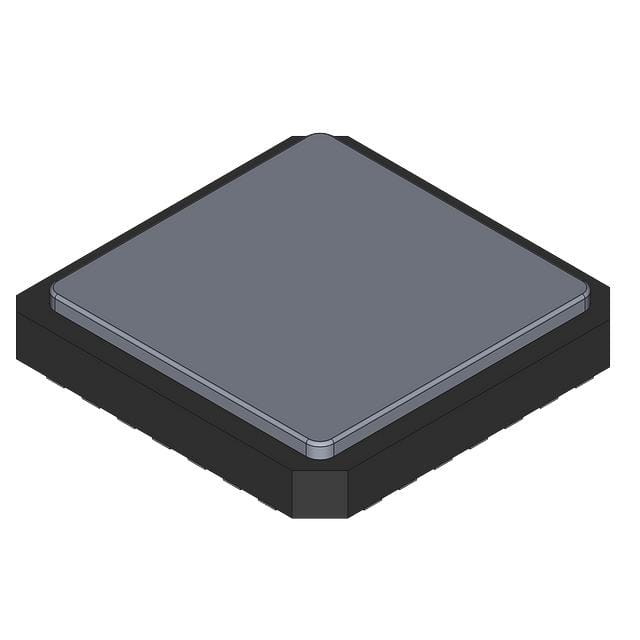
- Part No.:
- MAX3286CGI
- Manufacturer:
- Analog Devices Inc./Maxim Integrated
- Category:
- Laser Drivers
- Package:
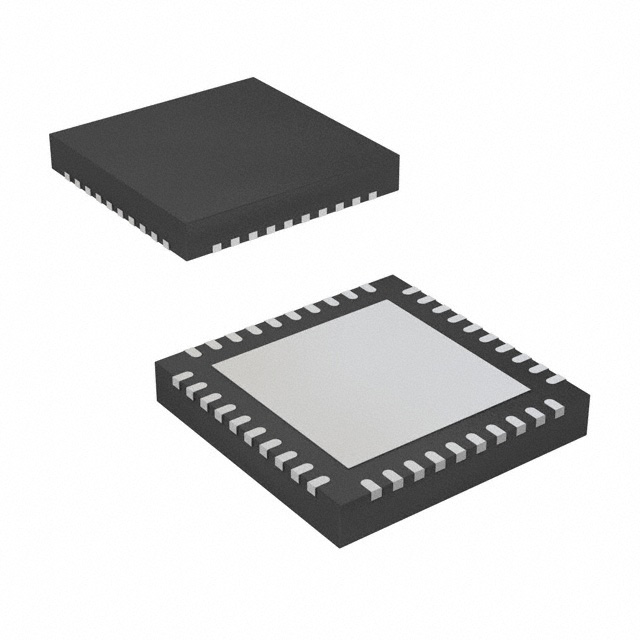
- 28-VFQFN Exposed Pad
- Datasheet:
-
 MAX3286CGI.pdf
- Description:
- LAN LASER DRIVER
- Quantity:
- Payment:

- Shipping:

Inventory:1,494
Please send an inquiry. Send us your inquiry, and we will respond immediately.
Product details
Overview
MAX3286CGI from Maxim Integrated is a 1.25Gbps high-speed laser driver IC optimized for Gigabit Ethernet optical transmitters, integrating bias generator with automatic power control (APC), laser modulator, dual enable/shutdown safety circuitry, and programmable power-on reset. It delivers 30mA modulation current into 25Ω load, achieves 22ps deterministic jitter, and supports common-cathode or common-anode laser configurations with temperature-compensated modulation current.
For engineers reviewing the MAX3286CGI datasheet, MAX3286CGI pinout, MAX3286CGI application, or MAX3286CGI equivalent, this device is selected for fiber-optic LAN transmitter designs requiring single-point fault tolerance, stable optical extinction ratio over 0°C to +70°C, and compatibility with TO-46-packaged shortwave (780–850nm) or longwave (1300nm) laser diodes and VCSELs.
Technical Context
The MAX3286CGI implements a closed-loop APC architecture using MD input feedback to maintain constant average optical power across temperature and laser aging, with REF voltage dynamically derived from MON pin (VREF = 2.65 − 2.25(VCC − VMON)). Its modulation path uses dual-resistor programming (MODSET + TC pins) to set both temperature-stable and temperature-increasing components of laser modulation current, enabling precise extinction ratio control.
Safety logic includes dual latched FAULT/FAULT outputs, FLTDLY-programmable fault delay, and independent shutdown paths via SHDNDRV and internal BIASDRV disable - all compliant with open-fiber control (OFC) requirements. The POR circuit features adjustable delay (via PORDLY capacitor) and hysteresis (3.9V threshold, 2.65V hysteresis) to reject supply noise during hot-plug events.
Key Specifications
| Parameter | Value and Actual Design Meaning |
|---|---|
| Data Rate | 1.25Gbps - meets IEEE 802.3z Gigabit Ethernet physical layer timing requirements |
| Deterministic Jitter | 22ps typical - provides 72% margin against Gigabit Ethernet DJ specification limit |
| Laser Modulation Current | 30mA max - drives standard 25Ω laser load while maintaining VOUT ≥ VCC − 1V |
| Supply Voltage Range | +3.0V to +5.5V - supports single-supply operation across industrial and telecom rails |
| Operating Temperature | 0°C to +70°C - qualified for commercial-grade optical module environments |
| Package | 28-pin QFN (5mm × 5mm) - low-inductance, thermally enhanced footprint for high-speed laser interface |
| APC Accuracy | Maintains constant average optical power via MD feedback - eliminates manual bias trimming across temperature |
Pinout & Package
MAX3286CGI is housed in a 28-pin QFN package (5mm × 5mm, exposed pad grounded), optimized for thermal dissipation and high-frequency signal integrity in optical transmitter modules.
| Pin/Terminal | Circuit Role | Design Meaning |
|---|---|---|
| 1, 2, 16, 19 | GND | Ground reference for analog/digital sections and thermal path via exposed pad |
| 4, 13, 19 | VCC | +3.0V to +5.5V supply input - decoupling required at each pin per layout guidelines |
| 5, 6 | EN / EN | Dual TTL-compatible enable inputs - laser active only when EN=high AND EN=low (fault-tolerant logic) |
| 17, 18 | POL / POL | Laser polarity configuration - sets common-cathode (POL=VCC, POL=GND) or common-anode mode |
| 14, 15 | IN+ / IN− | Differential data input - accepts 100mVP-P to 1660mVP-P signals for 1.25Gbps NRZ modulation |
| 24, 25 | OUT+ / OUT− | Modulation current output pair - delivers up to 30mA differential current into laser load |
| 27, 28 | MODSET / TC | Resistor-programmed modulation current amplitude and tempco - enables precise extinction ratio tuning |
| 10 | LV | Low-voltage mode select - open for 3.0–5.5V operation; GND for 4.5–5.5V only |
Key Features
| Feature | Design Value |
|---|---|
| Automatic Power Control (APC) | Stabilizes average optical output power using MD photodiode feedback - eliminates thermal drift and laser aging effects |
| Programmable Temperature Compensation | Independent MODSET and TC resistor inputs allow fine-tuning of modulation current tempco from 0 to 4000ppm/°C |
| Dual Redundant Safety Architecture | Separate FAULT/FAULT latched outputs, dual EN inputs, and SHDNDRV shutdown driver ensure single-point fault tolerance |
| Configurable Laser Polarity Support | POL/POL pins enable hardware-selectable common-cathode or common-anode laser interfacing without external component changes |
| Adjustable Power-On Reset Delay | PORDLY pin accepts external capacitor (0.01µF typical) to extend POR duration - prevents false faults during APC loop stabilization |
Applications
| Gigabit Ethernet Optical Transmitter | Fibre Channel Optical Transmitter |
|---|---|
Use Scenario: 1000BASE-SX/SX+ transceiver module operating at 1.25Gbps over multimode fiber. IC Role / Device Role / Timing Role: Laser driver providing high-fidelity NRZ modulation, APC-regulated bias, and deterministic jitter <22ps for IEEE 802.3z compliance. Use Value: Enables plug-and-play interoperability with SFP MSA-compliant host systems while maintaining >72% DJ margin. |
Use Scenario: 1G Fibre Channel (FC-PI-2) short-wavelength optical link in storage area networks. IC Role / Device Role / Timing Role: High-speed laser modulator driving 850nm VCSELs with integrated safety monitoring for Class 1 laser compliance. Use Value: Eliminates need for external APC loop components and reduces bill-of-materials by integrating bias control, modulation, and fault detection. |
| ATM LAN Optical Transmitter | Industrial Fiber-Optic Data Link |
Use Scenario: OC-3/STM-1 ATM backbone interface using 1310nm DFB lasers in telecom access equipment. IC Role / Device Role / Timing Role: Precision laser driver supporting constant-current mode for lasers without monitor diodes and APC mode for photodiode-equipped units. Use Value: Single IC supports both legacy and modern laser types - simplifies design reuse across multiple product generations. |
Use Scenario: Ruggedized fiber-optic data link in factory automation, where EMI immunity and fault resilience are critical. IC Role / Device Role / Timing Role: Safety-certified laser driver with dual EN/FAULT signaling and programmable FLTDLY delay for controlled startup under noisy conditions. Use Value: Meets IEC 60825-1 Class 1 laser safety requirements without external watchdog circuitry. |
Equivalent & Alternatives
The following parts are listed as comparable options for similar laser driver applications.
| Alternative Part | Technical Difference | Application Difference | Selection Advice |
|---|---|---|---|
| MAX3287CTE+ | 16-pin TSSOP-EP package; identical 1.25Gbps performance, 22ps DJ, and APC functionality but reduced pin count limits configurability (no FLTDLY, no LV) | Targeted for space-constrained, cost-sensitive modules where full safety feature set is not required | Select MAX3287CTE+ only when PCB real estate is critical and dual-enable safety logic can be omitted |
| MAX3296CTI+ | 2.5Gbps rated (vs. 1.25Gbps); same 28-pin QFN package, safety architecture, and APC engine but higher modulation bandwidth and 7ps DJ | Required for Fibre Channel 2GFC or 1000BASE-LX applications demanding >2Gbps data rates | Choose MAX3296CTI+ when upgrading to 2.5Gbps infrastructure - note higher supply current (ICC = 75mA vs. 62mA) |
Compared with MAX3287CTE+, the MAX3286CGI offers full safety configurability (FLTDLY, LV, dual POL) in a larger package; versus MAX3296CTI+, it trades 2.5Gbps capability for lower power and cost in established Gigabit Ethernet deployments.
Availability
MAX3286CGI is available at Aetrix Electronics and suitable for Gigabit Ethernet optical transceivers, Fibre Channel 1GFC modules, and ATM OC-3 interfaces requiring stable component supply, long-term lifecycle support, and traceable sourcing for industrial and telecom OEMs.
Supply support for MAX3286CGI includes scheduled delivery planning, volume procurement assistance, BOM continuity management, traceable sourcing, and lifecycle availability coordination for OEM customers, industrial embedded developers, connected-device designers, and electronics production programs.
Manufacturer
Maxim Integrated (now part of Analog Devices) is a semiconductor company specializing in precision analog, mixed-signal, and high-speed interface solutions for communications, computing, and industrial markets.
The MAX3286CGI belongs to Maxim's LAN laser driver product line, designed specifically for fiber-optic transmitter modules needing integrated APC, low-jitter modulation, and comprehensive laser safety compliance in compact QFN packages.
FAQ
What is the maximum laser modulation current supported by the MAX3286CGI?
The MAX3286CGI supports up to 30mA of laser modulation current into a 25Ω load, as specified in the Electrical Characteristics table under "Maximum Laser Modulation Current." This value is achievable with proper resistor selection at MODSET and TC pins and requires that the instantaneous output voltage at OUT+ and OUT− remains above VCC − 1V to maintain linear operation. The MAX3286CGI maintains this current level across its full 0°C to +70°C operating range when configured with appropriate temperature compensation.
How does the MAX3286CGI implement automatic power control (APC)?
The MAX3286CGI implements APC by closing a feedback loop through the MD (monitor diode) pin, which connects to the anode or cathode of the laser's integrated photodiode. The internal power-control amplifier adjusts the BIASDRV output to maintain a stable 1.7V at MD, thereby regulating average optical power. The REF pin voltage (VREF = 2.65 − 2.25(VCC − VMON)) sets the target photocurrent via external RSET, enabling precise APC calibration. This loop operates independently of temperature and laser aging, ensuring consistent output over the lifetime of the MAX3286CGI-based module.
Can the MAX3286CGI drive both VCSELs and edge-emitting laser diodes?
Yes, the MAX3286CGI is explicitly designed to drive vertical-cavity surface-emitting lasers (VCSELs), shortwave (780–850nm) edge-emitting lasers, and longwave (1300nm) lasers. Its MON pin supports VCSEL bias current monitoring, while the configurable POL/POL inputs and common-cathode/common-anode modes accommodate diverse laser pinouts. The datasheet confirms compatibility with TO-46-packaged lasers and specifies performance with 1310nm DFB lasers in eye diagram testing - confirming broad laser diode interoperability within the MAX3286CGI's 1.25Gbps operational envelope.
What safety certifications or compliance does the MAX3286CGI support?
The MAX3286CGI supports IEC 60825-1 Class 1 laser safety compliance through integrated hardware-level safety features: dual latched FAULT/FAULT outputs, redundant EN/EN enable logic, programmable FLTDLY fault delay, and SHDNDRV-driven external MOSFET shutdown. These features enable single-point fault tolerance - meaning any single internal failure (e.g., short to VCC/GND or inter-pin short) triggers immediate laser shutdown. The MAX3286CGI also meets open-fiber control (OFC) requirements via its dual-enable architecture, making it suitable for certified optical transceiver modules without additional safety ASICs.
What is the purpose of the FLTDLY pin on the MAX3286CGI?
The FLTDLY pin on the MAX3286CGI programs the duration of the internal fault-delay pulse that disables safety monitoring during power-up, allowing time for the APC loop to stabilize before fault detection activates. A capacitor connected to FLTDLY (e.g., 0.01µF) sets this delay - typically 5–10× the APC time constant - preventing spurious FAULT assertions at startup. Grounding FLTDLY disables the safety circuit entirely (with EN high and EN low), while leaving it open defaults to minimum delay. This pin is essential for reliable initialization in systems where APC settling time exceeds standard POR timing.
MAX3286CGI Specifications
- Product attributes
- Attribute value
- Manufacturer:
- Analog Devices Inc./Maxim Integrated
- Series:
- -
- Package/Case:
- 28-VFQFN Exposed Pad
- Packaging:
- Bulk
- Product Status:
- Active
- Type:
- Laser Diode Driver (Fiber Optic)
- Data Rate:
- 1.25Gbps
- Number of Channels:
- 1
- Voltage - Supply:
- 3V ~ 5.5V
- Current - Supply:
- 52 mA
- Current - Modulation:
- 30mA
- Current - Bias:
- -
- Operating Temperature:
- 0°C ~ 70°C (TA)
- Grade:
- -
- Qualification:
- -
- Supplier Device Package:
- 28-QFN (5x5)
- Mounting Type:
- Surface Mount
MAX3286CGI FAQ
1.How can I place an order for MAX3286CGI through Aetrix?
Please submit a Request for Quotation (RFQ) for MAX3286CGI on Aetrix. Our sales agent will provide a competitive quotation and guide you through the order confirmation once you accept the terms.
2.Are the price and stock information for MAX3286CGI reliable?
The price and inventory of MAX3286CGI are updated periodically and may fluctuate due to market conditions. Stock and pricing data are typically refreshed every 24 hours. Quotation validity for MAX3286CGI is usually 5 days.
3.What payment methods are accepted for MAX3286CGI?
We accept Wire Transfer, PayPal, Credit Card, Western Union, MoneyGram, and Escrow for MAX3286CGI transactions.
Note: Certain payment methods may incur a processing fee.
4.How is shipping managed for MAX3286CGI?
MAX3286CGI orders can be shipped via leading logistics carriers, including DHL, UPS, FedEx, TNT, or Registered Mail.
Once your MAX3286CGI order is processed, you will receive an email with the shipment details and tracking number.
Note: Tracking information may take up to 24 hours to appear. Express delivery typically takes 3–5 business days.
5.How can I obtain technical support or documentation for MAX3286CGI?
For technical support, including MAX3286CGI datasheets, pinout diagrams, or application guidance, please contact our engineering support team. They can provide detailed documentation and assistance for your MAX3286CGI requirements.
6.How does Aetrix verify that MAX3286CGI is sourced from the original manufacturer or authorized distributors?
All MAX3286CGI products on Aetrix are procured from qualified distributors and authorized channels. Our dedicated quality assurance team conducts strict verification, including traceability checks and, if necessary, third-party testing. This ensures that MAX3286CGI meets industry standards.
7.What is the process for return or replacement of MAX3286CGI?
All MAX3286CGI units undergo pre-shipment inspection (PSI). If there is an issue with MAX3286CGI, returns or replacements are accepted under the following conditions:
1.Quantity discrepancies, incorrect items, or visible external defects (such as breakage or corrosion), acknowledged by Aetrix.
2.The issue is reported within 90 days of delivery.
3.The MAX3286CGI part is unused and in its original packaging.
Return procedure for MAX3286CGI:
1.Submit a request within 90 days.
2.Obtain a Return Material Authorization (RMA) from Aetrix.
MAX3286CGI Tags
-
EPC21701
EPC
-
EPC21601
EPC
-
MAX3799ETJ+T
Analog Devices Inc./Maxim Integrated
-
AD9665ACPZ-REEL7
Analog Devices Inc.
-
MAX3740AETG+T
Analog Devices Inc./Maxim Integrated
-
MAX3795ETG+
Analog Devices Inc./Maxim Integrated

-
EPC21603
EPC
-
ONET8501VRGPT
Texas Instruments
-
MAX3738ETG+T
Analog Devices Inc./Maxim Integrated
-
SY88022ALMG-TR
Microchip Technology
-
ISL78365ARZ-T7A
Renesas
-
EPC21603ENGRT
EPC
Tech Hub

A practical engineering guide to 3.3V and 5V logic compatibility, input thresholds, resistor dividers, translator ICs, MOSFET level shifting, I2C pull-ups, timing limits and power-sequencing risks.

The 74HC595 uses push-pull logic outputs, while the TPIC6B595 uses 50 V open-drain DMOS sinks for higher-power loads. This guide compares timing, current limits, 3.3 V interfacing, load wiring, thermal…

The 74HC595 converts serial data into eight stable parallel outputs. This guide covers pin functions, shift and storage timing, OE and MR behavior, drive-current limits, cascading, voltage compatibilit…

A technical comparison of level-sensitive latches and edge-triggered flip-flops, covering timing windows, setup and hold limits, master–slave operation, time borrowing, race-through, HDL inference and…

A D latch stores one bit while Enable controls when data can pass. This reference covers gate-level operation, truth tables, transparency, setup and hold timing, LE versus OE, common ICs and practical …

An SR latch stores one bit through cross-coupled feedback. This engineering reference covers NOR and NAND implementations, truth tables, forbidden-state recovery, gated operation, switch debouncing, fa…

Latch circuits retain one bit through feedback. This technical reference covers SR and D latches, truth tables, transparency, timing limits, latch-versus-flip-flop behavior, applications and common log…

An engineering guide to LED driver operation, constant-current and constant-voltage outputs, linear and switching topologies, dimming, IC selection, calculations, replacement compatibility, and fault c…

Operational amplifier guide covering op amp basics, feedback, ideal vs real op amps, common configurations, buffer circuits, offset, bias current, gain-bandwidth, slew rate, rail-to-rail limits and sel…

Jumper cables guide covering safe connection order, red and black clamp placement, final ground connection, cable gauge, length, clamp quality, copper vs CCA cables, jump starter comparison and battery…


