
 My Inquiry
 My Account


Analog Devices Inc./Maxim Integrated MAX328EWE-T
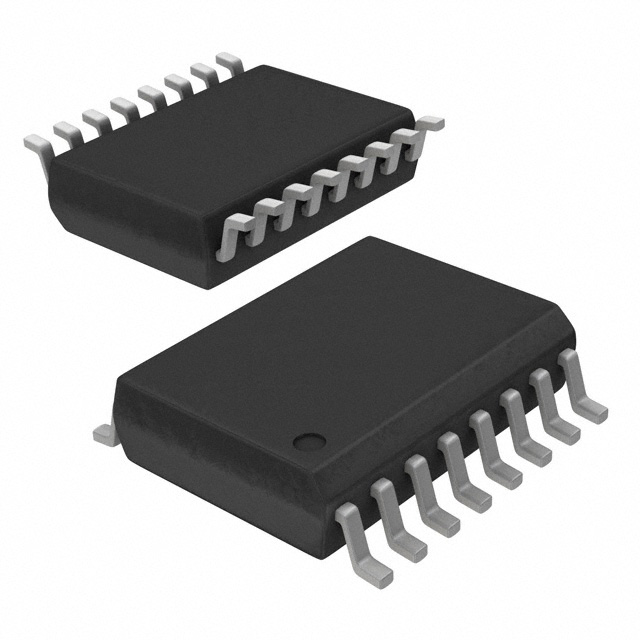
- Part No.:
- MAX328EWE-T
- Manufacturer:
- Analog Devices Inc./Maxim Integrated
- Package:
- 16-SOIC (0.295", 7.50mm Width)
- Datasheet:
-
 MAX328EWE-T.pdf
- Description:
- IC MUX 8:1 3.5KOHM 16SOIC
- Quantity:
- Payment:

- Shipping:

Inventory:1,126
Please send an inquiry. Send us your inquiry, and we will respond immediately.
Product details
Overview
The MAX328EWE-T from Maxim Integrated is a monolithic CMOS 1-of-8 single-ended analog multiplexer with ultra-low off-leakage (1pA typ at +25°C), 2.5kΩ on-resistance, and ±5V to ±18V dual-supply or 10V–30V single-supply operation. It serves as a precision signal-routing device in high-impedance data-acquisition paths, enabling fault-tolerant operation when paired with external 40kΩ input resistors - sustaining indefinite 110V AC faults while maintaining <40nV error for normal signals.
For engineers reviewing the MAX328EWE-T datasheet, MAX328EWE-T pinout, MAX328EWE-T application, or MAX328EWE-T equivalent, this device is selected for low-error analog switching in aerospace HUDs, industrial control systems, and portable data loggers where leakage-induced offset, rail-to-rail signal handling, and TTL/CMOS logic compatibility are critical design constraints.
Technical Context
The MAX328EWE-T implements a fully decoded 3-bit address decoder (A0–A2) controlling eight bidirectional analog switches between S1–S8 inputs and a common D output. Its latchup-proof CMOS process ensures robust operation across unbalanced supply combinations (e.g., +12V/−5V) without performance degradation.
Switching is governed by an active-high EN input, with break-before-make timing (0.2µs) and sub-1.5µs transition time. The device supports rail-to-rail analog signal ranges (±15V with ±15V supplies), and its charge injection (4pC max) and low off-capacitance (1.8pF) preserve signal integrity in high-resolution ADC front-ends.
Key Specifications
| Parameter | Value and Actual Design Meaning |
|---|---|
| Analog Signal Range | ±15V with ±15V supplies - supports full-rail signal routing without clipping |
| On-Resistance (RDS(ON)) | 2.5kΩ typ - minimizes voltage drop and gain error in precision sensor interfaces |
| Off-Leakage Current | 1pA typ at +25°C - limits offset drift in high-impedance op-amp or ADC input stages |
| Switching Time | 1.5µs max - enables sampling rates up to ~667kHz in time-critical acquisition |
| Supply Range | ±5V to ±18V dual or 10V–30V single - accommodates legacy and battery-powered systems |
| Charge Injection | 4pC max - reduces settling error in sample-and-hold circuits |
| Power Dissipation | 1.9mW with ±15V - suitable for thermally constrained portable instrumentation |
Pinout & Package
MAX328EWE-T is housed in a 16-pin Wide SO (SOIC-W) package with exposed pad (RoHS-compliant, lead-free).
| Pin/Terminal | Circuit Role | Design Meaning |
|---|---|---|
| 1, 3 | V− | Negative supply rail - must be connected for proper switch biasing and leakage control |
| 2, 4–7 | S1–S4 | Bidirectional analog inputs - routed to output D when selected by A0–A2 |
| 8 | D | Common analog output - shared path for all eight channels; bidirectional |
| 9–12 | S8–S5 | Bidirectional analog inputs - continuation of channel set (S5–S8) |
| 13 | V+ | Positive supply rail - defines upper analog signal limit and logic threshold reference |
| 14 | GND | Digital ground reference - separate from analog ground in mixed-signal layouts |
| 15–16 | A0, A1, A2 | 3-bit binary address inputs - decode one of eight channels (S1–S8) to D |
| EN (Pin 2) | Enable | Active-high digital control - disables all switches when low, preventing signal coupling |
Key Features
| Feature | Design Value |
|---|---|
| Ultra-low off-leakage | 1pA typ at +25°C - preserves DC accuracy in µV-level sensor measurements |
| Rail-to-rail analog range | Operates with signals extending to V+ and V− rails - eliminates level-shifting in bipolar systems |
| TTL/CMOS logic compatibility | Accepts 0.8V/2.4V thresholds - interoperable with standard microcontroller GPIO without buffers |
| Fault-tolerant architecture | With 40kΩ external resistors, withstands indefinite 110V AC faults - no external diodes required |
| Bidirectional signal flow | Supports mux or demux operation - simplifies PCB layout and reuse in bidirectional signal paths |
Applications
| Aircraft Heads-Up Displays (HUD) | Data-Acquisition Systems |
|---|---|
Use Scenario: Multiplexing multiple sensor inputs (e.g., airspeed, altitude, attitude) into a single high-resolution ADC within space-constrained cockpit electronics. IC Role / Device Role / Timing Role: Precision analog switch routing signals from isolated transducers to ADC front-end with minimal offset drift. Use Value: 1pA leakage ensures <40nV error contribution even after decades of field operation under thermal cycling. |
Use Scenario: Scanning 8-channel thermocouple or strain-gauge arrays in industrial environmental monitoring stations. IC Role / Device Role / Timing Role: Low-on-resistance (2.5kΩ) and rail-to-rail capability enable direct connection to instrumentation amplifiers without gain adjustment. Use Value: 1.5µs switching time allows full 8-channel scan at >100ksps aggregate rate with deterministic timing. |
| Control Systems | Signal Routing |
Use Scenario: Isolating feedback signals from motor drives or power converters in servo loop hardware. IC Role / Device Role / Timing Role: Fault-tolerant configuration (with 40kΩ resistors) protects against accidental 110V AC coupling during maintenance or wiring faults. Use Value: Indefinite 110V AC fault survival eliminates need for external protection diodes or fuses. |
Use Scenario: Reconfigurable test equipment routing analog stimulus or response signals between instruments and DUTs. IC Role / Device Role / Timing Role: Bidirectional operation allows same device to route signals either direction depending on system state. Use Value: Pin compatibility with DG508/DG509 enables drop-in upgrade of legacy test fixtures without board redesign. |
Equivalent & Alternatives
The following parts are listed as comparable options for similar analog multiplexer applications.
| Alternative Part | Technical Difference | Application Difference | Selection Advice |
|---|---|---|---|
| DG508ACJ | Higher off-leakage (10nA vs. 1pA), 100Ω higher RDS(ON), no fault-tolerance design | Limited to lower-precision, non-safety-critical signal routing; not rated for 110V AC fault conditions | Select only if cost sensitivity outweighs leakage and fault-protection requirements |
| MAX358EWE+ | Same pinout and function but specified only for 0°C to +70°C; lacks extended −40°C to +85°C rating | Not qualified for automotive or outdoor industrial deployments requiring wide temperature operation | Choose MAX328EWE-T when full industrial temperature range and long-term reliability are mandatory |
Compared with DG508ACJ and MAX358EWE+, the MAX328EWE-T delivers three orders of magnitude lower leakage, guaranteed fault tolerance, and extended temperature qualification - making it the sole option for high-accuracy, safety-aware analog multiplexing in harsh environments.
Availability
MAX328EWE-T is available at Aetrix Electronics and suitable for aircraft heads-up displays, industrial control systems, and portable data-acquisition systems requiring stable component supply across extended temperature ranges and long production lifecycles.
Supply support for MAX328EWE-T includes scheduled delivery planning, volume procurement assistance, BOM continuity management, traceable sourcing, and lifecycle availability coordination for OEM customers, industrial embedded developers, connected-device designers, and electronics production programs.
Manufacturer
Maxim Integrated (now part of Analog Devices) designs precision analog, mixed-signal, and power-management ICs for demanding industrial, aerospace, and medical applications.
The MAX328EWE-T belongs to Maxim's ultra-low-leakage analog multiplexer product line, engineered specifically for high-impedance signal routing in fault-prone, high-accuracy measurement systems where traditional muxes introduce unacceptable offset or reliability risk.
FAQ
What is the operating temperature range of the MAX328EWE-T?
The MAX328EWE-T is rated for −40°C to +85°C operation, validated across the full range for key parameters including off-leakage, on-resistance, and switching time. This extended industrial temperature grade makes it suitable for deployment in automotive engine compartments, outdoor instrumentation, and avionics subsystems where ambient extremes are expected. All leakage specifications are 100% tested at +85°C and correlated at +25°C per Maxim's production test protocol.
Is the MAX328EWE-T pin-compatible with the DG508 series?
Yes, the MAX328EWE-T is explicitly designed as a pin-for-pin replacement for the DG508/DG509 in standard 16-pin SO and DIP footprints. Its pin mapping matches exactly - including V+, V−, GND, EN, A0–A2, S1–S8, and D - enabling direct substitution without PCB modification. However, unlike the DG508, the MAX328EWE-T adds fault-tolerance capability and achieves 1000× lower leakage, delivering measurable system-level improvements in accuracy and reliability.
How does the MAX328EWE-T achieve fault tolerance with 110V AC?
The MAX328EWE-T achieves indefinite 110V AC fault tolerance when used with 40kΩ resistors on each analog input (S1–S8). These resistors limit fault current to safe levels while leveraging the device's internal ESD diodes to clamp input voltage to ±15.7V. With 1pA max leakage, the resulting error is <40nV (1pA × 40kΩ), preserving signal fidelity. No external diodes are needed - a key differentiator from legacy multiplexers like the DG508 that require additional protection circuitry.
What supply configurations does the MAX328EWE-T support?
The MAX328EWE-T operates with dual supplies from ±5V to ±18V or a single supply from 10V to 30V. It also supports unbalanced configurations such as +12V/−5V or +5V/−15V without performance loss. This flexibility allows integration into legacy ±15V systems, modern low-voltage battery-powered instruments, and hybrid power architectures - all while maintaining rail-to-rail analog signal handling and consistent leakage performance.
Does the MAX328EWE-T support bidirectional signal flow?
Yes, the MAX328EWE-T supports fully bidirectional analog signal routing: any Sx pin can serve as input or output, and the D pin functions equivalently in both directions. This enables use as either a multiplexer (eight inputs → one output) or demultiplexer (one input → eight outputs) depending on system configuration. Bidirectionality is inherent to its CMOS switch architecture and requires no mode-setting pins or external control logic.
MAX328EWE-T Specifications
- Product attributes
- Attribute value
- Manufacturer:
- Analog Devices Inc./Maxim Integrated
- Series:
- -
- Packaging:
- Tape & Reel (TR)
- Product Status:
- Obsolete
- Switch Circuit:
- -
- Multiplexer/Demultiplexer Circuit:
- 8:1
- Number of Circuits:
- 1
- On-State Resistance (Max):
- 3.5kOhm
- Channel-to-Channel Matching (ΔRon):
- 70Ohm
- Voltage - Supply, Single (V+):
- 10V ~ 30V
- Voltage - Supply, Dual (V±):
- ±5V ~ 18V
- Switch Time (Ton, Toff) (Max):
- 1.5µs, 1µs
- -3db Bandwidth:
- -
- Charge Injection:
- 2pC
- Channel Capacitance (CS(off), CD(off)):
- 1.8pF, 8pF
- Current - Leakage (IS(off)) (Max):
- 10pA
- Crosstalk:
- -
- Operating Temperature:
- -40°C ~ 85°C (TA)
- Grade:
- -
- Qualification:
- -
- Mounting Type:
- Surface Mount
- Supplier Device Package:
- 16-SOIC
MAX328EWE-T FAQ
1.How can I place an order for MAX328EWE-T through Aetrix?
Please submit a Request for Quotation (RFQ) for MAX328EWE-T on Aetrix. Our sales agent will provide a competitive quotation and guide you through the order confirmation once you accept the terms.
2.Are the price and stock information for MAX328EWE-T reliable?
The price and inventory of MAX328EWE-T are updated periodically and may fluctuate due to market conditions. Stock and pricing data are typically refreshed every 24 hours. Quotation validity for MAX328EWE-T is usually 5 days.
3.What payment methods are accepted for MAX328EWE-T?
We accept Wire Transfer, PayPal, Credit Card, Western Union, MoneyGram, and Escrow for MAX328EWE-T transactions.
Note: Certain payment methods may incur a processing fee.
4.How is shipping managed for MAX328EWE-T?
MAX328EWE-T orders can be shipped via leading logistics carriers, including DHL, UPS, FedEx, TNT, or Registered Mail.
Once your MAX328EWE-T order is processed, you will receive an email with the shipment details and tracking number.
Note: Tracking information may take up to 24 hours to appear. Express delivery typically takes 3–5 business days.
5.How can I obtain technical support or documentation for MAX328EWE-T?
For technical support, including MAX328EWE-T datasheets, pinout diagrams, or application guidance, please contact our engineering support team. They can provide detailed documentation and assistance for your MAX328EWE-T requirements.
6.How does Aetrix verify that MAX328EWE-T is sourced from the original manufacturer or authorized distributors?
All MAX328EWE-T products on Aetrix are procured from qualified distributors and authorized channels. Our dedicated quality assurance team conducts strict verification, including traceability checks and, if necessary, third-party testing. This ensures that MAX328EWE-T meets industry standards.
7.What is the process for return or replacement of MAX328EWE-T?
All MAX328EWE-T units undergo pre-shipment inspection (PSI). If there is an issue with MAX328EWE-T, returns or replacements are accepted under the following conditions:
1.Quantity discrepancies, incorrect items, or visible external defects (such as breakage or corrosion), acknowledged by Aetrix.
2.The issue is reported within 90 days of delivery.
3.The MAX328EWE-T part is unused and in its original packaging.
Return procedure for MAX328EWE-T:
1.Submit a request within 90 days.
2.Obtain a Return Material Authorization (RMA) from Aetrix.
MAX328EWE-T Tags

-
SN74LVC1G3157DBVR
Texas Instruments
-
SN74LVC1G66DBVR
Texas Instruments
-
SN74LVC1G66DCKR
Texas Instruments
-
SN74LVC1G3157DSFR
Texas Instruments
-
1P1G3157QDCKRQ1
Texas Instruments
-
SN74LVC2G66DCUR
Texas Instruments
-
SN74LV4052APWR
Texas Instruments
-
74HC4051D,653
Nexperia USA Inc.
-
SN74LV4051APWR
Texas Instruments
-
CD74HC4052PWR
Texas Instruments
-
CD74HC4051PWR
Texas Instruments
-
TS5A3166DBVR
Texas Instruments
Tech Hub

A practical engineering guide to 3.3V and 5V logic compatibility, input thresholds, resistor dividers, translator ICs, MOSFET level shifting, I2C pull-ups, timing limits and power-sequencing risks.

The 74HC595 uses push-pull logic outputs, while the TPIC6B595 uses 50 V open-drain DMOS sinks for higher-power loads. This guide compares timing, current limits, 3.3 V interfacing, load wiring, thermal…

The 74HC595 converts serial data into eight stable parallel outputs. This guide covers pin functions, shift and storage timing, OE and MR behavior, drive-current limits, cascading, voltage compatibilit…

A technical comparison of level-sensitive latches and edge-triggered flip-flops, covering timing windows, setup and hold limits, master–slave operation, time borrowing, race-through, HDL inference and…

A D latch stores one bit while Enable controls when data can pass. This reference covers gate-level operation, truth tables, transparency, setup and hold timing, LE versus OE, common ICs and practical …

An SR latch stores one bit through cross-coupled feedback. This engineering reference covers NOR and NAND implementations, truth tables, forbidden-state recovery, gated operation, switch debouncing, fa…

Latch circuits retain one bit through feedback. This technical reference covers SR and D latches, truth tables, transparency, timing limits, latch-versus-flip-flop behavior, applications and common log…

An engineering guide to LED driver operation, constant-current and constant-voltage outputs, linear and switching topologies, dimming, IC selection, calculations, replacement compatibility, and fault c…

Operational amplifier guide covering op amp basics, feedback, ideal vs real op amps, common configurations, buffer circuits, offset, bias current, gain-bandwidth, slew rate, rail-to-rail limits and sel…

Jumper cables guide covering safe connection order, red and black clamp placement, final ground connection, cable gauge, length, clamp quality, copper vs CCA cables, jump starter comparison and battery…


