
 My Inquiry
 My Account


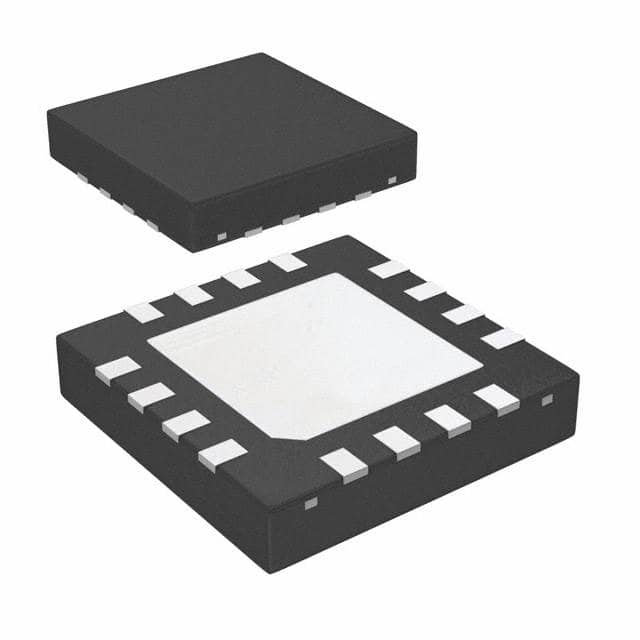
Analog Devices Inc./Maxim Integrated MAX3580ETJ+T
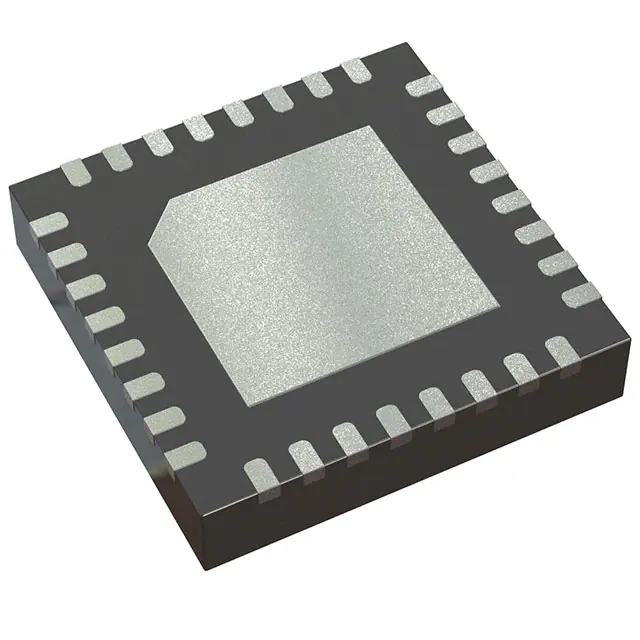
- Part No.:
- MAX3580ETJ+T
- Manufacturer:
- Analog Devices Inc./Maxim Integrated
- Category:
- Video Processing
- Package:
- 32-WFQFN Exposed Pad
- Datasheet:
-
 MAX3580ETJ+T.pdf
- Description:
- IC VID DIR CONV TV TUNER 32TQFN
- Quantity:
- Payment:

- Shipping:

Inventory:3,749
Please send an inquiry. Send us your inquiry, and we will respond immediately.
Product details
Overview
MAX3580ETJ+T from Maxim Integrated is a fully integrated, direct-conversion TV tuner IC designed for Digital Video Broadcasting-Terrestrial (DVB-T) reception. It covers VHF-III (170–230MHz) and UHF (470–878MHz) bands, delivers 71dB typical voltage gain, achieves 4.7dB noise figure at 470MHz, and operates from +3.1V to +3.5V with 650mW power dissipation in digital television front-end signal chains.
For engineers reviewing the MAX3580ETJ+T datasheet, MAX3580ETJ+T pinout, MAX3580ETJ+T application, or MAX3580ETJ+T equivalent, this page provides verified RF tuning performance, zero-IF I/Q baseband output specifications, AGC control behavior, phase-noise compliance for OFDM, and package-level thermal and layout guidance for DVB-T set-top and embedded TV designs.
Technical Context
The MAX3580ETJ+T implements a fractional-N synthesizer with 20-bit resolution and Frac-N architecture optimized for -90dBc/Hz close-in phase noise at 1kHz offset-critical for OFDM sensitivity in presence of strong adjacent channels. Its zero-IF architecture eliminates external SAW filters by delivering differential I/Q baseband outputs directly to the demodulator.
On-chip DC-offset cancellation uses mixed-signal feedback to suppress second-order distortion, improving dynamic range for downstream digitizers. The integrated multiband tracking filter and tunable baseband lowpass filters support full-band VHF-III and UHF operation without external band-switching components.
Key Specifications
| Parameter | Value and Actual Design Meaning |
|---|---|
| RF Input Range | VHF-III: 170–230MHz; UHF: 470–878MHz - supports full DVB-T channel coverage across terrestrial broadcast bands |
| Noise Figure | 4.7dB (typ) at 470MHz - enables high sensitivity for weak-signal reception in urban multipath environments |
| Overall Voltage Gain | 71dB (typ) at max gain - sufficient to amplify -93dBm to -20dBm RF inputs to 1VP-P baseband output |
| Phase Noise | -90dBc/Hz at 1kHz offset - meets MBRAI/NorDig requirements for OFDM symbol timing stability |
| Power Dissipation | 650mW at VCC = +3.3V - requires thermal-aware PCB layout with exposed paddle soldered to ground plane |
| Supply Voltage | +3.1V to +3.5V - compatible with standard 3.3V LDOs; tolerates ±5% variation without performance degradation |
| AGC Range | 76dB dynamic gain control - maintains constant baseband output level across >100dB RF input variation |
Pinout & Package
MAX3580ETJ+T is housed in a 32-pin TQFN package (5mm × 5mm) with exposed thermal pad (EP), rated for -40°C to +85°C operation. The exposed paddle must be soldered to the PCB ground plane for optimal RF performance and thermal management.
| Pin/Terminal | Circuit Role | Design Meaning |
|---|---|---|
| 1, 2 | SDA, SCL | 2-wire serial interface lines - require external pull-up resistors to VCC_SYN; support 400kHz clock rate |
| 4, 3 | RFIN, RFIN2 | Dual RF inputs - RFIN selected via RFS bit in Register 0x05; supports antenna diversity or dual-tuner configurations |
| 9, 19 | RF_AGC, BB_AGC | Analog gain control inputs - 0.5V to 2.85V range sets 76dB RF and 50dB baseband VGA gain respectively |
| 15–18 | BBQ-, BBQ+, BBI-, BBI+ | Differential I/Q baseband outputs - 1VP-P nominal, 60Ω differential impedance, DC-coupled with programmable highpass cutoff (20–200Hz) |
| 20, 21 | VCC_VCO, VTUNE | VCO supply and tuning voltage - VTUNE connects directly to PLL loop filter; VCC_VCO requires local 100pF decoupling |
| 24, 25 | CP, GND_CP | Charge-pump output and ground - CP drives loop filter; GND_CP must be isolated from digital ground to minimize reference spurs |
| 32, EP | XE, Exposed Pad | Crystal oscillator feedback and thermal ground - XE connects to capacitive divider in self-oscillating mode; EP must be soldered to PCB ground |
Key Features
| Feature | Design Value |
|---|---|
| I/Q Baseband Outputs | Eliminate all IF-SAW filters - reduces BOM cost and board area while enabling direct connection to DVB-T demodulators |
| Frac-N Synthesizer | -90dBc/Hz phase noise at 1kHz offset - ensures robust OFDM symbol recovery under strong adjacent-channel interference |
| Integrated Tracking Filters | Automatically tune across VHF/UHF bands - removes need for external band-switched LC networks or relays |
| Tunable Baseband LPF | Programmable 7MHz/8MHz passband - matches DVB-T channel bandwidths without external component changes |
| DC-Offset Cancellation | Mixed-signal on-chip correction - improves second-order IMD performance and prevents ADC saturation in zero-IF architecture |
| Ultra-Small TQFN | 5mm × 5mm footprint with exposed pad - enables compact tuner modules for USB peripherals and laptop TVs |
Applications
| Digital Television Front-End | DVB-T Set-Top Box Tuner |
|---|---|
Use Scenario: Integrated tuner in flat-panel TV mainboard receiving terrestrial broadcast signals in dense urban RF environments. IC Role / Device Role / Timing Role: Direct-conversion RF-to-baseband converter providing differential I/Q outputs synchronized to internal PLL clock. Use Value: 4.7dB noise figure and -90dBc/Hz 1kHz phase noise enable reliable reception of low-SNR DVB-T signals without external LNAs or SAW filters. |
Use Scenario: Compact tuner module in consumer-grade DVB-T set-top box supporting full VHF/UHF band coverage. IC Role / Device Role / Timing Role: Single-chip tuner with integrated VCO, synthesizer, and AGC delivering calibrated baseband outputs to demodulator ASIC. Use Value: 76dB AGC range and programmable baseband filtering allow consistent signal level delivery across varying antenna conditions and channel bandwidths. |
| Laptop TV Tuner Module | USB DVB-T Peripheral |
Use Scenario: Miniaturized tuner solution embedded in notebook PCs for portable terrestrial TV viewing. IC Role / Device Role / Timing Role: Low-power, small-footprint RF front-end converting broadcast signals to baseband for USB-connected demodulator IC. Use Value: 650mW total power dissipation and 5mm × 5mm TQFN package meet thermal and space constraints of laptop motherboard layouts. |
Use Scenario: Plug-and-play USB dongle for PC-based DVB-T reception requiring minimal host-side RF design effort. IC Role / Device Role / Timing Role: Standalone tuner IC interfacing via 2-wire bus to microcontroller, generating I/Q streams for USB audio/video streaming. Use Value: Integrated tracking filters and Frac-N synthesizer eliminate need for external frequency planning or calibration during mass production. |
Equivalent & Alternatives
The following parts are listed as comparable options for similar direct-conversion TV tuner applications.
| Alternative Part | Technical Difference | Application Difference | Selection Advice |
|---|---|---|---|
| SI2151-A10-GM | Single-ended baseband outputs; 3.3V-only supply; no integrated tracking filter - requires external band-switching | Targeted at cost-sensitive USB dongles with simpler RF front-end; lacks VHF-III support below 230MHz | Select when board space allows external filters and VHF-III coverage is not required; lower integration but mature driver support |
| MT2063DN | Higher power (850mW); supports ATSC/DVB-C in addition to DVB-T; larger 40-pin QFN package | Suitable for multi-standard broadcast receivers; includes built-in analog video DAC not present in MAX3580ETJ+T | Choose for hybrid DVB-T/ATSC platforms where additional standards support justifies higher power and footprint |
Compared with SI2151-A10-GM and MT2063DN, the MAX3580ETJ+T offers superior VHF-III coverage, lower power, and tighter phase-noise performance specifically optimized for DVB-T OFDM, making it ideal for space-constrained, high-sensitivity terrestrial TV applications.
Availability
MAX3580ETJ+T is available at Aetrix Electronics and suitable for digital televisions, DVB-T set-top boxes, and USB broadcast peripherals requiring stable component supply, long-term lifecycle assurance, and RoHS-compliant packaging.
Supply support for MAX3580ETJ+T includes scheduled delivery planning, volume procurement assistance, BOM continuity management, traceable sourcing, and lifecycle availability coordination for OEM customers, industrial embedded developers, connected-device designers, and electronics production programs.
Manufacturer
Maxim Integrated (now part of Analog Devices) is a semiconductor company specializing in high-performance analog, mixed-signal, and RF solutions for communications, computing, and consumer electronics.
The MAX3580ETJ+T belongs to Maxim's TV tuner product line, engineered specifically for zero-IF DVB-T front-ends with integrated synthesis, filtering, and AGC to replace multi-chip discrete tuner architectures.
FAQ
What is the operating temperature range for the MAX3580ETJ+T?
The MAX3580ETJ+T is specified for operation from -40°C to +85°C ambient temperature. This industrial-grade range ensures reliable performance in digital television chassis, set-top enclosures, and laptop thermal environments. Junction temperature must not exceed +150°C, and the exposed paddle must be thermally coupled to the PCB ground plane to maintain safe thermal resistance.
Does the MAX3580ETJ+T support both VHF-III and UHF DVB-T bands?
Yes, the MAX3580ETJ+T fully supports both VHF-III (170–230MHz) and UHF (470–878MHz) bands required for DVB-T reception. Band selection is controlled via the TF_BS bit in Register 0x05, and the integrated multiband tracking filter automatically adapts component values using on-chip ROM tables for optimal matching across the entire range.
How does the MAX3580ETJ+T handle DC offset in its zero-IF architecture?
The MAX3580ETJ+T implements on-chip mixed-signal DC-offset cancellation using dedicated DACs and feedback loops per I/Q channel. Registers 0x0B–0x0C configure correction thresholds, speed, and DAC values. This architecture actively suppresses LO leakage-induced DC offsets, preventing ADC saturation and preserving dynamic range without requiring external AC-coupling capacitors.
What package type and thermal considerations apply to the MAX3580ETJ+T?
The MAX3580ETJ+T uses a 32-pin TQFN package (5mm × 5mm) with an exposed thermal pad (EP). For optimal RF performance and thermal management, the EP must be soldered to a solid copper ground plane with ≥4 thermal vias. The device dissipates 650mW at +3.3V, and derating begins above +70°C ambient (21.3mW/°C).
Can the MAX3580ETJ+T be used with standard 27MHz crystal references?
Yes, the MAX3580ETJ+T accepts reference frequencies from 4MHz to 27MHz via the XB/XE pins. A 27MHz crystal is fully supported and commonly used to achieve optimal phase-noise performance in the UHF band. The internal REF_BUFF provides a buffered 0.7VP-P output, and register settings (e.g., RDIV in Register 0x06) allow scaling for different reference frequencies.
MAX3580ETJ+T Specifications
- Product attributes
- Attribute value
- Manufacturer:
- Analog Devices Inc./Maxim Integrated
- Series:
- -
- Package/Case:
- 32-WFQFN Exposed Pad
- Packaging:
- Tape & Reel (TR)
- Product Status:
- Obsolete
- Function:
- Tuner
- Applications:
- Professional Video
- Standards:
- -
- Control Interface:
- Serial
- Voltage - Supply:
- 3.1V ~ 3.5V
- Mounting Type:
- Surface Mount
- Grade:
- -
- Qualification:
- -
- Supplier Device Package:
- 32-TQFN (5x5)
MAX3580ETJ+T FAQ
1.How can I place an order for MAX3580ETJ+T through Aetrix?
Please submit a Request for Quotation (RFQ) for MAX3580ETJ+T on Aetrix. Our sales agent will provide a competitive quotation and guide you through the order confirmation once you accept the terms.
2.Are the price and stock information for MAX3580ETJ+T reliable?
The price and inventory of MAX3580ETJ+T are updated periodically and may fluctuate due to market conditions. Stock and pricing data are typically refreshed every 24 hours. Quotation validity for MAX3580ETJ+T is usually 5 days.
3.What payment methods are accepted for MAX3580ETJ+T?
We accept Wire Transfer, PayPal, Credit Card, Western Union, MoneyGram, and Escrow for MAX3580ETJ+T transactions.
Note: Certain payment methods may incur a processing fee.
4.How is shipping managed for MAX3580ETJ+T?
MAX3580ETJ+T orders can be shipped via leading logistics carriers, including DHL, UPS, FedEx, TNT, or Registered Mail.
Once your MAX3580ETJ+T order is processed, you will receive an email with the shipment details and tracking number.
Note: Tracking information may take up to 24 hours to appear. Express delivery typically takes 3–5 business days.
5.How can I obtain technical support or documentation for MAX3580ETJ+T?
For technical support, including MAX3580ETJ+T datasheets, pinout diagrams, or application guidance, please contact our engineering support team. They can provide detailed documentation and assistance for your MAX3580ETJ+T requirements.
6.How does Aetrix verify that MAX3580ETJ+T is sourced from the original manufacturer or authorized distributors?
All MAX3580ETJ+T products on Aetrix are procured from qualified distributors and authorized channels. Our dedicated quality assurance team conducts strict verification, including traceability checks and, if necessary, third-party testing. This ensures that MAX3580ETJ+T meets industry standards.
7.What is the process for return or replacement of MAX3580ETJ+T?
All MAX3580ETJ+T units undergo pre-shipment inspection (PSI). If there is an issue with MAX3580ETJ+T, returns or replacements are accepted under the following conditions:
1.Quantity discrepancies, incorrect items, or visible external defects (such as breakage or corrosion), acknowledged by Aetrix.
2.The issue is reported within 90 days of delivery.
3.The MAX3580ETJ+T part is unused and in its original packaging.
Return procedure for MAX3580ETJ+T:
1.Submit a request within 90 days.
2.Obtain a Return Material Authorization (RMA) from Aetrix.
MAX3580ETJ+T Tags
-
HDMI2C1-6C1
STMicroelectronics
-
ADA4430-1YKSZ-R7
Analog Devices Inc.

-
LM1881MX/NOPB
Texas Instruments
-
SN75DP130SSRGZR
Texas Instruments
-
EQCO30T5.2
Microchip Technology
-
LMH1980MM/NOPB
Texas Instruments
-
EQCO30R5.D
Microchip Technology

-
SII9022ACNU
Lattice Semiconductor Corporation
-
SN65DP159RGZR
Texas Instruments
-
SN65DP159RSBR
Texas Instruments
-
SN65DP141RLJR
Texas Instruments
-
LMH0303SQ/NOPB
Texas Instruments
Tech Hub

A practical engineering guide to 3.3V and 5V logic compatibility, input thresholds, resistor dividers, translator ICs, MOSFET level shifting, I2C pull-ups, timing limits and power-sequencing risks.

The 74HC595 uses push-pull logic outputs, while the TPIC6B595 uses 50 V open-drain DMOS sinks for higher-power loads. This guide compares timing, current limits, 3.3 V interfacing, load wiring, thermal…

The 74HC595 converts serial data into eight stable parallel outputs. This guide covers pin functions, shift and storage timing, OE and MR behavior, drive-current limits, cascading, voltage compatibilit…

A technical comparison of level-sensitive latches and edge-triggered flip-flops, covering timing windows, setup and hold limits, master–slave operation, time borrowing, race-through, HDL inference and…

A D latch stores one bit while Enable controls when data can pass. This reference covers gate-level operation, truth tables, transparency, setup and hold timing, LE versus OE, common ICs and practical …

An SR latch stores one bit through cross-coupled feedback. This engineering reference covers NOR and NAND implementations, truth tables, forbidden-state recovery, gated operation, switch debouncing, fa…

Latch circuits retain one bit through feedback. This technical reference covers SR and D latches, truth tables, transparency, timing limits, latch-versus-flip-flop behavior, applications and common log…

An engineering guide to LED driver operation, constant-current and constant-voltage outputs, linear and switching topologies, dimming, IC selection, calculations, replacement compatibility, and fault c…

Operational amplifier guide covering op amp basics, feedback, ideal vs real op amps, common configurations, buffer circuits, offset, bias current, gain-bandwidth, slew rate, rail-to-rail limits and sel…

Jumper cables guide covering safe connection order, red and black clamp placement, final ground connection, cable gauge, length, clamp quality, copper vs CCA cables, jump starter comparison and battery…


