
 My Inquiry
 My Account


Analog Devices Inc./Maxim Integrated MAX3735EGG
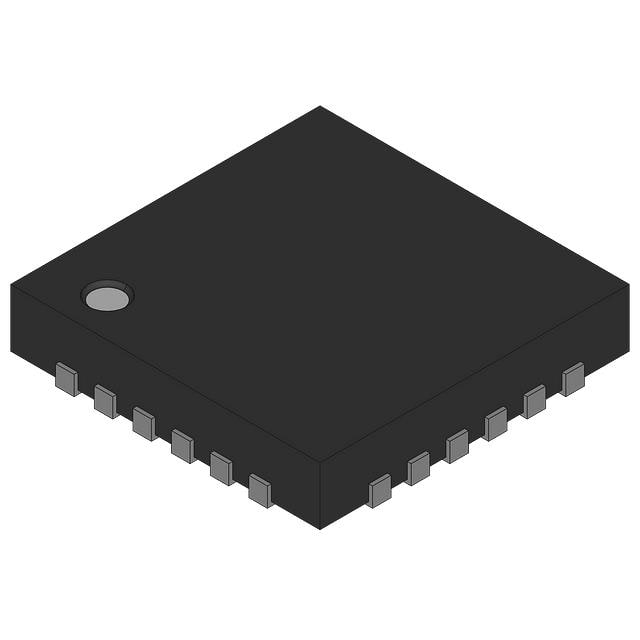
- Part No.:
- MAX3735EGG
- Manufacturer:
- Analog Devices Inc./Maxim Integrated
- Category:
- Laser Drivers
- Package:
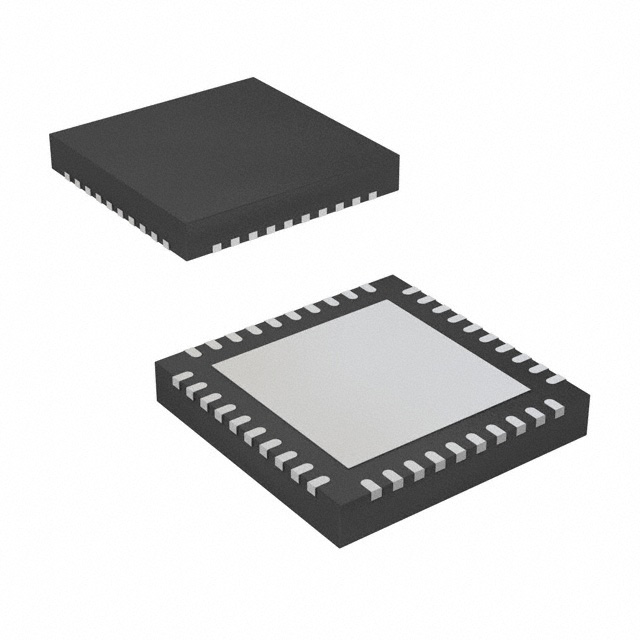
- 24-WFQFN Exposed Pad
- Datasheet:
-
 MAX3735EGG.pdf
- Description:
- 2.7GBPS, LOW-POWERLASER DRIVERS
- Quantity:
- Payment:

- Shipping:

Inventory:3,234
Please send an inquiry. Send us your inquiry, and we will respond immediately.
Product details
Overview
The MAX3735EGG from Maxim Integrated is a +3.3V, 2.7Gbps SFP/SFF laser driver IC designed for biasing and modulating FP/DFB laser diodes in fiber-optic transceivers. It delivers programmable bias current (1–100mA), modulation current (10–60mA DC-coupled or up to 85mA AC-coupled), and integrates automatic average power control (APC) with <±16% optical power setting accuracy over temperature and lifetime. Its 24-pin QFN-EP package supports Gigabit Ethernet and Fibre Channel modules.
For engineers reviewing the MAX3735EGG datasheet, MAX3735EGG pinout, MAX3735EGG application, or MAX3735EGG equivalent, key selection criteria include its SFF-8472-compliant transmit diagnostics, deterministic jitter <38ps at 2.67Gbps, edge transition times <51ps, 27mA typical supply current, and integrated TX_DISABLE/TX_FAULT safety logic for hot-plug SFP modules.
Technical Context
The MAX3735EGG implements a fully integrated APC feedback loop using an external capacitor (CAPC) between APCFILT1 and APCFILT2 to stabilize average optical power against laser threshold drift. Its high-speed modulation driver features differential input termination (100Ω), optimized 15Ω output load drive, and supports both DC- and AC-coupled laser interfaces.
It embeds dual current monitors (BC_MON and PC_MON) with ±10% gain stability over temperature, latched TX_FAULT assertion on overcurrent or open-loop conditions, and on-chip pullup for TX_DISABLE. The device operates across –40°C to +85°C and meets SFP MSA timing requirements including TX_DISABLE negate time of 1ms (MAX3735) or 600µs (MAX3735A).
Key Specifications
| Parameter | Value and Actual Design Meaning |
|---|---|
| Supply Voltage | +2.97V to +3.63V - compatible with standard 3.3V SFP power rails and tolerant of board-level ripple. |
| Data Rate Support | 155Mbps to 2.7Gbps - multirate operation enables reuse across OC3/OC12/OC48-FEC and 1G/2G Fibre Channel. |
| Bias Current Range | 1mA to 100mA - covers low-threshold FP lasers and high-power DFB lasers without external amplification. |
| Modulation Current | 10–60mA (DC-coupled); up to 85mA (AC-coupled) - enables flexible extinction ratio tuning via RMODSET resistor. |
| APC Accuracy | ±16% over temperature/lifetime - maintains stable average optical power without host microcontroller intervention. |
| Edge Transition Time | <51ps - ensures clean eye opening at 2.7Gbps with minimal duty-cycle distortion. |
| Deterministic Jitter | <38ps peak-to-peak at 2.67Gbps - meets SFP MSA jitter budget for reliable serial link margin. |
Pinout & Package
The MAX3735EGG is housed in a 24-pin, 4mm × 4mm QFN-EP (exposed pad) package rated for –40°C to +85°C operation. Thermal performance requires soldering the exposed pad to PCB ground.
| Pin/Terminal | Circuit Role | Design Meaning |
|---|---|---|
| IN+, IN- | Differential data input | Accepts 200–2400mVP-P CML-compatible signals; internal 100Ω termination eliminates external resistors. |
| BIAS | Laser bias current output | Sinks 1–100mA to laser cathode; low-impedance path minimizes parasitic inductance impact on optical rise/fall. |
| OUT+, OUT- | Differential modulation current outputs | Source/sink 10–85mA into 15Ω load; pins 15 & 16 must be shorted externally to reduce package inductance. |
| MD | Monitor photodiode anode input | Connects to back-facet photodiode; CAPC filter between APCFILT1/APCFILT2 sets APC loop dominant pole. |
| TX_DISABLE | TTL-compatible disable control | Assert high to shut down BIAS/IMOD within 134ns; internal pullup eliminates need for external resistor. |
| TX_FAULT | Open-collector fault indicator | Latches on overcurrent, open APC loop, or single-point failure; requires external 4.7–10kΩ pullup per SFP MSA. |
| BC_MON, PC_MON | Bias/photocurrent monitor outputs | Current-source outputs scaled to IBIAS/76 and IMD; voltage across external R determines fault threshold (1.22–1.39V). |
| SHUTDOWN | Optional external shutdown control | Voltage output drives external transistor to force laser cathode grounding during fault for Class 1 eye safety. |
Key Features
| Feature | Design Value |
|---|---|
| SFP/SFF-8472 Compliance | Fully satisfies MSA timing, diagnostic monitoring (bias/photocurrent), and fault reporting requirements for pluggable optics. |
| Integrated APC Loop | Eliminates need for external DACs or microcontroller-based power regulation; stabilizes optical output over laser aging and temperature drift. |
| Programmable Current Ranges | Independent resistor-set bias (1–100mA) and modulation (10–85mA) currents enable precise extinction ratio and optical power tuning. |
| Low-Jitter High-Speed Driver | Sub-51ps edge transitions and <38ps deterministic jitter at 2.67Gbps ensure robust signal integrity in 2.7Gbps links. |
| Robust Safety Architecture | Latched TX_FAULT, redundant shutdown path (SHUTDOWN pin), and dual current monitors provide fail-safe laser control per IEC 60825. |
Applications
| Gigabit Ethernet SFP Transceiver | 1G/2G Fibre Channel SFP |
|---|---|
Use Scenario: 1.25Gbps Ethernet link in enterprise switch line cards requiring hot-pluggable, SFF-8472-compliant optics. IC Role / Device Role / Timing Role: Laser driver providing bias/modulation current, APC-regulated average power, and real-time TX_FAULT reporting to host controller. Use Value: Enables plug-and-play interoperability with SFP host systems while maintaining >8.2dB extinction ratio across –40°C to +85°C. | Use Scenario: Storage area network transceiver operating at 1.0625Gbps or 2.125Gbps with strict jitter and EOL monitoring requirements. IC Role / Device Role / Timing Role: SFP MSA-compliant laser driver delivering deterministic jitter <38ps and latched fault detection for link reliability. Use Value: Supports Fibre Channel Class 3 timing compliance and provides photocurrent/bias-current telemetry for predictive maintenance. |
| Multirate OC3–OC48-FEC SFP | SFP Module with DS1858 Controller |
Use Scenario: Telecom access equipment requiring single transceiver design supporting SONET OC3 (155Mbps), OC12 (622Mbps), and OC48-FEC (2.488Gbps). IC Role / Device Role / Timing Role: Multirate laser driver with wide modulation range (10–85mA) and APC loop stable across data rates and temperatures. Use Value: Reduces BOM count by eliminating rate-specific drivers; maintains ±16% optical power accuracy regardless of data pattern or bit rate. | Use Scenario: Digital diagnostic SFP module implementing SFF-8472 DOM using Maxim's DS1858 controller IC. IC Role / Device Role / Timing Role: Analog front-end laser driver with BC_MON/PC_MON outputs interfaced to DS1858 ADC inputs for real-time monitoring. Use Value: Resistor-programmed current ranges (MODSET/APCSET) match DS1858's I²C-controlled DAC resolution, enabling closed-loop calibration. |
Equivalent & Alternatives
The following parts are listed as comparable options for similar laser driver applications.
| Alternative Part | Technical Difference | Application Difference | Selection Advice |
|---|---|---|---|
| MAX3735AETG | Improved multirate operation; tighter APC stability (±6% vs. ±8%); faster TX_DISABLE negate time (600µs vs. 1ms). | Preferred for new designs targeting 2.5G+ rates with stricter jitter or startup timing requirements. | Select MAX3735AETG when enhanced APC stability or reduced fault recovery latency is required; otherwise MAX3735EGG remains suitable for cost-sensitive 1G/2G applications. |
| SY88315BLE | 3.3V 2.7Gbps laser driver with integrated limiting amplifier; higher modulation current (100mA); no built-in APC loop. | Requires external APC circuitry or host MCU control; suited for non-SFF-8472 modules where diagnostics are not mandated. | Choose SY88315BLE only if external APC implementation is acceptable and higher modulation headroom is needed; MAX3735EGG provides self-contained APC and full MSA compliance. |
Compared with MAX3735AETG and SY88315BLE, the MAX3735EGG offers the most direct integration for SFP/SFF modules requiring autonomous APC, SFF-8472 diagnostics, and guaranteed 2.7Gbps performance without external support circuitry.
Availability
MAX3735EGG is available at Aetrix Electronics and suitable for Gigabit Ethernet transceivers, Fibre Channel modules, and multirate SONET/SDH SFP applications requiring stable component supply across industrial temperature ranges.
Supply support for MAX3735EGG includes scheduled delivery planning, volume procurement assistance, BOM continuity management, traceable sourcing, and lifecycle availability coordination for OEM customers, industrial embedded developers, connected-device designers, and electronics production programs.
Manufacturer
Maxim Integrated (now part of Analog Devices) is a semiconductor company specializing in high-performance analog, mixed-signal, and RF solutions for communications, computing, and industrial markets.
The MAX3735EGG belongs to Maxim's SFP/SFF laser driver product line, engineered specifically for compact, low-power, MSA-compliant fiber-optic transceivers operating from 155Mbps to 2.7Gbps.
FAQ
What is the operating temperature range for the MAX3735EGG?
The MAX3735EGG is specified to operate across –40°C to +85°C ambient temperature. This extended range ensures reliable performance in telecom chassis, enterprise switches, and industrial networking equipment where thermal management is constrained. All electrical characteristics-including bias current accuracy, APC stability, and jitter-are guaranteed over this full range per the datasheet.
Does the MAX3735EGG require external components for APC loop stability?
Yes, the MAX3735EGG requires an external capacitor (CAPC) connected between APCFILT1 and APCFILT2 pins to set the dominant pole of the automatic power control loop. Typical values range from 0.01µF to 2.7nF depending on laser type and coupling method; the datasheet provides specific recommendations for DC- vs. AC-coupled configurations to ensure loop stability and minimize pattern-dependent jitter.
How does the MAX3735EGG implement laser safety shutdown?
The MAX3735EGG implements dual-layer laser safety: first, it asserts the open-collector TX_FAULT pin on overcurrent or APC loop failure; second, it drives the SHUTDOWN pin high to control an external transistor that grounds the laser cathode. This redundant path complies with IEC 60825 Class 1 eye safety requirements and ensures immediate optical shutdown during fault conditions.
Can the MAX3735EGG drive both FP and DFB laser diodes?
Yes, the MAX3735EGG supports both FP and DFB laser diodes through its wide programmable current ranges: bias current from 1mA to 100mA and modulation current from 10mA to 60mA (DC-coupled) or up to 85mA (AC-coupled). Its APC loop maintains constant average optical power across laser types, and the 15Ω output impedance matches typical laser diode interface requirements.
Is the MAX3735EGG pin-compatible with the MAX3735A series?
Yes, the MAX3735EGG is pin-compatible with the MAX3735AETG and MAX3735AETG+ variants-same 24-pin QFN-EP footprint, identical pin functions, and shared layout. However, the MAX3735A versions offer improved APC stability (±6% vs. ±8%) and faster TX_DISABLE negate time (600µs vs. 1ms), so firmware or timing-critical designs may require validation despite mechanical compatibility.
MAX3735EGG Specifications
- Product attributes
- Attribute value
- Manufacturer:
- Analog Devices Inc./Maxim Integrated
- Series:
- -
- Package/Case:
- 24-WFQFN Exposed Pad
- Packaging:
- Bulk
- Product Status:
- Active
- Type:
- Laser Diode Driver (Fiber Optic)
- Data Rate:
- 2.7Gbps
- Number of Channels:
- 1
- Voltage - Supply:
- 2.97V ~ 3.63V
- Current - Supply:
- 27 mA
- Current - Modulation:
- 85mA
- Current - Bias:
- 100 mA
- Operating Temperature:
- -40°C ~ 85°C
- Grade:
- -
- Qualification:
- -
- Supplier Device Package:
- 24-TQFN-EP (4x4)
- Mounting Type:
- Surface Mount
MAX3735EGG FAQ
1.How can I place an order for MAX3735EGG through Aetrix?
Please submit a Request for Quotation (RFQ) for MAX3735EGG on Aetrix. Our sales agent will provide a competitive quotation and guide you through the order confirmation once you accept the terms.
2.Are the price and stock information for MAX3735EGG reliable?
The price and inventory of MAX3735EGG are updated periodically and may fluctuate due to market conditions. Stock and pricing data are typically refreshed every 24 hours. Quotation validity for MAX3735EGG is usually 5 days.
3.What payment methods are accepted for MAX3735EGG?
We accept Wire Transfer, PayPal, Credit Card, Western Union, MoneyGram, and Escrow for MAX3735EGG transactions.
Note: Certain payment methods may incur a processing fee.
4.How is shipping managed for MAX3735EGG?
MAX3735EGG orders can be shipped via leading logistics carriers, including DHL, UPS, FedEx, TNT, or Registered Mail.
Once your MAX3735EGG order is processed, you will receive an email with the shipment details and tracking number.
Note: Tracking information may take up to 24 hours to appear. Express delivery typically takes 3–5 business days.
5.How can I obtain technical support or documentation for MAX3735EGG?
For technical support, including MAX3735EGG datasheets, pinout diagrams, or application guidance, please contact our engineering support team. They can provide detailed documentation and assistance for your MAX3735EGG requirements.
6.How does Aetrix verify that MAX3735EGG is sourced from the original manufacturer or authorized distributors?
All MAX3735EGG products on Aetrix are procured from qualified distributors and authorized channels. Our dedicated quality assurance team conducts strict verification, including traceability checks and, if necessary, third-party testing. This ensures that MAX3735EGG meets industry standards.
7.What is the process for return or replacement of MAX3735EGG?
All MAX3735EGG units undergo pre-shipment inspection (PSI). If there is an issue with MAX3735EGG, returns or replacements are accepted under the following conditions:
1.Quantity discrepancies, incorrect items, or visible external defects (such as breakage or corrosion), acknowledged by Aetrix.
2.The issue is reported within 90 days of delivery.
3.The MAX3735EGG part is unused and in its original packaging.
Return procedure for MAX3735EGG:
1.Submit a request within 90 days.
2.Obtain a Return Material Authorization (RMA) from Aetrix.
MAX3735EGG Tags
-
EPC21701
EPC
-
EPC21601
EPC
-
MAX3799ETJ+T
Analog Devices Inc./Maxim Integrated
-
AD9665ACPZ-REEL7
Analog Devices Inc.
-
MAX3740AETG+T
Analog Devices Inc./Maxim Integrated
-
MAX3795ETG+
Analog Devices Inc./Maxim Integrated

-
EPC21603
EPC
-
ONET8501VRGPT
Texas Instruments
-
MAX3738ETG+T
Analog Devices Inc./Maxim Integrated
-
SY88022ALMG-TR
Microchip Technology
-
ISL78365ARZ-T7A
Renesas
-
EPC21603ENGRT
EPC
Tech Hub

A practical engineering guide to 3.3V and 5V logic compatibility, input thresholds, resistor dividers, translator ICs, MOSFET level shifting, I2C pull-ups, timing limits and power-sequencing risks.

The 74HC595 uses push-pull logic outputs, while the TPIC6B595 uses 50 V open-drain DMOS sinks for higher-power loads. This guide compares timing, current limits, 3.3 V interfacing, load wiring, thermal…

The 74HC595 converts serial data into eight stable parallel outputs. This guide covers pin functions, shift and storage timing, OE and MR behavior, drive-current limits, cascading, voltage compatibilit…

A technical comparison of level-sensitive latches and edge-triggered flip-flops, covering timing windows, setup and hold limits, master–slave operation, time borrowing, race-through, HDL inference and…

A D latch stores one bit while Enable controls when data can pass. This reference covers gate-level operation, truth tables, transparency, setup and hold timing, LE versus OE, common ICs and practical …

An SR latch stores one bit through cross-coupled feedback. This engineering reference covers NOR and NAND implementations, truth tables, forbidden-state recovery, gated operation, switch debouncing, fa…

Latch circuits retain one bit through feedback. This technical reference covers SR and D latches, truth tables, transparency, timing limits, latch-versus-flip-flop behavior, applications and common log…

An engineering guide to LED driver operation, constant-current and constant-voltage outputs, linear and switching topologies, dimming, IC selection, calculations, replacement compatibility, and fault c…

Operational amplifier guide covering op amp basics, feedback, ideal vs real op amps, common configurations, buffer circuits, offset, bias current, gain-bandwidth, slew rate, rail-to-rail limits and sel…

Jumper cables guide covering safe connection order, red and black clamp placement, final ground connection, cable gauge, length, clamp quality, copper vs CCA cables, jump starter comparison and battery…


