
 My Inquiry
 My Account


Analog Devices Inc./Maxim Integrated MAX3786UTJ
- Part No.:
- MAX3786UTJ
- Manufacturer:
- Analog Devices Inc./Maxim Integrated
- Category:
- Specialized
- Package:
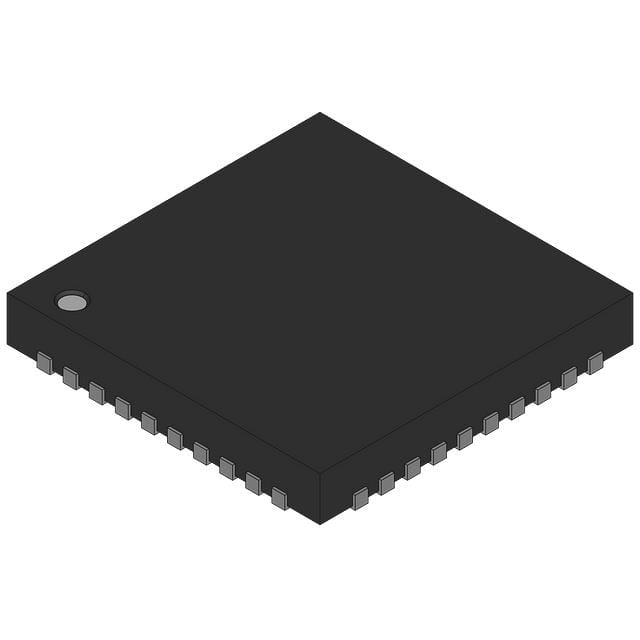
- 32-WFQFN Exposed Pad
- Datasheet:
-
 MAX3786UTJ.pdf
- Description:
- 1.5GBPS SERIAL MUX/BUFFER
- Quantity:
- Payment:

- Shipping:

Inventory:9,751
Please send an inquiry. Send us your inquiry, and we will respond immediately.
Product details
Overview
MAX3786UTJ from Maxim Integrated is a 1.5Gbps Serial ATA-compatible multiplexer/buffer IC designed for redundant SATA I/O channel switching in storage controllers. It integrates receive equalization (EQ) and transmit preemphasis (PE) on dual controller-side channels, supports loss-of-signal detection on all three high-speed inputs, and enables loopback on the nonselected channel. It operates from a single +3.3V supply and is used in enterprise RAID controllers requiring failover-capable SATA signal routing.
For engineers reviewing the MAX3786UTJ datasheet, MAX3786UTJ pinout, MAX3786UTJ application, or MAX3786UTJ equivalent, key selection criteria include differential jitter performance (<50psP-P with EQ/PE enabled), 100Ω internal input termination, CML-compatible I/O architecture, and support for SATA out-of-band signaling with sub-5ns output enable/disable timing.
Technical Context
The MAX3786UTJ implements a triple-mux architecture with independent LVCMOS control of channel selection (SEL), loopback enable (LB_EN), and per-channel EQ/PE activation (EQ0EN/EQ1EN/PE0EN/PE1EN). Its LOS detectors monitor RX, IN0, and IN1 with 50–150mVP-P thresholds and drive output disable logic with <5ns response time.
All high-speed I/Os use CML signaling with internally terminated 100Ω differential inputs and 50Ω single-ended-to-VCC outputs. EQ and PE are calibrated to compensate for ~2.5dB path loss-matching typical 20in FR-4 stripline attenuation at 750MHz.
Key Specifications
| Parameter | Value and Actual Design Meaning |
|---|---|
| Max Data Rate | 1.5Gbps - Supports full SATA I (1.5Gbps) link speed without retiming. |
| Supply Voltage | +3.0V to +3.6V - Single-rail operation compatible with standard 3.3V logic domains. |
| Input Termination | 100Ω differential - Eliminates need for external termination resistors on RX/IN0/IN1. |
| Output Termination | 50Ω to VCC - Matches SATA-compliant CML output impedance without external components. |
| Total Residual Jitter | <50psP-P with EQ/PE on - Meets SATA jitter budget for reliable 1.5Gbps eye opening after 20in FR-4 trace. |
| LOS Threshold | 50–150mVP-P - Enables robust OOB signaling detection across process/voltage/temperature corners. |
| Power Dissipation | 520mW typical with EQ/PE enabled - Enables thermal management in dense storage controller PCB layouts. |
Pinout & Package
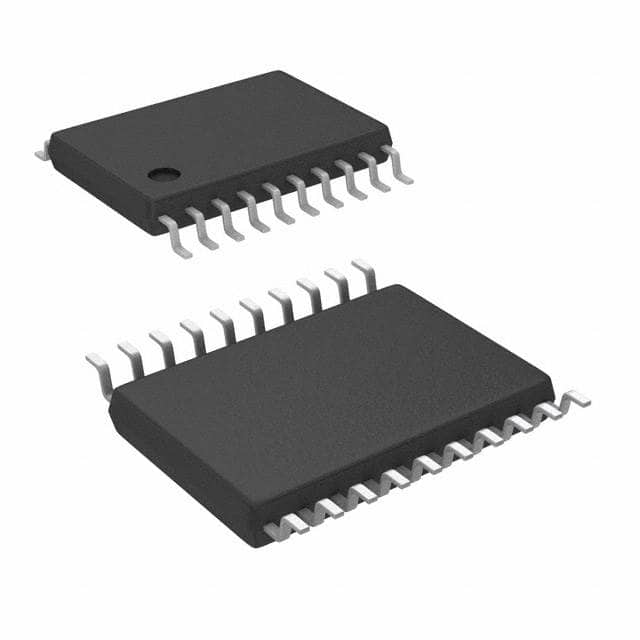
The MAX3786UTJ is housed in a 5mm × 5mm, 32-lead thin QFN package with exposed pad (T3255-2), requiring soldering of the EP pad to PCB ground for thermal and electrical integrity.
| Pin/Terminal | Circuit Role | Design Meaning |
|---|---|---|
| TX+/TX- | Controller-side CML data output pair | Drives SATA controller TX path; AC-coupled, internally terminated. |
| RX+/RX- | Controller-side CML data input pair | Receives SATA controller RX path; 100Ω differential termination, EQ-capable. |
| IN0+/IN0-/OUT0+/OUT0- | Channel 0 I/O differential pairs | Connects to first redundant SATA device; supports independent EQ/PE enable via EQ0EN/PE0EN. |
| IN1+/IN1-/OUT1+/OUT1- | Channel 1 I/O differential pairs | Connects to second redundant SATA device; supports independent EQ/PE enable via EQ1EN/PE1EN. |
| SEL | LVCMOS channel select input | Low = route TX/RX to Channel 0; High = route to Channel 1; internal 40kΩ pull-up. |
| LB_EN | LVCMOS loopback enable input | Low = enables loopback on nonselected channel; critical for diagnostics and hot-swap validation. |
| EQ0EN/EQ1EN/PE0EN/PE1EN | LVCMOS EQ/PE enable inputs | Active-low controls; internal 40kΩ pull-ups allow default-disable if left unconnected. |
| VCC (Pins 1,4,8,15,17,20,21,24,26) | +3.3V supply | Multiple distributed pins reduce IR drop and improve power integrity for high-speed analog blocks. |
| GND (Pins 16,25) | Ground reference | Dedicated ground pins adjacent to high-speed I/Os minimize return-path inductance. |
| CM0/CM1 | Input common-mode access points | Optional 1.0µF capacitor to VCC provides low-impedance AC common-mode path for improved noise rejection. |
Key Features
| Feature | Design Value |
|---|---|
| Integrated Receive Equalization | 4.5dB boost at 750MHz compensates for up to 20in FR-4 trace loss, restoring signal integrity at receiver input. |
| Integrated Transmit Preemphasis | 4.5dB high-frequency boost at 750MHz pre-compensates for channel loss, improving eye height at far-end SATA device. |
| SATA Out-of-Band Signaling Support | Three independent LOS detectors (RX, IN0, IN1) with <5ns response enable compliant OOB handshake and link initialization. |
| Loopback on Nonselected Channel | Enables real-time diagnostics and link training verification without physical reconfiguration or external test equipment. |
| AC-Coupled, Internally Terminated I/O | Eliminates 10 external termination resistors and simplifies layout while maintaining 100Ω differential and 50Ω single-ended impedance targets. |
Applications
| RAID Controller Redundancy | SATA Hot-Swap Validation |
|---|---|
Use Scenario: Dual-controller RAID systems require seamless failover between primary and backup SATA host bus adapters during maintenance or failure. IC Role / Device Role / Timing Role: MAX3786UTJ acts as a transparent, low-jitter signal switch that routes SATA TX/RX between two controllers and one disk drive while preserving OOB signaling integrity. Use Value: Enables sub-5ns output disable/enable during switchover, preventing data corruption and ensuring uninterrupted link training during controller handoff. | Use Scenario: Enterprise storage enclosures must validate SATA link stability before and after hot-insertion of drives without disrupting active I/O. IC Role / Device Role / Timing Role: MAX3786UTJ provides loopback capability on the inactive channel, allowing the system to verify PHY-level connectivity and signal quality prior to engagement. Use Value: Loopback mode eliminates need for external loopback cables or test fixtures, reducing BOM cost and enabling automated pre-insertion diagnostics. |
| High-Density Storage Backplanes | SATA Signal Integrity Extension |
Use Scenario: Compact 1U servers integrate multiple SATA drives on shared backplane traces where trace length and crosstalk degrade signal fidelity. IC Role / Device Role / Timing Role: MAX3786UTJ serves as a repeater/mux with integrated EQ/PE, placed near drive connectors to restore signal amplitude and timing margin. Use Value: Compensates for >2.5dB insertion loss in FR-4 backplane traces, extending usable SATA reach beyond 20in while maintaining <50psP-P residual jitter. | Use Scenario: Legacy SATA controllers lack built-in EQ/PE but must interface with long or lossy interconnects to modern drives. IC Role / Device Role / Timing Role: MAX3786UTJ functions as an external signal conditioner, adding EQ on inbound paths and PE on outbound paths without modifying controller silicon. Use Value: Enables interoperability between older SATA PHYs and longer cable assemblies or flex PCBs that would otherwise violate SATA jitter and eye-opening specs. |
Equivalent & Alternatives
The following parts are listed as comparable options for similar SATA mux/buffer applications.
| Alternative Part | Technical Difference | Application Difference | Selection Advice |
|---|---|---|---|
| MAX3785UTJ | No receive equalization or transmit preemphasis; lower power (350mW); same 1.5Gbps rate and 32-pin QFN package. | Suitable only for short (<10in) FR-4 traces with minimal loss; cannot extend SATA reach or recover degraded eyes. | Select MAX3785UTJ when signal integrity is assured by layout and cost reduction is prioritized over EQ/PE flexibility. |
| TI DS100DF410 | 4-channel 10Gbps retimer with adaptive EQ/CDR; requires external reference clock; 40-pin QFN; higher power (1.2W). | Supports SATA II/III (3/6Gbps) and SAS; adds clock-data recovery for severely degraded signals; over-spec for basic 1.5Gbps redundancy. | Choose DS100DF410 only when upgrading to multi-gigabit SATA/SAS or when CDR is required for >30in trace lengths or connector-induced jitter. |
Compared with MAX3785UTJ, the MAX3786UTJ adds essential EQ/PE for marginal channel conditions without increasing pin count or footprint; versus DS100DF410, it offers targeted 1.5Gbps SATA functionality at lower cost, power, and design complexity-ideal for cost-sensitive, space-constrained redundancy implementations.
Availability
MAX3786UTJ is available at Aetrix Electronics and suitable for RAID controller redundancy, SATA hot-swap validation, and high-density storage backplane applications requiring stable component supply and long-term industrial lifecycle support.
Supply support for MAX3786UTJ includes scheduled delivery planning, volume procurement assistance, BOM continuity management, traceable sourcing, and lifecycle availability coordination for OEM customers, industrial embedded developers, connected-device designers, and electronics production programs.
Manufacturer
Maxim Integrated (now part of Analog Devices) designs precision analog, mixed-signal, and high-speed interface ICs for industrial, communications, and computing markets.
The MAX3786UTJ belongs to Maxim's high-speed serial interface product line, engineered specifically for SATA infrastructure applications demanding low-jitter signal routing, OOB compatibility, and hardware-based redundancy management.
FAQ
What is the operating temperature range for the MAX3786UTJ?
The MAX3786UTJ is specified to operate from 0°C to +85°C ambient temperature. This industrial-grade range ensures reliable performance in server chassis, storage enclosures, and network-attached storage units where airflow and thermal management are constrained. The device's thermal design leverages the exposed pad for efficient heat dissipation into the PCB ground plane.
Does the MAX3786UTJ require external termination resistors?
No, the MAX3786UTJ does not require external termination resistors. Its high-speed inputs feature internal 100Ω differential termination, and outputs provide internal 50Ω single-ended-to-VCC termination. External AC coupling capacitors are still required, but the integrated terminations eliminate 10 discrete resistors typically needed in SATA signal path designs.
How does the loopback function work on the MAX3786UTJ?
The MAX3786UTJ enables loopback on the nonselected I/O channel via the LB_EN pin. When LB_EN is driven low, the inactive channel (e.g., IN1/OUT1 when SEL = low) routes its input directly to its output, forming a local diagnostic path. This allows real-time validation of signal integrity and PHY layer functionality without engaging the primary data path or requiring external test hardware.
Can the MAX3786UTJ support SATA II (3Gbps) or SATA III (6Gbps) data rates?
No, the MAX3786UTJ is rated exclusively for 1.5Gbps operation. Its electrical specifications-including jitter, bandwidth, and EQ/PE calibration-are characterized and guaranteed only at SATA I speed. Attempting 3Gbps or 6Gbps operation exceeds design limits and will result in excessive jitter, closed eye diagrams, and link failure. For higher speeds, consider retimers like the DS100DF410.
What is the purpose of the CM0 and CM1 pins on the MAX3786UTJ?
The CM0 and CM1 pins provide access to the common-mode voltage nodes of the IN0 and IN1 differential inputs. Though normally left unconnected, each can be tied to VCC via a 1.0µF capacitor to establish a low-impedance AC path for common-mode noise rejection-improving immunity to board-level EMI and power-supply noise without affecting differential signal integrity.
MAX3786UTJ Specifications
- Product attributes
- Attribute value
- Manufacturer:
- Analog Devices Inc./Maxim Integrated
- Series:
- -
- Package/Case:
- 32-WFQFN Exposed Pad
- Packaging:
- Bulk
- Product Status:
- Active
- Applications:
- Mux/Buffer with Loopback and Equalization
- Interface:
- CML
- Voltage - Supply:
- 3V ~ 3.6V
- Supplier Device Package:
- 32-TQFN-EP (5x5)
- Grade:
- -
- Qualification:
- -
- Mounting Type:
- Surface Mount
MAX3786UTJ FAQ
1.How can I place an order for MAX3786UTJ through Aetrix?
Please submit a Request for Quotation (RFQ) for MAX3786UTJ on Aetrix. Our sales agent will provide a competitive quotation and guide you through the order confirmation once you accept the terms.
2.Are the price and stock information for MAX3786UTJ reliable?
The price and inventory of MAX3786UTJ are updated periodically and may fluctuate due to market conditions. Stock and pricing data are typically refreshed every 24 hours. Quotation validity for MAX3786UTJ is usually 5 days.
3.What payment methods are accepted for MAX3786UTJ?
We accept Wire Transfer, PayPal, Credit Card, Western Union, MoneyGram, and Escrow for MAX3786UTJ transactions.
Note: Certain payment methods may incur a processing fee.
4.How is shipping managed for MAX3786UTJ?
MAX3786UTJ orders can be shipped via leading logistics carriers, including DHL, UPS, FedEx, TNT, or Registered Mail.
Once your MAX3786UTJ order is processed, you will receive an email with the shipment details and tracking number.
Note: Tracking information may take up to 24 hours to appear. Express delivery typically takes 3–5 business days.
5.How can I obtain technical support or documentation for MAX3786UTJ?
For technical support, including MAX3786UTJ datasheets, pinout diagrams, or application guidance, please contact our engineering support team. They can provide detailed documentation and assistance for your MAX3786UTJ requirements.
6.How does Aetrix verify that MAX3786UTJ is sourced from the original manufacturer or authorized distributors?
All MAX3786UTJ products on Aetrix are procured from qualified distributors and authorized channels. Our dedicated quality assurance team conducts strict verification, including traceability checks and, if necessary, third-party testing. This ensures that MAX3786UTJ meets industry standards.
7.What is the process for return or replacement of MAX3786UTJ?
All MAX3786UTJ units undergo pre-shipment inspection (PSI). If there is an issue with MAX3786UTJ, returns or replacements are accepted under the following conditions:
1.Quantity discrepancies, incorrect items, or visible external defects (such as breakage or corrosion), acknowledged by Aetrix.
2.The issue is reported within 90 days of delivery.
3.The MAX3786UTJ part is unused and in its original packaging.
Return procedure for MAX3786UTJ:
1.Submit a request within 90 days.
2.Obtain a Return Material Authorization (RMA) from Aetrix.
MAX3786UTJ Tags
-
NVT4857UKAZ
NXP Semiconductors
-
TCA8418RTWR
Texas Instruments
-
PCA9546APWR
Texas Instruments
-
MD0100N8-G
Microchip Technology
-
PCA9548APW,118
NXP Semiconductors
-
PCA9540BDP,118
NXP Semiconductors
-
PCA9548APWR
Texas Instruments
-
PCA9546APW,118
NXP Semiconductors
-
PTN3360DBS,518
NXP Semiconductors
-
PCA9546ABS,118
NXP Semiconductors
-
PCA9518PWR
Texas Instruments
-
PCA9545APW,118
NXP Semiconductors
Tech Hub

A practical engineering guide to 3.3V and 5V logic compatibility, input thresholds, resistor dividers, translator ICs, MOSFET level shifting, I2C pull-ups, timing limits and power-sequencing risks.

The 74HC595 uses push-pull logic outputs, while the TPIC6B595 uses 50 V open-drain DMOS sinks for higher-power loads. This guide compares timing, current limits, 3.3 V interfacing, load wiring, thermal…

The 74HC595 converts serial data into eight stable parallel outputs. This guide covers pin functions, shift and storage timing, OE and MR behavior, drive-current limits, cascading, voltage compatibilit…

A technical comparison of level-sensitive latches and edge-triggered flip-flops, covering timing windows, setup and hold limits, master–slave operation, time borrowing, race-through, HDL inference and…

A D latch stores one bit while Enable controls when data can pass. This reference covers gate-level operation, truth tables, transparency, setup and hold timing, LE versus OE, common ICs and practical …

An SR latch stores one bit through cross-coupled feedback. This engineering reference covers NOR and NAND implementations, truth tables, forbidden-state recovery, gated operation, switch debouncing, fa…

Latch circuits retain one bit through feedback. This technical reference covers SR and D latches, truth tables, transparency, timing limits, latch-versus-flip-flop behavior, applications and common log…

An engineering guide to LED driver operation, constant-current and constant-voltage outputs, linear and switching topologies, dimming, IC selection, calculations, replacement compatibility, and fault c…

Operational amplifier guide covering op amp basics, feedback, ideal vs real op amps, common configurations, buffer circuits, offset, bias current, gain-bandwidth, slew rate, rail-to-rail limits and sel…

Jumper cables guide covering safe connection order, red and black clamp placement, final ground connection, cable gauge, length, clamp quality, copper vs CCA cables, jump starter comparison and battery…


