
 My Inquiry
 My Account


Analog Devices Inc./Maxim Integrated MAX3798ETJ+
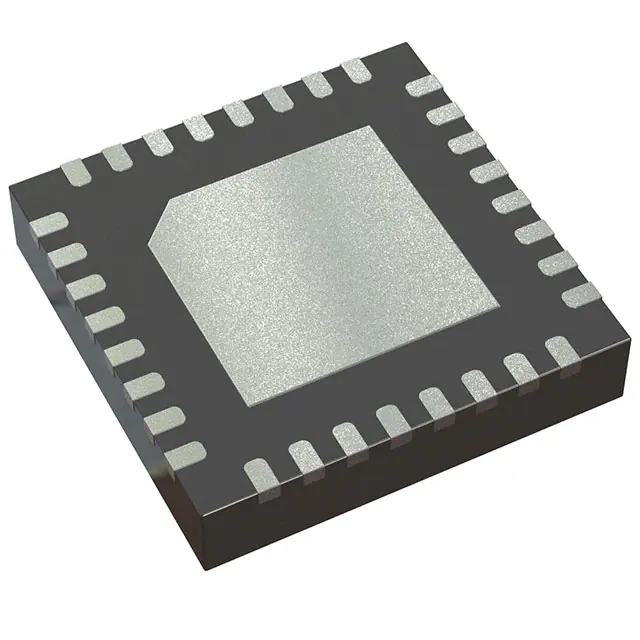
- Part No.:
- MAX3798ETJ+
- Manufacturer:
- Analog Devices Inc./Maxim Integrated
- Category:
- Instrumentation, Op Amps, Buffer Amps
- Package:
- 32-WFQFN Exposed Pad
- Datasheet:
-
 MAX3798ETJ+.pdf
- Description:
- IC LIMITING 1 CIRCUIT 32TQFN
- Quantity:
- Payment:

- Shipping:

Inventory:129
Please send an inquiry. Send us your inquiry, and we will respond immediately.
Product details
Overview
The MAX3798ETJ+ from Maxim Integrated is a single-supply (+3.3V), integrated limiting amplifier and VCSEL driver IC for 10GBASE-SR and Fibre Channel (1x–8x) optical transceivers, supporting data rates up to 10.3125Gbps. It delivers 3mVP-P receiver sensitivity at 10.32Gbps, 4psP-P deterministic jitter, and programmable modulation/bias currents (up to 12mA/15mA) in a compact 32-pin TQFN package - enabling SFP+ MSA-compliant 850nm VCSEL-based transceiver designs.
For engineers reviewing the MAX3798ETJ+ datasheet, MAX3798ETJ+ pinout, MAX3798ETJ+ application, or MAX3798ETJ+ equivalent, key selection considerations include its dual-mode (high-gain/high-bandwidth) operation, 3-wire digital interface for full Rx/Tx configuration, integrated APC loop control, CML output slew-rate adjustment, and eye safety features compliant with IEC 60825-1 Class 1 requirements.
Technical Context
The MAX3798ETJ+ integrates two functionally distinct signal paths: a high-sensitivity limiting amplifier with adjustable LOS threshold and CML output level control, and a precision VCSEL driver with independent modulation/bias current DACs, eye-crossing adjustment, and programmable deemphasis. Its MODE_SEL architecture enables dynamic switching between high-gain (optimized for low-input-signal scenarios) and high-bandwidth (optimized for 10G NRZ) modes.
All differential I/Os are internally back-terminated to 50Ω for direct PCB routing without external resistors. The 3-wire digital interface (SDA/SCL/CSEL) controls 24+ configurable parameters - including Rx squelch polarity, Tx deemphasis, LOS hysteresis, and CML output amplitude - eliminating need for external microcontrollers or discrete logic in SFP+ modules.
Key Specifications
| Parameter | Value and Actual Design Meaning |
|---|---|
| Data Rate Support | 1.0625Gbps to 10.3125Gbps (NRZ); enables interoperability across 1x/2x/4x/8x FC and 10GBASE-SR/LR/LRM standards. |
| Receiver Sensitivity | 3mVP-P at 10.32Gbps; allows use with low-output ROSAs while maintaining BER ≤10⁻¹². |
| Deterministic Jitter | 4psP-P at 10.32Gbps (2³¹−1 PRBS); meets SFP+ MSA eye mask compliance for 850nm VCSEL links. |
| Modulation Current Range | 2mA to 12mA into 100Ω differential load; supports precise optical power tuning for APC loop stability. |
| Bias Current Range | 2mA to 15mA; enables thermal drift compensation and VCSEL aging margin in long-life transceivers. |
| Power Dissipation | 320mW typical at 3.3V; enables thermally constrained SFP+ module designs without forced air cooling. |
| LOS Threshold Adjustment | 14–77mVP-P range via 6-bit DAC; permits adaptive signal loss detection across varying fiber lengths and connector losses. |
Pinout & Package
MAX3798ETJ+ is housed in a lead-free, RoHS-compliant 5mm × 5mm, 32-pin TQFN-EP package with exposed thermal pad (pin 32). All differential I/Os are internally back-terminated to 50Ω for impedance-matched PCB trace routing.
| Pin/Terminal | Circuit Role | Design Meaning |
|---|---|---|
| 1 (LOS) | Open-drain loss-of-signal indicator | Asserts low when input falls below programmable threshold; polarity invertible via register; supports SFP+ LOS signaling. |
| 2 (MSEL) | Hardware mode-select input | Logic-high selects high-bandwidth mode (10G); logic-low selects high-gain mode (≤4.25G); internal 75kΩ pulldown. |
| 3,6,27,30 (VCCR) | Receiver power supply | Dedicated 3.3V rail for limiting amplifier; decoupling required per datasheet layout guidelines. |
| 4,5 (ROUT+, ROUT−) | Differential CML receive output | AC-coupled, 50Ω back-terminated; supports 400mVP-P to 1005mVP-P amplitude via SET_CML DAC. |
| 7,8 (TIN+, TIN−) | Differential transmit input | Accepts CML-level data (0.075–0.8VP-P); 75–125Ω differential input resistance; >9dB return loss to 16GHz. |
| 9,10 (TOUT+, TOUT−) | Differential VCSEL modulation output | Drives VCSEL anode/cathode; supports 26–39ps rise/fall time; integrated eye safety monitoring. |
| 11 (BIAS) | VCSEL bias current output | Sink output delivering 2–15mA; compliance voltage 0.9–2.1V; monitored via BMON pin. |
| 12 (BMON) | Bias current monitor | Analog voltage proportional to BIAS current (16mA/A gain); used for closed-loop APC feedback. |
| 13 (DISABLE) | Transmit shutdown control | Active-high TTL/CMOS input; asserts within 1μs to disable IMOD/IBIAS; resets FAULT on negation. |
| 14 (FAULT) | Open-drain fault indicator | Asserts low on overvoltage at BMAX/MMAX/BMON/BIAS; requires external 4.7kΩ pullup to VCC. |
| 15–18,20–23,25,26,28,29,31 (SDA, SCL, CSEL, RIN+, RIN−, VEER, VEET, CAZ1, CAZ2, BMAX, MMAX, VBMON) | Digital interface & analog monitoring terminals | 3-wire serial control (400–1000kHz), input termination, APC loop capacitors, and safety voltage monitors. |
Key Features
| Feature | Design Value |
|---|---|
| 3-wire digital interface | Reduces pin count by 60% vs. parallel control; enables full Rx/Tx configuration (mode, LOS, deemphasis, eye crossing) without external MCU. |
| Dual-mode limiting amplifier | Hardware (MSEL) + register-controlled selection between high-gain (for low-sensitivity ROSAs) and high-bandwidth (for 10G NRZ) operation. |
| Programmable CML output slew rate | Adjustable rise/fall time (26–50ps) in high-gain mode to optimize eye opening under varying channel loss. |
| Integrated eye safety circuitry | Monitors BMAX, MMAX, BMON, and BIAS voltages; asserts FAULT if thresholds exceeded - satisfies IEC 60825-1 Class 1 compliance. |
| Low-jitter VCSEL driver | 4psP-P DJ at 10.32Gbps with 26ps Tx transition time; supports mask-compliant optical eye diagrams for 10GBASE-SR. |
| APC loop support | Includes dedicated BMON pin with 16mA/A gain and CAZ1/CAZ2 capacitor pads for stable average-power control loop implementation. |
Applications
| 10GBASE-SR SFP+ Transceiver | 8x Fibre Channel SFP Transceiver |
|---|---|
Use Scenario: Short-reach (≤300m) multimode fiber links in data center top-of-rack switches using 850nm VCSELs. IC Role / Device Role / Timing Role: Receives low-amplitude TIA output, limits to clean CML signal; drives VCSEL with precisely controlled IMOD/IBIAS for stable optical output. Use Value: Enables 10.3125Gbps operation with <4ps DJ and 3mVP-P sensitivity - meeting IEEE 802.3ae SR mask requirements without external equalization. |
Use Scenario: High-density storage area networks with legacy 8.5Gbps Fibre Channel infrastructure. IC Role / Device Role / Timing Role: Acts as limiting amplifier and laser driver in SFF-8472-compliant SFP modules; supports 1x/2x/4x/8x FC data rates. Use Value: Single-chip solution reduces BOM count and PCB area vs. discrete amplifier + driver; MODE_SEL pin simplifies rate auto-detection. |
| 10GBASE-LR SFP+ Transceiver (1310nm) | 10GBASE-LRM SFP+ Transceiver (1310nm) |
Use Scenario: 10km single-mode fiber links using 1310nm DFB lasers in enterprise campus networks. IC Role / Device Role / Timing Role: Provides high-sensitivity limiting amplification for low-output PIN diodes; drives DFB laser via external modulator interface. Use Value: 3mVP-P sensitivity at 10.32Gbps allows use with low-cost ROSAs; programmable LOS threshold adapts to varying link budgets. |
Use Scenario: Extended-reach (≤220m) operation over legacy 62.5μm multimode fiber using 1310nm VCSELs. IC Role / Device Role / Timing Role: Compensates for modal dispersion via programmable deemphasis and eye-crossing adjustment in Tx path. Use Value: SET_TXDE[3:0] and eye-crossing DAC enable optimization of optical eye for LRM compliance without hardware changes. |
Equivalent & Alternatives
The following parts are listed as comparable options for similar limiting amplifier and VCSEL driver applications.
| Alternative Part | Technical Difference | Application Difference | Selection Advice |
|---|---|---|---|
| MAX3738ETJ+ | Lower max data rate (4.25Gbps); no 10G NRZ support; identical 32-pin TQFN package and 3-wire interface. | Targeted for 1x/2x/4x FC only; not suitable for 10GBASE-SR/LR. | Select MAX3738ETJ+ only for cost-sensitive ≤4.25Gbps SFP designs where 10G capability is unnecessary. |
| SY88315BLEY | Higher power consumption (450mW); supports 11.3Gbps; uses 4-wire SPI instead of 3-wire interface; 28-pin QFN package. | Designed for CPRI/eCPRI fronthaul; lacks integrated APC loop components (CAZ1/CAZ2 pins). | Choose SY88315BLEY only when >10.3125Gbps margin or CPRI timing specs are required; expect PCB redesign due to pinout/package change. |
Compared with MAX3738ETJ+ and SY88315BLEY, the MAX3798ETJ+ uniquely balances 10.3125Gbps performance, ultra-low 320mW power, integrated APC support, and SFP+ MSA-compliant pinout - making it the optimal choice for next-generation 10G optical transceivers requiring thermal efficiency and design reuse.
Availability
MAX3798ETJ+ is available at Aetrix Electronics and suitable for 10GBASE-SR optical transceivers, Fibre Channel SFP+ modules, and 10G Ethernet over multimode fiber applications requiring stable component supply, long-term lifecycle support, and RoHS-compliant packaging.
Supply support for MAX3798ETJ+ includes scheduled delivery planning, volume procurement assistance, BOM continuity management, traceable sourcing, and lifecycle availability coordination for OEM customers, industrial embedded developers, connected-device designers, and electronics production programs.
Manufacturer
Maxim Integrated (now part of Analog Devices) is a semiconductor company specializing in high-performance analog, mixed-signal, and RF ICs for communications, computing, and industrial systems.
The MAX3798ETJ+ belongs to Maxim's optical interconnect product line, designed specifically to simplify SFP/SFP+ transceiver development with integrated limiting amplifiers, VCSEL drivers, and digital configuration interfaces - reducing time-to-market for 10G optical modules.
FAQ
What data rates does the MAX3798ETJ+ support?
The MAX3798ETJ+ supports data rates from 1.0625Gbps up to 10.3125Gbps (NRZ), covering all Fibre Channel speeds (1x/2x/4x/8x) and IEEE 802.3ae 10GBASE-SR/LR/LRM standards. At 10.32Gbps, it achieves 3mVP-P receiver sensitivity and 4psP-P deterministic jitter - verified with 2³¹−1 PRBS test patterns per datasheet Section 3.
Does the MAX3798ETJ+ include integrated eye safety features?
Yes, the MAX3798ETJ+ includes hardware-monitored eye safety circuitry compliant with IEC 60825-1 Class 1 requirements. It continuously monitors voltages at BMAX, MMAX, BMON, and BIAS pins; asserts the open-drain FAULT pin if any exceed defined thresholds (e.g., VBMAX < VCC − 0.6V), ensuring automatic laser shutdown during fault conditions.
How is the MAX3798ETJ+ configured for different optical standards?
The MAX3798ETJ+ uses a 3-wire digital interface (SDA/SCL/CSEL) to configure 24+ parameters including MODE_SEL (high-gain vs. high-bandwidth), LOS threshold (14–77mVP-P), CML output amplitude (595–1005mVP-P), Tx deemphasis, and eye-crossing. Configuration registers allow one hardware design to support 10GBASE-SR, FC-8x, and LRM via firmware - no PCB changes required.
What is the package type and thermal performance of the MAX3798ETJ+?
The MAX3798ETJ+ uses a 5mm × 5mm, 32-pin TQFN-EP package with exposed thermal pad (pin 32). At 3.3V supply and 25°C ambient, it dissipates 320mW typical power. Its thermal resistance θJA is 34.5°C/W above +70°C, enabling operation up to +85°C ambient in SFP+ modules without active cooling - validated per datasheet Absolute Maximum Ratings table.
Can the MAX3798ETJ+ be used in both SFP and SFP+ form factors?
Yes, the MAX3798ETJ+ is explicitly designed for both SFP and SFP+ MSA-compliant optical transceivers. Its dual-mode architecture (via MSEL pin or MODE_SEL register) supports lower-speed FC-1x/2x/4x (SFP) and 10G Ethernet (SFP+). The 32-pin TQFN footprint matches SFP+ module layout constraints, and its 3.3V single supply eliminates need for additional voltage rails.
MAX3798ETJ+ Specifications
- Product attributes
- Attribute value
- Manufacturer:
- Analog Devices Inc./Maxim Integrated
- Series:
- -
- Package/Case:
- 32-WFQFN Exposed Pad
- Packaging:
- Tube
- Product Status:
- Active
- Amplifier Type:
- Limiting
- Number of Circuits:
- 1
- Output Type:
- Differential
- Slew Rate:
- -
- Gain Bandwidth Product:
- -
- -3db Bandwidth:
- -
- Current - Input Bias:
- -
- Voltage - Input Offset:
- -
- Current - Supply:
- 97mA
- Current - Output / Channel:
- -
- Voltage - Supply Span (Min):
- 2.85 V
- Voltage - Supply Span (Max):
- 3.63 V
- Operating Temperature:
- -40°C ~ 85°C
- Grade:
- -
- Qualification:
- -
- Mounting Type:
- Surface Mount
- Supplier Device Package:
- 32-TQFN (5x5)
MAX3798ETJ+ FAQ
1.How can I place an order for MAX3798ETJ+ through Aetrix?
Please submit a Request for Quotation (RFQ) for MAX3798ETJ+ on Aetrix. Our sales agent will provide a competitive quotation and guide you through the order confirmation once you accept the terms.
2.Are the price and stock information for MAX3798ETJ+ reliable?
The price and inventory of MAX3798ETJ+ are updated periodically and may fluctuate due to market conditions. Stock and pricing data are typically refreshed every 24 hours. Quotation validity for MAX3798ETJ+ is usually 5 days.
3.What payment methods are accepted for MAX3798ETJ+?
We accept Wire Transfer, PayPal, Credit Card, Western Union, MoneyGram, and Escrow for MAX3798ETJ+ transactions.
Note: Certain payment methods may incur a processing fee.
4.How is shipping managed for MAX3798ETJ+?
MAX3798ETJ+ orders can be shipped via leading logistics carriers, including DHL, UPS, FedEx, TNT, or Registered Mail.
Once your MAX3798ETJ+ order is processed, you will receive an email with the shipment details and tracking number.
Note: Tracking information may take up to 24 hours to appear. Express delivery typically takes 3–5 business days.
5.How can I obtain technical support or documentation for MAX3798ETJ+?
For technical support, including MAX3798ETJ+ datasheets, pinout diagrams, or application guidance, please contact our engineering support team. They can provide detailed documentation and assistance for your MAX3798ETJ+ requirements.
6.How does Aetrix verify that MAX3798ETJ+ is sourced from the original manufacturer or authorized distributors?
All MAX3798ETJ+ products on Aetrix are procured from qualified distributors and authorized channels. Our dedicated quality assurance team conducts strict verification, including traceability checks and, if necessary, third-party testing. This ensures that MAX3798ETJ+ meets industry standards.
7.What is the process for return or replacement of MAX3798ETJ+?
All MAX3798ETJ+ units undergo pre-shipment inspection (PSI). If there is an issue with MAX3798ETJ+, returns or replacements are accepted under the following conditions:
1.Quantity discrepancies, incorrect items, or visible external defects (such as breakage or corrosion), acknowledged by Aetrix.
2.The issue is reported within 90 days of delivery.
3.The MAX3798ETJ+ part is unused and in its original packaging.
Return procedure for MAX3798ETJ+:
1.Submit a request within 90 days.
2.Obtain a Return Material Authorization (RMA) from Aetrix.
MAX3798ETJ+ Tags
-
LM358DT
STMicroelectronics

-
LM358DR
Texas Instruments
-
LM2904DR
Texas Instruments
-
LM358ADR
Texas Instruments
-
LM2904DGKR
Texas Instruments
-
LM324DR
Texas Instruments

-
MCP6006T-E/OT
Microchip Technology
-
MCP6006UT-E/OT
Microchip Technology
-
LM324PWR
Texas Instruments
-
LM2902PWR
Texas Instruments
-
LM2902DR
Texas Instruments
-
LM358P
Texas Instruments
Tech Hub

A practical engineering guide to 3.3V and 5V logic compatibility, input thresholds, resistor dividers, translator ICs, MOSFET level shifting, I2C pull-ups, timing limits and power-sequencing risks.

The 74HC595 uses push-pull logic outputs, while the TPIC6B595 uses 50 V open-drain DMOS sinks for higher-power loads. This guide compares timing, current limits, 3.3 V interfacing, load wiring, thermal…

The 74HC595 converts serial data into eight stable parallel outputs. This guide covers pin functions, shift and storage timing, OE and MR behavior, drive-current limits, cascading, voltage compatibilit…

A technical comparison of level-sensitive latches and edge-triggered flip-flops, covering timing windows, setup and hold limits, master–slave operation, time borrowing, race-through, HDL inference and…

A D latch stores one bit while Enable controls when data can pass. This reference covers gate-level operation, truth tables, transparency, setup and hold timing, LE versus OE, common ICs and practical …

An SR latch stores one bit through cross-coupled feedback. This engineering reference covers NOR and NAND implementations, truth tables, forbidden-state recovery, gated operation, switch debouncing, fa…

Latch circuits retain one bit through feedback. This technical reference covers SR and D latches, truth tables, transparency, timing limits, latch-versus-flip-flop behavior, applications and common log…

An engineering guide to LED driver operation, constant-current and constant-voltage outputs, linear and switching topologies, dimming, IC selection, calculations, replacement compatibility, and fault c…

Operational amplifier guide covering op amp basics, feedback, ideal vs real op amps, common configurations, buffer circuits, offset, bias current, gain-bandwidth, slew rate, rail-to-rail limits and sel…

Jumper cables guide covering safe connection order, red and black clamp placement, final ground connection, cable gauge, length, clamp quality, copper vs CCA cables, jump starter comparison and battery…


