
 My Inquiry
 My Account


Analog Devices Inc./Maxim Integrated MAX3867ECM
- Part No.:
- MAX3867ECM
- Manufacturer:
- Analog Devices Inc./Maxim Integrated
- Category:
- Laser Drivers
- Package:
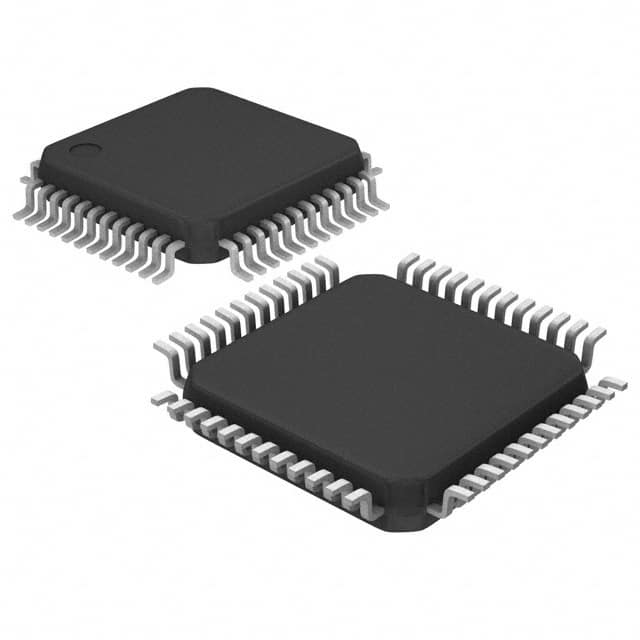
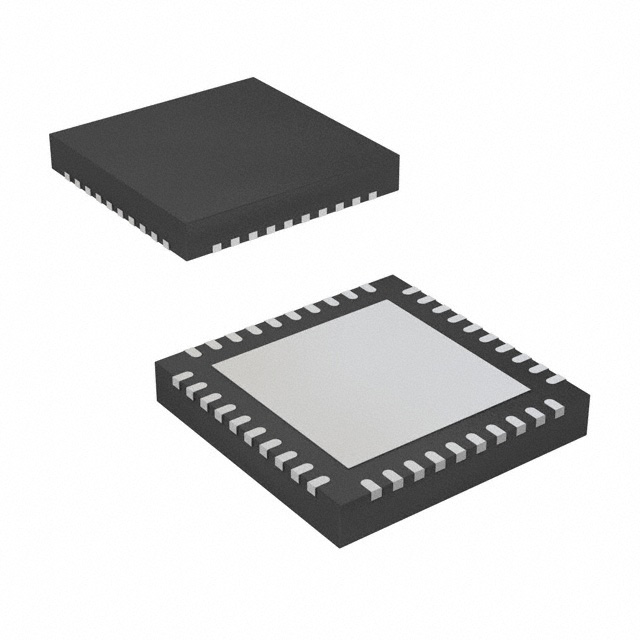
- 48-LQFP
- Datasheet:
-
 MAX3867ECM.pdf
- Description:
- IC LASER DRVR 2.5GB 5.5V 48LQFP
- Quantity:
- Payment:

- Shipping:

Inventory:3,228
Please send an inquiry. Send us your inquiry, and we will respond immediately.
Product details
Overview
MAX3867ECM from Maxim Integrated is a single +3.3V laser driver IC designed for 2.5Gbps SDH/SONET optical transmitters. It delivers programmable bias current (1–100mA) and modulation current (5–60mA), features automatic average power control (APC) with failure monitoring, and accepts differential PECL data/clock inputs. It operates in industrial temperature range (−40°C to +85°C) and drives laser diodes in add/drop multiplexers and section regenerators.
For engineers reviewing the MAX3867ECM datasheet, MAX3867ECM pinout, MAX3867ECM application, or MAX3867ECM equivalent, key selection criteria include APC loop stability, PECL input compatibility, rise/fall time <90ps, TTL enable/failure signaling, and 48-pin TQFP package thermal performance at 2.5Gbps.
Technical Context
The MAX3867ECM integrates a high-speed modulation driver and laser-biasing block with closed-loop APC using external resistors (APCSET, BIASMAX, MODSET) and capacitor (CAPC = 0.1µF). Its differential PECL input stage supports retiming via LATCH-controlled clock synchronization or direct path operation.
Output stage uses AC-coupled, high-slew-rate differential pair driving 25Ω load with OUT+/OUT− pins; bias current flows through BIAS pin while modulation current splits across OUT+ and OUT−. APC feedback monitors photodiode current (IMD = 18–1000µA) to maintain constant average optical power over temperature and lifetime.
Key Specifications
| Parameter | Value and Actual Design Meaning |
|---|---|
| Supply Voltage | +3.14V to +5.5V - supports both +3.3V and +5V operation with headroom margin for 60mA modulation |
| Rise/Fall Time | <90ps - enables clean 2.5Gbps NRZ eye diagrams with low pattern-dependent jitter |
| Modulation Current Range | 5mA to 60mA - set by RMODSET resistor; sufficient for ≥6.6dB extinction ratio in SONET OC-48 systems |
| Bias Current Range | 1mA to 100mA - set by RBIASMAX resistor; accommodates laser threshold drift over life and temperature |
| APC Monitor Accuracy | ±15% bias current absolute accuracy - ensures stable average optical power despite component variation |
| Input Compatibility | Differential PECL data/clock - accepts VID = 200–1600mVp-p with VICM = VCC − 1.49V to VCC − 1.32V |
| Fail Output | TTL/CMOS FAIL pin - active-low signal indicates APC loop inability to regulate monitor diode current |
Pinout & Package
The MAX3867ECM is housed in a 48-pin Thin Quad Flat Package (TQFP), 7mm × 7mm, 0.5mm pitch, with exposed thermal pad. Pin functions are validated per Maxim's official datasheet Rev 0a (1998), including dedicated ground domains (GND1–GND4), separate power rails (VCC1/VCC2/VCC3/VCC4), and APC-specific terminals (APCSET, CAPC, APCFILT, MD).
| Pin/Terminal | Circuit Role | Design Meaning |
|---|---|---|
| 25 (BIAS) | Laser bias current output | DC current source driving laser cathode; requires minimal parasitic capacitance for stable APC operation |
| 29 (OUT+), 30 (OUT−) | Differential modulation current outputs | AC-coupled high-speed outputs delivering IMOD swing; require external pull-up inductor and damping network |
| 14 (ENABLE) | TTL/CMOS enable input | Active-high control: disables both bias and modulation currents within 25ns disable time |
| 19 (FAIL) | TTL/CMOS APC failure indicator | Open-drain or push-pull output pulled low when APC loop cannot maintain target IMD |
| 46 (MODSET), 47 (BIASMAX), 44 (APCSET) | Current programming resistors | Ground-referenced pins setting IMOD, IBIASMAX, and APC reference current via external resistors |
| 35 (MD) | Monitor photodiode anode input | Accepts back-facet photocurrent; requires external capacitor to ground for AC filtering |
| 22 (APCFILT), 38 (CAPC) | APC loop filtering nodes | APCFILT filters APC noise; CAPC sets dominant pole (10kHz bandwidth with 0.1µF) |
| 13 (LATCH), 9/10 (CLK+/CLK−), 4/5 (DATA+/DATA−) | Data retiming interface | LATCH selects clock-synchronized (high) or direct-path (low) operation; CLK+/CLK− accept PECL differential clock |
Key Features
| Feature | Design Value |
|---|---|
| Single +3.3V supply operation | Eliminates need for dual-rail supplies in compact SDH/SONET line cards, reducing BOM count and layout complexity |
| Programmable slow-start | SLWSTRT pin accepts external capacitor to delay laser turn-on, meeting IEC 60825 Class 1 safety requirements |
| Automatic Power Control (APC) | Maintains constant average optical power over −40°C to +85°C and laser lifetime using closed-loop feedback on monitor diode current |
| PECL-compatible differential inputs | Accepts standard 200–1600mVp-p differential signals without level-shifting, simplifying interface to serializer ICs like MAX3890 |
| Failure-monitor output | FAIL pin provides system-level fault indication for APC tracking loss, enabling diagnostics and graceful shutdown |
Applications
| SONET OC-48 Add/Drop Multiplexer | Digital Cross-Connect System (DCS) |
|---|---|
Use Scenario: Aggregating and rerouting 2.5Gbps OC-48 channels in metro optical networks with dynamic wavelength provisioning. IC Role / Device Role / Timing Role: Laser driver providing precise bias/modulation control and APC-stabilized optical output for channel-specific transmitters. Use Value: Enables stable extinction ratio >6.6dB and low jitter (<90ps edge speed) required for BER <10⁻¹² in multi-node DCS architectures. | Use Scenario: Reconfiguring optical paths between SONET line interfaces in central office switching fabrics. IC Role / Device Role / Timing Role: High-reliability laser driver with FAIL monitoring and enable control for hot-swappable line cards. Use Value: APC loop stability ensures consistent optical power across temperature swings during card insertion/removal cycles. |
| Section Regenerator | 2.5Gbps Optical Transmitter Module |
Use Scenario: Restoring signal integrity in long-haul fiber spans where optical power degrades beyond receiver sensitivity. IC Role / Device Role / Timing Role: Precision laser driver maintaining constant average optical power despite aging and ambient temperature shifts. Use Value: ±15% bias current accuracy and −480 to +480ppm/°C stability meet GR-253-CORE regeneration margin requirements. | Use Scenario: Integrating into SFF/SFP-compliant 2.5Gbps pluggable transceivers for enterprise and access networks. IC Role / Device Role / Timing Role: Compact TQFP-packaged driver supporting AC-coupled laser interface and low-jitter 2.488Gbps NRZ transmission. Use Value: 48-pin TQFP footprint allows dense placement on small-form-factor PCBs while meeting SONET jitter masks (12kHz–20MHz BW). |
Equivalent & Alternatives
The following parts are listed as comparable options for similar laser driver applications.
| Alternative Part | Technical Difference | Application Difference | Selection Advice |
|---|---|---|---|
| MAX3735A | Lower max modulation current (45mA vs. 60mA); integrated CDR; no LATCH input | Targeted at lower-power 2.5Gbps modules with embedded clock recovery | Select MAX3735A when CDR functionality is needed and modulation current ≤45mA suffices |
| LMH6522 | Wideband current-output DAC-based driver; no built-in APC; requires external microcontroller for closed-loop control | Suitable for custom analog-intensive designs where APC algorithm must be externally managed | Choose LMH6522 only when full flexibility in APC implementation outweighs integration benefits of MAX3867ECM |
Compared with MAX3735A and LMH6522, the MAX3867ECM offers higher modulation current headroom (60mA), native APC with FAIL flag, and LATCH-controlled retiming-making it optimal for standards-compliant SONET OC-48 transmitters requiring minimal external components and deterministic timing behavior.
Availability
MAX3867ECM is available at Aetrix Electronics and suitable for SONET/SDH transmission systems, add/drop multiplexers, digital cross-connects, section regenerators, and 2.5Gbps optical transmitters requiring stable component supply across extended temperature ranges and long product lifecycles.
Supply support for MAX3867ECM includes scheduled delivery planning, volume procurement assistance, BOM continuity management, traceable sourcing, and lifecycle availability coordination for OEM customers, industrial embedded developers, connected-device designers, and electronics production programs.
Manufacturer
Maxim Integrated (now part of Analog Devices) is a U.S.-based semiconductor company specializing in high-performance analog, mixed-signal, and RF solutions for communications, industrial, and computing markets.
The MAX3867ECM belongs to Maxim's optical communications product line, engineered specifically for SDH/SONET-compliant 2.5Gbps laser drivers with integrated APC, PECL interfacing, and industrial-grade reliability.
FAQ
What is the maximum modulation current supported by the MAX3867ECM?
The MAX3867ECM supports a programmable modulation current range of 5mA to 60mA, set by an external resistor on the MODSET pin. This 60mA upper limit is specified under +3.3V supply and 2.5Gbps operation with AC-coupled laser interface. At +5V supply, modulation current exceeding 60mA is possible if junction temperature remains below +150°C and optical performance requirements are verified.
Does the MAX3867ECM require external components for APC loop stability?
Yes, the MAX3867ECM requires two external components for proper APC operation: a 0.1µF capacitor from CAPC to ground to set the dominant pole (10kHz bandwidth), and a resistor from APCSET to ground to define the target monitor diode current. These components directly determine APC loop response time and optical power setpoint accuracy.
How does the LATCH function affect data timing in the MAX3867ECM?
When LATCH is high, the MAX3867ECM synchronizes incoming DATA+ and DATA− signals to the rising edge of the PECL CLK+ input, reducing pattern-dependent jitter. When LATCH is low, data passes directly to the output stage without retiming. The LATCH pin thus enables flexible timing architecture-retimed for long-haul links or direct-path for low-latency applications.
Can the MAX3867ECM operate without Automatic Power Control?
Yes, the MAX3867ECM operates fully in open-loop mode. Disconnect APCSET from ground (or connect 100kΩ as recommended), and set bias and modulation currents solely via BIASMAX and MODSET resistors. In this configuration, APC-related pins (CAPC, APCFILT, MD) become unused, and FAIL output remains inactive.
What is the thermal resistance and maximum power dissipation of the MAX3867ECM in its TQFP package?
The MAX3867ECM in 48-pin TQFP has a thermal resistance of 48°C/W. At TA = +85°C, its continuous power dissipation is rated at 1354mW, derating by 20.8mW/°C above that temperature. Total power consumption depends on VCC, IBIAS, IMOD, and laser forward voltage; junction temperature must remain below +150°C for reliable operation of the MAX3867ECM.
MAX3867ECM Specifications
- Product attributes
- Attribute value
- Manufacturer:
- Analog Devices Inc./Maxim Integrated
- Series:
- -
- Package/Case:
- 48-LQFP
- Packaging:
- Tray
- Product Status:
- Obsolete
- Type:
- Laser Diode Driver (Fiber Optic)
- Data Rate:
- 2.5Gbps
- Number of Channels:
- 1
- Voltage - Supply:
- 3.14V ~ 5.5V
- Current - Supply:
- 62 mA
- Current - Modulation:
- 60mA
- Current - Bias:
- 100 mA
- Operating Temperature:
- -40°C ~ 85°C
- Grade:
- -
- Qualification:
- -
- Supplier Device Package:
- 48-LQFP (7x7)
- Mounting Type:
- Surface Mount
MAX3867ECM FAQ
1.How can I place an order for MAX3867ECM through Aetrix?
Please submit a Request for Quotation (RFQ) for MAX3867ECM on Aetrix. Our sales agent will provide a competitive quotation and guide you through the order confirmation once you accept the terms.
2.Are the price and stock information for MAX3867ECM reliable?
The price and inventory of MAX3867ECM are updated periodically and may fluctuate due to market conditions. Stock and pricing data are typically refreshed every 24 hours. Quotation validity for MAX3867ECM is usually 5 days.
3.What payment methods are accepted for MAX3867ECM?
We accept Wire Transfer, PayPal, Credit Card, Western Union, MoneyGram, and Escrow for MAX3867ECM transactions.
Note: Certain payment methods may incur a processing fee.
4.How is shipping managed for MAX3867ECM?
MAX3867ECM orders can be shipped via leading logistics carriers, including DHL, UPS, FedEx, TNT, or Registered Mail.
Once your MAX3867ECM order is processed, you will receive an email with the shipment details and tracking number.
Note: Tracking information may take up to 24 hours to appear. Express delivery typically takes 3–5 business days.
5.How can I obtain technical support or documentation for MAX3867ECM?
For technical support, including MAX3867ECM datasheets, pinout diagrams, or application guidance, please contact our engineering support team. They can provide detailed documentation and assistance for your MAX3867ECM requirements.
6.How does Aetrix verify that MAX3867ECM is sourced from the original manufacturer or authorized distributors?
All MAX3867ECM products on Aetrix are procured from qualified distributors and authorized channels. Our dedicated quality assurance team conducts strict verification, including traceability checks and, if necessary, third-party testing. This ensures that MAX3867ECM meets industry standards.
7.What is the process for return or replacement of MAX3867ECM?
All MAX3867ECM units undergo pre-shipment inspection (PSI). If there is an issue with MAX3867ECM, returns or replacements are accepted under the following conditions:
1.Quantity discrepancies, incorrect items, or visible external defects (such as breakage or corrosion), acknowledged by Aetrix.
2.The issue is reported within 90 days of delivery.
3.The MAX3867ECM part is unused and in its original packaging.
Return procedure for MAX3867ECM:
1.Submit a request within 90 days.
2.Obtain a Return Material Authorization (RMA) from Aetrix.
MAX3867ECM Tags
-
EPC21701
EPC
-
EPC21601
EPC
-
MAX3799ETJ+T
Analog Devices Inc./Maxim Integrated
-
AD9665ACPZ-REEL7
Analog Devices Inc.
-
MAX3740AETG+T
Analog Devices Inc./Maxim Integrated
-
MAX3795ETG+
Analog Devices Inc./Maxim Integrated

-
EPC21603
EPC
-
ONET8501VRGPT
Texas Instruments
-
MAX3738ETG+T
Analog Devices Inc./Maxim Integrated
-
SY88022ALMG-TR
Microchip Technology
-
ISL78365ARZ-T7A
Renesas
-
EPC21603ENGRT
EPC
Tech Hub

A practical engineering guide to 3.3V and 5V logic compatibility, input thresholds, resistor dividers, translator ICs, MOSFET level shifting, I2C pull-ups, timing limits and power-sequencing risks.

The 74HC595 uses push-pull logic outputs, while the TPIC6B595 uses 50 V open-drain DMOS sinks for higher-power loads. This guide compares timing, current limits, 3.3 V interfacing, load wiring, thermal…

The 74HC595 converts serial data into eight stable parallel outputs. This guide covers pin functions, shift and storage timing, OE and MR behavior, drive-current limits, cascading, voltage compatibilit…

A technical comparison of level-sensitive latches and edge-triggered flip-flops, covering timing windows, setup and hold limits, master–slave operation, time borrowing, race-through, HDL inference and…

A D latch stores one bit while Enable controls when data can pass. This reference covers gate-level operation, truth tables, transparency, setup and hold timing, LE versus OE, common ICs and practical …

An SR latch stores one bit through cross-coupled feedback. This engineering reference covers NOR and NAND implementations, truth tables, forbidden-state recovery, gated operation, switch debouncing, fa…

Latch circuits retain one bit through feedback. This technical reference covers SR and D latches, truth tables, transparency, timing limits, latch-versus-flip-flop behavior, applications and common log…

An engineering guide to LED driver operation, constant-current and constant-voltage outputs, linear and switching topologies, dimming, IC selection, calculations, replacement compatibility, and fault c…

Operational amplifier guide covering op amp basics, feedback, ideal vs real op amps, common configurations, buffer circuits, offset, bias current, gain-bandwidth, slew rate, rail-to-rail limits and sel…

Jumper cables guide covering safe connection order, red and black clamp placement, final ground connection, cable gauge, length, clamp quality, copper vs CCA cables, jump starter comparison and battery…


