
 My Inquiry
 My Account


Analog Devices Inc./Maxim Integrated MAX4416ESA+
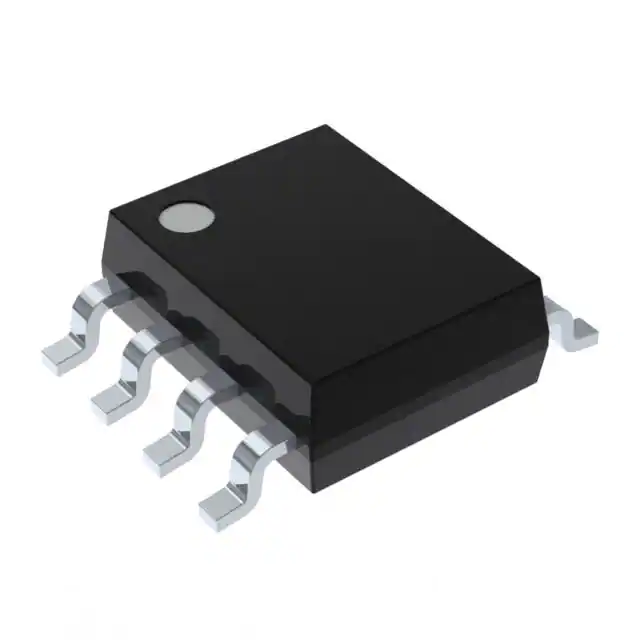
- Part No.:
- MAX4416ESA+
- Manufacturer:
- Analog Devices Inc./Maxim Integrated
- Category:
- Instrumentation, Op Amps, Buffer Amps
- Package:
- 8-SOIC (0.154", 3.90mm Width)
- Datasheet:
-
 MAX4416ESA+.pdf
- Description:
- IC VOLTAGE FEEDBACK 2 CIRC 8SOIC
- Quantity:
- Payment:

- Shipping:

Inventory:1,930
Please send an inquiry. Send us your inquiry, and we will respond immediately.
Product details
Overview
MAX4416ESA+ from Maxim Integrated is a dual, unity-gain stable, rail-to-rail output operational amplifier optimized for low-power, high-speed video and portable signal conditioning. It delivers 400MHz -3dB bandwidth, 200V/µs slew rate, and consumes only 1.6mA per amplifier from a single +2.7V to +5.5V supply. Its input common-mode range extends 100mV below ground and within 1.5V of VCC, enabling full-swing operation in battery-powered video line drivers and ADC input buffers.
For engineers reviewing the MAX4416ESA+ datasheet, MAX4416ESA+ pinout, MAX4416ESA+ application, or MAX4416ESA+ equivalent, this page provides verified electrical specifications, package mapping to 8-pin SO, real-world application context for video and instrumentation, and two validated alternative op amps with documented functional trade-offs.
Technical Context
The MAX4416ESA+ employs voltage-feedback architecture with internal unity-gain compensation, supporting stable operation at AV = +1V/V. Its rail-to-rail output stage uses demand-driven current biasing to maintain low open-loop output impedance (<0.5Ω at 1MHz), minimizing gain sensitivity to load variations across 1kΩ–150Ω loads.
Input stage design enables ground-sensing operation (VEE − 0.1V) and high CMRR (65–94dB), while differential gain/phase error is specified at 0.03%/0.15° under NTSC conditions - critical for analog video fidelity. Stability with capacitive loads requires external isolation resistors (e.g., 22Ω for 15pF), as the device is not optimized for direct reactive drive.
Key Specifications
| Parameter | Value and Actual Design Meaning |
|---|---|
| -3dB Bandwidth | 400MHz at AV = +1V/V - supports >150MHz video baseband and fast pulse applications without gain peaking |
| Slew Rate | 200V/µs - enables clean 2Vp-p step response in ≤14ns with <1% settling time of 100ns |
| Supply Current | 1.6mA per amplifier - allows dual-channel operation on 3.3V/5V rails with sub-3.3mW total quiescent power |
| Input Common-Mode Range | VEE − 0.1V to VCC − 1.5V - permits full-scale input swing in single-supply systems down to 0V reference |
| Output Voltage Swing | VOL = 15mV, VOH = 375mV (RL = 10kΩ, VCC = +5V) - achieves >4.6Vp-p dynamic range with minimal headroom loss |
| Spurious-Free Dynamic Range | −93dBc at 5MHz, VCC = +3V - ensures high-fidelity signal integrity in low-voltage portable instrumentation |
| Differential Gain/Phase Error | 0.03%/0.15° (NTSC, RL = 150Ω) - meets broadcast-grade video line driver requirements |
Pinout & Package
MAX4416ESA+ is housed in an 8-pin SO (Small Outline) package, measuring 4.9mm × 3.9mm × 1.75mm, with standard JEDEC MS-012AC footprint and gull-wing leads. RoHS-compliant and rated for −40°C to +85°C operation.
| Pin | Circuit Role | Design Meaning |
|---|---|---|
| 1 | OUTA | Amplifier A output - rail-to-rail capable, drives 150Ω video loads directly when isolated |
| 2 | INA− | Amplifier A inverting input - high-impedance node (16MΩ), sensitive to PCB parasitics above 100MHz |
| 3 | INA+ | Amplifier A noninverting input - accepts signals down to −0.1V, enabling true ground-referenced inputs |
| 4 | VEE | Negative supply terminal - tied to ground in single-supply configurations; must be bypassed with 0.1µF |
| 5 | N.C. | No connection - internally unconnected; leave floating or tie to ground per layout best practice |
| 6 | INB− | Amplifier B inverting input - matched to INA− for dual-channel phase/gain tracking (0.1°/0.1dB max mismatch) |
| 7 | INB+ | Amplifier B noninverting input - identical common-mode range and noise performance as INA+ |
| 8 | VCC | Positive supply terminal - operates from +2.7V to +5.5V; requires local 0.1µF ceramic bypass to VEE |
Key Features
| Feature | Design Value |
|---|---|
| Rail-to-rail output swing | Drives 1kΩ loads to within 15mV of VEE and 375mV of VCC at +5V - maximizes usable dynamic range in low-voltage systems |
| Ultra-low distortion at 5MHz | −93dBc SFDR and 0.003% THD at +3V supply - preserves signal fidelity in portable instrumentation front-ends |
| Ground-sensing input | Common-mode range includes VEE − 0.1V - eliminates need for level-shifting in single-supply sensor interfaces |
| Capacitive load drive support | Stable with up to 120pF when paired with ≥22Ω isolation resistor - enables robust driving of ADC input capacitance and cable traces |
| Low input bias current | 1.3µA typical - reduces DC error in high-impedance gain-setting networks (e.g., >100kΩ feedback resistors) |
Applications
| Video Line Driver | Portable Instrumentation Front-End |
|---|---|
|
Use Scenario: Driving 75Ω coaxial video lines in handheld test equipment or embedded vision modules. IC Role / Device Role / Timing Role: Dual-channel buffer amplifying composite NTSC/PAL signals with minimal group delay variation. Use Value: 0.03%/0.15° differential gain/phase error ensures color fidelity and sync stability over temperature and supply variation. |
Use Scenario: Signal conditioning for 12-bit, 10MSPS ADCs in battery-powered data loggers. IC Role / Device Role / Timing Role: High-speed input buffer charging ADC sample-and-hold capacitance with <100ns 1% settling. Use Value: 200V/µs slew rate and <0.5Ω output impedance at 1MHz prevent acquisition-time errors and harmonic distortion. |
| Cellular Baseband Signal Chain | Keyless Entry RF Signal Conditioning |
|
Use Scenario: Amplifying IF signals in GSM/EDGE transceivers before quadrature demodulation. IC Role / Device Role / Timing Role: Low-noise, low-distortion gain block operating from 3.3V supply in compact RF module layouts. Use Value: −93dBc SFDR at 5MHz and 10nV/√Hz input noise preserve EVM in narrowband modulation schemes. |
Use Scenario: Buffering low-level 315/433MHz OOK/FSK envelope signals in automotive key fob receivers. IC Role / Device Role / Timing Role: Fast-settling comparator preamplifier conditioning ASK-demodulated pulses for digital decoding. Use Value: 14ns rise/fall time and 100ns 1% settling enable reliable detection of sub-µs pulse edges in noisy vehicle environments. |
Equivalent & Alternatives
The following parts are listed as comparable options for similar high-speed, low-power op amp applications.
| Alternative Part | Technical Difference | Application Difference | Selection Advice |
|---|---|---|---|
| LMH6629MA/NOPB | Higher supply current (5.5mA), wider bandwidth (1.5GHz), no rail-to-rail output (VOH = VCC − 1.2V) | Better for RF gain stages requiring >1GHz bandwidth; unsuitable where ground-sensing input or rail-to-rail swing is mandatory | Select when bandwidth >1GHz is required and supply current budget allows ≥3× increase |
| ADA4891-2ARZ | Lower bandwidth (105MHz), lower supply current (1.2mA), rail-to-rail I/O, but higher THD (−72dBc @5MHz) | Cost-optimized for general-purpose portable analog; insufficient for broadcast video or high-SFDR instrumentation | Select for cost-sensitive, non-video applications where 105MHz bandwidth and 1.2mA supply suffice |
Compared with LMH6629MA/NOPB and ADA4891-2ARZ, MAX4416ESA+ uniquely balances 400MHz bandwidth, rail-to-rail output, ground-sensing input, and 1.6mA supply in a dual configuration - making it the only option meeting NTSC video fidelity specs while fitting tight power budgets in space-constrained designs.
Availability
MAX4416ESA+ is available at Aetrix Electronics and suitable for video line drivers, portable instrumentation front-ends, and cellular baseband signal chains requiring stable component supply, long-term lifecycle support, and guaranteed RoHS compliance.
Supply support for MAX4416ESA+ includes scheduled delivery planning, volume procurement assistance, BOM continuity management, traceable sourcing, and lifecycle availability coordination for OEM customers, industrial embedded developers, connected-device designers, and electronics production programs.
Manufacturer
Maxim Integrated (now part of Analog Devices) designs precision analog, mixed-signal, and power management ICs for demanding industrial, medical, and communications applications.
The MAX4414–MAX4419 family was engineered specifically for low-voltage, high-speed signal conditioning in portable video, instrumentation, and communications systems - prioritizing rail-to-rail swing, ultra-low distortion, and sub-2mA power efficiency.
FAQ
What is the maximum capacitive load the MAX4416ESA+ can drive without oscillation?
The MAX4416ESA+ is stable with up to 120pF capacitive load when used with a series isolation resistor ≥22Ω, as confirmed in the Typical Operating Characteristics (Figure 2 and toc40). Driving reactive loads directly (e.g., unterminated cables or ADC input capacitance) without isolation risks peaking and oscillation due to reduced phase margin - a design constraint explicitly documented in the Applications Information section.
Does the MAX4416ESA+ support true single-supply operation with input signals at ground potential?
Yes. The MAX4416ESA+ input common-mode voltage range extends to VEE − 0.1V (i.e., −0.1V when VEE = 0V), enabling ground-referenced or slightly negative inputs in single-supply configurations. This ground-sensing capability is guaranteed by design and tested per the Absolute Maximum Ratings and DC Electrical Characteristics tables.
What is the typical power-up 1% settling time for the MAX4416ESA+?
The MAX4416ESA+ exhibits a typical power-up 1% settling time of 1.2µs, as specified in the AC Electrical Characteristics table (Note 2). This parameter reflects the time required for the output to stabilize within 1% of final value after VCC reaches regulation - critical for power-gated systems and burst-mode instrumentation.
How does the MAX4416ESA+ compare to the MAX4417ESA+ in terms of gain stability and bandwidth?
The MAX4416ESA+ is unity-gain stable with 400MHz −3dB bandwidth and 200V/µs slew rate, whereas the MAX4417ESA+ is compensated for minimum gain of +5V/V, offering 150MHz bandwidth and 470V/µs slew rate. Their internal compensation differs fundamentally: MAX4416ESA+ supports AV = +1V/V configurations (e.g., voltage followers), while MAX4417ESA+ requires AV ≥ +5V/V for stability - a distinction clearly defined in the Selector Guide and General Description.
Is the MAX4416ESA+ pin-compatible with other devices in the MAX4414–MAX4419 family?
Yes - the MAX4416ESA+ shares identical 8-pin SO pinout with MAX4414ESA+, MAX4415ESA+, and MAX4417ESA+, as confirmed in the Pin Configurations section and Ordering Information table. All four variants use pins 1 (OUTA), 2 (INA−), 3 (INA+), 4 (VEE), 5 (N.C.), 6 (INB−), 7 (INB+), and 8 (VCC) with identical functions and spacing, enabling drop-in replacement where bandwidth and gain requirements align.
MAX4416ESA+ Specifications
- Product attributes
- Attribute value
- Manufacturer:
- Analog Devices Inc./Maxim Integrated
- Series:
- -
- Package/Case:
- 8-SOIC (0.154", 3.90mm Width)
- Packaging:
- Tube
- Product Status:
- Active
- Amplifier Type:
- Voltage Feedback
- Number of Circuits:
- 2
- Output Type:
- Rail-to-Rail
- Slew Rate:
- 200V/µs
- Gain Bandwidth Product:
- -
- -3db Bandwidth:
- 400 MHz
- Current - Input Bias:
- 1.3 µA
- Voltage - Input Offset:
- 500 µV
- Current - Supply:
- 1.6mA (x2 Channels)
- Current - Output / Channel:
- 75 mA
- Voltage - Supply Span (Min):
- 2.7 V
- Voltage - Supply Span (Max):
- 5.5 V
- Operating Temperature:
- -40°C ~ 85°C
- Grade:
- -
- Qualification:
- -
- Mounting Type:
- Surface Mount
- Supplier Device Package:
- 8-SOIC
MAX4416ESA+ FAQ
1.How can I place an order for MAX4416ESA+ through Aetrix?
Please submit a Request for Quotation (RFQ) for MAX4416ESA+ on Aetrix. Our sales agent will provide a competitive quotation and guide you through the order confirmation once you accept the terms.
2.Are the price and stock information for MAX4416ESA+ reliable?
The price and inventory of MAX4416ESA+ are updated periodically and may fluctuate due to market conditions. Stock and pricing data are typically refreshed every 24 hours. Quotation validity for MAX4416ESA+ is usually 5 days.
3.What payment methods are accepted for MAX4416ESA+?
We accept Wire Transfer, PayPal, Credit Card, Western Union, MoneyGram, and Escrow for MAX4416ESA+ transactions.
Note: Certain payment methods may incur a processing fee.
4.How is shipping managed for MAX4416ESA+?
MAX4416ESA+ orders can be shipped via leading logistics carriers, including DHL, UPS, FedEx, TNT, or Registered Mail.
Once your MAX4416ESA+ order is processed, you will receive an email with the shipment details and tracking number.
Note: Tracking information may take up to 24 hours to appear. Express delivery typically takes 3–5 business days.
5.How can I obtain technical support or documentation for MAX4416ESA+?
For technical support, including MAX4416ESA+ datasheets, pinout diagrams, or application guidance, please contact our engineering support team. They can provide detailed documentation and assistance for your MAX4416ESA+ requirements.
6.How does Aetrix verify that MAX4416ESA+ is sourced from the original manufacturer or authorized distributors?
All MAX4416ESA+ products on Aetrix are procured from qualified distributors and authorized channels. Our dedicated quality assurance team conducts strict verification, including traceability checks and, if necessary, third-party testing. This ensures that MAX4416ESA+ meets industry standards.
7.What is the process for return or replacement of MAX4416ESA+?
All MAX4416ESA+ units undergo pre-shipment inspection (PSI). If there is an issue with MAX4416ESA+, returns or replacements are accepted under the following conditions:
1.Quantity discrepancies, incorrect items, or visible external defects (such as breakage or corrosion), acknowledged by Aetrix.
2.The issue is reported within 90 days of delivery.
3.The MAX4416ESA+ part is unused and in its original packaging.
Return procedure for MAX4416ESA+:
1.Submit a request within 90 days.
2.Obtain a Return Material Authorization (RMA) from Aetrix.
MAX4416ESA+ Tags
-
LM358DT
STMicroelectronics

-
LM358DR
Texas Instruments
-
LM2904DR
Texas Instruments
-
LM358ADR
Texas Instruments
-
LM2904DGKR
Texas Instruments
-
LM324DR
Texas Instruments
-
MCP6006T-E/OT
Microchip Technology
-
MCP6006UT-E/OT
Microchip Technology
-
LM324PWR
Texas Instruments
-
LM2902PWR
Texas Instruments
-
LM2902DR
Texas Instruments
-
LM358P
Texas Instruments
Tech Hub

A practical engineering guide to 3.3V and 5V logic compatibility, input thresholds, resistor dividers, translator ICs, MOSFET level shifting, I2C pull-ups, timing limits and power-sequencing risks.

The 74HC595 uses push-pull logic outputs, while the TPIC6B595 uses 50 V open-drain DMOS sinks for higher-power loads. This guide compares timing, current limits, 3.3 V interfacing, load wiring, thermal…

The 74HC595 converts serial data into eight stable parallel outputs. This guide covers pin functions, shift and storage timing, OE and MR behavior, drive-current limits, cascading, voltage compatibilit…

A technical comparison of level-sensitive latches and edge-triggered flip-flops, covering timing windows, setup and hold limits, master–slave operation, time borrowing, race-through, HDL inference and…

A D latch stores one bit while Enable controls when data can pass. This reference covers gate-level operation, truth tables, transparency, setup and hold timing, LE versus OE, common ICs and practical …

An SR latch stores one bit through cross-coupled feedback. This engineering reference covers NOR and NAND implementations, truth tables, forbidden-state recovery, gated operation, switch debouncing, fa…

Latch circuits retain one bit through feedback. This technical reference covers SR and D latches, truth tables, transparency, timing limits, latch-versus-flip-flop behavior, applications and common log…

An engineering guide to LED driver operation, constant-current and constant-voltage outputs, linear and switching topologies, dimming, IC selection, calculations, replacement compatibility, and fault c…

Operational amplifier guide covering op amp basics, feedback, ideal vs real op amps, common configurations, buffer circuits, offset, bias current, gain-bandwidth, slew rate, rail-to-rail limits and sel…

Jumper cables guide covering safe connection order, red and black clamp placement, final ground connection, cable gauge, length, clamp quality, copper vs CCA cables, jump starter comparison and battery…


