
 My Inquiry
 My Account


Analog Devices Inc./Maxim Integrated MAX4612CUD
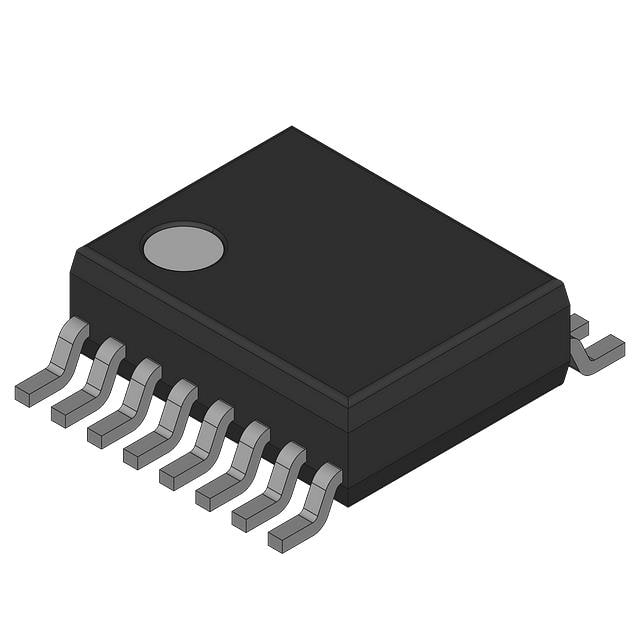
- Part No.:
- MAX4612CUD
- Manufacturer:
- Analog Devices Inc./Maxim Integrated
- Package:
- 14-TSSOP (0.173", 4.40mm Width)
- Datasheet:
-
 MAX4612CUD.pdf
- Description:
- IC SW SPST-NO/NC 100OHM 14TSSOP
- Quantity:
- Payment:

- Shipping:

Inventory:1,398
Please send an inquiry. Send us your inquiry, and we will respond immediately.
Product details
Overview
MAX4612CUD from Maxim Integrated is a quad, low-voltage, SPST CMOS analog switch with two normally open (NO) and two normally closed (NC) channels. It operates from a single +2V to +12V supply, delivers ≤100Ω on-resistance at +5V, matches channels within 4Ω max, and handles rail-to-rail analog signals (GND to V+). It is used in battery-powered audio routing and low-voltage data-acquisition front-ends.
For engineers reviewing the MAX4612CUD datasheet, MAX4612CUD pinout, MAX4612CUD application, or MAX4612CUD equivalent, key selection criteria include its dual NO/NC topology, guaranteed on-resistance flatness (≤18Ω), sub-2nA off-leakage at +85°C, TTL/CMOS logic compatibility, and TSSOP-14 packaging for space-constrained mixed-signal PCBs.
Technical Context
The MAX4612CUD implements four independent SPST switches in a single monolithic CMOS die, with dedicated NO and NC terminals per channel-unlike fully configurable analog multiplexers. Its control logic uses standard +0.8V/+2.4V thresholds, enabling direct interface with +5V TTL/CMOS microcontrollers without level-shifting.
Each switch supports bidirectional analog signal flow across the full supply range (GND to V+), with on-resistance variation tightly controlled (≤18Ω flatness over signal range) and channel-to-channel matching (≤4Ω ΔRON) verified across temperature. ESD protection exceeds 2kV per Method 3015.7, and leakage remains below 2nA at +85°C.
Key Specifications
| Parameter | Value and Actual Design Meaning |
|---|---|
| Supply Range | +2V to +12V single supply - enables operation from Li-ion battery (3.0–4.2V) up to industrial 12V rails without dual supplies. |
| On-Resistance (max) | 100Ω at +5V - ensures minimal signal attenuation and voltage drop in precision sensor or audio paths. |
| On-Resistance Match | ≤4Ω between channels - critical for matched gain/attenuation in differential or multi-channel sampling circuits. |
| Off-Leakage Current | ≤2nA at TA = +85°C - preserves accuracy in high-impedance sample-and-hold or battery-monitoring nodes. |
| Analog Signal Range | GND to V+ - supports rail-to-rail input/output without clamping diodes or external biasing. |
| Logic Compatibility | +0.8V low / +2.4V high thresholds - guarantees reliable switching with standard +5V CMOS/TTL outputs. |
| Bandwidth | 300MHz on-channel - suitable for audio, baseband, and low-speed digital signal routing (e.g., UART, I²C isolation). |
Pinout & Package
MAX4612CUD is housed in a 14-pin TSSOP package (4.4mm body width, JEDEC MO-153 compliant) with exposed pad connected to V+. Pin 1 is located at the top-left corner adjacent to the index mark.
| Pin/Terminal | Circuit Role | Design Meaning |
|---|---|---|
| 1, 8 | NO1, NO3 | Normally open analog terminals - connect only when corresponding IN1/IN3 is HIGH; used for default-open signal paths. |
| 3, 11 | NC2, NC4 | Normally closed analog terminals - remain connected until IN2/IN4 goes HIGH; provide fail-safe continuity. |
| 2, 4, 9, 10 | COM1–COM4 | Common analog ports - serve as shared signal junctions for each SPST switch; bidirectional and rail-to-rail capable. |
| 13, 5, 6, 12 | IN1–IN4 | Digital control inputs - accept standard TTL/CMOS logic levels; no pull-up/down required. |
| 7 | GND | Digital/analog ground reference - must be tied to system ground plane for noise immunity and leakage control. |
| 14 | V+ | Positive supply for analog and digital circuitry - powers internal CMOS switches and logic; requires local 0.1µF bypass. |
Key Features
| Feature | Design Value |
|---|---|
| Dual NO/NC topology | Two independently controlled NO and two NC switches enable flexible signal path redundancy or power-fail default states in one IC. |
| Rail-to-rail signal handling | Supports analog voltages from GND to V+ without distortion or clipping - eliminates need for external level-shifting in portable systems. |
| Guaranteed on-resistance flatness | ≤18Ω variation over full signal range ensures consistent gain/attenuation in precision instrumentation front-ends. |
| Low temperature drift | On-resistance match holds ≤4Ω from -40°C to +125°C - maintains channel balance in automotive or industrial environments. |
| High off-isolation | -60dB at 1MHz - prevents crosstalk between active and inactive channels in multi-source audio or sensor routing. |
Applications
| Battery-Powered Audio Routing | Low-Voltage Data Acquisition |
|---|---|
Use Scenario: Switching microphone inputs or headphone outputs in portable medical monitors or handheld test equipment. IC Role / Device Role / Timing Role: Dual NO/NC configuration routes audio paths while maintaining silent default (NC) or muted default (NO) states during power-up. Use Value: Sub-2nA leakage preserves battery life over months of standby; rail-to-rail support avoids DC-blocking capacitors in AC-coupled paths. | Use Scenario: Multiplexing sensor outputs (thermocouples, RTDs) into a low-power ADC in IoT edge nodes. IC Role / Device Role / Timing Role: Acts as precision analog front-end switch - selects one of four sensors while minimizing offset error via matched RON. Use Value: ≤4Ω channel matching reduces gain mismatch errors; 100Ω max RON limits burden voltage on high-impedance sensors. |
| Sample-and-Hold Circuits | Communication Interface Protection |
Use Scenario: Isolating hold capacitor from input source during acquisition phase in precision ADC drivers. IC Role / Device Role / Timing Role: NO switch disconnects input during hold phase; NC switch maintains capacitor charge integrity. Use Value: ≤1pC charge injection minimizes voltage step on hold capacitor; low leakage (<2nA) prevents droop over 10ms hold times. | Use Scenario: Adding fault-tolerant signal gating before RS-232/RS-485 transceivers in industrial PLCs. IC Role / Device Role / Timing Role: NC switch provides default connection; NO switch isolates transceiver during overvoltage or hot-swap events. Use Value: >2kV ESD rating protects downstream ICs; rail-to-rail capability handles ±12V RS-232 swing without external clamps. |
Equivalent & Alternatives
The following parts are listed as comparable options for similar analog switch applications.
| Alternative Part | Technical Difference | Application Difference | Selection Advice |
|---|---|---|---|
| MAX4611CUD | Four NC-only switches (no NO channels); identical package, supply, and leakage specs. | Suitable where all paths require fail-closed behavior (e.g., safety interlocks), but cannot replace MAX4612CUD's mixed NO/NC functionality. | Select MAX4611CUD only if default-closed operation is mandatory across all four channels. |
| ADG1412BRUZ | Quad SPST, dual NO/NC topology; higher supply (±15V or +12V); 1.8Ω typical RON; 16-TSSOP package. | Supports higher voltage rails and lower on-resistance, but requires PCB redesign due to different pinout and footprint. | Choose ADG1412BRUZ when <2Ω RON or bipolar supply operation is required - not a drop-in replacement. |
Compared with MAX4611CUD (NC-only) and ADG1412BRUZ (lower RON, different footprint), MAX4612CUD uniquely balances mixed NO/NC flexibility, TSSOP-14 compatibility, and optimized leakage/resistance trade-offs for +2V to +12V portable systems.
Availability
MAX4612CUD is available at Aetrix Electronics and suitable for battery-operated equipment, low-voltage data-acquisition systems, and audio signal routing requiring stable component supply across commercial temperature range (0°C to +70°C).
Supply support for MAX4612CUD includes scheduled delivery planning, volume procurement assistance, BOM continuity management, traceable sourcing, and lifecycle availability coordination for OEM customers, industrial embedded developers, connected-device designers, and electronics production programs.
Manufacturer
Maxim Integrated (now part of Analog Devices) designs precision analog, mixed-signal, and high-reliability semiconductor solutions for industrial, medical, and communications markets.
The MAX461x family targets low-voltage, low-leakage analog switching in space- and power-constrained systems - emphasizing rail-to-rail performance, guaranteed matching, and robust ESD tolerance for portable and embedded applications.
FAQ
What is the maximum supply voltage for MAX4612CUD, and what happens if exceeded?
The absolute maximum V+ rating for MAX4612CUD is +13V. Exceeding this voltage risks permanent damage due to gate oxide breakdown or junction failure. At +12V operation, a minimum 0.1µF ceramic bypass capacitor must be placed directly at the V+ pin to suppress transients. The MAX4612CUD datasheet specifies that even ±5% tolerance supplies may generate overshoot spikes above 13.0V, so design margins and transient suppression are essential for reliability.
Does MAX4612CUD support bidirectional analog signal flow?
Yes, MAX4612CUD supports fully bidirectional analog signal flow on all COM–NO and COM–NC paths. Each switch conducts equally well in either direction because it uses symmetrical CMOS transmission-gate architecture. This allows use in AC-coupled audio paths, differential sensor interfaces, or any application where signal polarity or direction is not fixed - a key advantage over mechanical relays or unidirectional FET switches.
How does the dual NO/NC configuration of MAX4612CUD differ from MAX4610CUD and MAX4611CUD?
MAX4612CUD integrates two NO and two NC switches in one 14-pin TSSOP package. In contrast, MAX4610CUD contains four NO-only switches, while MAX4611CUD contains four NC-only switches. This makes MAX4612CUD uniquely suited for applications requiring both fail-open and fail-closed behavior - such as redundant signal paths, power-fail safe routing, or hybrid analog multiplexing - without needing multiple ICs or external logic.
What is the typical on-resistance flatness of MAX4612CUD, and why does it matter?
The guaranteed on-resistance flatness of MAX4612CUD is ≤18Ω over the full analog signal range (GND to V+). This means RON varies by no more than 18Ω as the signal voltage sweeps across the rail - critical for minimizing harmonic distortion and gain nonlinearity in audio, instrumentation, and precision measurement circuits. Flatness directly impacts THD+N performance; the MAX4612CUD achieves 0.009% THD+N at 2VP-P with +5V supply.
Can MAX4612CUD operate from a +3V supply, and how does performance change?
Yes, MAX4612CUD operates down to +2V, including +3V nominal supplies. At +3V, on-resistance increases to 360Ω (max), on-resistance match degrades to 5Ω (max), and turn-on time extends to 140ns (max). However, logic thresholds remain compatible (+0.5V low / +2.4V high), and rail-to-rail signal handling is preserved. This makes MAX4612CUD viable for ultra-low-power systems where higher RON is acceptable - e.g., sensor wake-up gating or infrequent signal routing.
MAX4612CUD Specifications
- Product attributes
- Attribute value
- Manufacturer:
- Analog Devices Inc./Maxim Integrated
- Series:
- -
- Packaging:
- Bulk
- Product Status:
- Active
- Switch Circuit:
- SPST - NO/NC
- Multiplexer/Demultiplexer Circuit:
- 1:1
- Number of Circuits:
- 4
- On-State Resistance (Max):
- 100Ohm
- Channel-to-Channel Matching (ΔRon):
- 1Ohm
- Voltage - Supply, Single (V+):
- 2V ~ 12V
- Voltage - Supply, Dual (V±):
- -
- Switch Time (Ton, Toff) (Max):
- 65ns, 28ns
- -3db Bandwidth:
- 300MHz
- Charge Injection:
- 1pC
- Channel Capacitance (CS(off), CD(off)):
- 16pF, 16pF
- Current - Leakage (IS(off)) (Max):
- 100pA
- Crosstalk:
- -80dB @ 1MHz
- Operating Temperature:
- 0°C ~ 70°C (TA)
- Grade:
- -
- Qualification:
- -
- Mounting Type:
- Surface Mount
- Supplier Device Package:
- 14-TSSOP
MAX4612CUD FAQ
1.How can I place an order for MAX4612CUD through Aetrix?
Please submit a Request for Quotation (RFQ) for MAX4612CUD on Aetrix. Our sales agent will provide a competitive quotation and guide you through the order confirmation once you accept the terms.
2.Are the price and stock information for MAX4612CUD reliable?
The price and inventory of MAX4612CUD are updated periodically and may fluctuate due to market conditions. Stock and pricing data are typically refreshed every 24 hours. Quotation validity for MAX4612CUD is usually 5 days.
3.What payment methods are accepted for MAX4612CUD?
We accept Wire Transfer, PayPal, Credit Card, Western Union, MoneyGram, and Escrow for MAX4612CUD transactions.
Note: Certain payment methods may incur a processing fee.
4.How is shipping managed for MAX4612CUD?
MAX4612CUD orders can be shipped via leading logistics carriers, including DHL, UPS, FedEx, TNT, or Registered Mail.
Once your MAX4612CUD order is processed, you will receive an email with the shipment details and tracking number.
Note: Tracking information may take up to 24 hours to appear. Express delivery typically takes 3–5 business days.
5.How can I obtain technical support or documentation for MAX4612CUD?
For technical support, including MAX4612CUD datasheets, pinout diagrams, or application guidance, please contact our engineering support team. They can provide detailed documentation and assistance for your MAX4612CUD requirements.
6.How does Aetrix verify that MAX4612CUD is sourced from the original manufacturer or authorized distributors?
All MAX4612CUD products on Aetrix are procured from qualified distributors and authorized channels. Our dedicated quality assurance team conducts strict verification, including traceability checks and, if necessary, third-party testing. This ensures that MAX4612CUD meets industry standards.
7.What is the process for return or replacement of MAX4612CUD?
All MAX4612CUD units undergo pre-shipment inspection (PSI). If there is an issue with MAX4612CUD, returns or replacements are accepted under the following conditions:
1.Quantity discrepancies, incorrect items, or visible external defects (such as breakage or corrosion), acknowledged by Aetrix.
2.The issue is reported within 90 days of delivery.
3.The MAX4612CUD part is unused and in its original packaging.
Return procedure for MAX4612CUD:
1.Submit a request within 90 days.
2.Obtain a Return Material Authorization (RMA) from Aetrix.
MAX4612CUD Tags

-
SN74LVC1G3157DBVR
Texas Instruments
-
SN74LVC1G66DBVR
Texas Instruments
-
SN74LVC1G66DCKR
Texas Instruments
-
SN74LVC1G3157DSFR
Texas Instruments
-
1P1G3157QDCKRQ1
Texas Instruments
-
SN74LVC2G66DCUR
Texas Instruments
-
SN74LV4052APWR
Texas Instruments
-
74HC4051D,653
Nexperia USA Inc.
-
SN74LV4051APWR
Texas Instruments
-
CD74HC4052PWR
Texas Instruments
-
CD74HC4051PWR
Texas Instruments
-
TS5A3166DBVR
Texas Instruments
Tech Hub

A practical engineering guide to 3.3V and 5V logic compatibility, input thresholds, resistor dividers, translator ICs, MOSFET level shifting, I2C pull-ups, timing limits and power-sequencing risks.

The 74HC595 uses push-pull logic outputs, while the TPIC6B595 uses 50 V open-drain DMOS sinks for higher-power loads. This guide compares timing, current limits, 3.3 V interfacing, load wiring, thermal…

The 74HC595 converts serial data into eight stable parallel outputs. This guide covers pin functions, shift and storage timing, OE and MR behavior, drive-current limits, cascading, voltage compatibilit…

A technical comparison of level-sensitive latches and edge-triggered flip-flops, covering timing windows, setup and hold limits, master–slave operation, time borrowing, race-through, HDL inference and…

A D latch stores one bit while Enable controls when data can pass. This reference covers gate-level operation, truth tables, transparency, setup and hold timing, LE versus OE, common ICs and practical …

An SR latch stores one bit through cross-coupled feedback. This engineering reference covers NOR and NAND implementations, truth tables, forbidden-state recovery, gated operation, switch debouncing, fa…

Latch circuits retain one bit through feedback. This technical reference covers SR and D latches, truth tables, transparency, timing limits, latch-versus-flip-flop behavior, applications and common log…

An engineering guide to LED driver operation, constant-current and constant-voltage outputs, linear and switching topologies, dimming, IC selection, calculations, replacement compatibility, and fault c…

Operational amplifier guide covering op amp basics, feedback, ideal vs real op amps, common configurations, buffer circuits, offset, bias current, gain-bandwidth, slew rate, rail-to-rail limits and sel…

Jumper cables guide covering safe connection order, red and black clamp placement, final ground connection, cable gauge, length, clamp quality, copper vs CCA cables, jump starter comparison and battery…


