
 My Inquiry
 My Account


Analog Devices Inc./Maxim Integrated MAX4729ELT+T
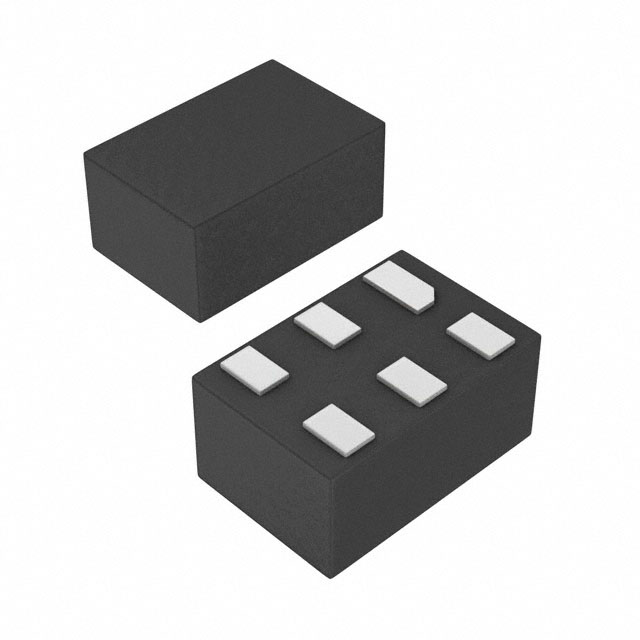
- Part No.:
- MAX4729ELT+T
- Manufacturer:
- Analog Devices Inc./Maxim Integrated
- Package:
- 6-WFDFN
- Datasheet:
-
 MAX4729ELT+T.pdf
- Description:
- IC SWITCH SPDT X 1 5.5OHM 6UDFN
- Quantity:
- Payment:

- Shipping:

Inventory:8,974
Please send an inquiry. Send us your inquiry, and we will respond immediately.
Product details
Overview
MAX4729ELT+T from Maxim Integrated is a low-voltage, single-pole/double-throw (SPDT) CMOS analog switch in a 6-pin µDFN package, operating from +1.8V to +5.5V supply, delivering 3.5Ω typical on-resistance at +2.7V, 0.45Ω RON flatness, and 300MHz -3dB bandwidth - used for precision audio routing and battery-powered signal switching.
For engineers reviewing the MAX4729ELT+T datasheet, MAX4729ELT+T pinout, MAX4729ELT+T application, or MAX4729ELT+T equivalent, key selection criteria include its ultra-low 1nA supply current, ±80mA continuous channel current rating, TTL/CMOS-compatible logic inputs tolerant up to +5.5V, and guaranteed performance across -40°C to +85°C.
Technical Context
The MAX4729ELT+T implements a single SPDT analog switch with break-before-make timing (≤1ns), enabling clean signal path isolation during state transitions. Its CMOS process ensures rail-to-rail analog signal handling (0V to V+) and low charge injection (3pC), critical for sample-and-hold and multiplexed data acquisition.
It features dual-channel matching (0.05Ω RON match at +2.7V), low off-isolation (-67dB at 1MHz), and crosstalk suppression (-67dB at 1MHz), supporting high-fidelity audio and RF-adjacent signal routing without inter-channel coupling.
Key Specifications
| Parameter | Value and Actual Design Meaning |
|---|---|
| Supply Voltage Range | +1.8V to +5.5V single supply - supports direct interface with Li-ion, 3.3V, and 5V logic domains without level shifters. |
| On-Resistance (RON) | 3.5Ω typical at +2.7V - minimizes voltage drop and signal attenuation in low-level analog paths. |
| RON Flatness | 0.45Ω max at +2.7V - ensures consistent gain and linearity across full analog input range (0V to V+). |
| -3dB Bandwidth | 300MHz - enables reliable switching of video, USB 1.1, and baseband RF signals without roll-off. |
| Supply Current (I+) | 1nA typical - eliminates standby power concerns in always-on portable and IoT sensor nodes. |
| Off-Isolation | -67dB at 1MHz - prevents leakage between active and inactive channels in multi-source audio/video systems. |
| Charge Injection | 3pC - reduces settling error in precision ADC front-ends and sample-and-hold circuits. |
Pinout & Package
MAX4729ELT+T is housed in a 1.5mm × 1.0mm, 0.5mm pitch, 6-pin µDFN package (package code L611+1), RoHS-compliant and moisture-sensitive level 1 (MSL1).
| Pin/Terminal | Circuit Role | Design Meaning |
|---|---|---|
| 1 | NO (Normally Open) | Analog output terminal connected to COM when IN = HIGH; unconnected otherwise - used for primary signal path selection. |
| 2 | V+ | Positive supply input - must be applied before analog signals to prevent latch-up; accepts +1.8V to +5.5V. |
| 3 | GND | Ground reference for analog and digital sections - requires low-impedance connection to minimize noise coupling. |
| 4 | NC (Normally Closed) | Analog output terminal connected to COM when IN = LOW - provides complementary signal path to NO. |
| 5 | COM | Common analog input/output terminal - bidirectional; connects to either NO or NC based on IN logic state. |
| 6 | IN | Digital control input - TTL/CMOS-compatible; accepts 0V to +5.5V regardless of V+, enabling mixed-voltage system interfacing. |
Key Features
| Feature | Design Value |
|---|---|
| Low 3.5Ω RON | Reduces insertion loss and distortion in audio and sensor signal chains, preserving SNR in battery-powered devices. |
| 0.45Ω RON flatness | Maintains consistent channel gain across full signal swing, eliminating amplitude-dependent nonlinearity in instrumentation amplifiers. |
| 300MHz -3dB bandwidth | Supports HDMI DDC, USB 1.1, and composite video switching without edge degradation or timing skew. |
| 1nA supply current | Enables multi-year operation on coin-cell batteries in wearables and remote sensors without duty cycling. |
| ±80mA channel current | Handles peak currents in relay-replacement applications such as programmable gain stages and sensor excitation circuits. |
Applications
| Portable Audio Routing | Low-Voltage Data Acquisition |
|---|---|
|
Use Scenario: Switching microphone inputs between headset jack and internal MEMS mic in Bluetooth earbuds. IC Role / Device Role / Timing Role: SPDT analog switch selecting between two analog sources feeding a single ADC input. Use Value: 3.5Ω RON and 0.035% THD preserve voice clarity; 1nA I+ extends battery life beyond 100 hours per charge. |
Use Scenario: Multiplexing thermistor, RTD, and potentiometer signals into a 16-bit SAR ADC in handheld test equipment. IC Role / Device Role / Timing Role: Low-leakage, low-RON analog switch isolating sensor paths during sampling. Use Value: 0.05Ω RON match and 3pC charge injection ensure <1 LSB measurement error across all channels. |
| Sample-and-Hold Circuits | Communications Signal Switching |
|
Use Scenario: Capturing fast transient waveforms in oscilloscope front-end using switched-capacitor hold circuitry. IC Role / Device Role / Timing Role: Precision analog switch controlling capacitor charging phase with minimal droop and kickback. Use Value: Break-before-make timing ≤1ns prevents short-circuit transients; 19.5pF on-capacitance minimizes hold-time settling delay. |
Use Scenario: Selecting between GPS L1 and cellular LTE bands in shared antenna front-end of asset trackers. IC Role / Device Role / Timing Role: High-isolation SPDT switch routing RF-adjacent baseband signals without crosstalk. Use Value: -67dB off-isolation and -67dB crosstalk at 1MHz suppress interference between co-located radios. |
Equivalent & Alternatives
The following parts are listed as comparable options for similar SPDT analog switch applications.
| Alternative Part | Technical Difference | Application Difference | Selection Advice |
|---|---|---|---|
| MAX4730ELT+T | Same package and pinout, but inverted logic: IN = LOW selects NC, IN = HIGH selects NO - truth table opposite of MAX4729ELT+T. | Requires firmware or logic inversion in control path; identical analog performance and thermal specs. | Select MAX4730ELT+T only when system-level logic polarity matches its inverted function. |
| TMUX1574DSGR | Higher RON (6.5Ω typ), wider supply (1.08V–5.5V), lower leakage (<1pA), but no guaranteed RON flatness spec. | Better for ultra-low-power sub-1V systems; less suitable for precision gain-matched multi-channel designs. | Choose TMUX1574DSGR when supply voltage drops below 1.8V or picoampere leakage dominates design priority. |
Compared with MAX4730ELT+T and TMUX1574DSGR, the MAX4729ELT+T uniquely balances ultra-low RON, tight RON flatness, and sub-nanoampere quiescent current - making it optimal for portable audio and precision data acquisition where analog fidelity and battery life are jointly constrained.
Availability
MAX4729ELT+T is available at Aetrix Electronics and suitable for portable audio routing, low-voltage data-acquisition systems, sample-and-hold circuits, communications signal switching, and relay replacement requiring stable component supply and long-term manufacturability.
Supply support for MAX4729ELT+T includes scheduled delivery planning, volume procurement assistance, BOM continuity management, traceable sourcing, and lifecycle availability coordination for OEM customers, industrial embedded developers, connected-device designers, and electronics production programs.
Manufacturer
Maxim Integrated, now part of Analog Devices, designs precision analog, mixed-signal, and power-management ICs for industrial, medical, and consumer applications.
The MAX4729ELT+T belongs to Maxim's low-voltage analog switch product line, engineered specifically for high-fidelity, low-power signal routing in space-constrained portable electronics.
FAQ
What is the maximum analog signal voltage range supported by the MAX4729ELT+T?
The MAX4729ELT+T supports analog signals from 0V to V+ (rail-to-rail), with absolute maximum ratings allowing COM, NO, and NC terminals to swing from -0.3V to (V+ + 0.3V). This enables full utilization of the supply voltage for signal headroom - for example, with V+ = +3.3V, analog signals can range from 0V to +3.3V without clipping or distortion. The device includes internal ESD clamps to protect against overvoltage transients.
Does the MAX4729ELT+T require external pull-up or pull-down resistors on the IN pin?
No, the MAX4729ELT+T does not require external pull-up or pull-down resistors on the IN pin. Its digital input is TTL/CMOS-compatible with guaranteed VIH ≥ +2.0V and VIL ≤ +0.4V across -40°C to +85°C, and input leakage remains below ±1µA. The IN pin accepts voltages from 0V to +5.5V regardless of V+, so direct connection to microcontroller GPIOs (e.g., 1.8V, 3.3V, or 5V logic) is safe and functional without additional biasing components.
Can the MAX4729ELT+T be used in bidirectional signal paths?
Yes, the MAX4729ELT+T supports fully bidirectional analog signal flow. Both COM and NO/NC terminals are symmetrical in construction and rated for ±80mA continuous current, with identical RON, capacitance, and leakage specifications in either direction. This makes the MAX4729ELT+T suitable for applications like shared sensor buses, I²C signal routing, or duplex audio interfaces where signal direction may reverse dynamically.
What is the thermal performance of the MAX4729ELT+T in its µDFN package?
The MAX4729ELT+T in the 6-pin µDFN package (L611+1) has a thermal resistance θJA of approximately 476°C/W (calculated from 168mW max power dissipation at TA = +70°C with 2.1mW/°C derating). At 1nA supply current and typical analog loads, self-heating is negligible - junction temperature rise stays below 0.1°C under normal operation. The package is MSL1 and compatible with standard reflow profiles up to +260°C peak.
How does the MAX4729ELT+T handle power-supply sequencing?
The MAX4729ELT+T requires V+ to be applied before analog signals to prevent forward-biasing internal ESD diodes and potential latch-up. Digital inputs (IN) tolerate up to +5.5V regardless of V+, but analog terminals (COM, NO, NC) must remain within -0.3V to (V+ + 0.3V) at all times. Proper sequencing - apply V+, then IN, then analog signals - ensures robust operation across automotive and industrial environments where supply ramps may be asynchronous.
MAX4729ELT+T Specifications
- Product attributes
- Attribute value
- Manufacturer:
- Analog Devices Inc./Maxim Integrated
- Series:
- -
- Packaging:
- Tape & Reel (TR)
- Product Status:
- Active
- Switch Circuit:
- SPDT
- Multiplexer/Demultiplexer Circuit:
- 2:1
- Number of Circuits:
- 1
- On-State Resistance (Max):
- 5.5Ohm
- Channel-to-Channel Matching (ΔRon):
- 50mOhm
- Voltage - Supply, Single (V+):
- 1.8V ~ 5.5V
- Voltage - Supply, Dual (V±):
- -
- Switch Time (Ton, Toff) (Max):
- 45ns, 26ns
- -3db Bandwidth:
- 300MHz
- Charge Injection:
- 3pC
- Channel Capacitance (CS(off), CD(off)):
- 6.5pF
- Current - Leakage (IS(off)) (Max):
- 2nA
- Crosstalk:
- -67dB @ 1MHz
- Operating Temperature:
- -40°C ~ 85°C (TA)
- Grade:
- -
- Qualification:
- -
- Mounting Type:
- Surface Mount
- Supplier Device Package:
- 6-µDFN (1.5x1)
MAX4729ELT+T FAQ
1.How can I place an order for MAX4729ELT+T through Aetrix?
Please submit a Request for Quotation (RFQ) for MAX4729ELT+T on Aetrix. Our sales agent will provide a competitive quotation and guide you through the order confirmation once you accept the terms.
2.Are the price and stock information for MAX4729ELT+T reliable?
The price and inventory of MAX4729ELT+T are updated periodically and may fluctuate due to market conditions. Stock and pricing data are typically refreshed every 24 hours. Quotation validity for MAX4729ELT+T is usually 5 days.
3.What payment methods are accepted for MAX4729ELT+T?
We accept Wire Transfer, PayPal, Credit Card, Western Union, MoneyGram, and Escrow for MAX4729ELT+T transactions.
Note: Certain payment methods may incur a processing fee.
4.How is shipping managed for MAX4729ELT+T?
MAX4729ELT+T orders can be shipped via leading logistics carriers, including DHL, UPS, FedEx, TNT, or Registered Mail.
Once your MAX4729ELT+T order is processed, you will receive an email with the shipment details and tracking number.
Note: Tracking information may take up to 24 hours to appear. Express delivery typically takes 3–5 business days.
5.How can I obtain technical support or documentation for MAX4729ELT+T?
For technical support, including MAX4729ELT+T datasheets, pinout diagrams, or application guidance, please contact our engineering support team. They can provide detailed documentation and assistance for your MAX4729ELT+T requirements.
6.How does Aetrix verify that MAX4729ELT+T is sourced from the original manufacturer or authorized distributors?
All MAX4729ELT+T products on Aetrix are procured from qualified distributors and authorized channels. Our dedicated quality assurance team conducts strict verification, including traceability checks and, if necessary, third-party testing. This ensures that MAX4729ELT+T meets industry standards.
7.What is the process for return or replacement of MAX4729ELT+T?
All MAX4729ELT+T units undergo pre-shipment inspection (PSI). If there is an issue with MAX4729ELT+T, returns or replacements are accepted under the following conditions:
1.Quantity discrepancies, incorrect items, or visible external defects (such as breakage or corrosion), acknowledged by Aetrix.
2.The issue is reported within 90 days of delivery.
3.The MAX4729ELT+T part is unused and in its original packaging.
Return procedure for MAX4729ELT+T:
1.Submit a request within 90 days.
2.Obtain a Return Material Authorization (RMA) from Aetrix.
MAX4729ELT+T Tags

-
SN74LVC1G3157DBVR
Texas Instruments

-
SN74LVC1G66DBVR
Texas Instruments
-
SN74LVC1G66DCKR
Texas Instruments
-
SN74LVC1G3157DSFR
Texas Instruments
-
1P1G3157QDCKRQ1
Texas Instruments
-
SN74LVC2G66DCUR
Texas Instruments
-
SN74LV4052APWR
Texas Instruments
-
74HC4051D,653
Nexperia USA Inc.
-
SN74LV4051APWR
Texas Instruments
-
CD74HC4052PWR
Texas Instruments
-
CD74HC4051PWR
Texas Instruments
-
TS5A3166DBVR
Texas Instruments
Tech Hub

A practical engineering guide to 3.3V and 5V logic compatibility, input thresholds, resistor dividers, translator ICs, MOSFET level shifting, I2C pull-ups, timing limits and power-sequencing risks.

The 74HC595 uses push-pull logic outputs, while the TPIC6B595 uses 50 V open-drain DMOS sinks for higher-power loads. This guide compares timing, current limits, 3.3 V interfacing, load wiring, thermal…

The 74HC595 converts serial data into eight stable parallel outputs. This guide covers pin functions, shift and storage timing, OE and MR behavior, drive-current limits, cascading, voltage compatibilit…

A technical comparison of level-sensitive latches and edge-triggered flip-flops, covering timing windows, setup and hold limits, master–slave operation, time borrowing, race-through, HDL inference and…

A D latch stores one bit while Enable controls when data can pass. This reference covers gate-level operation, truth tables, transparency, setup and hold timing, LE versus OE, common ICs and practical …

An SR latch stores one bit through cross-coupled feedback. This engineering reference covers NOR and NAND implementations, truth tables, forbidden-state recovery, gated operation, switch debouncing, fa…

Latch circuits retain one bit through feedback. This technical reference covers SR and D latches, truth tables, transparency, timing limits, latch-versus-flip-flop behavior, applications and common log…

An engineering guide to LED driver operation, constant-current and constant-voltage outputs, linear and switching topologies, dimming, IC selection, calculations, replacement compatibility, and fault c…

Operational amplifier guide covering op amp basics, feedback, ideal vs real op amps, common configurations, buffer circuits, offset, bias current, gain-bandwidth, slew rate, rail-to-rail limits and sel…

Jumper cables guide covering safe connection order, red and black clamp placement, final ground connection, cable gauge, length, clamp quality, copper vs CCA cables, jump starter comparison and battery…


