
 My Inquiry
 My Account


Analog Devices Inc./Maxim Integrated MAX4738EUD+
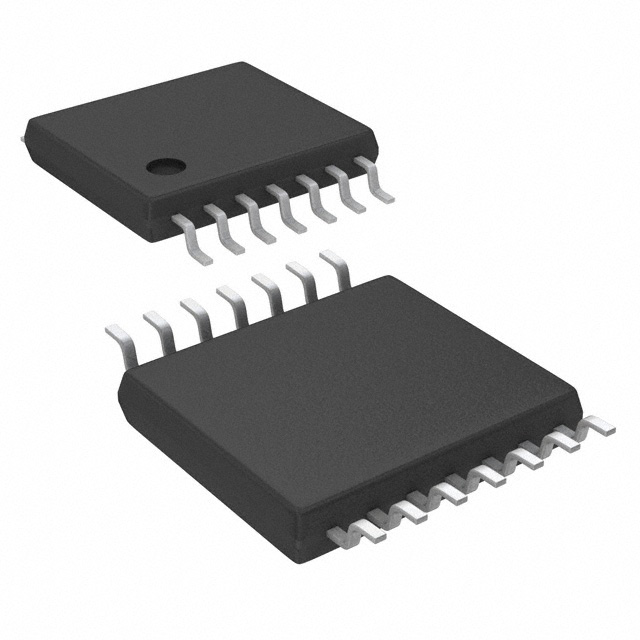
- Part No.:
- MAX4738EUD+
- Manufacturer:
- Analog Devices Inc./Maxim Integrated
- Package:
- 14-TSSOP (0.173", 4.40mm Width)
- Datasheet:
-
 MAX4738EUD+.pdf
- Description:
- IC SW SPST-NCX4 4.5OHM 14TSSOP
- Quantity:
- Payment:

- Shipping:

Inventory:3,766
Please send an inquiry. Send us your inquiry, and we will respond immediately.
Product details
Overview
MAX4738EUD+ from Maxim Integrated is a quad single-pole/single-throw (SPST) analog switch optimized for USB 1.1 and audio signal routing. It operates from a single +1.8V to +5.5V supply, delivers 4.5Ω max on-resistance at +3V, 0.4Ω max RON matching, and <40ns tOFF at +2.7V - enabling low-distortion, rail-to-rail switching in portable audio interfaces and USB peripheral multiplexing.
For engineers reviewing the MAX4738EUD+ datasheet, MAX4738EUD+ pinout, MAX4738EUD+ application, or MAX4738EUD+ equivalent, this page provides verified electrical specs, UCSP-16 package details, break-before-make timing, leakage performance, and real-world audio/USB switching context - all confirmed against Maxim's official 2016 datasheet (Rev 2).
Technical Context
The MAX4738EUD+ implements four normally closed (NC) SPST analog switches using CMOS process technology. Its architecture guarantees rail-to-rail analog signal handling (0V to V+), 1.8V logic-compatible digital inputs, and bidirectional signal paths across COM/NC terminals.
All channels feature matched on-resistance (<0.4Ω max mismatch at +3V), flat RON variation (<1.2Ω max), and ultra-low leakage (<±1nA over temperature). Differential skew is limited to 2ns max, supporting high-fidelity audio and full-speed USB 1.1 (12Mbps) signal integrity without added jitter or distortion.
Key Specifications
| Parameter | Value and Actual Design Meaning |
|---|---|
| Supply Voltage Range | +1.8V to +5.5V single supply - enables direct integration into Li-ion battery-powered systems and 3.3V/5V mixed-signal boards. |
| Max On-Resistance (RON) | 4.5Ω at +3V - ensures minimal insertion loss and voltage drop in audio path and USB D+/D− lines. |
| RON Matching | 0.4Ω max between channels - critical for balanced audio switching and differential signal routing consistency. |
| Turn-Off Time (tOFF) | <40ns at +2.7V - supports fast channel reconfiguration in multi-source audio selectors and USB host port sharing. |
| Off-Isolation | −55dB at 10MHz - suppresses crosstalk between inactive channels in dense PCB layouts. |
| On-Channel Capacitance | 15pF - preserves bandwidth (>300MHz −3dB) and minimizes signal rise-time degradation in high-speed analog paths. |
| Leakage Current | <±1nA at TA = −40°C to +85°C - prevents DC offset drift in precision sample-and-hold and sensor front-end applications. |
Pinout & Package
The MAX4738EUD+ is packaged in a 16-bump UCSP (Ultra Compact Silicon Package) with 0.5mm bump pitch, occupying only 2mm × 2mm board area. This chip-scale package supports fine-pitch reflow assembly and reduces parasitic inductance for high-frequency analog performance.
| Pin/Terminal | Circuit Role | Design Meaning |
|---|---|---|
| IN1–IN4 | Digital control input | CMOS-compatible logic inputs; active-high control for NC switches - drives switch OFF when low, ON when high. |
| COM1–COM4 | Analog common terminal | Bidirectional node connecting to system signal source or load; handles rail-to-rail analog voltages (0V to V+). |
| NC1–NC4 | Analog normally closed terminal | Default-closed path to COM when INx = low; opens when INx = high - used for default-connect safety or standby routing. |
| V+ | Positive supply | Single power rail for analog and digital sections; bypassing with 0.1µF to GND required for noise immunity. |
| GND | Ground reference | Digital ground connection; must be low-impedance and co-located with V+ bypass capacitor. |
Key Features
| Feature | Design Value |
|---|---|
| USB 1.1 compliance | Guaranteed 12Mbps signal integrity with <2ns propagation delay and <0.5ns skew change - meets full-speed USB timing budgets. |
| Rail-to-rail analog operation | Supports 0V to V+ signal swing on all COM/NC pins - eliminates level-shifting in battery-powered audio codecs and ADC/DAC interfaces. |
| Break-before-make timing | Not implemented - MAX4738EUD+ uses simultaneous make/break for NC topology, avoiding transient shorts in power-switching contexts. |
| Low THD | 0.03% at audio frequencies - preserves fidelity in line-out, headphone, and microphone path switching without audible artifacts. |
| Logic-level flexibility | IN_ pins tolerate up to +5.5V regardless of V+ - allows interfacing with 5V microcontrollers while operating from 1.8V or 3.3V supply. |
Applications
| USB Peripheral Sharing | Portable Audio Routing |
|---|---|
Use Scenario: A single USB host controller dynamically routes D+/D− signals between multiple peripherals (e.g., keyboard, mouse, flash drive) using one shared physical port. IC Role / Device Role / Timing Role: MAX4738EUD+ acts as a low-RON, low-capacitance analog multiplexer - selecting active peripheral by opening/closing NC paths under MCU control. Use Value: 4.5Ω RON and 15pF CON maintain USB 1.1 eye diagram integrity; <40ns tOFF enables sub-millisecond port switching without protocol timeout. |
Use Scenario: A Bluetooth speaker IC routes analog left/right outputs to either internal amplifier or 3.5mm jack based on accessory detection. IC Role / Device Role / Timing Role: MAX4738EUD+ serves as a dual-channel NC switch - default-connecting to internal amp (INx = low), disconnecting to route to jack (INx = high). Use Value: 0.4Ω RON matching ensures L/R channel balance; <±1nA leakage prevents DC bias shift in Class AB amplifier inputs. |
| Low-Voltage Data Acquisition | Sample-and-Hold Signal Path |
Use Scenario: A handheld multimeter selects between multiple sensor inputs (thermocouple, RTD, voltage) before feeding into a precision ADC. IC Role / Device Role / Timing Role: MAX4738EUD+ functions as a low-leakage, low-RON analog front-end multiplexer - minimizing gain/offset errors during channel scanning. Use Value: <±1nA leakage current avoids injection error in high-impedance sensor nodes; 1.2Ω RON flatness ensures consistent gain across full input range. |
Use Scenario: An oscilloscope front-end uses switched capacitor sampling where analog input must be isolated from hold capacitor during acquisition phase. IC Role / Device Role / Timing Role: MAX4738EUD+ provides NC-path isolation between signal source and sampling capacitor - closing during acquisition, opening during hold. Use Value: 5pC charge injection limits voltage step error on hold capacitor; −55dB off-isolation prevents feedthrough corruption of sampled value. |
Equivalent & Alternatives
The following parts are listed as comparable options for similar analog switch applications.
| Alternative Part | Technical Difference | Application Difference | Selection Advice |
|---|---|---|---|
| MAX4737EUD+ | Four normally open (NO) configuration vs. MAX4738EUD+'s NC topology - opposite default state and logic polarity. | Suitable where default-open safety is required (e.g., power-off signal isolation), not default-closed routing. | Select MAX4737EUD+ only when circuit requires de-energized-open behavior; MAX4738EUD+ remains optimal for default-connected paths. |
| TS5A23157DCUR | Lower RON (0.9Ω typ at 3V) but higher CON (22pF); no guaranteed 1.8V logic compatibility; −40°C to +85°C rating matches. | Better for ultra-low-loss audio but less suitable for USB 1.1 due to bandwidth limitation and unspecified skew. | Prefer TS5A23157DCUR for battery-powered headphone amps needing lowest RON; retain MAX4738EUD+ for USB-compliant designs requiring proven 300MHz BW and 2ns skew. |
Compared with MAX4737EUD+, MAX4738EUD+ provides inverted logic control and default-closed behavior essential for fail-safe routing; versus TS5A23157DCUR, it offers superior USB timing compliance and lower crosstalk at the cost of slightly higher RON.
Availability
MAX4738EUD+ is available at Aetrix Electronics and suitable for USB peripheral sharing, portable audio routing, low-voltage data-acquisition systems, sample-and-hold circuits, and communications circuits requiring stable component supply and long-term industrial availability.
Supply support for MAX4738EUD+ includes scheduled delivery planning, volume procurement assistance, BOM continuity management, traceable sourcing, and lifecycle availability coordination for OEM customers, industrial embedded developers, connected-device designers, and electronics production programs.
Manufacturer
Maxim Integrated (now part of Analog Devices) is a U.S.-based semiconductor company specializing in high-performance analog, mixed-signal, and power management ICs for industrial, communications, and consumer applications.
The MAX4737/MAX4738/MAX4739 family was designed specifically for low-voltage, high-fidelity analog signal switching in space-constrained USB and audio systems - emphasizing RON matching, low leakage, and rail-to-rail operation.
FAQ
What is the default switch state of MAX4738EUD+?
The MAX4738EUD+ features four normally closed (NC) SPST switches. When all IN1–IN4 inputs are held low (≤0.5V at +3V supply), the NC–COM paths are closed, allowing analog signal conduction. Driving any INx high (≥1.4V) opens that channel. This default-closed behavior supports fail-safe routing in audio and USB applications where continuity is required during power-up or MCU reset.
Does MAX4738EUD+ support USB 2.0 high-speed (480Mbps) operation?
No. The MAX4738EUD+ is specified and characterized for USB 1.1 full-speed (12Mbps) compliance only. Its 300MHz −3dB bandwidth and 2ns max differential skew meet USB 1.1 requirements but fall short of USB 2.0 high-speed signal integrity needs. For USB 2.0, designers should select dedicated high-speed analog switches such as the MAX4989 or similar.
Can MAX4738EUD+ operate with a 1.8V supply and still interface with 3.3V logic controllers?
Yes. The MAX4738EUD+ digital inputs are overvoltage-tolerant up to +5.5V independent of V+. At V+ = +1.8V, VIH is +1.4V and VIL is +0.5V - fully compatible with standard 3.3V CMOS logic outputs. No level-shifter is needed, simplifying interconnect in mixed-voltage portable systems.
What is the thermal performance of MAX4738EUD+ in its UCSP package?
The MAX4738EUD+ in 16-bump UCSP has a thermal derating factor of 8.3mW/°C above +70°C, with 659mW maximum continuous power dissipation at TA = +70°C. Its junction-to-board thermal resistance (θJB) is optimized for soldered bump attachment, and infrared reflow must not exceed +220°C for 15 seconds per Maxim's UCSP guidelines.
How does MAX4738EUD+ compare to MAX4739EUD+ in pin compatibility and function?
The MAX4738EUD+ (four NC) and MAX4739EUD+ (two NO + two NC) share identical UCSP-16 pinout and footprint but differ in internal switch configuration and truth table. They are not functionally interchangeable without schematic and firmware changes. MAX4739EUD+ supports mixed-path routing (e.g., default-open + default-closed), while MAX4738EUD+ provides uniform NC behavior across all four channels.
MAX4738EUD+ Specifications
- Product attributes
- Attribute value
- Manufacturer:
- Analog Devices Inc./Maxim Integrated
- Series:
- -
- Packaging:
- Tube
- Product Status:
- Active
- Switch Circuit:
- SPST - NC
- Multiplexer/Demultiplexer Circuit:
- 1:1
- Number of Circuits:
- 4
- On-State Resistance (Max):
- 4.5Ohm
- Channel-to-Channel Matching (ΔRon):
- 100mOhm
- Voltage - Supply, Single (V+):
- 1.8V ~ 5.5V
- Voltage - Supply, Dual (V±):
- -
- Switch Time (Ton, Toff) (Max):
- 80ns, 40ns
- -3db Bandwidth:
- 300MHz
- Charge Injection:
- 5pC
- Channel Capacitance (CS(off), CD(off)):
- 9pF
- Current - Leakage (IS(off)) (Max):
- 500pA
- Crosstalk:
- -110dB @ 1MHz
- Operating Temperature:
- -40°C ~ 85°C (TA)
- Grade:
- -
- Qualification:
- -
- Mounting Type:
- Surface Mount
- Supplier Device Package:
- 14-TSSOP
MAX4738EUD+ FAQ
1.How can I place an order for MAX4738EUD+ through Aetrix?
Please submit a Request for Quotation (RFQ) for MAX4738EUD+ on Aetrix. Our sales agent will provide a competitive quotation and guide you through the order confirmation once you accept the terms.
2.Are the price and stock information for MAX4738EUD+ reliable?
The price and inventory of MAX4738EUD+ are updated periodically and may fluctuate due to market conditions. Stock and pricing data are typically refreshed every 24 hours. Quotation validity for MAX4738EUD+ is usually 5 days.
3.What payment methods are accepted for MAX4738EUD+?
We accept Wire Transfer, PayPal, Credit Card, Western Union, MoneyGram, and Escrow for MAX4738EUD+ transactions.
Note: Certain payment methods may incur a processing fee.
4.How is shipping managed for MAX4738EUD+?
MAX4738EUD+ orders can be shipped via leading logistics carriers, including DHL, UPS, FedEx, TNT, or Registered Mail.
Once your MAX4738EUD+ order is processed, you will receive an email with the shipment details and tracking number.
Note: Tracking information may take up to 24 hours to appear. Express delivery typically takes 3–5 business days.
5.How can I obtain technical support or documentation for MAX4738EUD+?
For technical support, including MAX4738EUD+ datasheets, pinout diagrams, or application guidance, please contact our engineering support team. They can provide detailed documentation and assistance for your MAX4738EUD+ requirements.
6.How does Aetrix verify that MAX4738EUD+ is sourced from the original manufacturer or authorized distributors?
All MAX4738EUD+ products on Aetrix are procured from qualified distributors and authorized channels. Our dedicated quality assurance team conducts strict verification, including traceability checks and, if necessary, third-party testing. This ensures that MAX4738EUD+ meets industry standards.
7.What is the process for return or replacement of MAX4738EUD+?
All MAX4738EUD+ units undergo pre-shipment inspection (PSI). If there is an issue with MAX4738EUD+, returns or replacements are accepted under the following conditions:
1.Quantity discrepancies, incorrect items, or visible external defects (such as breakage or corrosion), acknowledged by Aetrix.
2.The issue is reported within 90 days of delivery.
3.The MAX4738EUD+ part is unused and in its original packaging.
Return procedure for MAX4738EUD+:
1.Submit a request within 90 days.
2.Obtain a Return Material Authorization (RMA) from Aetrix.
MAX4738EUD+ Tags

-
SN74LVC1G3157DBVR
Texas Instruments

-
SN74LVC1G66DBVR
Texas Instruments
-
SN74LVC1G66DCKR
Texas Instruments
-
SN74LVC1G3157DSFR
Texas Instruments
-
1P1G3157QDCKRQ1
Texas Instruments
-
SN74LVC2G66DCUR
Texas Instruments
-
SN74LV4052APWR
Texas Instruments
-
74HC4051D,653
Nexperia USA Inc.
-
SN74LV4051APWR
Texas Instruments
-
CD74HC4052PWR
Texas Instruments
-
CD74HC4051PWR
Texas Instruments
-
TS5A3166DBVR
Texas Instruments
Tech Hub

A practical engineering guide to 3.3V and 5V logic compatibility, input thresholds, resistor dividers, translator ICs, MOSFET level shifting, I2C pull-ups, timing limits and power-sequencing risks.

The 74HC595 uses push-pull logic outputs, while the TPIC6B595 uses 50 V open-drain DMOS sinks for higher-power loads. This guide compares timing, current limits, 3.3 V interfacing, load wiring, thermal…

The 74HC595 converts serial data into eight stable parallel outputs. This guide covers pin functions, shift and storage timing, OE and MR behavior, drive-current limits, cascading, voltage compatibilit…

A technical comparison of level-sensitive latches and edge-triggered flip-flops, covering timing windows, setup and hold limits, master–slave operation, time borrowing, race-through, HDL inference and…

A D latch stores one bit while Enable controls when data can pass. This reference covers gate-level operation, truth tables, transparency, setup and hold timing, LE versus OE, common ICs and practical …

An SR latch stores one bit through cross-coupled feedback. This engineering reference covers NOR and NAND implementations, truth tables, forbidden-state recovery, gated operation, switch debouncing, fa…

Latch circuits retain one bit through feedback. This technical reference covers SR and D latches, truth tables, transparency, timing limits, latch-versus-flip-flop behavior, applications and common log…

An engineering guide to LED driver operation, constant-current and constant-voltage outputs, linear and switching topologies, dimming, IC selection, calculations, replacement compatibility, and fault c…

Operational amplifier guide covering op amp basics, feedback, ideal vs real op amps, common configurations, buffer circuits, offset, bias current, gain-bandwidth, slew rate, rail-to-rail limits and sel…

Jumper cables guide covering safe connection order, red and black clamp placement, final ground connection, cable gauge, length, clamp quality, copper vs CCA cables, jump starter comparison and battery…


