
 My Inquiry
 My Account


Analog Devices Inc./Maxim Integrated MAX4995BAVB+
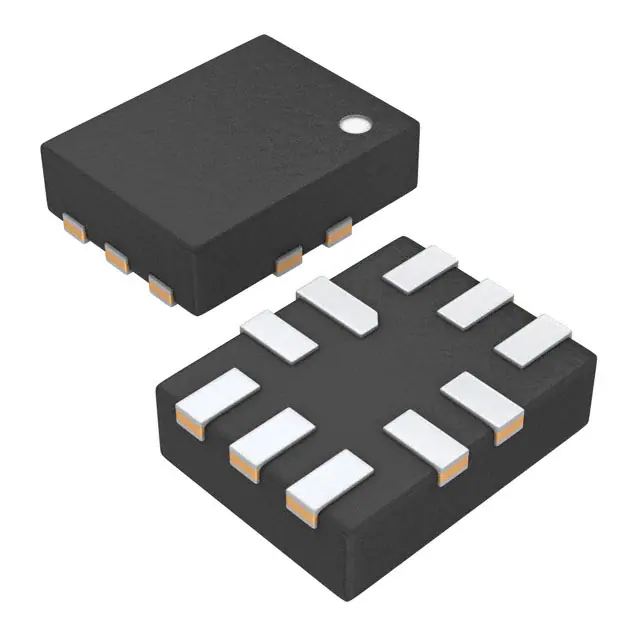
- Part No.:
- MAX4995BAVB+
- Manufacturer:
- Analog Devices Inc./Maxim Integrated
- Category:
- Current Regulation/Management
- Package:
- 10-UFQFN
- Datasheet:
-
 MAX4995BAVB+.pdf
- Description:
- IC CURRENT SWITCH 10% 10UTQFN
- Quantity:
- Payment:

- Shipping:

Inventory:2,435
Please send an inquiry. Send us your inquiry, and we will respond immediately.
Product details
Overview
The MAX4995BAVB+ from Maxim Integrated is a programmable current-limit load switch IC with latch-off fault response, 130mΩ typical on-resistance, +1.7V to +5.5V supply range, and 50mA–600mA adjustable current limit. It operates in -40°C to +125°C and is used in SDIO, USB, and notebook VGA port power management where persistent overcurrent must disable the rail until manual reset.
For engineers reviewing the MAX4995BAVB+ datasheet, MAX4995BAVB+ pinout, MAX4995BAVB+ application, or MAX4995BAVB+ equivalent, this page delivers verified electrical parameters, thermal shutdown behavior, reverse-current blocking, FLAG signaling logic, and package-specific layout guidance for reliable integration into portable and embedded power rails.
Technical Context
The MAX4995BAVB+ implements a precision analog current-sense amplifier driving an internal N-channel MOSFET switch, with fixed 10–22.6ms blanking time before fault assertion. Its latch-off response requires ON pin toggle or VIN cycle to recover - unlike autoretry or continuous-limit variants in the same family.
It integrates reverse-current protection (110mV threshold), thermal shutdown at +150°C with 15°C hysteresis, and open-drain FLAG output that asserts low during overload, thermal fault, reverse conduction, or SETI-to-GND short. The 10-pin UTQFN package supports high-density routing with exposed pad grounding for thermal performance.
Key Specifications
| Parameter | Value and Actual Design Meaning |
|---|---|
| Current Limit Range | 50mA to 600mA, set by external resistor from SETI to GND; ±10% accuracy ensures predictable fault thresholds. |
| On-Resistance (RON) | 130mΩ typ at VIN = 3.3V; enables <100mV dropout at 300mA, minimizing voltage loss in low-voltage rails. |
| Supply Voltage Range | +1.7V to +5.5V; supports single-cell Li-ion, USB 2.0/3.0, and 3.3V/5V system rails without level-shifting. |
| Latchoff Current (Post-Fault) | 8µA typ at VIN = 3.3V; ultra-low quiescent draw during latched-off state preserves battery life in portable systems. |
| Thermal Shutdown Threshold | +150°C junction temperature with 15°C hysteresis; prevents permanent damage during sustained short-circuit events. |
| Reverse-Current Blocking | 10µA max reverse leakage when VOUT > VIN + 110mV; eliminates backfeed from downstream capacitors or powered peripherals. |
| FLAG Assertion Delay | 650mV (VIN – VOUT) drop required to assert FLAG; provides noise immunity while ensuring fast fault detection. |
Pinout & Package
MAX4995BAVB+ uses a 10-pin, 1.4mm × 1.8mm UTQFN package with exposed pad (EP) connected to GND for thermal dissipation. Pin 1 is marked with top-side dot; pin numbering follows standard UTQFN counterclockwise convention starting from top-left corner.
| Pin/Terminal | Circuit Role | Design Meaning |
|---|---|---|
| 1, 10 | IN | Power input; bypass with ≥1µF ceramic capacitor to GND to suppress transients during short-circuit events. |
| 2 | FLAG | Open-drain fault indicator; requires external pullup; asserts low on overload, thermal shutdown, reverse current, or SETI short. |
| 3 | ON | Active-high enable input; drive high to turn on switch; toggle to reset latched-off state after fault. |
| 4 | GND | Analog/digital ground reference; connect EP (exposed pad) directly to this node for optimal thermal performance. |
| 5 | SETI | Current-limit programming node; connect resistor to GND (45.8kΩ–576kΩ) to set 600mA–50mA limit; no capacitance >20pF allowed. |
| 6, 9 | N.C. | No-connect pins; internally unconnected; leave floating or tie to GND per layout best practice (no electrical effect). |
| 7, 8 | OUT | Switched output; bypass with ≥1µF ceramic capacitor to GND; supports parallel connection of multiple outputs. |
Key Features
| Feature | Design Value |
|---|---|
| Latch-off fault response | Permanently disables output until ON pin toggled or VIN cycled - prevents uncontrolled retry cycles in safety-critical rails. |
| ±10% current-limit accuracy | Ensures consistent trip point across voltage, temperature, and process variation; eliminates need for calibration in production. |
| 130mΩ typical RON | Minimizes conduction loss and self-heating at rated load, enabling use in thermally constrained mobile PCBs. |
| Reverse-current blocking | Blocks >110mV VOUT–VIN with <10µA leakage - protects host supplies from backfeed in multi-rail systems like USB OTG. |
| Thermal shutdown with hysteresis | +150°C trip / +135°C recovery prevents oscillation during marginal thermal conditions; maintains system stability. |
Applications
| SDIO Port Power Control | USB Peripheral Power Switching |
|---|---|
|
Use Scenario: Managing power to SD card slots in tablets and notebooks where hot-plug insertion may cause inrush or short faults. IC Role / Device Role / Timing Role: Load switch with latch-off response isolates faulty SD cards until user-initiated reset, preventing system-wide bus collapse. Use Value: Eliminates need for software polling or external fault-handling logic; reduces BOM count and firmware complexity. |
Use Scenario: Enabling/disabling USB device ports in docking stations or multi-port hubs subject to cable shorts or miswired peripherals. IC Role / Device Role / Timing Role: Acts as protected power gate between upstream VBUS and downstream port, asserting FLAG to host controller on fault. Use Value: Prevents host VBUS collapse during peripheral faults; enables clean port-level power cycling via ON pin control. |
| Notebook VGA Port Protection | GPS Module Power Sequencing |
|
Use Scenario: Safeguarding VGA port power delivery in ultrabooks where accidental shorting of DDC lines or hot-plug events can overload the rail. IC Role / Device Role / Timing Role: Current-limited switch placed between main 3.3V rail and VGA port logic; latches off on sustained overload. Use Value: Avoids brownout of core system rails; allows deterministic recovery only after user action or BIOS intervention. |
Use Scenario: Controlling power to GPS receivers in automotive telematics units where antenna shorts or ESD events may trigger overcurrent. IC Role / Device Role / Timing Role: Provides fault-isolated 3.3V supply to GPS module with thermal and reverse-current protection. Use Value: Guarantees GPS subsystem remains isolated during fault, preserving navigation continuity in adjacent modules. |
Equivalent & Alternatives
The following parts are listed as comparable options for similar programmable current-limit switch applications.
| Alternative Part | Technical Difference | Application Difference | Selection Advice |
|---|---|---|---|
| MAX4995AAVB+ | Autoretry fault response instead of latch-off; identical pinout, package, and current-limit range. | Suitable for non-critical loads where automatic recovery is acceptable (e.g., auxiliary sensors); not safe for safety-isolated rails. | Select MAX4995AAVB+ only if system firmware can tolerate repeated retries and thermal stress during persistent faults. |
| MAX4995CAVB+ | Continuous current-limit mode instead of latch-off; same package and SETI programming interface. | Used where constant current delivery is required during overload (e.g., LED biasing); lacks definitive fault isolation. | Choose MAX4995CAVB+ only when downstream circuitry must remain powered at reduced current during fault conditions. |
Compared with MAX4995AAVB+ (autoretry) and MAX4995CAVB+ (continuous limit), the MAX4995BAVB+ provides definitive fault containment via latch-off - critical for protecting shared power domains and meeting IEC 62368-1 fault isolation requirements without additional supervision circuitry.
Availability
MAX4995BAVB+ is available at Aetrix Electronics and suitable for SDIO port protection, USB peripheral switching, and notebook VGA power management requiring stable component supply across industrial temperature ranges and long-life product programs.
Supply support for MAX4995BAVB+ includes scheduled delivery planning, volume procurement assistance, BOM continuity management, traceable sourcing, and lifecycle availability coordination for OEM customers, industrial embedded developers, connected-device designers, and electronics production programs.
Manufacturer
Maxim Integrated, now part of Analog Devices, designs precision analog and mixed-signal ICs for power, sensing, and interface applications in industrial, automotive, and consumer systems.
The MAX4995B series was developed specifically for robust, programmable load-switching in space-constrained portable electronics - emphasizing latch-off safety, low RON, and reverse-current blocking in sub-2mm² packages.
FAQ
What fault response does the MAX4995BAVB+ use, and how is it reset?
The MAX4995BAVB+ uses a latch-off fault response: upon overcurrent exceeding blanking time, it permanently disables the switch until the ON pin is toggled low-then-high or the input supply (VIN) is cycled. This differs from autoretry (MAX4995A) or continuous-limit (MAX4995C) variants. The latch-off behavior ensures definitive isolation of faulty loads, making MAX4995BAVB+ suitable for safety-critical power domains where uncontrolled retries are unacceptable.
How do I set the current limit for the MAX4995BAVB+?
The current limit for MAX4995BAVB+ is set by connecting a resistor (RSETI) from the SETI pin to GND. Using the formula ILIM(mA) = 29042 / (RSETI(kΩ) + 2.48), a 94.2kΩ resistor yields ~300mA. Valid range is 45.8kΩ (600mA) to 576kΩ (50mA). Capacitance on SETI must not exceed 20pF to avoid instability. Shorting SETI to GND forces FLAG assertion and disables the switch.
Does the MAX4995BAVB+ provide reverse-current protection, and what is its threshold?
Yes, MAX4995BAVB+ includes integrated reverse-current protection that blocks conduction when VOUT exceeds VIN by more than 110mV (typical), limiting reverse leakage to ≤10µA. The switch turns off and FLAG asserts immediately - no blanking delay applies. Recovery occurs when VOUT drops below VIN + 100mV (typ). This feature prevents backfeed from downstream capacitors or powered peripherals into the host supply rail.
What is the thermal shutdown behavior of the MAX4995BAVB+?
The MAX4995BAVB+ enters thermal shutdown when junction temperature reaches +150°C (typical), turning off the switch and asserting FLAG low. It remains latched off until temperature falls by ~15°C (to ~+135°C), at which point normal operation resumes only if ON is asserted. This hysteresis prevents oscillation near the trip point. The 10-pin UTQFN package's exposed pad must be soldered to a thermal pad on PCB for effective heat dissipation.
Can the MAX4995BAVB+ be used in automotive applications?
Yes, MAX4995BAVB+ is qualified for operation from -40°C to +125°C and features thermal shutdown, reverse-current blocking, and robust fault handling - all essential for under-hood and infotainment power management. Its latch-off response aligns with ASIL-B fault containment requirements for non-redundant power switches. However, full AEC-Q100 qualification status must be confirmed with Analog Devices' latest automotive compliance documentation before deployment in safety-critical vehicle systems.
MAX4995BAVB+ Specifications
- Product attributes
- Attribute value
- Manufacturer:
- Analog Devices Inc./Maxim Integrated
- Series:
- -
- Package/Case:
- 10-UFQFN
- Packaging:
- Strip
- Product Status:
- Active
- Function:
- Current Switch
- Sensing Method:
- -
- Accuracy:
- ±10%
- Voltage - Input:
- 1.7V ~ 5.5V
- Current - Output:
- Adjustable
- Operating Temperature:
- -40°C ~ 125°C
- Grade:
- -
- Qualification:
- -
- Mounting Type:
- Surface Mount
- Supplier Device Package:
- 10-UTQFN (1.4x1.8)
MAX4995BAVB+ FAQ
1.How can I place an order for MAX4995BAVB+ through Aetrix?
Please submit a Request for Quotation (RFQ) for MAX4995BAVB+ on Aetrix. Our sales agent will provide a competitive quotation and guide you through the order confirmation once you accept the terms.
2.Are the price and stock information for MAX4995BAVB+ reliable?
The price and inventory of MAX4995BAVB+ are updated periodically and may fluctuate due to market conditions. Stock and pricing data are typically refreshed every 24 hours. Quotation validity for MAX4995BAVB+ is usually 5 days.
3.What payment methods are accepted for MAX4995BAVB+?
We accept Wire Transfer, PayPal, Credit Card, Western Union, MoneyGram, and Escrow for MAX4995BAVB+ transactions.
Note: Certain payment methods may incur a processing fee.
4.How is shipping managed for MAX4995BAVB+?
MAX4995BAVB+ orders can be shipped via leading logistics carriers, including DHL, UPS, FedEx, TNT, or Registered Mail.
Once your MAX4995BAVB+ order is processed, you will receive an email with the shipment details and tracking number.
Note: Tracking information may take up to 24 hours to appear. Express delivery typically takes 3–5 business days.
5.How can I obtain technical support or documentation for MAX4995BAVB+?
For technical support, including MAX4995BAVB+ datasheets, pinout diagrams, or application guidance, please contact our engineering support team. They can provide detailed documentation and assistance for your MAX4995BAVB+ requirements.
6.How does Aetrix verify that MAX4995BAVB+ is sourced from the original manufacturer or authorized distributors?
All MAX4995BAVB+ products on Aetrix are procured from qualified distributors and authorized channels. Our dedicated quality assurance team conducts strict verification, including traceability checks and, if necessary, third-party testing. This ensures that MAX4995BAVB+ meets industry standards.
7.What is the process for return or replacement of MAX4995BAVB+?
All MAX4995BAVB+ units undergo pre-shipment inspection (PSI). If there is an issue with MAX4995BAVB+, returns or replacements are accepted under the following conditions:
1.Quantity discrepancies, incorrect items, or visible external defects (such as breakage or corrosion), acknowledged by Aetrix.
2.The issue is reported within 90 days of delivery.
3.The MAX4995BAVB+ part is unused and in its original packaging.
Return procedure for MAX4995BAVB+:
1.Submit a request within 90 days.
2.Obtain a Return Material Authorization (RMA) from Aetrix.
MAX4995BAVB+ Tags
.jpg)
-
PSSI2021SAY,115
Nexperia USA Inc.
-
BCR401RE6327HTSA1
Infineon Technologies
-
INA199B2DCKR
Texas Instruments
-
INA199A1DCKR
Texas Instruments
-
INA199B1DCKR
Texas Instruments
-
NSI45015WT1G
onsemi
-
NSI45020T1G
onsemi
-
NSI45030AT1G
onsemi
-
NSI45025AT1G
onsemi
-
NSI45020AT1G
onsemi
-
NSI50010YT1G
onsemi
-
LM334Z/NOPB
Texas Instruments
Tech Hub

A practical engineering guide to 3.3V and 5V logic compatibility, input thresholds, resistor dividers, translator ICs, MOSFET level shifting, I2C pull-ups, timing limits and power-sequencing risks.

The 74HC595 uses push-pull logic outputs, while the TPIC6B595 uses 50 V open-drain DMOS sinks for higher-power loads. This guide compares timing, current limits, 3.3 V interfacing, load wiring, thermal…

The 74HC595 converts serial data into eight stable parallel outputs. This guide covers pin functions, shift and storage timing, OE and MR behavior, drive-current limits, cascading, voltage compatibilit…

A technical comparison of level-sensitive latches and edge-triggered flip-flops, covering timing windows, setup and hold limits, master–slave operation, time borrowing, race-through, HDL inference and…

A D latch stores one bit while Enable controls when data can pass. This reference covers gate-level operation, truth tables, transparency, setup and hold timing, LE versus OE, common ICs and practical …

An SR latch stores one bit through cross-coupled feedback. This engineering reference covers NOR and NAND implementations, truth tables, forbidden-state recovery, gated operation, switch debouncing, fa…

Latch circuits retain one bit through feedback. This technical reference covers SR and D latches, truth tables, transparency, timing limits, latch-versus-flip-flop behavior, applications and common log…

An engineering guide to LED driver operation, constant-current and constant-voltage outputs, linear and switching topologies, dimming, IC selection, calculations, replacement compatibility, and fault c…

Operational amplifier guide covering op amp basics, feedback, ideal vs real op amps, common configurations, buffer circuits, offset, bias current, gain-bandwidth, slew rate, rail-to-rail limits and sel…

Jumper cables guide covering safe connection order, red and black clamp placement, final ground connection, cable gauge, length, clamp quality, copper vs CCA cables, jump starter comparison and battery…


