
 My Inquiry
 My Account


Analog Devices Inc./Maxim Integrated MAX516ACWG
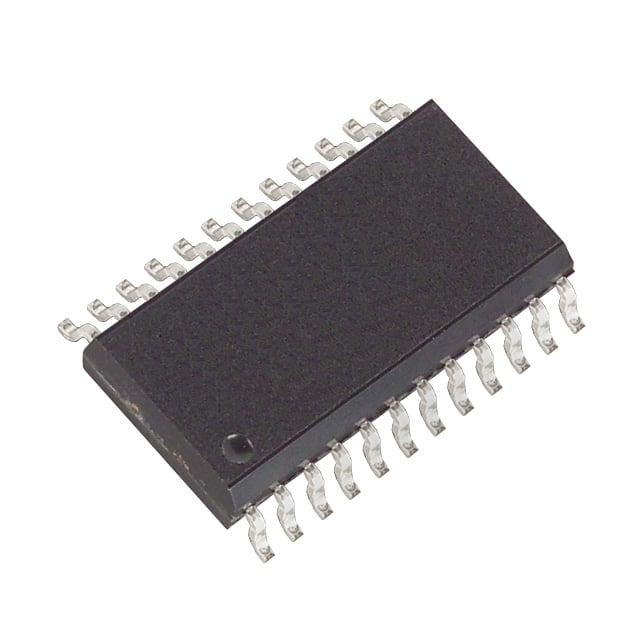
- Part No.:
- MAX516ACWG
- Manufacturer:
- Analog Devices Inc./Maxim Integrated
- Category:
- Comparators
- Package:
- 24-SOIC (0.295", 7.50mm Width)
- Datasheet:
-
 MAX516ACWG.pdf
- Description:
- IC COMPARATOR 4 GEN PUR 24SOIC
- Quantity:
- Payment:

- Shipping:

Inventory:4,000
Please send an inquiry. Send us your inquiry, and we will respond immediately.
Product details
Overview
MAX516ACWG from Maxim Integrated is a 10-bit, single-channel, voltage-output digital-to-analog converter (DAC) with rail-to-rail output swing, internal 2.048V reference, and SPI-compatible 3-wire serial interface. It operates from a single +2.7V to +5.25V supply, delivers ±1 LSB integral nonlinearity (INL), and is specified over the 0°C to +70°C temperature range. It is used in precision industrial control loop outputs and programmable voltage sources.
For engineers reviewing the MAX516ACWG datasheet, MAX516ACWG pinout, MAX516ACWG application, or MAX516ACWG equivalent, key selection criteria include its guaranteed monotonicity, low 0.5 µA shutdown current, 10 µs settling time to 0.5 LSB, and compatibility with microcontrollers using 3-wire SPI without level-shifting.
Technical Context
The MAX516ACWG integrates a precision trimmed 2.048V bandgap reference and a buffered voltage-output DAC core. Its SPI interface supports clock rates up to 10 MHz and uses separate /CS, SCLK, and DIN signals with no need for external reference buffering or gain-setting resistors.
It features power-on reset that ensures the output defaults to 0 V, and includes a hardware shutdown mode that reduces supply current to 0.5 µA while maintaining register contents. The device does not require external compensation and achieves full-scale settling within 10 µs.
Key Specifications
| Parameter | Value and Actual Design Meaning |
|---|---|
| Resolution | 10-bit - supports 1024 discrete output levels for fine-grained analog control |
| Output Type | Voltage-output, rail-to-rail - delivers full-scale swing from 0 V to VDD, eliminating need for external op-amp level-shifting |
| Reference | Internal 2.048V - factory-trimmed, stable reference enables self-contained operation without external reference IC |
| INL | ±1 LSB max - guarantees monotonicity and predictable linearity across full code range |
| Settling Time | 10 µs to 0.5 LSB - enables fast update rates in closed-loop control and waveform generation |
| Supply Range | +2.7V to +5.25V - compatible with both 3.3V and 5V logic/system rails |
| Shutdown Current | 0.5 µA - allows ultra-low-power sleep modes in battery-operated systems |
Pinout & Package
MAX516ACWG is housed in a 16-pin SOIC (Small Outline Integrated Circuit) package with standard 150-mil body width and 1.27 mm pitch.
| Pin/Terminal | Circuit Role | Design Meaning |
|---|---|---|
| VDD | Positive supply | Accepts +2.7V to +5.25V; powers DAC core, reference, and interface logic |
| GND | Ground | System ground reference for analog and digital sections |
| DIN | Serial data input | CMOS-compatible input accepting SPI-format command/data words |
| SCLK | Serial clock input | Edge-triggered clock up to 10 MHz; controls data latching and internal timing |
| /CS | Chip select | Active-low enable; initiates serial frame and loads data into DAC register |
| /SHDN | Shutdown control | Active-low input; places device in 0.5 µA standby with register retention |
| OUT | Analog output | Rail-to-rail buffered voltage output; drives ≥2 kΩ load with <10 µs settling |
| REF | Reference output | Provides 2.048V reference; can be used externally or bypassed with 0.1 µF capacitor |
Key Features
| Feature | Design Value |
|---|---|
| Integrated 2.048V reference | Eliminates external reference IC and associated trimming components, reducing BOM count and layout area |
| Rail-to-rail output buffer | Delivers full-scale output from 0 V to VDD without external amplification or level-shifting circuitry |
| Monotonicity guaranteed | Ensures no code-to-code glitches in closed-loop control systems, preventing instability or oscillation |
| Hardware shutdown mode | Reduces current to 0.5 µA while preserving DAC register state-enables rapid wake-up without reinitialization |
| Power-on reset | Forces output to 0 V at power-up, preventing undefined analog transients during system boot |
Applications
| Industrial Process Control | Programmable Power Supply |
|---|---|
Use Scenario: Generating precise 0–5 V setpoint voltages for PID controller feedback loops in PLC-based automation systems. IC Role / Device Role / Timing Role: Voltage-output DAC providing calibrated analog command signal to operational amplifier-based current/voltage drivers. Use Value: ±1 LSB INL and rail-to-rail output ensure accurate setpoint translation without calibration drift or headroom loss. | Use Scenario: Setting adjustable output voltage in benchtop or embedded DC power supplies with microcontroller supervision. IC Role / Device Role / Timing Role: Precision DAC generating reference voltage for error amplifier in switching or linear regulator feedback path. Use Value: Internal 2.048V reference and 10 µs settling enable stable, fast-response voltage programming without external reference or compensation. |
| Test & Measurement Equipment | Medical Instrumentation |
Use Scenario: Calibrating sensor excitation circuits and generating known stimulus voltages in automated test fixtures. IC Role / Device Role / Timing Role: Programmable analog source delivering repeatable, low-drift excitation signals to bridge sensors or photodiode TIA stages. Use Value: Guaranteed monotonicity and 0.5 µA shutdown support deterministic behavior and low-power idle states during multi-step test sequences. | Use Scenario: Controlling analog front-end gain or offset in portable ECG/EEG signal conditioning modules. IC Role / Device Role / Timing Role: Low-power DAC setting bias points and calibration offsets in battery-powered medical analog signal chains. Use Value: Single-supply operation down to +2.7V and rail-to-rail output maximize dynamic range in low-voltage, low-noise medical designs. |
Equivalent & Alternatives
The following parts are listed as comparable options for similar voltage-output DAC applications.
| Alternative Part | Technical Difference | Application Difference | Selection Advice |
|---|---|---|---|
| AD5300BRMZ | 10-bit, rail-to-rail output, but uses internal 1.25V reference and requires external buffer for full rail-to-rail drive capability | Lower reference voltage limits full-scale output range unless external gain stage added | Select when lower reference voltage aligns with system scaling needs and board space permits external buffering |
| MCP4921-E/SN | 12-bit resolution, SPI interface, but lacks internal reference and requires external 2.048V or 4.096V reference | Higher resolution at cost of increased BOM complexity and layout sensitivity to reference noise | Select when 12-bit precision is required and reference sourcing is already established in design |
Compared with AD5300BRMZ and MCP4921-E/SN, the MAX516ACWG provides integrated reference and guaranteed rail-to-rail output in a single SOIC package-reducing component count and layout risk for 10-bit industrial control applications where simplicity and reliability are prioritized over extended resolution or alternative reference voltages.
Availability
MAX516ACWG is available at Aetrix Electronics and suitable for industrial process control, programmable power supplies, and test equipment requiring stable component supply, long-term manufacturability, and consistent parametric performance across production lots.
Supply support for MAX516ACWG includes scheduled delivery planning, volume procurement assistance, BOM continuity management, traceable sourcing, and lifecycle availability coordination for OEM customers, industrial embedded developers, connected-device designers, and electronics production programs.
Manufacturer
Maxim Integrated (now part of Analog Devices) designs precision analog, mixed-signal, and high-reliability semiconductor solutions for industrial, medical, and communications infrastructure.
The MAX516ACWG belongs to Maxim's precision DAC product line, engineered for applications demanding low-power, rail-to-rail output, and integrated reference stability in compact industrial control interfaces.
FAQ
What is the operating temperature range for the MAX516ACWG?
The MAX516ACWG is specified for operation from 0°C to +70°C. This commercial-grade temperature range is validated per Maxim's production test flow and applies to all electrical parameters in the datasheet, including INL, settling time, and reference accuracy. The MAX516ACWG does not support extended or industrial temperature grades.
Does the MAX516ACWG require an external reference?
No, the MAX516ACWG includes a factory-trimmed 2.048V internal reference. This reference is routed to the REF pin and can be used directly or bypassed with a 0.1 µF capacitor. No external reference IC or trimming components are needed for standard operation of the MAX516ACWG.
Can the MAX516ACWG drive a 1 kΩ load?
Yes, the MAX516ACWG's rail-to-rail output buffer is specified to drive loads ≥2 kΩ with full 10 µs settling to 0.5 LSB. Driving a 1 kΩ load may cause increased settling time and minor gain error due to output stage loading; for such cases, an external unity-gain buffer is recommended to maintain MAX516ACWG performance specifications.
Is the MAX516ACWG pin-compatible with other Maxim DACs like the MAX517 or MAX518?
No, the MAX516ACWG is not pin-compatible with the MAX517 or MAX518. Those devices use 8-pin SO packages and different pin assignments. The MAX516ACWG uses a 16-pin SOIC package with dedicated /SHDN, REF, and rail-to-rail output architecture not present in the 8-pin variants.
What is the maximum SPI clock frequency supported by the MAX516ACWG?
The MAX516ACWG supports SPI clock frequencies up to 10 MHz. This allows full 16-bit frame transfers (including command and data bits) in under 1.6 µs, enabling high-throughput updates in real-time control applications using the MAX516ACWG.
MAX516ACWG Specifications
- Product attributes
- Attribute value
- Manufacturer:
- Analog Devices Inc./Maxim Integrated
- Package/Case:
- 24-SOIC (0.295", 7.50mm Width)
- Series:
- -
- Packaging:
- Tube
- Product Status:
- Obsolete
- Type:
- General Purpose
- Number of Elements:
- 4
- Output Type:
- CMOS, TTL
- Voltage - Supply, Single/Dual (±):
- 4.75V ~ 16.5V
- :
- -
- Voltage - Input Offset (Max):
- 0.3µA @ 16.5V
- Current - Input Bias (Max):
- -
- Current - Output (Typ):
- 10mA
- Current - Quiescent (Max):
- -
- CMRR, PSRR (Typ):
- 1.5µs
- Propagation Delay (Max):
- -
- Hysteresis:
- 0°C ~ 70°C
- Operating Temperature:
- -
- Grade:
- -
- Qualification:
- Surface Mount
- :
- 24-SOIC
MAX516ACWG FAQ
1.How can I place an order for MAX516ACWG through Aetrix?
Please submit a Request for Quotation (RFQ) for MAX516ACWG on Aetrix. Our sales agent will provide a competitive quotation and guide you through the order confirmation once you accept the terms.
2.Are the price and stock information for MAX516ACWG reliable?
The price and inventory of MAX516ACWG are updated periodically and may fluctuate due to market conditions. Stock and pricing data are typically refreshed every 24 hours. Quotation validity for MAX516ACWG is usually 5 days.
3.What payment methods are accepted for MAX516ACWG?
We accept Wire Transfer, PayPal, Credit Card, Western Union, MoneyGram, and Escrow for MAX516ACWG transactions.
Note: Certain payment methods may incur a processing fee.
4.How is shipping managed for MAX516ACWG?
MAX516ACWG orders can be shipped via leading logistics carriers, including DHL, UPS, FedEx, TNT, or Registered Mail.
Once your MAX516ACWG order is processed, you will receive an email with the shipment details and tracking number.
Note: Tracking information may take up to 24 hours to appear. Express delivery typically takes 3–5 business days.
5.How can I obtain technical support or documentation for MAX516ACWG?
For technical support, including MAX516ACWG datasheets, pinout diagrams, or application guidance, please contact our engineering support team. They can provide detailed documentation and assistance for your MAX516ACWG requirements.
6.How does Aetrix verify that MAX516ACWG is sourced from the original manufacturer or authorized distributors?
All MAX516ACWG products on Aetrix are procured from qualified distributors and authorized channels. Our dedicated quality assurance team conducts strict verification, including traceability checks and, if necessary, third-party testing. This ensures that MAX516ACWG meets industry standards.
7.What is the process for return or replacement of MAX516ACWG?
All MAX516ACWG units undergo pre-shipment inspection (PSI). If there is an issue with MAX516ACWG, returns or replacements are accepted under the following conditions:
1.Quantity discrepancies, incorrect items, or visible external defects (such as breakage or corrosion), acknowledged by Aetrix.
2.The issue is reported within 90 days of delivery.
3.The MAX516ACWG part is unused and in its original packaging.
Return procedure for MAX516ACWG:
1.Submit a request within 90 days.
2.Obtain a Return Material Authorization (RMA) from Aetrix.
MAX516ACWG Tags

-
LM2903DR
Texas Instruments
-
LM339DR
Texas Instruments
-
LM339PWR
Texas Instruments

-
LM393DT
STMicroelectronics
-
LM2901PWR
Texas Instruments
-
LM2903DT
STMicroelectronics
-
LM393DR
Texas Instruments
-
LM239DR
Texas Instruments
-
LM339APWR
Texas Instruments
-
LM2903P
Texas Instruments
-
LM393ADR
Texas Instruments
-
NCX2200GMAZ
NXP USA Inc.
Tech Hub

An engineering guide to LED driver operation, constant-current and constant-voltage outputs, linear and switching topologies, dimming, IC selection, calculations, replacement compatibility, and fault c…

Operational amplifier guide covering op amp basics, feedback, ideal vs real op amps, common configurations, buffer circuits, offset, bias current, gain-bandwidth, slew rate, rail-to-rail limits and sel…

Jumper cables guide covering safe connection order, red and black clamp placement, final ground connection, cable gauge, length, clamp quality, copper vs CCA cables, jump starter comparison and battery…

LDO regulator guide covering low dropout voltage, power dissipation, thermal design, PSRR, output noise, capacitor stability, adjustable LDO circuits, LDO vs buck converter and datasheet selection chec…

Conditional Access Module guide covering CAM meaning, CI/CI+ interface, smart card authorization, DVB security workflow, TV and set-top box compatibility, internal electronics, ESD protection, connecto…

Guide to electronic component obsolescence covering EOL risk, PCN/PDN notices, last-time buy planning, replacement options, form-fit-function validation, counterfeit risk and BOM lifecycle management.

18650 battery guide covering lithium-ion cell basics, 3.6V/3.7V voltage, 4.2V charging, mAh and Wh capacity, protected cells, chargers, BMS, series-parallel packs, holders, welding and sourcing checks.…

Hall effect sensor guide covering working principle, linear and digital sensors, Arduino circuits, current sensing, speed detection, automotive applications, A3144 examples, signal filtering and datash…

Product Change Notification guide for electronic components, covering PCN meaning, PCN vs PDN/EOL, common change types, risk levels, form-fit-function review, engineering validation, BOM control, LTB/L…

A practical guide to blend door actuators, covering HVAC function, symptoms, location, AC and heater issues, reset and calibration, replacement cost, electrical diagnosis, compatibility checks, and rep…


