
 My Inquiry
 My Account


Analog Devices Inc./Maxim Integrated MAX6650EUB
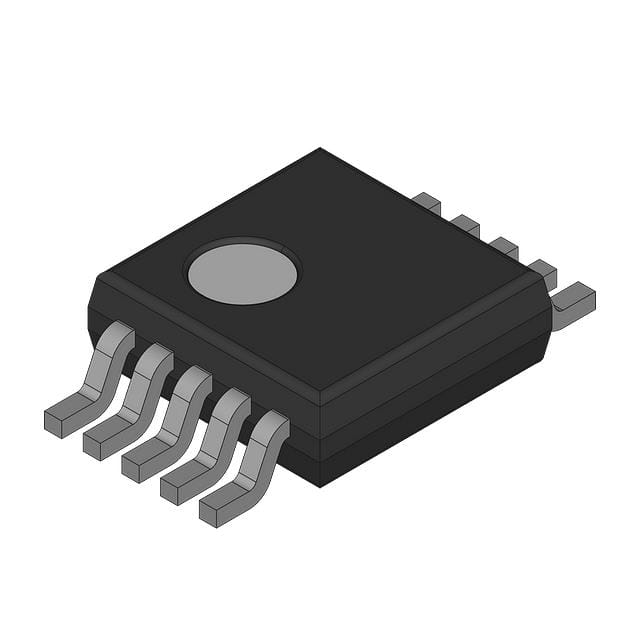
- Part No.:
- MAX6650EUB
- Manufacturer:
- Analog Devices Inc./Maxim Integrated
- Category:
- Motor Drivers, Controllers
- Package:
- 10-TFSOP, 10-MSOP (0.118", 3.00mm Width)
- Datasheet:
-
 MAX6650EUB.pdf
- Description:
- IC REG LIN FAN SPEED REGULATOR
- Quantity:
- Payment:

- Shipping:

Inventory:166
Please send an inquiry. Send us your inquiry, and we will respond immediately.
Product details
Overview
The MAX6650EUB from Maxim Integrated is a single-fan SMBus/I2C-compatible fan-speed regulator and monitor for 5V/12V brushless DC fans with open-collector tachometers. It linearly regulates fan voltage via external MOSFET/bipolar transistor, enforces closed-loop speed control using tachometer feedback, and features programmable alert output, hardware full-on override (GPIO1), and 3V–5.5V operation - deployed in server thermal management systems.
For engineers reviewing the MAX6650EUB datasheet, MAX6650EUB pinout, MAX6650EUB application, or MAX6650EUB equivalent, key selection considerations include tachometer input impedance (100 kΩ), DAC resolution (8 bits), SMBus timing compliance (400 kHz max SCL), GPIO sink capability (10 mA), and µMAX-10 package compatibility with high-density PCB layouts.
Technical Context
The MAX6650EUB implements dual internal control loops: a digital-to-analog converter (DAC) sets a reference voltage for an internal feedback amplifier that drives an external N-channel MOSFET's gate to regulate fan voltage on the low side; simultaneously, digital logic compares measured tachometer frequency against a target set by the Fan-Speed Register and adjusts the DAC input to force convergence.
It supports four SMBus slave addresses (36h, 3Eh, 90h, 96h) via ADD pin strapping, operates in four modes (full-on, shutdown, closed-loop, open-loop), and uses a 254 kHz ±10% internal oscillator - with tachometer threshold defined as VFB + 0.5 V to VFB + 1.5 V for 5V fans and VFB + 1.0 V to VFB + 3.0 V for 12V fans.
Key Specifications
| Parameter | Value and Actual Design Meaning |
|---|---|
| Supply Voltage | 3.0 V to 5.5 V - powers internal logic and interface; supports direct connection to common system rails. |
| Fan Voltage Support | 5 VDC or 12 VDC - enables regulation of standard PC/server cooling fans without level-shifting. |
| Tachometer Input Impedance | 100 kΩ - ensures minimal loading on open-collector tachometer outputs from brushless fans. |
| DAC Resolution | 8 bits - provides 256 discrete output voltage steps for precise analog control of fan drive voltage. |
| SMBus Clock Frequency | Up to 400 kHz - compatible with standard high-speed SMBus/I²C host controllers. |
| GPIO Sink Current | 10 mA per pin - sufficient to directly drive status LEDs or interface with standard logic inputs. |
| Operating Temperature | −40°C to +85°C - qualified for industrial and enterprise computing environments. |
Pinout & Package
The MAX6650EUB is housed in a 10-pin µMAX® package (3.0 mm × 3.0 mm, 0.8 mm height, 0.5 mm pitch), optimized for space-constrained thermal management subsystems.
| Pin | Circuit Role | Design Meaning |
|---|---|---|
| TACH0 | Tachometer input | Monitors fan rotation pulses; used for closed-loop speed regulation and fault detection. |
| GND | Ground reference | Common return path for power, feedback, and I/O signals; must be low-impedance. |
| SDA | SMBus/I²C data line | Open-drain bidirectional serial data interface; requires external pullup resistor (typically 4.7 kΩ). |
| SCL | SMBus/I²C clock line | Open-drain clock input; synchronizes all register reads/writes and command transfers. |
| ADD | Slave address select | Configures one of four SMBus addresses (36h/3Eh/90h/96h) via external pulldown resistor or floating. |
| GPIO0 | Programmable I/O | Configurable as active-low ALERT output for fault reporting (e.g., tach overflow, min/max output alarms). |
| GPIO1 | Hardware override input | Active-low FULL ON input - forces fan to maximum speed independent of software control during failure. |
| OUT | Analog output driver | Drives gate/base of external N-MOSFET or bipolar transistor to regulate fan voltage on low side. |
| FB | Feedback input | Closes analog control loop; monitors voltage at MOSFET source/fan cathode to maintain DAC-set reference. |
| VCC | Power supply | 3.0 V to 5.5 V input; powers internal logic, DAC, and interface circuitry; bypass capacitor required. |
Key Features
| Feature | Design Value |
|---|---|
| Closed-loop fan control | Automatically matches tachometer frequency to programmed target - eliminates manual tuning and improves thermal stability. |
| Hardware full-on override | GPIO1 acts as fail-safe input: pulling low forces fan to 100% speed regardless of register state or firmware status. |
| Programmable alert output | GPIO0 asserts active-low signal on configurable faults (tach overflow, min/max output, GPIO1 low) - enables system-level thermal interrupt handling. |
| Four SMBus addresses | ADD pin strapping allows up to four MAX6650EUB devices on same bus - simplifies multi-fan monitoring in dense chassis. |
| 8-bit DAC with monotonicity | Guaranteed monotonic output across full 0–255 range - ensures predictable, stepwise fan voltage adjustment without reversal. |
Applications
| RAID Enclosures | Server Blade Chassis |
|---|---|
Use Scenario: Thermal management in multi-bay RAID storage units with variable fan loads and ambient temperature swings. IC Role / Device Role / Timing Role: Fan-speed regulator and tachometer monitor - maintains consistent airflow while minimizing acoustic noise and power draw. Use Value: Enables dynamic fan speed scaling proportional to disk temperature, extending fan life and reducing system power by up to 30% versus fixed-speed operation. | Use Scenario: Compact blade servers requiring precise per-blade thermal control and centralized SMBus-based monitoring. IC Role / Device Role / Timing Role: Single-fan controller with hardware full-on override - ensures continuous cooling even during host processor reset or firmware hang. Use Value: GPIO1 hardware override guarantees fail-safe cooling without software intervention, meeting ASHRAE A3/A4 environmental compliance. |
| Desktop Workstations | Telecom Line Cards |
Use Scenario: High-performance desktop workstations with discrete GPU and CPU cooling zones. IC Role / Device Role / Timing Role: SMBus-addressable fan controller - integrates into platform controller hub (PCH) thermal management firmware stack. Use Value: Four selectable slave addresses allow coexistence with other SMBus peripherals (e.g., temperature sensors, VRMs) on shared bus. | Use Scenario: Carrier-grade telecom line cards operating in NEBS-compliant cabinets with strict thermal budgets. IC Role / Device Role / Timing Role: Tachometer-regulated fan driver - monitors fan health and triggers alerts on rotational stall or bearing failure. Use Value: Tachometer overflow alarm and min/max output level detection enable predictive maintenance and remote fault isolation. |
Equivalent & Alternatives
The following parts are listed as comparable options for similar fan-speed regulation applications.
| Alternative Part | Technical Difference | Application Difference | Selection Advice |
|---|---|---|---|
| LM87CIMT | Integrated temperature sensor + fan controller in 24-TSSOP; supports dual fans; no hardware full-on GPIO. | Used where local temperature sensing and multi-fan coordination are required; lacks dedicated fail-safe override pin. | Select when system-level thermal profiling (not just fan speed) is needed and board space permits larger package. |
| ADM1032ARMZ | 2-channel temp sensor + single-fan controller in 8-MSOP; SMBus-compatible; no tachometer count-time programming. | Targeted at cost-sensitive embedded systems with basic thermal monitoring; limited tachometer resolution and no GPIO configurability. | Choose for simpler designs where only coarse fan speed control and temperature readback are required. |
Compared with LM87CIMT and ADM1032ARMZ, the MAX6650EUB offers dedicated hardware full-on override (GPIO1), higher tachometer input impedance (100 kΩ vs. ≤50 kΩ), and finer DAC resolution (8-bit vs. 6-bit in ADM1032), making it optimal for mission-critical server cooling where reliability and precision outweigh integration density.
Availability
MAX6650EUB is available at Aetrix Electronics and suitable for RAID enclosures, server blade chassis, and telecom line cards requiring stable component supply, long-term lifecycle support, and RoHS-compliant packaging.
Supply support for MAX6650EUB includes scheduled delivery planning, volume procurement assistance, BOM continuity management, traceable sourcing, and lifecycle availability coordination for OEM customers, industrial embedded developers, connected-device designers, and electronics production programs.
Manufacturer
Maxim Integrated (now part of Analog Devices) is a semiconductor company specializing in precision analog, mixed-signal, and power management ICs for industrial, computing, and communications markets.
The MAX6650EUB belongs to Maxim's thermal management product line, designed specifically for intelligent, SMBus-addressable fan control in high-reliability computing infrastructure where deterministic fail-safe behavior is mandatory.
FAQ
What is the function of the ADD pin on the MAX6650EUB?
The ADD pin on the MAX6650EUB selects one of four SMBus slave addresses (36h, 3Eh, 90h, or 96h) by connecting it to GND, leaving it floating, or using external resistors. This enables multiple MAX6650EUB devices to share the same SMBus without address conflict - critical for multi-fan systems. The pin's input leakage is ±1 µA, and its logic thresholds are VIL = 0.1 V and VIH = VCC − 0.05 V.
How does the MAX6650EUB achieve closed-loop fan speed control?
The MAX6650EUB achieves closed-loop fan speed control by comparing the measured tachometer pulse frequency (via TACH0) against a target period derived from the Fan-Speed Register, prescaler, and 254 kHz internal oscillator. It adjusts the 8-bit DAC output to modulate the OUT pin voltage, which drives an external MOSFET to regulate fan voltage - forcing tachometer frequency to match the programmed value with typical convergence within milliseconds.
Can the MAX6650EUB drive a 12V fan directly?
No, the MAX6650EUB cannot drive a 12V fan directly. It regulates 12V fans indirectly by controlling an external N-channel MOSFET or bipolar transistor connected between the fan's low-side terminal and ground. The MAX6650EUB's OUT pin drives the gate/base of that transistor, while FB monitors the resulting voltage drop to close the analog feedback loop - ensuring safe, linear regulation without exceeding device voltage ratings.
What is the purpose of the GPIO1 pin on the MAX6650EUB?
The GPIO1 pin on the MAX6650EUB serves as a hardware full-on override input. When pulled low, it forces the fan to run at maximum speed regardless of software commands, DAC settings, or register states - providing fail-safe cooling during microcontroller lockup, firmware crash, or communication loss. This feature is explicitly documented in the MAX6650EUB datasheet as a critical reliability mechanism for server and telecom applications.
Does the MAX6650EUB require an external crystal or clock source?
No, the MAX6650EUB does not require an external crystal or clock source. It contains a factory-trimmed 254 kHz ±10% internal oscillator used for tachometer period calculation and timing functions. This oscillator is temperature- and supply-voltage-stable (±10% over −40°C to +85°C and 3.0 V–5.5 V), eliminating BOM cost and layout complexity associated with external timing components - a key differentiator from competing fan controllers like the ADT7470.
MAX6650EUB Specifications
- Product attributes
- Attribute value
- Manufacturer:
- Analog Devices Inc./Maxim Integrated
- Series:
- -
- Package/Case:
- 10-TFSOP, 10-MSOP (0.118", 3.00mm Width)
- Packaging:
- Bulk
- Product Status:
- Active
- Motor Type - Stepper:
- Unipolar
- Motor Type - AC, DC:
- Brushless DC (BLDC)
- Function:
- Controller - Speed
- Output Configuration:
- Pre-Driver - Low Side
- Interface:
- I2C, SMBus
- Technology:
- -
- Step Resolution:
- -
- Applications:
- Fan Controller
- Current - Output:
- 100mA
- Voltage - Supply:
- 3V ~ 5.5V
- Voltage - Load:
- -
- Operating Temperature:
- -40°C ~ 85°C (TA)
- Grade:
- -
- Qualification:
- -
- Mounting Type:
- Surface Mount
- Supplier Device Package:
- 10-uMAX
MAX6650EUB FAQ
1.How can I place an order for MAX6650EUB through Aetrix?
Please submit a Request for Quotation (RFQ) for MAX6650EUB on Aetrix. Our sales agent will provide a competitive quotation and guide you through the order confirmation once you accept the terms.
2.Are the price and stock information for MAX6650EUB reliable?
The price and inventory of MAX6650EUB are updated periodically and may fluctuate due to market conditions. Stock and pricing data are typically refreshed every 24 hours. Quotation validity for MAX6650EUB is usually 5 days.
3.What payment methods are accepted for MAX6650EUB?
We accept Wire Transfer, PayPal, Credit Card, Western Union, MoneyGram, and Escrow for MAX6650EUB transactions.
Note: Certain payment methods may incur a processing fee.
4.How is shipping managed for MAX6650EUB?
MAX6650EUB orders can be shipped via leading logistics carriers, including DHL, UPS, FedEx, TNT, or Registered Mail.
Once your MAX6650EUB order is processed, you will receive an email with the shipment details and tracking number.
Note: Tracking information may take up to 24 hours to appear. Express delivery typically takes 3–5 business days.
5.How can I obtain technical support or documentation for MAX6650EUB?
For technical support, including MAX6650EUB datasheets, pinout diagrams, or application guidance, please contact our engineering support team. They can provide detailed documentation and assistance for your MAX6650EUB requirements.
6.How does Aetrix verify that MAX6650EUB is sourced from the original manufacturer or authorized distributors?
All MAX6650EUB products on Aetrix are procured from qualified distributors and authorized channels. Our dedicated quality assurance team conducts strict verification, including traceability checks and, if necessary, third-party testing. This ensures that MAX6650EUB meets industry standards.
7.What is the process for return or replacement of MAX6650EUB?
All MAX6650EUB units undergo pre-shipment inspection (PSI). If there is an issue with MAX6650EUB, returns or replacements are accepted under the following conditions:
1.Quantity discrepancies, incorrect items, or visible external defects (such as breakage or corrosion), acknowledged by Aetrix.
2.The issue is reported within 90 days of delivery.
3.The MAX6650EUB part is unused and in its original packaging.
Return procedure for MAX6650EUB:
1.Submit a request within 90 days.
2.Obtain a Return Material Authorization (RMA) from Aetrix.
MAX6650EUB Tags
-
DRV2603RUNR
Texas Instruments
-
DRV8837CDSGR
Texas Instruments
-
DRV8837DSGR
Texas Instruments
-
DRV8838DSGR
Texas Instruments
-
DRV8839DSSR
Texas Instruments
-
EMC2301-1-ACZL-TR
Microchip Technology
-
DRV8231ADSGR
Texas Instruments
-
EMC2302-2-AIZL-TR
Microchip Technology
-
DRV8800PWPR
Texas Instruments
-
DRV8835DSSR
Texas Instruments
-
EMC2303-1-KP-TR
Microchip Technology
-
DRV8876PWPR
Texas Instruments
Tech Hub

A practical engineering guide to 3.3V and 5V logic compatibility, input thresholds, resistor dividers, translator ICs, MOSFET level shifting, I2C pull-ups, timing limits and power-sequencing risks.

The 74HC595 uses push-pull logic outputs, while the TPIC6B595 uses 50 V open-drain DMOS sinks for higher-power loads. This guide compares timing, current limits, 3.3 V interfacing, load wiring, thermal…

The 74HC595 converts serial data into eight stable parallel outputs. This guide covers pin functions, shift and storage timing, OE and MR behavior, drive-current limits, cascading, voltage compatibilit…

A technical comparison of level-sensitive latches and edge-triggered flip-flops, covering timing windows, setup and hold limits, master–slave operation, time borrowing, race-through, HDL inference and…

A D latch stores one bit while Enable controls when data can pass. This reference covers gate-level operation, truth tables, transparency, setup and hold timing, LE versus OE, common ICs and practical …

An SR latch stores one bit through cross-coupled feedback. This engineering reference covers NOR and NAND implementations, truth tables, forbidden-state recovery, gated operation, switch debouncing, fa…

Latch circuits retain one bit through feedback. This technical reference covers SR and D latches, truth tables, transparency, timing limits, latch-versus-flip-flop behavior, applications and common log…

An engineering guide to LED driver operation, constant-current and constant-voltage outputs, linear and switching topologies, dimming, IC selection, calculations, replacement compatibility, and fault c…

Operational amplifier guide covering op amp basics, feedback, ideal vs real op amps, common configurations, buffer circuits, offset, bias current, gain-bandwidth, slew rate, rail-to-rail limits and sel…

Jumper cables guide covering safe connection order, red and black clamp placement, final ground connection, cable gauge, length, clamp quality, copper vs CCA cables, jump starter comparison and battery…


