
 My Inquiry
 My Account


Analog Devices Inc./Maxim Integrated MAX6829TWUT+T
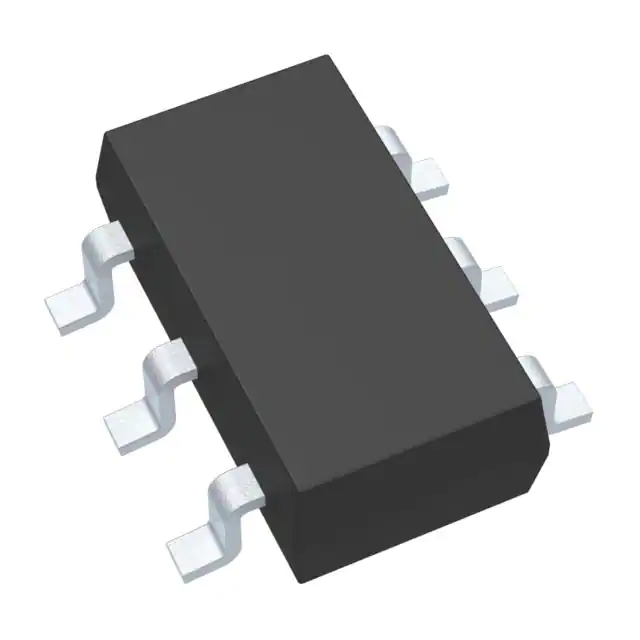
- Part No.:
- MAX6829TWUT+T
- Manufacturer:
- Analog Devices Inc./Maxim Integrated
- Category:
- Supervisors
- Package:
- SOT-23-6
- Datasheet:
-
 MAX6829TWUT+T.pdf
- Description:
- IC SUPERVISOR 2 CHANNEL SOT23-6
- Quantity:
- Payment:

- Shipping:

Inventory:1,000
Please send an inquiry. Send us your inquiry, and we will respond immediately.
Product details
Overview
MAX6829TWUT+T from Maxim Integrated is a dual ultra-low-voltage microprocessor supervisory circuit in 6-pin SOT23 package, designed to monitor primary supply (VCC) at 3.08V threshold and secondary supply (VCC2) at 2.313V threshold, with manual reset input, watchdog timer (1.6s timeout), and active-low push-pull RESET output. It ensures reliable system reset during power-up, brownout, and software fault conditions in battery-powered embedded systems.
For engineers reviewing the MAX6829TWUT+T datasheet, MAX6829TWUT+T pinout, MAX6829TWUT+T application, or MAX6829TWUT+T equivalent, this page delivers verified electrical parameters, confirmed pin functions, real-world use scenarios for multivoltage monitoring, and validated alternative parts with documented functional differences.
Technical Context
The MAX6829TWUT+T integrates two independent voltage monitors: one factory-trimmed for VCC (3.08V ±3% over -40°C to +125°C) and another for VCC2 (2.313V ±3% over same range), both asserting reset when either supply falls below its threshold. It features a 1.6s watchdog timer cleared by WDI edge transitions and a 140ms minimum reset timeout period after recovery.
Its push-pull RESET output drives low during fault conditions and returns high after timeout; MR input includes internal 50kΩ pullup and supports CMOS-level manual reset triggering; VCC2 pin is dedicated-no user-adjustable RESET IN function as found in MAX6826–MAX6828 variants.
Key Specifications
| Parameter | Value and Actual Design Meaning |
|---|---|
| VCC Reset Threshold | 3.08V (±3% over -40°C to +125°C); ensures reliable detection of 3.3V rail brownout before µP malfunction |
| VCC2 Reset Threshold | 2.313V (±3% over -40°C to +125°C); factory-trimmed for precise monitoring of 2.5V auxiliary supply |
| Reset Timeout Period | 140ms minimum; guarantees sufficient hold time for µP initialization and memory stabilization |
| Watchdog Timeout Period | 1.6s nominal (0.8s–2.6s over temperature); provides robust software execution supervision without false triggers |
| Operating Voltage Range | 1.2V to 5.5V on VCC; enables operation down to ultralow-power states while maintaining reset validity |
| RESET Output Type | Active-low push-pull; eliminates external pullup resistor and supports direct interface to µP reset pins |
| Supply Current (VCC = 3.6V) | 7µA typical, 25µA max at -40°C to +125°C; minimizes quiescent drain in battery-critical applications |
Pinout & Package
Package: 6-pin SOT23 (U6+1 outline, land pattern 90-0175), RoHS-compliant lead-free (+T suffix), -40°C to +125°C operating range.
| Pin/Terminal | Circuit Role | Design Meaning |
|---|---|---|
| 1 - RESET | Active-low push-pull reset output | Drives low during VCC/VCC2 undervoltage, MR assertion, or watchdog timeout; returns high after 140ms timeout |
| 2 - GND | Ground reference | Common return path for all internal comparators, timers, and output stage; must be low-impedance |
| 3 - MR | Manual reset input (active-low) | Pulled up internally to VCC via 50kΩ; asserts reset when pulled ≤0.3×VCC; debounced by internal timing |
| 4 - WDI | Watchdog input | Edge-sensitive; reset triggered if no transition occurs within 1.6s; disabled when left floating or three-stated |
| 5 - VCC2 | Secondary supply monitor input | Factory-trimmed comparator input for fixed 2.313V threshold; connects directly to 2.5V rail |
| 6 - VCC | Primary supply monitor input | Factory-trimmed comparator input for fixed 3.08V threshold; powers internal circuitry and sets logic levels |
Key Features
| Feature | Design Value |
|---|---|
| Dual independent voltage monitoring | Simultaneous supervision of 3.3V (VCC) and 2.5V (VCC2) rails with separate thresholds and hysteresis |
| Guaranteed reset validity down to VCC = 1.2V | Ensures correct reset assertion even during deep brownout-no undefined output states |
| Immunity to short negative VCC transients | Withstands ≤20µs glitches down to 100mV below threshold without spurious reset generation |
| No external components required | Integrates precision references, comparators, watchdog timer, and push-pull driver-zero external passives |
| Factory-trimmed thresholds | Eliminates calibration overhead: VCC = 3.08V ±3%, VCC2 = 2.313V ±3% across full temperature range |
Applications
| Portable/Battery-Powered Equipment | Embedded Controllers |
|---|---|
|
Use Scenario: Power management in handheld medical devices with dual-rail Li-ion battery system (3.3V I/O + 2.5V sensor core). IC Role / Device Role / Timing Role: Supervises both rails independently; asserts RESET within 20µs of VCC drop below 3.08V or VCC2 below 2.313V. Use Value: Prevents firmware corruption during battery sag by guaranteeing 140ms reset hold time while enabling <25µA quiescent current. |
Use Scenario: Industrial PLC module requiring deterministic restart after brownout in remote field deployments. IC Role / Device Role / Timing Role: Monitors main 3.3V controller supply and 2.5V FPGA configuration rail; triggers watchdog reset if firmware hangs. Use Value: 1.6s watchdog timeout prevents lockup without requiring host µP intervention; push-pull RESET ensures clean release. |
| Intelligent Instruments | Critical µP Monitoring |
|
Use Scenario: Precision digital multimeter with isolated analog front-end powered from 2.5V LDO and digital section from 3.3V rail. IC Role / Device Role / Timing Role: Detects undervoltage on either rail and holds µP in reset until both supplies stabilize above thresholds. Use Value: Eliminates measurement errors caused by marginal supply conditions; factory-trimmed thresholds ensure ±3% accuracy without calibration. |
Use Scenario: Automotive-grade telematics unit where µP reset integrity is mandated for ASIL-B compliance. IC Role / Device Role / Timing Role: Primary supervisor for safety-critical boot sequence; validates VCC ≥3.08V and VCC2 ≥2.313V before releasing reset. Use Value: Guaranteed operation down to VCC = 1.2V and immunity to 20µs transients meet automotive EMC requirements per ISO 7637-2. |
Equivalent & Alternatives
The following parts are listed as comparable options for similar dual-supply supervisory applications.
| Alternative Part | Technical Difference | Application Difference | Selection Advice |
|---|---|---|---|
| MAX6830TWUT+T | Active-high push-pull RESET output; identical VCC/VCC2 thresholds and watchdog timing | Required when host µP expects active-high reset assertion (e.g., certain ARM Cortex-M boot sequences) | Select when system architecture mandates high-true reset signaling rather than low-true |
| MAX6829TTUT+T | Same functionality but with 3.00V VCC threshold (±3%) and 2.244V VCC2 threshold (±3%) | Better suited for 3.0V nominal systems with tighter tolerance margins on 2.25V auxiliary rail | Choose for designs using 3.0V main supply and 2.25V secondary supply where tighter threshold matching is critical |
Compared with MAX6829TWUT+T, MAX6830TWUT+T changes reset polarity but preserves all monitoring and timing behavior, while MAX6829TTUT+T shifts both thresholds downward by ~2.6% to match lower nominal supply voltages-neither is pin-compatible with alternate reset types or threshold variants.
Availability
MAX6829TWUT+T is available at Aetrix Electronics and suitable for portable/battery-powered equipment, embedded controllers, and intelligent instruments requiring stable component supply with guaranteed long-term availability and full temperature-range validation.
Supply support for MAX6829TWUT+T includes scheduled delivery planning, volume procurement assistance, BOM continuity management, traceable sourcing, and lifecycle availability coordination for OEM customers, industrial embedded developers, connected-device designers, and electronics production programs.
Manufacturer
Maxim Integrated (now part of Analog Devices) designs precision analog and mixed-signal ICs for demanding industrial, automotive, and computing applications, with emphasis on reliability, low power, and integration.
The MAX6826–MAX6831 family was engineered specifically for dual-rail microprocessor supervision in space-constrained, battery-sensitive systems-delivering factory-trimmed accuracy, wide temperature operation, and zero external components.
FAQ
What is the exact VCC reset threshold voltage for MAX6829TWUT+T?
The MAX6829TWUT+T has a factory-trimmed VCC reset threshold of 3.08V, with guaranteed tolerance of ±3% over the full operating temperature range (-40°C to +125°C). This value is specified in the Electrical Characteristics table under "VCC Reset Threshold" for suffix 'T', and applies to the primary supply monitoring function of the MAX6829TWUT+T.
Does MAX6829TWUT+T support user-adjustable secondary voltage monitoring?
No, the MAX6829TWUT+T does not support user-adjustable secondary monitoring. It uses a dedicated VCC2 pin with a fixed 2.313V factory-trimmed threshold. Unlike MAX6826–MAX6828 variants, it lacks the RESET IN pin and associated internal 0.63V reference needed for resistor-divider-based threshold programming-this functionality is absent in the MAX6829TWUT+T.
What is the watchdog timeout period specification for MAX6829TWUT+T?
The MAX6829TWUT+T watchdog timeout period is 1.6s nominal, with a guaranteed range of 0.80s to 2.60s over the full -40°C to +125°C temperature range. This parameter is measured from the last WDI edge until reset assertion and is fully characterized in the Electrical Characteristics table under "Watchdog Timeout Period" for the MAX6829TWUT+T.
Is MAX6829TWUT+T pin-compatible with MAX6826–MAX6828 series devices?
No, the MAX6829TWUT+T is not pin-compatible with MAX6826–MAX6828. While all share the 6-pin SOT23 package, pin 5 is VCC2 (fixed monitor) in MAX6829TWUT+T but RESET IN (adjustable monitor) in MAX6826–MAX6828. Swapping them would connect the wrong signal to pin 5, causing incorrect or failed supervision-pin mapping differs between these families.
What is the maximum operating temperature range supported by MAX6829TWUT+T?
The MAX6829TWUT+T is rated for continuous operation from -40°C to +125°C ambient temperature, as confirmed in the Ordering Information table and Absolute Maximum Ratings section. All key specifications-including reset thresholds, timeout periods, and supply current-are guaranteed across this full industrial temperature range, making the MAX6829TWUT+T suitable for harsh-environment applications.
MAX6829TWUT+T Specifications
- Product attributes
- Attribute value
- Manufacturer:
- Analog Devices Inc./Maxim Integrated
- Series:
- -
- Package/Case:
- SOT-23-6
- Packaging:
- Cut Tape (CT)
- Product Status:
- Obsolete
- Programmable:
- Not Verified
- Type:
- Multi-Voltage Supervisor
- Number of Voltages Monitored:
- 2
- Voltage - Threshold:
- 1.665V, 3.08V
- Output:
- Push-Pull, Totem Pole
- Reset:
- Active Low
- Reset Timeout:
- 140ms Minimum
- Operating Temperature:
- -40°C ~ 125°C (TA)
- Grade:
- -
- Qualification:
- -
- Mounting Type:
- Surface Mount
- Supplier Device Package:
- SOT-6
MAX6829TWUT+T FAQ
1.How can I place an order for MAX6829TWUT+T through Aetrix?
Please submit a Request for Quotation (RFQ) for MAX6829TWUT+T on Aetrix. Our sales agent will provide a competitive quotation and guide you through the order confirmation once you accept the terms.
2.Are the price and stock information for MAX6829TWUT+T reliable?
The price and inventory of MAX6829TWUT+T are updated periodically and may fluctuate due to market conditions. Stock and pricing data are typically refreshed every 24 hours. Quotation validity for MAX6829TWUT+T is usually 5 days.
3.What payment methods are accepted for MAX6829TWUT+T?
We accept Wire Transfer, PayPal, Credit Card, Western Union, MoneyGram, and Escrow for MAX6829TWUT+T transactions.
Note: Certain payment methods may incur a processing fee.
4.How is shipping managed for MAX6829TWUT+T?
MAX6829TWUT+T orders can be shipped via leading logistics carriers, including DHL, UPS, FedEx, TNT, or Registered Mail.
Once your MAX6829TWUT+T order is processed, you will receive an email with the shipment details and tracking number.
Note: Tracking information may take up to 24 hours to appear. Express delivery typically takes 3–5 business days.
5.How can I obtain technical support or documentation for MAX6829TWUT+T?
For technical support, including MAX6829TWUT+T datasheets, pinout diagrams, or application guidance, please contact our engineering support team. They can provide detailed documentation and assistance for your MAX6829TWUT+T requirements.
6.How does Aetrix verify that MAX6829TWUT+T is sourced from the original manufacturer or authorized distributors?
All MAX6829TWUT+T products on Aetrix are procured from qualified distributors and authorized channels. Our dedicated quality assurance team conducts strict verification, including traceability checks and, if necessary, third-party testing. This ensures that MAX6829TWUT+T meets industry standards.
7.What is the process for return or replacement of MAX6829TWUT+T?
All MAX6829TWUT+T units undergo pre-shipment inspection (PSI). If there is an issue with MAX6829TWUT+T, returns or replacements are accepted under the following conditions:
1.Quantity discrepancies, incorrect items, or visible external defects (such as breakage or corrosion), acknowledged by Aetrix.
2.The issue is reported within 90 days of delivery.
3.The MAX6829TWUT+T part is unused and in its original packaging.
Return procedure for MAX6829TWUT+T:
1.Submit a request within 90 days.
2.Obtain a Return Material Authorization (RMA) from Aetrix.
MAX6829TWUT+T Tags
-
MIC826SYMT-TR
Microchip Technology
-
APX803S-31SA-7
Diodes Incorporated
-
APX803L20-29SA-7
Diodes Incorporated

-
TPS3828-33DBVR
Texas Instruments

-
V6340RSP3B+
EM Microelectronic
-
EM6325CXSP5B-2.9+
EM Microelectronic
-
MCP120T-300I/TT
Microchip Technology
-
MCP130T-315I/TT
Microchip Technology
-
MCP120T-475I/TT
Microchip Technology
-
MCP111T-300E/TT
Microchip Technology
-
MCP120T-315I/TT
Microchip Technology
-
MCP809T-315I/TT
Microchip Technology
Tech Hub

A practical engineering guide to 3.3V and 5V logic compatibility, input thresholds, resistor dividers, translator ICs, MOSFET level shifting, I2C pull-ups, timing limits and power-sequencing risks.

The 74HC595 uses push-pull logic outputs, while the TPIC6B595 uses 50 V open-drain DMOS sinks for higher-power loads. This guide compares timing, current limits, 3.3 V interfacing, load wiring, thermal…

The 74HC595 converts serial data into eight stable parallel outputs. This guide covers pin functions, shift and storage timing, OE and MR behavior, drive-current limits, cascading, voltage compatibilit…

A technical comparison of level-sensitive latches and edge-triggered flip-flops, covering timing windows, setup and hold limits, master–slave operation, time borrowing, race-through, HDL inference and…

A D latch stores one bit while Enable controls when data can pass. This reference covers gate-level operation, truth tables, transparency, setup and hold timing, LE versus OE, common ICs and practical …

An SR latch stores one bit through cross-coupled feedback. This engineering reference covers NOR and NAND implementations, truth tables, forbidden-state recovery, gated operation, switch debouncing, fa…

Latch circuits retain one bit through feedback. This technical reference covers SR and D latches, truth tables, transparency, timing limits, latch-versus-flip-flop behavior, applications and common log…

An engineering guide to LED driver operation, constant-current and constant-voltage outputs, linear and switching topologies, dimming, IC selection, calculations, replacement compatibility, and fault c…

Operational amplifier guide covering op amp basics, feedback, ideal vs real op amps, common configurations, buffer circuits, offset, bias current, gain-bandwidth, slew rate, rail-to-rail limits and sel…

Jumper cables guide covering safe connection order, red and black clamp placement, final ground connection, cable gauge, length, clamp quality, copper vs CCA cables, jump starter comparison and battery…


