
 My Inquiry
 My Account


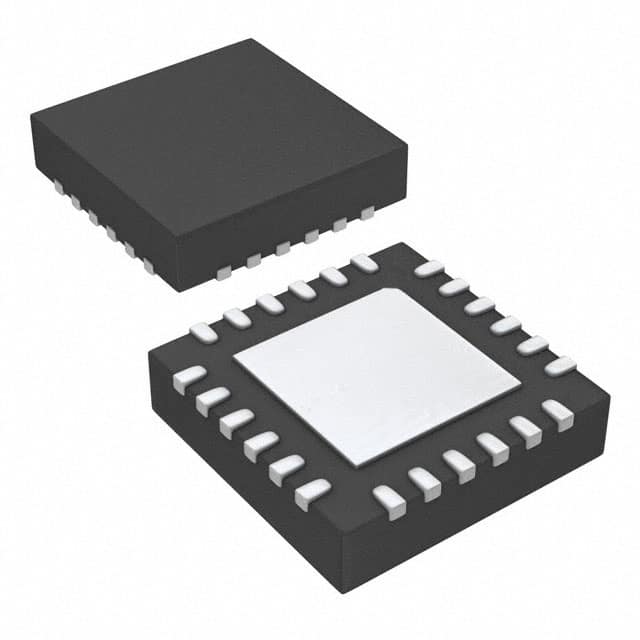
Analog Devices Inc./Maxim Integrated MAX7359ETG+T
- Part No.:
- MAX7359ETG+T
- Manufacturer:
- Analog Devices Inc./Maxim Integrated
- Category:
- Specialized
- Package:
- 24-WFQFN Exposed Pad
- Datasheet:
-
 MAX7359ETG+T.pdf
- Description:
- IC INTERFACE SPECIALIZED 24TQFN
- Quantity:
- Payment:

- Shipping:

Inventory:2,292
Please send an inquiry. Send us your inquiry, and we will respond immediately.
Product details
Overview
MAX7359ETG+T from Maxim Integrated is a 2-wire (I²C) interfaced key switch controller that manages up to 64 mechanical or resistive keys with static matrix scanning, 16-entry FIFO buffering, and configurable autosleep (1µA typ) for ultra-low-power portable applications. It integrates column drivers (COL2–COL7/PORT2–PORT7) and supports GPO reconfiguration, key release detection, and hardware interrupt generation.
For engineers reviewing the MAX7359ETG+T datasheet, MAX7359ETG+T pinout, MAX7359ETG+T application, or MAX7359ETG+T equivalent, this device delivers deterministic key-event timing, low-EMI operation via static monitoring, I²C timeout control, user-configurable debounce (9–40ms), and seamless integration into space-constrained handheld systems requiring robust tactile input handling.
Technical Context
The MAX7359ETG+T implements a static key-scan architecture-current sources drive columns while rows are monitored for pull-down events-eliminating dynamic switching noise and enabling routing near RF/analog sections. Its internal 64kHz oscillator drives all timing, including debounce, autorepeat, and autosleep intervals.
Key event processing occurs in hardware: debounced presses/releases populate a 16-deep FIFO; interrupt logic triggers either on FIFO fill level (4–16 entries) or time-based debounce cycles (1–31); and register-controlled GPO mode allows up to seven open-drain outputs (including INT) for LED driving or system signaling.
Key Specifications
| Parameter | Value and Actual Design Meaning |
|---|---|
| Key Capacity | 64-key matrix support (8×8 layout), with optional key-release detection on all keys |
| Supply Voltage Range | +1.62V to +3.6V - compatible with single-cell Li-ion and dual-cell alkaline systems |
| Sleep Current | 0.6µA to 5µA - enables multi-month battery life in always-on portable devices |
| FIFO Depth | 16 entries - buffers press/release events without host CPU polling overhead |
| I²C Interface | 400kbps, 5.5V-tolerant, four selectable slave addresses - interoperable with legacy and modern microcontrollers |
| Debounce Time | User-configurable 9ms to 40ms - eliminates false triggers from mechanical bounce across diverse switch types |
| Operating Temperature | −40°C to +85°C - qualified for consumer handheld and industrial HMI environments |
Pinout & Package
MAX7359ETG+T is housed in a 24-pin TQFN package (3.5mm × 3.5mm, exposed pad), optimized for high-density portable PCB layouts. Pin functions align with key matrix row/column topology and flexible GPO assignment.
| Pin/Terminal | Circuit Role | Design Meaning |
|---|---|---|
| ROW0–ROW7 | Row inputs (key matrix) | Eight dedicated inputs for scanning key matrix rows; internally pulled up during sleep |
| COL0–COL1, COL2/PORT2–COL7/PORT7 | Column outputs / GPOs | Eight column drivers; COL2–COL7 and INT can be reconfigured as open-drain GPOs (up to 7 total) |
| INT | Active-low interrupt output | Open-drain signal indicating FIFO non-empty or timer expiry; configurable as GPO when unused |
| SDA, SCL, AD0 | I²C interface and address select | Standard bidirectional I²C bus lines; AD0 selects one of four slave addresses (0x38–0x3B) |
| VCC, GND, EP | Power and thermal interface | +1.62V to +3.6V supply; exposed pad tied to ground plane for thermal dissipation and EMI reduction |
Key Features
| Feature | Design Value |
|---|---|
| Static matrix scanning | Eliminates dynamic switching noise-enables routing adjacent to sensitive RF/analog circuits without shielding |
| Configurable autosleep/autowake | Enters 1µA sleep after programmable idle time; wakes in ≤2ms on key press-no firmware intervention required |
| GPO reassignment capability | Up to 7 pins (COL2–COL7 + INT) serve dual roles-reduces BOM count and simplifies layout when fewer than 64 keys are used |
| Hardware FIFO with status flags | 16-entry buffer with D6 (press/release flag) and D7 (FIFO-not-empty flag) enables efficient polled or interrupt-driven host reads |
| Programmable I²C timeout | 10–40ms bus timeout prevents lockup from stalled masters-critical for field-reliable embedded systems |
Applications
| Cell Phones | PDAs |
|---|---|
Use Scenario: Front-panel tactile keypad with backlight control and low-power standby. IC Role / Device Role / Timing Role: Key switch controller managing 32-button layout; generates interrupts only on valid key events; maintains FIFO state during sleep. Use Value: Reduces host MCU wakeups by >90% versus polling; enables <1µA system standby current with responsive wake-on-keypress. |
Use Scenario: Compact PDA with QWERTY-style keyboard and touch-sensitive navigation keys. IC Role / Device Role / Timing Role: Centralized key scanner handling 64-key matrix; provides debounced press/release codes with autorepeat at 16ms delay/8-cycle rate. Use Value: Offloads timing-critical debounce and repeat logic from application processor-preserves real-time responsiveness under OS load. |
| Handheld Games | Portable Consumer Electronics |
Use Scenario: Game controller with directional pad, action buttons, and shoulder triggers. IC Role / Device Role / Timing Role: Low-EMI key controller scanning 48 switches; uses COL/PORT pins to drive RGB LEDs for button feedback. Use Value: Integrates input scanning and visual feedback in one 3.5mm × 3.5mm package-saves >12mm² board area versus discrete solutions. |
Use Scenario: Smart remote with capacitive-touch fallback and mechanical key backup. IC Role / Device Role / Timing Role: Primary key handler for 24 mechanical keys; INT pin signals host only when ≥8 events queue-prevents interrupt storm during rapid input. Use Value: Configurable FIFO-triggered interrupt reduces host ISR execution time by 70% compared to per-key edge detection. |
Equivalent & Alternatives
The following parts are listed as comparable options for similar key switch controller applications.
| Alternative Part | Technical Difference | Application Difference | Selection Advice |
|---|---|---|---|
| MAX7360ETG+ | Same 24-pin TQFN footprint and core functionality; adds integrated voltage regulator (1.8V/3.3V selectable) and enhanced ESD protection (±8kV HBM). | Preferred where regulated auxiliary supply or higher ESD immunity is required-e.g., medical handhelds or outdoor remotes. | Select MAX7360ETG+ when board-level LDO elimination or robustness against electrostatic discharge is critical. |
| TCA8418RTWR | TI part with identical 64-key capacity and I²C interface but lacks autosleep (<5µA typical), offers only 8-entry FIFO, and requires external pull-ups for all I/O. | Better suited for cost-sensitive, non-battery-powered applications where power optimization is secondary to BOM simplicity. | Choose TCA8418RTWR only if sleep current >5µA is acceptable and external pull-up resistors are already present in design. |
Compared with MAX7359ETG+T, MAX7360ETG+ improves system integration via on-chip regulation and ESD hardening, while TCA8418RTWR trades power efficiency and FIFO depth for lower unit cost-making MAX7359ETG+T the optimal balance of ultra-low sleep current, deep event buffering, and compact packaging for premium portable devices.
Availability
MAX7359ETG+T is available at Aetrix Electronics and suitable for cell phones, PDAs, handheld games, and portable consumer electronics requiring stable component supply, long-term lifecycle support, and RoHS-compliant packaging.
Supply support for MAX7359ETG+T includes scheduled delivery planning, volume procurement assistance, BOM continuity management, traceable sourcing, and lifecycle availability coordination for OEM customers, industrial embedded developers, connected-device designers, and electronics production programs.
Manufacturer
Maxim Integrated (now part of Analog Devices) designs precision analog, mixed-signal, and power management ICs for demanding industrial, automotive, and consumer applications.
The MAX7359ETG+T belongs to Maxim's human-interface peripheral product line, engineered specifically for ultra-low-power, EMI-resilient key scanning in space-constrained portable electronics.
FAQ
What is the minimum supply voltage required for reliable operation of the MAX7359ETG+T?
The MAX7359ETG+T operates reliably from +1.62V to +3.6V. At the lower limit of 1.62V, all specifications-including key-switch source current (20µA min), sleep current (0.6µA typ), and I²C timing-are guaranteed across the full −40°C to +85°C temperature range. This makes MAX7359ETG+T suitable for single-cell lithium-polymer or lithium-iron-phosphate battery systems where voltage drops below 2.0V during discharge.
Can the MAX7359ETG+T drive LEDs directly, and what is its sink current capability?
Yes, the MAX7359ETG+T can drive LEDs directly using its open-drain column/GPO pins (COL2/PORT2 through COL7/PORT7 and INT). Each pin supports up to 10mA sink current with VOL ≤ 0.2V at VCC = +2.5V and TA = +25°C. The device maintains this performance across temperature: at +85°C and VCC = +3.6V, VOL remains ≤ 0.3V at 10mA, enabling bright LED indication without external drivers.
How does the MAX7359ETG+T handle key debouncing, and is the timing adjustable?
The MAX7359ETG+T performs hardware-based key debouncing with fully user-configurable timing from 9ms to 40ms in 1ms increments, set via bits D0–D4 of the Debounce Register (0x02). This eliminates software debounce routines and ensures consistent, jitter-free key event reporting regardless of host processor load-critical for real-time UI responsiveness in handheld devices.
Does the MAX7359ETG+T support key release detection, and how is it enabled?
Yes, the MAX7359ETG+T supports optional key release detection on all 64 keys. It is enabled by setting bit D3 (Key Release Enable) to '1' in the Configuration Register (0x01). When active, the FIFO reports both press (D6 = 0) and release (D6 = 1) events for each key, allowing precise state tracking-essential for gaming controllers and accessibility interfaces requiring release-triggered actions.
What happens to the FIFO contents when the MAX7359ETG+T enters autosleep mode?
The FIFO contents are fully preserved during autosleep mode-the 16-entry buffer retains all pending key-press and key-release events. Host systems can read the FIFO at any time, even while the MAX7359ETG+T is in sleep, using standard I²C transactions. This ensures no key events are lost during low-power states, maintaining UI responsiveness without requiring wake-up synchronization.
MAX7359ETG+T Specifications
- Product attributes
- Attribute value
- Manufacturer:
- Analog Devices Inc./Maxim Integrated
- Series:
- -
- Package/Case:
- 24-WFQFN Exposed Pad
- Packaging:
- Tape & Reel (TR)
- Product Status:
- Active
- Applications:
- Cell Phones, PDA, Players
- Interface:
- I2C
- Voltage - Supply:
- 1.65V ~ 3.6V
- Supplier Device Package:
- 24-TQFN (3.5x3.5)
- Grade:
- -
- Qualification:
- -
- Mounting Type:
- Surface Mount
MAX7359ETG+T FAQ
1.How can I place an order for MAX7359ETG+T through Aetrix?
Please submit a Request for Quotation (RFQ) for MAX7359ETG+T on Aetrix. Our sales agent will provide a competitive quotation and guide you through the order confirmation once you accept the terms.
2.Are the price and stock information for MAX7359ETG+T reliable?
The price and inventory of MAX7359ETG+T are updated periodically and may fluctuate due to market conditions. Stock and pricing data are typically refreshed every 24 hours. Quotation validity for MAX7359ETG+T is usually 5 days.
3.What payment methods are accepted for MAX7359ETG+T?
We accept Wire Transfer, PayPal, Credit Card, Western Union, MoneyGram, and Escrow for MAX7359ETG+T transactions.
Note: Certain payment methods may incur a processing fee.
4.How is shipping managed for MAX7359ETG+T?
MAX7359ETG+T orders can be shipped via leading logistics carriers, including DHL, UPS, FedEx, TNT, or Registered Mail.
Once your MAX7359ETG+T order is processed, you will receive an email with the shipment details and tracking number.
Note: Tracking information may take up to 24 hours to appear. Express delivery typically takes 3–5 business days.
5.How can I obtain technical support or documentation for MAX7359ETG+T?
For technical support, including MAX7359ETG+T datasheets, pinout diagrams, or application guidance, please contact our engineering support team. They can provide detailed documentation and assistance for your MAX7359ETG+T requirements.
6.How does Aetrix verify that MAX7359ETG+T is sourced from the original manufacturer or authorized distributors?
All MAX7359ETG+T products on Aetrix are procured from qualified distributors and authorized channels. Our dedicated quality assurance team conducts strict verification, including traceability checks and, if necessary, third-party testing. This ensures that MAX7359ETG+T meets industry standards.
7.What is the process for return or replacement of MAX7359ETG+T?
All MAX7359ETG+T units undergo pre-shipment inspection (PSI). If there is an issue with MAX7359ETG+T, returns or replacements are accepted under the following conditions:
1.Quantity discrepancies, incorrect items, or visible external defects (such as breakage or corrosion), acknowledged by Aetrix.
2.The issue is reported within 90 days of delivery.
3.The MAX7359ETG+T part is unused and in its original packaging.
Return procedure for MAX7359ETG+T:
1.Submit a request within 90 days.
2.Obtain a Return Material Authorization (RMA) from Aetrix.
MAX7359ETG+T Tags
-
NVT4857UKAZ
NXP Semiconductors
-
TCA8418RTWR
Texas Instruments
-
PCA9546APWR
Texas Instruments
-
MD0100N8-G
Microchip Technology
-
PCA9548APW,118
NXP Semiconductors
-
PCA9540BDP,118
NXP Semiconductors
-
PCA9548APWR
Texas Instruments
-
PCA9546APW,118
NXP Semiconductors
-
PTN3360DBS,518
NXP Semiconductors
-
PCA9546ABS,118
NXP Semiconductors
-
PCA9518PWR
Texas Instruments
-
PCA9545APW,118
NXP Semiconductors
Tech Hub

A practical engineering guide to 3.3V and 5V logic compatibility, input thresholds, resistor dividers, translator ICs, MOSFET level shifting, I2C pull-ups, timing limits and power-sequencing risks.

The 74HC595 uses push-pull logic outputs, while the TPIC6B595 uses 50 V open-drain DMOS sinks for higher-power loads. This guide compares timing, current limits, 3.3 V interfacing, load wiring, thermal…

The 74HC595 converts serial data into eight stable parallel outputs. This guide covers pin functions, shift and storage timing, OE and MR behavior, drive-current limits, cascading, voltage compatibilit…

A technical comparison of level-sensitive latches and edge-triggered flip-flops, covering timing windows, setup and hold limits, master–slave operation, time borrowing, race-through, HDL inference and…

A D latch stores one bit while Enable controls when data can pass. This reference covers gate-level operation, truth tables, transparency, setup and hold timing, LE versus OE, common ICs and practical …

An SR latch stores one bit through cross-coupled feedback. This engineering reference covers NOR and NAND implementations, truth tables, forbidden-state recovery, gated operation, switch debouncing, fa…

Latch circuits retain one bit through feedback. This technical reference covers SR and D latches, truth tables, transparency, timing limits, latch-versus-flip-flop behavior, applications and common log…

An engineering guide to LED driver operation, constant-current and constant-voltage outputs, linear and switching topologies, dimming, IC selection, calculations, replacement compatibility, and fault c…

Operational amplifier guide covering op amp basics, feedback, ideal vs real op amps, common configurations, buffer circuits, offset, bias current, gain-bandwidth, slew rate, rail-to-rail limits and sel…

Jumper cables guide covering safe connection order, red and black clamp placement, final ground connection, cable gauge, length, clamp quality, copper vs CCA cables, jump starter comparison and battery…


