
 My Inquiry
 My Account


Analog Devices Inc./Maxim Integrated MAX7375AXR185+T
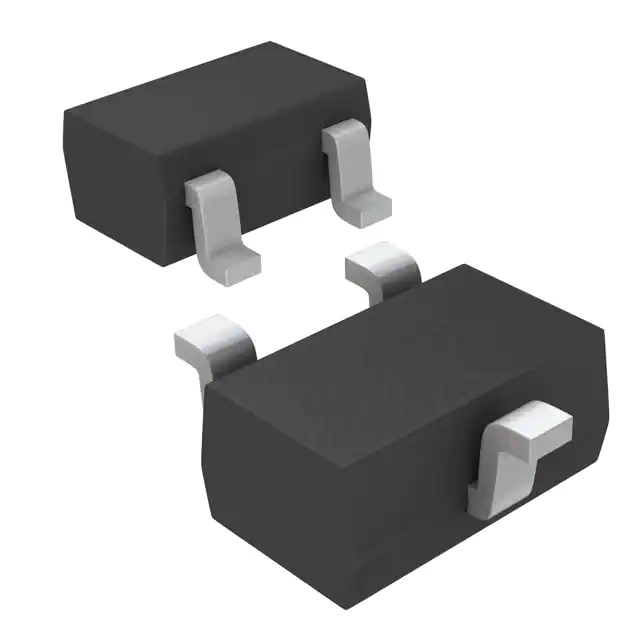
- Part No.:
- MAX7375AXR185+T
- Manufacturer:
- Analog Devices Inc./Maxim Integrated
- Category:
- Oscillators
- Package:
- SC-70, SOT-323
- Datasheet:
-
 MAX7375AXR185+T.pdf
- Description:
- MEMS OSC XO 1.8400MHZ CMOS SMD
- Quantity:
- Payment:

- Shipping:

Inventory:1,009
Please send an inquiry. Send us your inquiry, and we will respond immediately.
Product details
Overview
MAX7375AXR185+T from Maxim Integrated is a factory-trimmed 1.84MHz silicon oscillator in SC70-3 package, delivering rail-to-rail 50% duty cycle square-wave output for microcontroller and UART clocking in 2.7V–5.5V systems. It features ±2% initial accuracy, ±50ppm/°C temp drift, 5µs startup time, 160psP-P jitter at 8MHz (scaled), and ±10mA drive capability - enabling direct replacement of ceramic resonators and crystals in white goods and appliance control boards.
For engineers reviewing the MAX7375AXR185+T datasheet, MAX7375AXR185+T pinout, MAX7375AXR185+T application, or MAX7375AXR185+T equivalent, key selection criteria include factory-set 1.84MHz frequency, SC70-3 footprint compatibility, -40°C to +125°C operation, no external components required, and immunity to vibration/EMI in humid environments.
Technical Context
The MAX7375AXR185+T uses a fully integrated BiCMOS oscillator core with no PLL-frequency is fixed at 1.84MHz via factory trimming. Its push-pull CMOS output drives 1kΩ to ground or 500Ω to V+, eliminating impedance-matching concerns when interfacing with µC clock inputs.
It operates across 2.7V–5.5V supply range with supply current of 0.8mA (typ) to 1.25mA (max) at +25°C, and maintains stable duty cycle (45–57%) and low jitter over temperature and voltage variations-critical for timing-critical embedded control loops in home appliances.
Key Specifications
| Parameter | Value and Actual Design Meaning |
|---|---|
| Output Frequency | 1.84MHz factory-trimmed-no calibration or external tuning needed for µC clock source. |
| Initial Accuracy | ±2% at +25°C, V+ = 3.0V-ensures reliable boot timing without margining for crystal tolerance. |
| Temp Drift | ±50ppm/°C-predictable frequency shift over -40°C to +125°C, suitable for oven/motor control. |
| Startup Time | 5µs-enables fast system wake-up and synchronous reset release in portable equipment. |
| Output Drive | ±10mA-directly drives high-capacitance µC clock inputs without buffer stages. |
| Duty Cycle | 45%–57%-maintains logic-level compatibility with standard CMOS clock receivers. |
| Rise/Fall Time | 5ns / 2.5ns-low EMI emission and robust noise immunity in electrically noisy appliance environments. |
Pinout & Package
Package: SC70-3 (3-pin surface-mount, 1.25mm × 0.85mm × 0.55mm body, 0.65mm pitch). RoHS-compliant, tape-and-reel packaging only.
| Pin/Terminal | Circuit Role | Design Meaning |
|---|---|---|
| 1 (V+) | Positive Supply Input | Accepts 2.7V–5.5V; powers internal oscillator core and output driver. |
| 2 (CLOCK) | CMOS Push-Pull Output | Delivers 1.84MHz square wave; drives µC clock input directly-no load caps or biasing. |
| 3 (GND) | Ground Reference | Return path for supply and output current; must be low-impedance for jitter control. |
Key Features
| Feature | Design Value |
|---|---|
| No External Components | Eliminates load capacitors, feedback resistors, and bias networks-reduces BOM count and layout area. |
| Vibration & EMI Immunity | Monolithic silicon design avoids piezoelectric sensitivity-stable operation in washing machine motors or HVAC fans. |
| Rail-to-Rail Output Swing | VOH ≥ V+ − 0.4V, VOL ≤ 0.4V-guarantees full logic swing across entire supply range for reliable µC clock sampling. |
| Wide Temp Range | -40°C to +125°C operation-qualified for under-hood or oven cavity mounting without derating. |
| Low Jitter | 160psP-P (at 8MHz, scaled to ~290ps at 1.84MHz)-meets setup/hold timing margins for 16-bit µCs running at 20MHz+. |
Applications
| Microcontroller Clock Source | UART Timing Reference |
|---|---|
Use Scenario: Providing main clock signal to 8/16-bit microcontrollers in smart home appliance control boards (e.g., refrigerator display, dishwasher MCU). IC Role / Device Role / Timing Role: Primary system clock generator replacing quartz crystal-drives µC core, peripherals, and timers. Use Value: Eliminates crystal start-up delay and frequency drift due to board flex or thermal cycling-improves boot reliability and long-term timing stability. | Use Scenario: Synchronizing UART baud rate generation in battery-powered handheld diagnostic tools. IC Role / Device Role / Timing Role: Dedicated baud-rate clock source for RS-232/RS-485 transceivers and UART peripherals. Use Value: Delivers consistent bit timing across 2.7V–5.5V supply range-avoids frame errors during brown-out conditions. |
| White Goods Timing Module | Industrial Control Panel Clock |
Use Scenario: Clocking motor control ICs and sensor interfaces in washing machine drum controllers. IC Role / Device Role / Timing Role: System timing reference for PWM generation, ADC sampling, and real-time event sequencing. Use Value: Resists mechanical shock and humidity-induced frequency shift-maintains accurate spin cycle timing despite vibration and condensation. | Use Scenario: Providing timing for HMI processors and CAN bus controllers in factory automation panels. IC Role / Device Role / Timing Role: Low-jitter clock source for deterministic real-time OS scheduling and communication stack timing. Use Value: Enables sub-millisecond interrupt latency consistency across wide temperature swings in unconditioned industrial enclosures. |
Equivalent & Alternatives
The following parts are listed as comparable options for similar silicon oscillator applications.
| Alternative Part | Technical Difference | Application Difference | Selection Advice |
|---|---|---|---|
| SiT1533AI-H4-33E-1.840000D | 1.84MHz MEMS oscillator; ±10ppm initial accuracy; 1.62–3.63V supply; 1.5µs startup. | Higher accuracy and lower power (120µA), but requires 3.3V-only operation and lacks 5V support. | Select for ultra-low-power portable designs where supply is fixed at 3.3V and tighter frequency tolerance is critical. |
| ABM3B-1.840MHZ-D2Y-T | 1.84MHz ceramic resonator; ±0.5% accuracy; requires external load caps and inverter circuit; 10ms startup. | Lower cost but needs 3 external components and suffers from poor EMI immunity and mechanical sensitivity. | Select only for cost-sensitive, non-vibrating, low-EMI applications where board space and reliability are secondary. |
Compared with SiT1533AI-H4-33E-1.840000D and ABM3B-1.840MHZ-D2Y-T, the MAX7375AXR185+T offers broader supply range (2.7–5.5V), superior vibration/EMI resilience, and simpler integration-making it optimal for ruggedized 3V/5V appliance control designs where robustness outweighs ultra-fine frequency tolerance.
Availability
MAX7375AXR185+T is available at Aetrix Electronics and suitable for white goods timing modules, microcontroller clock sources, and UART timing references requiring stable component supply, extended temperature operation, and drop-in replacement of ceramic resonators.
Supply support for MAX7375AXR185+T includes scheduled delivery planning, volume procurement assistance, BOM continuity management, traceable sourcing, and lifecycle availability coordination for OEM customers, industrial embedded developers, connected-device designers, and electronics production programs.
Manufacturer
Maxim Integrated (now part of Analog Devices) designs precision analog, mixed-signal, and timing solutions for industrial, automotive, and computing applications-with emphasis on high-reliability, low-power, and small-footprint ICs.
The MAX7375 series was developed specifically to replace quartz and ceramic timing elements in cost-sensitive, high-volume embedded systems-delivering robustness, simplicity, and factory-trimmed accuracy in SC70 packaging.
FAQ
What is the exact factory-trimmed frequency of MAX7375AXR185+T?
The MAX7375AXR185+T is factory-trimmed to 1.84MHz with ±2% initial accuracy at +25°C and V+ = 3.0V. This frequency is fixed and non-adjustable-no external components or programming are required. The top mark "AOU" on the SC70-3 package confirms this specific variant. Frequency remains stable across 2.7V–5.5V supply and -40°C to +125°C operating range, with ±50ppm/°C temperature coefficient.
Does MAX7375AXR185+T require external load capacitors or biasing resistors?
No, the MAX7375AXR185+T requires no external components. It integrates all oscillator circuitry-including frequency-setting elements-within the BiCMOS die. Unlike quartz crystals or ceramic resonators, it does not need load capacitors, feedback resistors, or gain-setting networks. This eliminates layout sensitivity and reduces BOM count, making MAX7375AXR185+T ideal for retrofitting existing crystal-based designs with minimal PCB changes.
What is the startup time specification for MAX7375AXR185+T, and how does it affect system reset timing?
The MAX7375AXR185+T achieves stable oscillation within 5µs after V+ rises above 2.7V. This fast startup enables tight synchronization with power-on reset circuits-engineers should assert system reset until at least 5µs after V+ exceeds 2.7V. The short delay supports rapid wake-up in battery-powered appliances and ensures deterministic µC boot timing without waiting for crystal ring-up delays that exceed milliseconds.
Can MAX7375AXR185+T operate at 5V supply, and what are its output voltage levels at that rail?
Yes, MAX7375AXR185+T operates across 2.7V–5.5V, including full 5V operation. At V+ = 5V and ISOURCE = 9mA, VOH ≥ 4.6V; at ISINK = 20mA, VOL ≤ 0.4V. This rail-to-rail CMOS-compatible swing ensures reliable logic-level recognition by 5V µCs and peripherals-no level-shifting required. The push-pull output structure maintains these levels across temperature and load variations.
How does MAX7375AXR185+T compare to quartz crystals in terms of EMI and vibration resistance?
Unlike quartz crystals-which rely on piezoelectric resonance and exhibit high impedance nodes vulnerable to EMI and mechanical shock-the MAX7375AXR185+T uses a monolithic silicon oscillator with no high-impedance nodes. Its solid-state design provides inherent immunity to board vibration, acoustic noise, and electromagnetic interference. This makes MAX7375AXR185+T significantly more reliable than crystals in washing machines, HVAC blowers, or industrial motor controls where mechanical stress degrades crystal performance.
MAX7375AXR185+T Specifications
- Product attributes
- Attribute value
- Manufacturer:
- Analog Devices Inc./Maxim Integrated
- Series:
- MAX7375
- Package/Case:
- SC-70, SOT-323
- Packaging:
- Tape & Reel (TR)
- Product Status:
- Active
- Base Resonator:
- MEMS
- Type:
- XO (Standard)
- Frequency:
- 1.84 MHz
- Function:
- -
- Output:
- CMOS
- Voltage - Supply:
- 2.7V ~ 5.5V
- Frequency Stability:
- -
- Absolute Pull Range (APR):
- -
- Operating Temperature:
- -40°C ~ 125°C
- Spread Spectrum Bandwidth:
- -
- Current - Supply (Max):
- 1.25mA
- Ratings:
- -
- Mounting Type:
- Surface Mount
- Supplier Device Package:
- 4-VDFN (3.2x2.5)
- Size / Dimension:
- 0.087" L x 0.053" W (2.20mm x 1.35mm)
- Height - Seated (Max):
- 0.043" (1.10mm)
MAX7375AXR185+T FAQ
1.How can I place an order for MAX7375AXR185+T through Aetrix?
Please submit a Request for Quotation (RFQ) for MAX7375AXR185+T on Aetrix. Our sales agent will provide a competitive quotation and guide you through the order confirmation once you accept the terms.
2.Are the price and stock information for MAX7375AXR185+T reliable?
The price and inventory of MAX7375AXR185+T are updated periodically and may fluctuate due to market conditions. Stock and pricing data are typically refreshed every 24 hours. Quotation validity for MAX7375AXR185+T is usually 5 days.
3.What payment methods are accepted for MAX7375AXR185+T?
We accept Wire Transfer, PayPal, Credit Card, Western Union, MoneyGram, and Escrow for MAX7375AXR185+T transactions.
Note: Certain payment methods may incur a processing fee.
4.How is shipping managed for MAX7375AXR185+T?
MAX7375AXR185+T orders can be shipped via leading logistics carriers, including DHL, UPS, FedEx, TNT, or Registered Mail.
Once your MAX7375AXR185+T order is processed, you will receive an email with the shipment details and tracking number.
Note: Tracking information may take up to 24 hours to appear. Express delivery typically takes 3–5 business days.
5.How can I obtain technical support or documentation for MAX7375AXR185+T?
For technical support, including MAX7375AXR185+T datasheets, pinout diagrams, or application guidance, please contact our engineering support team. They can provide detailed documentation and assistance for your MAX7375AXR185+T requirements.
6.How does Aetrix verify that MAX7375AXR185+T is sourced from the original manufacturer or authorized distributors?
All MAX7375AXR185+T products on Aetrix are procured from qualified distributors and authorized channels. Our dedicated quality assurance team conducts strict verification, including traceability checks and, if necessary, third-party testing. This ensures that MAX7375AXR185+T meets industry standards.
7.What is the process for return or replacement of MAX7375AXR185+T?
All MAX7375AXR185+T units undergo pre-shipment inspection (PSI). If there is an issue with MAX7375AXR185+T, returns or replacements are accepted under the following conditions:
1.Quantity discrepancies, incorrect items, or visible external defects (such as breakage or corrosion), acknowledged by Aetrix.
2.The issue is reported within 90 days of delivery.
3.The MAX7375AXR185+T part is unused and in its original packaging.
Return procedure for MAX7375AXR185+T:
1.Submit a request within 90 days.
2.Obtain a Return Material Authorization (RMA) from Aetrix.
MAX7375AXR185+T Tags
-
ECS-2333-160-BN-TR
ECS Inc.
-
ECS-2333-240-BN-TR
ECS Inc.
-
KC2016Z25.0000C1KX00
KYOCERA AVX
-0.035-Thick.jpg)
-
ECS-2033-250-BN
ECS Inc.
-
O 25,0-JO32-B-1V3-1-T1-LF
Jauch Quartz
-
SIT1533AI-H4-DCC-32.768E
SiTime
-
ECS-2333-500-BN-TR
ECS Inc.
-
COM1305-50.000-EXT-T-TR
Raltron Electronics
-
SG-210STF 24.0000ML0
EPSON
-
ECS-3225MV-320-CN-TR
ECS Inc.
-
ECS-2033-240-BN
ECS Inc.
-
ECS-2333-120-BN-TR
ECS Inc.
Tech Hub

A practical engineering guide to 3.3V and 5V logic compatibility, input thresholds, resistor dividers, translator ICs, MOSFET level shifting, I2C pull-ups, timing limits and power-sequencing risks.

The 74HC595 uses push-pull logic outputs, while the TPIC6B595 uses 50 V open-drain DMOS sinks for higher-power loads. This guide compares timing, current limits, 3.3 V interfacing, load wiring, thermal…

The 74HC595 converts serial data into eight stable parallel outputs. This guide covers pin functions, shift and storage timing, OE and MR behavior, drive-current limits, cascading, voltage compatibilit…

A technical comparison of level-sensitive latches and edge-triggered flip-flops, covering timing windows, setup and hold limits, master–slave operation, time borrowing, race-through, HDL inference and…

A D latch stores one bit while Enable controls when data can pass. This reference covers gate-level operation, truth tables, transparency, setup and hold timing, LE versus OE, common ICs and practical …

An SR latch stores one bit through cross-coupled feedback. This engineering reference covers NOR and NAND implementations, truth tables, forbidden-state recovery, gated operation, switch debouncing, fa…

Latch circuits retain one bit through feedback. This technical reference covers SR and D latches, truth tables, transparency, timing limits, latch-versus-flip-flop behavior, applications and common log…

An engineering guide to LED driver operation, constant-current and constant-voltage outputs, linear and switching topologies, dimming, IC selection, calculations, replacement compatibility, and fault c…

Operational amplifier guide covering op amp basics, feedback, ideal vs real op amps, common configurations, buffer circuits, offset, bias current, gain-bandwidth, slew rate, rail-to-rail limits and sel…

Jumper cables guide covering safe connection order, red and black clamp placement, final ground connection, cable gauge, length, clamp quality, copper vs CCA cables, jump starter comparison and battery…


