
 My Inquiry
 My Account


Analog Devices Inc./Maxim Integrated MAX8738EUA+
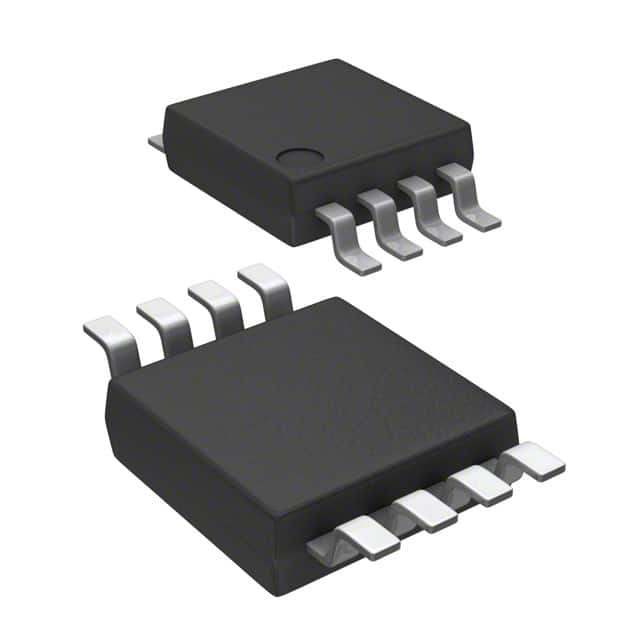
- Part No.:
- MAX8738EUA+
- Manufacturer:
- Analog Devices Inc./Maxim Integrated
- Category:
- Video Processing
- Package:
- 8-TSSOP, 8-MSOP (0.118", 3.00mm Width)
- Datasheet:
-
 MAX8738EUA+.pdf
- Description:
- IC VIDEO FILTER 8UMAX
- Quantity:
- Payment:

- Shipping:

Inventory:5,979
Please send an inquiry. Send us your inquiry, and we will respond immediately.
Product details
Overview
MAX8738EUA+ from Maxim Integrated is an I²C-programmable VCOM calibrator IC for TFT LCD panels, functioning as a solid-state replacement for mechanical potentiometers in VCOM voltage adjustment circuits. It features a 7-bit ratiometric DAC, EEPROM storage for persistent VCOM settings, and operates from 4.5V to 20V AVDD supply with <60µA quiescent current. It sinks programmable current into an external resistive divider to precisely set VCOM in notebook computers and LCD TVs.
For engineers reviewing the MAX8738EUA+ datasheet, MAX8738EUA+ pinout, MAX8738EUA+ application, or MAX8738EUA+ equivalent, this page delivers verified technical context, exact pin functions, real-world VCOM calibration use cases, and validated alternative parts - all grounded in Maxim's official specifications and evaluation circuit documentation.
Technical Context
The MAX8738EUA+ implements a ratiometric 7-bit DAC whose sink-current output (IOUT) scales linearly with AVDD, ensuring monotonicity across -40°C to +85°C. Its internal 3.6V LDO (VDD) powers logic and interface circuitry, while HV pin (16.1V–28V) enables EEPROM programming using the TFT panel's VGON supply - eliminating need for external high-voltage sources.
I²C communication uses fixed 7-bit slave address 0x5E (write-only), supporting five commands: increment/decrement DAC (00h/FFh), EEPROM write (AAh), EEPROM load (55h), and direct DAC write (11h). The device enters program mode automatically upon command receipt (except AAh), enabling EEPROM writes only when HV ≥15.6V and internal timing completes.
Key Specifications
| Parameter | Value and Actual Design Meaning |
|---|---|
| Supply Voltage (AVDD) | 4.5V to 20V - powers analog core and sets DAC full-scale range via ratiometric scaling |
| Sink Current Resolution | 7-bit (128 steps) - enables fine-grained VCOM adjustment down to ~15.75mV in typical designs |
| EEPROM Programming Supply | HV pin: 16.1V–28V - sourced directly from TFT VGON rail; no external HV generator needed |
| I²C Interface | Standard-mode (100kHz), 7-bit address 0x5E - reuses existing LCD panel I²C bus; no extra connector pins |
| Quiescent Current (AVDD) | ≤60µA at 20V - minimizes power draw in always-on display bias circuits |
| Output Settling Time | 20µs to ±0.5 LSB - ensures rapid VCOM stabilization after DAC updates during panel calibration |
| Package | 8-pin µMAX (3.05mm × 3.05mm) - compact footprint compatible with space-constrained LCD module layouts |
Pinout & Package
MAX8738EUA+ is housed in an 8-pin µMAX package (3.05mm × 3.05mm, 0.6mm height), lead-free and RoHS-compliant per + suffix designation. Pin 1 is marked by a dot; top-view orientation follows standard µMAX pin numbering (counterclockwise from mark).
| Pin/Terminal | Circuit Role | Design Meaning |
|---|---|---|
| 1 - OUT | Adjustable sink-current output | Connects to R1/R2 voltage divider node; sinks programmable current to lower VCOM below AVDD-derived maximum |
| 2 - AVDD | Analog high-voltage supply | 4.5V–20V input powering DAC, EEPROM, and ratiometric reference; bypass with 0.1µF capacitor |
| 3 - VDD | Internal 3.6V regulator output | Supplies internal logic and I²C interface; not for external loads; bypass with 0.1µF capacitor |
| 4 - GND | System ground reference | Common return for AVDD, VDD, HV, and signal paths; low-impedance connection required |
| 5 - HV | EEPROM programming high-voltage supply | 16.1V–28V input (e.g., TFT VGON); enables EEPROM writes; draws <1µA when idle |
| 6 - SDA | I²C serial data line | Open-drain bidirectional line; requires external pull-up; acknowledges commands at 0x5E address |
| 7 - SCL | I²C serial clock input | Master-generated clock up to 100kHz; synchronizes all command transfers and DAC updates |
| 8 - SET | Full-scale sink-current adjustment | Resistor (RSET) to GND sets IOUT full-scale: ISET = VAVDD/20 × RSET; determines VCOM adjustment range |
Key Features
| Feature | Design Value |
|---|---|
| Ratiometric 7-bit DAC | Output current scales with AVDD, eliminating drift from supply variation and enabling stable VCOM over wide input ranges |
| Integrated EEPROM | Stores last DAC setting; auto-loads on power-up - eliminates manual recalibration after power cycles or panel swaps |
| VCOM calibration automation | Replaces mechanical potentiometers; enables factory-line automated VCOM tuning via I²C commands without physical access |
| Single-supply HV programming | HV pin accepts TFT VGON voltage (16.1V–28V), removing need for dedicated EEPROM programming supplies or charge pumps |
| Low-power operation | 60µA max AVDD current and <1µA HV standby current minimize thermal impact and extend system battery life in portable displays |
Applications
| LCD Panel Calibration | Notebook Computer Displays |
|---|---|
|
Use Scenario: Factory-line VCOM optimization during TFT LCD module assembly, where mechanical pot adjustment is slow and inconsistent. IC Role / Device Role / Timing Role: VCOM calibrator IC sinking programmable current into R1/R2 divider to set precise backplane voltage. Use Value: Enables repeatable, software-controlled VCOM tuning with 128-step resolution - reducing calibration time by >70% vs. manual potentiometers. |
Use Scenario: Dynamic VCOM compensation during notebook lid open/close or brightness changes to maintain image uniformity. IC Role / Device Role / Timing Role: I²C-configurable VCOM sink that adjusts in <20µs to counteract panel voltage drift under varying thermal/load conditions. Use Value: Maintains consistent grayscale fidelity across operating temperature (-40°C to +85°C) without hardware redesign. |
| LCD TV Backlight Integration | Industrial Display Modules |
|
Use Scenario: Coordinating VCOM level with LED backlight dimming in large-format LCD TVs to suppress flicker and crosstalk. IC Role / Device Role / Timing Role: I²C-synchronized VCOM calibrator triggered alongside backlight PWM signals to align voltage transitions. Use Value: Eliminates visible artifacts during dynamic contrast modulation by ensuring VCOM settles within 20µs of backlight step changes. |
Use Scenario: Long-lifecycle medical or industrial displays requiring field-updatable VCOM settings without disassembly. IC Role / Device Role / Timing Role: EEPROM-based VCOM controller allowing remote recalibration via service port I²C commands. Use Value: Supports >100,000 EEPROM write cycles - enabling lifetime recalibration without component replacement. |
Equivalent & Alternatives
The following parts are listed as comparable options for similar VCOM calibration applications.
| Alternative Part | Technical Difference | Application Difference | Selection Advice |
|---|---|---|---|
| MAX8739EUA+ | Same 8-pin µMAX package and I²C interface, but includes integrated VCOM buffer amplifier (rail-to-rail output) - eliminates need for external op-amp in high-impedance divider designs | Required when VCOM node drives >100pF capacitance or needs >10mA drive strength; adds 1.5mA quiescent current | Select MAX8739EUA+ if external VCOM buffer is absent and panel layout lacks space for discrete op-amp + decoupling |
| MAX1512EUA+ | Pin-compatible 8-pin µMAX variant with 1-Wire interface instead of I²C; identical DAC, EEPROM, and HV programming architecture | Suitable for systems lacking I²C bus but providing 1-Wire master (e.g., microcontrollers with 1-Wire peripherals); slower command rate (~10ms/bit) | Choose MAX1512EUA+ only when I²C resources are exhausted and 1-Wire infrastructure already exists on target PCB |
Compared with MAX8738EUA+, MAX8739EUA+ adds buffer drive capability at higher supply current, while MAX1512EUA+ trades I²C speed for interface flexibility - neither is pin- or firmware-compatible without hardware or firmware revision.
Availability
MAX8738EUA+ is available at Aetrix Electronics and suitable for LCD panel calibration, notebook computer displays, and LCD TV backplane biasing requiring stable component supply, long-term lifecycle support, and guaranteed lead-free compliance.
Supply support for MAX8738EUA+ includes scheduled delivery planning, volume procurement assistance, BOM continuity management, traceable sourcing, and lifecycle availability coordination for OEM customers, industrial embedded developers, connected-device designers, and electronics production programs.
Manufacturer
Maxim Integrated (now part of Analog Devices) is a U.S.-based semiconductor company specializing in precision analog, mixed-signal, and power management ICs for industrial, automotive, and consumer applications.
The MAX8738EUA+ belongs to Maxim's TFT LCD power and timing management product line, engineered specifically to replace electromechanical VCOM adjustment in cost-sensitive, high-volume display modules.
FAQ
What is the function of the HV pin on the MAX8738EUA+?
The HV pin on the MAX8738EUA+ supplies the high voltage (16.1V–28V) required to program its internal EEPROM. It is designed to connect directly to the TFT LCD's VGON supply, eliminating the need for an external high-voltage source. When HV drops below 15.6V, EEPROM programming is disabled and HV supply current falls below 1µA. This design ensures MAX8738EUA+ integrates seamlessly into existing LCD power architectures without added components.
Can the MAX8738EUA+ operate without an external RSET resistor?
No - the MAX8738EUA+ requires an external RSET resistor connected from pin 8 (SET) to GND to define the full-scale sink current (ISET = VAVDD/20 × RSET). Without RSET, the DAC output cannot be scaled, and VCOM adjustment range becomes undefined. RSET values between 2.25kΩ and 45kΩ are supported per datasheet; typical selection is 24.9kΩ for balanced resolution and range in 10V AVDD designs. Omitting RSET renders MAX8738EUA+ nonfunctional.
How does the MAX8738EUA+ ensure monotonicity across temperature?
The MAX8738EUA+ guarantees monotonic DAC output over -40°C to +85°C via ratiometric design: its 7-bit DAC current scales proportionally with AVDD, and internal trimming compensates for process and temperature drift. Electrical characteristics confirm differential nonlinearity of ±1 LSB across full temperature range, and integral nonlinearity plots show ≤0.5 LSB error. This ensures every DAC code increment reliably increases VCOM sink current - critical for repeatable factory calibration. MAX8738EUA+ achieves this without external references or calibration routines.
Is the MAX8738EUA+ pin-compatible with the MAX8739EUA+?
Yes - the MAX8738EUA+ and MAX8739EUA+ share identical 8-pin µMAX packaging, pinout, and power/interface connections. However, MAX8739EUA+ integrates a rail-to-rail VCOM buffer amplifier on the OUT pin, whereas MAX8738EUA+ provides only a current sink. Substituting MAX8738EUA+ for MAX8739EUA+ requires adding an external op-amp if the VCOM node demands voltage buffering or high drive strength. The MAX8738EUA+ remains fully functional in pure current-sink configurations.
What I²C commands does the MAX8738EUA+ support, and how are they used in production calibration?
The MAX8738EUA+ supports five I²C commands: 00h (decrement DAC), FFh (increment DAC), AAh (write DAC to EEPROM), 55h (load EEPROM to DAC), and 11h (write specific DAC value). In production, calibration systems issue iterative 00h/FFh commands while measuring display uniformity, then lock the optimal setting with AAh. Post-calibration, 55h restores the setting on power-up. All commands use slave address 0x5E and require START/STOP framing - enabling fully automated, script-driven MAX8738EUA+ calibration without manual intervention.
MAX8738EUA+ Specifications
- Product attributes
- Attribute value
- Manufacturer:
- Analog Devices Inc./Maxim Integrated
- Series:
- -
- Package/Case:
- 8-TSSOP, 8-MSOP (0.118", 3.00mm Width)
- Packaging:
- Tube
- Product Status:
- Obsolete
- Function:
- Calibrator
- Applications:
- Video Display
- Standards:
- -
- Control Interface:
- I2C
- Voltage - Supply:
- -
- Mounting Type:
- Surface Mount
- Grade:
- -
- Qualification:
- -
- Supplier Device Package:
- 8-uMAX/uSOP
MAX8738EUA+ FAQ
1.How can I place an order for MAX8738EUA+ through Aetrix?
Please submit a Request for Quotation (RFQ) for MAX8738EUA+ on Aetrix. Our sales agent will provide a competitive quotation and guide you through the order confirmation once you accept the terms.
2.Are the price and stock information for MAX8738EUA+ reliable?
The price and inventory of MAX8738EUA+ are updated periodically and may fluctuate due to market conditions. Stock and pricing data are typically refreshed every 24 hours. Quotation validity for MAX8738EUA+ is usually 5 days.
3.What payment methods are accepted for MAX8738EUA+?
We accept Wire Transfer, PayPal, Credit Card, Western Union, MoneyGram, and Escrow for MAX8738EUA+ transactions.
Note: Certain payment methods may incur a processing fee.
4.How is shipping managed for MAX8738EUA+?
MAX8738EUA+ orders can be shipped via leading logistics carriers, including DHL, UPS, FedEx, TNT, or Registered Mail.
Once your MAX8738EUA+ order is processed, you will receive an email with the shipment details and tracking number.
Note: Tracking information may take up to 24 hours to appear. Express delivery typically takes 3–5 business days.
5.How can I obtain technical support or documentation for MAX8738EUA+?
For technical support, including MAX8738EUA+ datasheets, pinout diagrams, or application guidance, please contact our engineering support team. They can provide detailed documentation and assistance for your MAX8738EUA+ requirements.
6.How does Aetrix verify that MAX8738EUA+ is sourced from the original manufacturer or authorized distributors?
All MAX8738EUA+ products on Aetrix are procured from qualified distributors and authorized channels. Our dedicated quality assurance team conducts strict verification, including traceability checks and, if necessary, third-party testing. This ensures that MAX8738EUA+ meets industry standards.
7.What is the process for return or replacement of MAX8738EUA+?
All MAX8738EUA+ units undergo pre-shipment inspection (PSI). If there is an issue with MAX8738EUA+, returns or replacements are accepted under the following conditions:
1.Quantity discrepancies, incorrect items, or visible external defects (such as breakage or corrosion), acknowledged by Aetrix.
2.The issue is reported within 90 days of delivery.
3.The MAX8738EUA+ part is unused and in its original packaging.
Return procedure for MAX8738EUA+:
1.Submit a request within 90 days.
2.Obtain a Return Material Authorization (RMA) from Aetrix.
MAX8738EUA+ Tags
-
HDMI2C1-6C1
STMicroelectronics
-
ADA4430-1YKSZ-R7
Analog Devices Inc.

-
LM1881MX/NOPB
Texas Instruments
-
SN75DP130SSRGZR
Texas Instruments
-
EQCO30T5.2
Microchip Technology
-
LMH1980MM/NOPB
Texas Instruments
-
EQCO30R5.D
Microchip Technology

-
SII9022ACNU
Lattice Semiconductor Corporation
-
SN65DP159RGZR
Texas Instruments
-
SN65DP159RSBR
Texas Instruments
-
SN65DP141RLJR
Texas Instruments
-
LMH0303SQ/NOPB
Texas Instruments
Tech Hub

A practical engineering guide to 3.3V and 5V logic compatibility, input thresholds, resistor dividers, translator ICs, MOSFET level shifting, I2C pull-ups, timing limits and power-sequencing risks.

The 74HC595 uses push-pull logic outputs, while the TPIC6B595 uses 50 V open-drain DMOS sinks for higher-power loads. This guide compares timing, current limits, 3.3 V interfacing, load wiring, thermal…

The 74HC595 converts serial data into eight stable parallel outputs. This guide covers pin functions, shift and storage timing, OE and MR behavior, drive-current limits, cascading, voltage compatibilit…

A technical comparison of level-sensitive latches and edge-triggered flip-flops, covering timing windows, setup and hold limits, master–slave operation, time borrowing, race-through, HDL inference and…

A D latch stores one bit while Enable controls when data can pass. This reference covers gate-level operation, truth tables, transparency, setup and hold timing, LE versus OE, common ICs and practical …

An SR latch stores one bit through cross-coupled feedback. This engineering reference covers NOR and NAND implementations, truth tables, forbidden-state recovery, gated operation, switch debouncing, fa…

Latch circuits retain one bit through feedback. This technical reference covers SR and D latches, truth tables, transparency, timing limits, latch-versus-flip-flop behavior, applications and common log…

An engineering guide to LED driver operation, constant-current and constant-voltage outputs, linear and switching topologies, dimming, IC selection, calculations, replacement compatibility, and fault c…

Operational amplifier guide covering op amp basics, feedback, ideal vs real op amps, common configurations, buffer circuits, offset, bias current, gain-bandwidth, slew rate, rail-to-rail limits and sel…

Jumper cables guide covering safe connection order, red and black clamp placement, final ground connection, cable gauge, length, clamp quality, copper vs CCA cables, jump starter comparison and battery…


