
 My Inquiry
 My Account


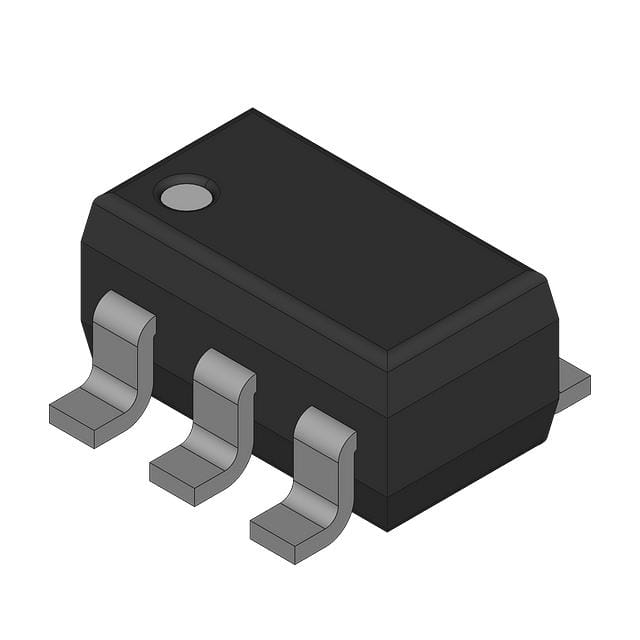
Analog Devices Inc./Maxim Integrated MAX8864SEUK
- Part No.:
- MAX8864SEUK
- Manufacturer:
- Analog Devices Inc./Maxim Integrated
- Package:
- SC-74A, SOT-753
- Datasheet:
-
 MAX8864SEUK.pdf
- Description:
- LOW-DROPOUT, 120MA, LINEAR REGUL
- Quantity:
- Payment:

- Shipping:

Inventory:270
Please send an inquiry. Send us your inquiry, and we will respond immediately.
Product details
Overview
The MAX8864SEUK from Maxim Integrated is a low-dropout linear regulator with fixed 2.84V output, delivering up to 120mA from a +2.5V to +6.5V input. It features an internal pMOSFET pass transistor, 55mV dropout at 50mA, 68μA no-load supply current, and auto-discharge functionality during shutdown-making it ideal for battery-powered cordless telephones and PCMCIA cards.
For engineers reviewing the MAX8864SEUK datasheet, MAX8864SEUK pinout, MAX8864SEUK application, or MAX8864SEUK equivalent, key selection criteria include its SOT23-5 package, Dual Mode™ operation (fixed/adjustable), reverse battery protection, thermal shutdown at 170°C, and guaranteed -40°C to +85°C operating range.
Technical Context
The MAX8864SEUK uses a 1.25V bandgap reference and error amplifier to regulate output via a p-channel MOSFET pass transistor with typical RDS(ON) of 1.1Ω. Its Dual Mode™ comparator selects feedback path based on SET pin voltage: below 60mV enables internal fixed-voltage regulation (2.84V).
Unlike PNP-based LDOs, it maintains constant 80μA operating supply current across load conditions-including dropout-due to zero gate-drive current requirement. The MAX8864 variant adds active output discharge through a 300Ω internal switch when SHDN is asserted.
Key Specifications
| Parameter | Value and Actual Design Meaning |
|---|---|
| Output Voltage | Fixed 2.84V (±0.09V over temperature), preset by internal resistor divider when SET = GND |
| Max Output Current | 120mA continuous; current limit clamps at ~280mA to prevent damage during short-circuit |
| Dropout Voltage | 55mV at 50mA load-enables stable regulation down to VIN = VOUT + 0.055V |
| Supply Current | 68μA no-load; 80μA under load-even in dropout-extending battery life in portable systems |
| Output Noise | 350μVRMS (10Hz–1MHz) with 1μF COUT, suitable for noise-sensitive analog circuits |
| Shutdown Current | 0.1μA max (typical 0.1nA), with active output discharge to ground via 300Ω path (MAX8864 only) |
| Thermal Protection | Shuts down at 170°C junction temperature; restarts after ~20°C hysteresis for pulsed fault recovery |
Pinout & Package
Package: 5-pin SOT23 (U5+1 outline, RoHS-compliant, JEDEC MO-178AA). GND pin serves dual role as electrical ground and thermal heatsink-requires connection to large copper area for optimal thermal dissipation.
| Pin/Terminal | Circuit Role | Design Meaning |
|---|---|---|
| 1 - SHDN | Active-low shutdown control | Pull low to disable regulator and trigger auto-discharge; connect to IN for normal operation |
| 2 - GND | Power and signal ground | Primary thermal path; must be soldered to PCB ground plane for θJA = 255.9°C/W compliance |
| 3 - IN | Input voltage supply | Accepts +2.5V to +6.5V; requires ≥1μF bypass capacitor to GND near pin |
| 4 - OUT | Regulated output | Delivers up to 120mA at 2.84V; requires ≥1μF, <0.2Ω ESR capacitor to GND for stability |
| 5 - SET | Feedback selection input | Grounded to enable fixed 2.84V mode; open or connected to external divider for adjustable output (1.25V–6.5V) |
Key Features
| Feature | Design Value |
|---|---|
| Dual Mode™ operation | Seamlessly switches between factory-trimmed 2.84V output and externally adjustable 1.25V–6.5V range via SET pin logic |
| Auto-discharge (MAX8864 only) | Internally discharges OUT to GND through 300Ω path during shutdown-prevents floating outputs in power-managed systems |
| Reverse battery protection | Limits reverse current to <1mA if VIN or SHDN falls below GND-protects battery and IC during incorrect insertion |
| Low-noise regulation | 350μVRMS output noise enables direct powering of 12-bit+ ADCs without additional filtering |
| Thermal overload recovery | Hysteretic shutdown (170°C trip / 150°C restart) allows safe pulsed operation under sustained overload without latch-up |
Applications
| Cordless Telephones | PCMCIA Cards |
|---|---|
|
Use Scenario: Powering RF front-end and baseband ICs in 900MHz/2.4GHz cordless handsets with single-cell Li-ion or NiMH battery. IC Role / Device Role / Timing Role: Primary 2.84V LDO supplying microcontroller core and analog codec-replacing less efficient switching solutions. Use Value: 80μA quiescent current extends standby time; 55mV dropout preserves usable battery life down to 2.9V input. |
Use Scenario: Regulating 3.3V or 5V bus-derived supply for PCMCIA Type II card logic and interface circuitry in laptops. IC Role / Device Role / Timing Role: Local point-of-load regulator decoupling host bus noise while meeting JEDEC JESD84-C timing margins. Use Value: 350μVRMS noise ensures clean power for high-speed data transfer; SOT23-5 footprint saves board space in tight card layouts. |
| Cellular Telephone Subsystems | Hand-Held Instruments |
|
Use Scenario: Supplying GPS receiver modules or Bluetooth radios in dual-mode cellular handsets where size and battery life are critical. IC Role / Device Role / Timing Role: Secondary LDO providing isolated 2.84V rail for RF ICs-minimizing coupling from noisy digital domains. Use Value: Reverse battery protection prevents damage during field-replaceable battery swaps; thermal shutdown avoids thermal runaway in sealed enclosures. |
Use Scenario: Powering precision op-amps and ADCs in portable multimeters or environmental sensors running from AA/AAA cells. IC Role / Device Role / Timing Role: Low-noise, low-quiescent regulator enabling >16-bit measurement accuracy with minimal self-heating drift. Use Value: 68μA no-load current maximizes shelf life; 1.25V reference tolerance (±25mV) supports accurate calibration without trimming. |
Equivalent & Alternatives
The following parts are listed as comparable options for similar low-dropout, fixed-output regulator applications.
| Alternative Part | Technical Difference | Application Difference | Selection Advice |
|---|---|---|---|
| MAX8863SEUK | No auto-discharge function; identical pinout, specs, and 2.84V output-but lacks active OUT discharge during shutdown | Suitable where output floating in shutdown is acceptable (e.g., non-power-gated subsystems) | Select MAX8864SEUK when system-level power sequencing requires forced output discharge to avoid backfeeding or latch-up |
| MCP1702T-2802E/TO | Fixed 2.8V output, 250mA rating, 6μA quiescent current, but no reverse battery protection or auto-discharge | Better suited for ultra-low-power always-on sensors; lacks robustness for consumer handhelds with frequent battery changes | Choose MAX8864SEUK for higher reliability in battery-swappable devices requiring reverse polarity and thermal fault resilience |
Compared with MAX8863SEUK, the MAX8864SEUK adds critical auto-discharge for clean power-down sequencing; versus MCP1702T-2802E/TO, it trades lower quiescent current for integrated protections essential in portable telecom equipment.
Availability
MAX8864SEUK is available at Aetrix Electronics and suitable for cordless telephones, PCMCIA cards, and hand-held instruments requiring stable component supply with guaranteed -40°C to +85°C operation and RoHS-compliant packaging.
Supply support for MAX8864SEUK includes scheduled delivery planning, volume procurement assistance, BOM continuity management, traceable sourcing, and lifecycle availability coordination for OEM customers, industrial embedded developers, connected-device designers, and electronics production programs.
Manufacturer
Maxim Integrated (now part of Analog Devices) designs precision analog, mixed-signal, and power-management ICs for demanding industrial, automotive, and communications applications.
The MAX8863/MAX8864 product line targets battery-powered portable electronics, emphasizing ultra-low quiescent current, small footprint, and integrated protection features for reliable operation in space-constrained, safety-critical systems.
FAQ
What output voltage does the MAX8864SEUK deliver, and how is it set?
The MAX8864SEUK delivers a factory-trimmed fixed output voltage of 2.84V (±0.09V over temperature). This is achieved by connecting the SET pin directly to GND, which activates the internal feedback resistor divider. No external components are required for fixed-voltage operation-making the MAX8864SEUK a drop-in solution for 2.84V rail generation in portable systems.
Does the MAX8864SEUK support adjustable output voltage, and if so, what is the range?
Yes, the MAX8864SEUK supports adjustable output voltage from 1.25V to 6.5V when the SET pin is configured with an external resistor divider instead of being tied to GND. The output follows VOUT = 1.25V × (1 + R1/R2). This flexibility allows the same MAX8864SEUK footprint to serve multiple voltage rails-though the S-version designation confirms its primary use case is fixed 2.84V regulation.
How does the auto-discharge feature of the MAX8864SEUK work, and why is it important?
The MAX8864SEUK includes an internal 300Ω discharge path from OUT to GND that activates when the SHDN pin is pulled low. This actively pulls the output voltage to ground within microseconds, preventing residual charge from backfeeding into downstream circuitry or causing undefined logic states during power-down. This feature is critical in systems with multiple power domains or strict sequencing requirements-distinguishing the MAX8864SEUK from the MAX8863SEUK.
What protection features are built into the MAX8864SEUK?
The MAX8864SEUK integrates four key protections: (1) reverse battery protection (<1mA reverse current if VIN or SHDN goes below GND), (2) thermal shutdown at 170°C with 20°C hysteresis, (3) short-circuit current limiting (~280mA), and (4) output discharge during shutdown. These features ensure robust operation in consumer handhelds where battery handling, ambient temperature swings, and fault conditions are common-making the MAX8864SEUK more resilient than basic LDOs.
Can the MAX8864SEUK operate from a single alkaline cell, and what is its minimum input voltage?
Yes-the MAX8864SEUK operates from +2.5V to +6.5V input, making it compatible with a single fresh alkaline cell (nominal 1.5V, up to 1.65V) only when boosted, but fully functional across two alkaline cells (3.0V–3.3V) or single Li-ion (3.0V–4.2V). Its 55mV dropout at 50mA means it regulates cleanly down to VIN = 2.895V for 2.84V output-supporting extended runtime as the battery discharges.
MAX8864SEUK Specifications
- Product attributes
- Attribute value
- Manufacturer:
- Analog Devices Inc./Maxim Integrated
- Series:
- -
- Package/Case:
- SC-74A, SOT-753
- Packaging:
- Bulk
- Product Status:
- Active
- Output Configuration:
- Positive
- Output Type:
- Adjustable (Fixed)
- Number of Regulators:
- 1
- Voltage - Input (Max):
- 6.5V
- Voltage - Output (Min/Fixed):
- 1.25V (2.84V)
- Voltage - Output (Max):
- 6.5V
- Voltage Dropout (Max):
- 0.12V @ 50mA
- Current - Output:
- 120mA
- Current - Quiescent (Iq):
- 150 µA
- Current - Supply (Max):
- 80 µA
- PSRR:
- 62dB (300Hz)
- Control Features:
- Enable
- Protection Features:
- Over Current, Over Temperature, Reverse Polarity, Short Circuit
- Operating Temperature:
- -40°C ~ 85°C (TA)
- Grade:
- -
- Qualification:
- -
- Mounting Type:
- Surface Mount
- Supplier Device Package:
- SOT-23-5
MAX8864SEUK FAQ
1.How can I place an order for MAX8864SEUK through Aetrix?
Please submit a Request for Quotation (RFQ) for MAX8864SEUK on Aetrix. Our sales agent will provide a competitive quotation and guide you through the order confirmation once you accept the terms.
2.Are the price and stock information for MAX8864SEUK reliable?
The price and inventory of MAX8864SEUK are updated periodically and may fluctuate due to market conditions. Stock and pricing data are typically refreshed every 24 hours. Quotation validity for MAX8864SEUK is usually 5 days.
3.What payment methods are accepted for MAX8864SEUK?
We accept Wire Transfer, PayPal, Credit Card, Western Union, MoneyGram, and Escrow for MAX8864SEUK transactions.
Note: Certain payment methods may incur a processing fee.
4.How is shipping managed for MAX8864SEUK?
MAX8864SEUK orders can be shipped via leading logistics carriers, including DHL, UPS, FedEx, TNT, or Registered Mail.
Once your MAX8864SEUK order is processed, you will receive an email with the shipment details and tracking number.
Note: Tracking information may take up to 24 hours to appear. Express delivery typically takes 3–5 business days.
5.How can I obtain technical support or documentation for MAX8864SEUK?
For technical support, including MAX8864SEUK datasheets, pinout diagrams, or application guidance, please contact our engineering support team. They can provide detailed documentation and assistance for your MAX8864SEUK requirements.
6.How does Aetrix verify that MAX8864SEUK is sourced from the original manufacturer or authorized distributors?
All MAX8864SEUK products on Aetrix are procured from qualified distributors and authorized channels. Our dedicated quality assurance team conducts strict verification, including traceability checks and, if necessary, third-party testing. This ensures that MAX8864SEUK meets industry standards.
7.What is the process for return or replacement of MAX8864SEUK?
All MAX8864SEUK units undergo pre-shipment inspection (PSI). If there is an issue with MAX8864SEUK, returns or replacements are accepted under the following conditions:
1.Quantity discrepancies, incorrect items, or visible external defects (such as breakage or corrosion), acknowledged by Aetrix.
2.The issue is reported within 90 days of delivery.
3.The MAX8864SEUK part is unused and in its original packaging.
Return procedure for MAX8864SEUK:
1.Submit a request within 90 days.
2.Obtain a Return Material Authorization (RMA) from Aetrix.
MAX8864SEUK Tags
-
MIC5504-1.8YM5-TR
Microchip Technology
-
MIC5504-3.3YM5-TR
Microchip Technology
-
MIC5365-3.0YC5-TR
Microchip Technology
-
MIC5365-1.8YC5-TR
Microchip Technology
-
MIC5365-2.5YC5-TR
Microchip Technology
-
MIC5365-3.3YC5-TR
Microchip Technology
-
MIC5365-3.3YD5-TR
Microchip Technology
-
MIC5317-3.3YM5-TR
Microchip Technology
-
TLV1117LV33DCYR
Texas Instruments
-
MIC5317-3.3YMT-TZ
Microchip Technology
-
MIC5528-3.3YMT-TR
Microchip Technology
-
TLV75801PDRVR
Texas Instruments
Tech Hub

TTL and CMOS logic families differ in thresholds, loading, output drive, power and timing. This engineering guide compares 74HC and 74HCT, calculates noise margins and checks 3.3 V/5 V compatibility.

A practical engineering guide to 3.3V and 5V logic compatibility, input thresholds, resistor dividers, translator ICs, MOSFET level shifting, I2C pull-ups, timing limits and power-sequencing risks.

The 74HC595 uses push-pull logic outputs, while the TPIC6B595 uses 50 V open-drain DMOS sinks for higher-power loads. This guide compares timing, current limits, 3.3 V interfacing, load wiring, thermal…

The 74HC595 converts serial data into eight stable parallel outputs. This guide covers pin functions, shift and storage timing, OE and MR behavior, drive-current limits, cascading, voltage compatibilit…

A technical comparison of level-sensitive latches and edge-triggered flip-flops, covering timing windows, setup and hold limits, master–slave operation, time borrowing, race-through, HDL inference and…

A D latch stores one bit while Enable controls when data can pass. This reference covers gate-level operation, truth tables, transparency, setup and hold timing, LE versus OE, common ICs and practical …

An SR latch stores one bit through cross-coupled feedback. This engineering reference covers NOR and NAND implementations, truth tables, forbidden-state recovery, gated operation, switch debouncing, fa…

Latch circuits retain one bit through feedback. This technical reference covers SR and D latches, truth tables, transparency, timing limits, latch-versus-flip-flop behavior, applications and common log…

An engineering guide to LED driver operation, constant-current and constant-voltage outputs, linear and switching topologies, dimming, IC selection, calculations, replacement compatibility, and fault c…

Operational amplifier guide covering op amp basics, feedback, ideal vs real op amps, common configurations, buffer circuits, offset, bias current, gain-bandwidth, slew rate, rail-to-rail limits and sel…


