
 My Inquiry
 My Account


Analog Devices Inc./Maxim Integrated MAX9022AUA
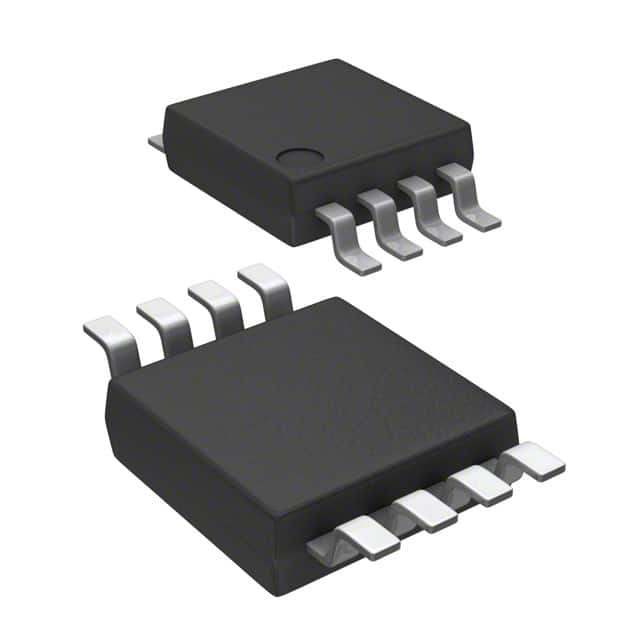
- Part No.:
- MAX9022AUA
- Manufacturer:
- Analog Devices Inc./Maxim Integrated
- Category:
- Comparators
- Package:
- 8-TSSOP, 8-MSOP (0.118", 3.00mm Width)
- Datasheet:
-
 MAX9022AUA.pdf
- Description:
- IC COMPARATOR 2 GEN PUR 8UMAX
- Quantity:
- Payment:

- Shipping:

Inventory:4,448
Please send an inquiry. Send us your inquiry, and we will respond immediately.
Product details
Overview
The MAX9022AUA from Analog Devices is a dual micropower comparator optimized for battery-powered portable systems, featuring 2.8μA supply current per comparator, 3μs propagation delay, and built-in 4mV hysteresis - enabling robust threshold detection in photodiode preamps and sensor-signal conditioning circuits.
For engineers reviewing the MAX9022AUA datasheet, MAX9022AUA pinout, MAX9022AUA application, or MAX9022AUA equivalent, key selection criteria include rail-to-rail output swing, single-supply operation down to 2.5V, -40°C to +125°C automotive-grade temperature range, and μMAX-8 package compatibility with space-constrained PCB layouts.
Technical Context
The MAX9022AUA integrates two independent comparators sharing a common VDD and VSS, each with input common-mode range extending from VSS to VDD − 1.1V and no phase reversal under overdriven inputs. Its internal hysteresis zone (4mV) is fixed and non-adjustable, centered on the input offset voltage (±1mV typical).
Output stage design minimizes switching current transients, eliminating power-supply glitches during transitions. Propagation delay remains stable across capacitive loads up to 150pF and varies from 3μs (VOD = 100mV) to 8μs (VOD = 10mV), with rise/fall times of 20ns into 10kΩ/15pF.
Key Specifications
| Parameter | Value and Actual Design Meaning |
|---|---|
| Supply Voltage Range | 2.5V to 5.5V single supply - supports direct Li-ion battery (3.0–4.2V) and regulated 3.3V/5V rails without level shifting. |
| Supply Current per Comparator | 2.8μA typical at +25°C - enables multi-year operation in coin-cell-powered IoT sensors. |
| Propagation Delay | 3μs at 100mV overdrive - sufficient for <300kHz digital line receiver or keyless entry pulse discrimination. |
| Hysteresis | 4mV fixed internal - suppresses chatter on slow-moving signals (e.g., thermistor outputs with >1ms rise time). |
| Input Offset Voltage | ±1mV typical, ±8mV max - ensures accurate threshold setting within ±4mV total window including hysteresis. |
| Rail-to-Rail Output Swing | VOL ≤ 2mV @ 10μA sink, VOH ≥ VDD − 2mV @ 10μA source - drives logic inputs directly without pull-ups. |
| Common-Mode Input Range | VSS to VDD − 1.1V - accepts ground-referenced sensor signals even at 2.5V supply. |
Pinout & Package
The MAX9022AUA is housed in an 8-pin μMAX package (3.0mm × 3.0mm, 0.8mm height), RoHS-compliant and tape-and-reel ready (U8+1 code). This ultra-compact footprint occupies ~35% less board area than standard SO-8 while maintaining thermal derating of 4.5mW/°C above +70°C.
| Pin/Terminal | Circuit Role | Design Meaning |
|---|---|---|
| 1 | OUTA | Comparator A open-drain/rail-to-rail output - sinks or sources current to drive CMOS/TTL loads directly. |
| 2 | INA− | Comparator A inverting input - accepts differential or single-ended signals referenced to VSS or mid-supply. |
| 3 | INA+ | Comparator A noninverting input - used with INA− to configure window, zero-crossing, or threshold detection. |
| 4 | VDD | Positive supply pin - requires 0.1μF ceramic bypass capacitor to VSS for stable high-speed operation. |
| 5 | VSS | Negative supply (ground) pin - serves as reference for all inputs and output swing baseline. |
| 6 | INB+ | Comparator B noninverting input - independent of INA+/INA−, enabling dual-channel signal monitoring. |
| 7 | INB− | Comparator B inverting input - paired with INB+ for second independent comparison function. |
| 8 | OUTB | Comparator B rail-to-rail output - electrically isolated from OUTA; supports asynchronous dual-event detection. |
Key Features
| Feature | Design Value |
|---|---|
| Ultra-low quiescent current | 2.8μA per comparator enables >10-year battery life in always-on wake-up circuits. |
| Internal 4mV hysteresis | Eliminates external feedback components for noise-immune threshold detection in EMI-prone environments. |
| Rail-to-rail output stage | Drives 10μA loads to within 2mV of VDD/VSS - interfaces directly with 1.8V–5V logic families without level shifters. |
| No phase reversal on overdrive | Prevents false triggering when inputs exceed common-mode range - critical for unconditioned sensor inputs. |
| Wide single-supply range | 2.5V minimum operation supports direct connection to partially discharged Li-ion cells (2.7–4.2V). |
Applications
| Battery-Powered Portable Systems | Sensor-Signal Detection |
|---|---|
Use Scenario: Power management in handheld medical monitors using coin-cell batteries. IC Role / Device Role / Timing Role: Dual comparator monitors battery voltage and sensor alert thresholds independently. Use Value: 2.8μA total quiescent current extends operational life beyond 5 years; μMAX-8 footprint saves PCB space for compact enclosure. |
Use Scenario: Threshold detection for analog-output ambient light sensors in smart thermostats. IC Role / Device Role / Timing Role: Compares photodiode amplifier output against programmable reference to trigger display backlight. Use Value: 4mV internal hysteresis prevents flicker from low-frequency ambient noise; rail-to-rail output drives MCU GPIO directly. |
| Photodiode Preamps | Digital Line Receivers |
Use Scenario: Pulse detection in optical smoke detectors with transimpedance amplifier front-end. IC Role / Device Role / Timing Role: Converts small photocurrent pulses into clean digital logic edges with minimal latency. Use Value: 3μs propagation delay ensures sub-microsecond response to smoke-induced light attenuation; low input bias current (3nA typ.) preserves signal integrity. |
Use Scenario: RS-232 or UART signal recovery in low-power industrial gateways. IC Role / Device Role / Timing Role: Acts as a high-impedance line receiver converting analog-level serial data into CMOS-compatible logic. Use Value: Input common-mode range (VSS to VDD−1.1V) accommodates ±5V RS-232 levels via resistive divider; 20ns rise/fall time preserves baud-rate fidelity. |
Equivalent & Alternatives
The following parts are listed as comparable options for similar dual micropower comparator applications.
| Alternative Part | Technical Difference | Application Difference | Selection Advice |
|---|---|---|---|
| TLV3602DR | Higher supply current (12μA/comparator), faster propagation (120ns), no internal hysteresis. | Requires external hysteresis resistors; better suited for high-speed line receivers than ultra-low-power sensing. | Select TLV3602DR only when speed >1MHz is required and battery life is secondary. |
| LMV393IDR | Lower cost, higher supply current (20μA/comparator), no internal hysteresis, wider temp range (−40°C to +125°C same). | Lacks integrated hysteresis and rail-to-rail output - needs external pull-up and feedback network. | Choose LMV393IDR for cost-sensitive designs where board area and power budget allow added passives. |
Compared with TLV3602DR and LMV393IDR, the MAX9022AUA uniquely delivers 2.8μA operation with factory-trimmed 4mV hysteresis and rail-to-rail outputs in a 3×3mm μMAX package - making it optimal for space- and energy-constrained sensor nodes where component count and standby current are critical.
Availability
The MAX9022AUA is available at Aetrix Electronics and suitable for battery-powered portable systems, sensor-signal detection, photodiode preamps, and digital line receivers requiring stable component supply across automotive (-40°C to +125°C) and industrial temperature grades.
Supply support for MAX9022AUA includes scheduled delivery planning, volume procurement assistance, BOM continuity management, traceable sourcing, and lifecycle availability coordination for OEM customers, industrial embedded developers, connected-device designers, and electronics production programs.
Manufacturer
Analog Devices is a global leader in high-performance analog, mixed-signal, and digital signal processing semiconductors, serving industrial, automotive, communications, and healthcare markets since 1965.
The MAX9022AUA belongs to the MAX902x micropower comparator family, designed specifically for ultra-low-power, space-constrained sensing and portable electronics where nanowatt-level standby current and sub-3μs response are mandatory.
FAQ
What is the operating temperature range for the MAX9022AUA?
The MAX9022AUA is specified for continuous operation from −40°C to +125°C, meeting AEC-Q100 Grade 0 requirements for automotive under-hood and industrial control applications. This range is guaranteed by design and validated across all electrical parameters including supply current, propagation delay, and input offset voltage.
Does the MAX9022AUA require external hysteresis components?
No, the MAX9022AUA includes 4mV of factory-trimmed internal hysteresis, eliminating the need for external positive-feedback resistors in most noise-immune threshold-detection applications. External hysteresis can be added if wider bands (>4mV) are required, but the internal hysteresis remains active unless overridden by strong external feedback.
Can the MAX9022AUA operate from a 2.5V single supply?
Yes, the MAX9022AUA is fully functional at 2.5V single supply, delivering specified performance including 2.8μA supply current, 3μs propagation delay, and rail-to-rail output swing. Its input common-mode range extends to VDD − 1.1V, allowing valid operation with inputs as high as 1.4V at 2.5V supply.
What is the maximum capacitive load the MAX9022AUA output can drive?
The MAX9022AUA output is stable with capacitive loads up to 150pF, as confirmed by characterization data showing no sustained oscillations. Driving larger loads may increase propagation delay and cause ringing; for >150pF, a series resistor (e.g., 10–50Ω) should isolate the output from the load capacitance.
Is the MAX9022AUA pin-compatible with other packages in the MAX9022 family?
No, the MAX9022AUA in μMAX-8 is not pin-compatible with the SOT23-8 (MAX9022AKA+T) or SO-8 (MAX9022ASA+T) variants. While all share identical electrical functionality and pin functions, the μMAX-8 has different pin numbering and physical layout - requiring unique PCB footprints and land patterns per package type.
MAX9022AUA Specifications
- Product attributes
- Attribute value
- Manufacturer:
- Analog Devices Inc./Maxim Integrated
- Package/Case:
- 8-TSSOP, 8-MSOP (0.118", 3.00mm Width)
- Series:
- -
- Packaging:
- Tube
- Product Status:
- Obsolete
- Type:
- General Purpose
- Number of Elements:
- 2
- Output Type:
- CMOS, Rail-to-Rail, TTL
- Voltage - Supply, Single/Dual (±):
- 2.5V ~ 5.5V, ±1.25V ~ 2.75V
- :
- 1mV @ 5V
- Voltage - Input Offset (Max):
- 0.003µA @ 5V
- Current - Input Bias (Max):
- -
- Current - Output (Typ):
- 5µA
- Current - Quiescent (Max):
- 100dB CMRR, 80dB PSRR
- CMRR, PSRR (Typ):
- 8µs
- Propagation Delay (Max):
- 4mV
- Hysteresis:
- -40°C ~ 125°C
- Operating Temperature:
- -
- Grade:
- -
- Qualification:
- Surface Mount
- :
- 8-uMAX/uSOP
MAX9022AUA FAQ
1.How can I place an order for MAX9022AUA through Aetrix?
Please submit a Request for Quotation (RFQ) for MAX9022AUA on Aetrix. Our sales agent will provide a competitive quotation and guide you through the order confirmation once you accept the terms.
2.Are the price and stock information for MAX9022AUA reliable?
The price and inventory of MAX9022AUA are updated periodically and may fluctuate due to market conditions. Stock and pricing data are typically refreshed every 24 hours. Quotation validity for MAX9022AUA is usually 5 days.
3.What payment methods are accepted for MAX9022AUA?
We accept Wire Transfer, PayPal, Credit Card, Western Union, MoneyGram, and Escrow for MAX9022AUA transactions.
Note: Certain payment methods may incur a processing fee.
4.How is shipping managed for MAX9022AUA?
MAX9022AUA orders can be shipped via leading logistics carriers, including DHL, UPS, FedEx, TNT, or Registered Mail.
Once your MAX9022AUA order is processed, you will receive an email with the shipment details and tracking number.
Note: Tracking information may take up to 24 hours to appear. Express delivery typically takes 3–5 business days.
5.How can I obtain technical support or documentation for MAX9022AUA?
For technical support, including MAX9022AUA datasheets, pinout diagrams, or application guidance, please contact our engineering support team. They can provide detailed documentation and assistance for your MAX9022AUA requirements.
6.How does Aetrix verify that MAX9022AUA is sourced from the original manufacturer or authorized distributors?
All MAX9022AUA products on Aetrix are procured from qualified distributors and authorized channels. Our dedicated quality assurance team conducts strict verification, including traceability checks and, if necessary, third-party testing. This ensures that MAX9022AUA meets industry standards.
7.What is the process for return or replacement of MAX9022AUA?
All MAX9022AUA units undergo pre-shipment inspection (PSI). If there is an issue with MAX9022AUA, returns or replacements are accepted under the following conditions:
1.Quantity discrepancies, incorrect items, or visible external defects (such as breakage or corrosion), acknowledged by Aetrix.
2.The issue is reported within 90 days of delivery.
3.The MAX9022AUA part is unused and in its original packaging.
Return procedure for MAX9022AUA:
1.Submit a request within 90 days.
2.Obtain a Return Material Authorization (RMA) from Aetrix.
MAX9022AUA Tags

-
LM2903DR
Texas Instruments
-
LM339DR
Texas Instruments
-
LM339PWR
Texas Instruments
-
LM393DT
STMicroelectronics
-
LM2901PWR
Texas Instruments
-
LM2903DT
STMicroelectronics
-
LM393DR
Texas Instruments
-
LM239DR
Texas Instruments
-
LM339APWR
Texas Instruments
-
LM2903P
Texas Instruments
-
LM393ADR
Texas Instruments
-
NCX2200GMAZ
NXP USA Inc.
Tech Hub

An engineering guide to LED driver operation, constant-current and constant-voltage outputs, linear and switching topologies, dimming, IC selection, calculations, replacement compatibility, and fault c…

Operational amplifier guide covering op amp basics, feedback, ideal vs real op amps, common configurations, buffer circuits, offset, bias current, gain-bandwidth, slew rate, rail-to-rail limits and sel…

Jumper cables guide covering safe connection order, red and black clamp placement, final ground connection, cable gauge, length, clamp quality, copper vs CCA cables, jump starter comparison and battery…

LDO regulator guide covering low dropout voltage, power dissipation, thermal design, PSRR, output noise, capacitor stability, adjustable LDO circuits, LDO vs buck converter and datasheet selection chec…

Conditional Access Module guide covering CAM meaning, CI/CI+ interface, smart card authorization, DVB security workflow, TV and set-top box compatibility, internal electronics, ESD protection, connecto…

Guide to electronic component obsolescence covering EOL risk, PCN/PDN notices, last-time buy planning, replacement options, form-fit-function validation, counterfeit risk and BOM lifecycle management.

18650 battery guide covering lithium-ion cell basics, 3.6V/3.7V voltage, 4.2V charging, mAh and Wh capacity, protected cells, chargers, BMS, series-parallel packs, holders, welding and sourcing checks.…

Hall effect sensor guide covering working principle, linear and digital sensors, Arduino circuits, current sensing, speed detection, automotive applications, A3144 examples, signal filtering and datash…

Product Change Notification guide for electronic components, covering PCN meaning, PCN vs PDN/EOL, common change types, risk levels, form-fit-function review, engineering validation, BOM control, LTB/L…

A practical guide to blend door actuators, covering HVAC function, symptoms, location, AC and heater issues, reset and calibration, replacement cost, electrical diagnosis, compatibility checks, and rep…


