
 My Inquiry
 My Account


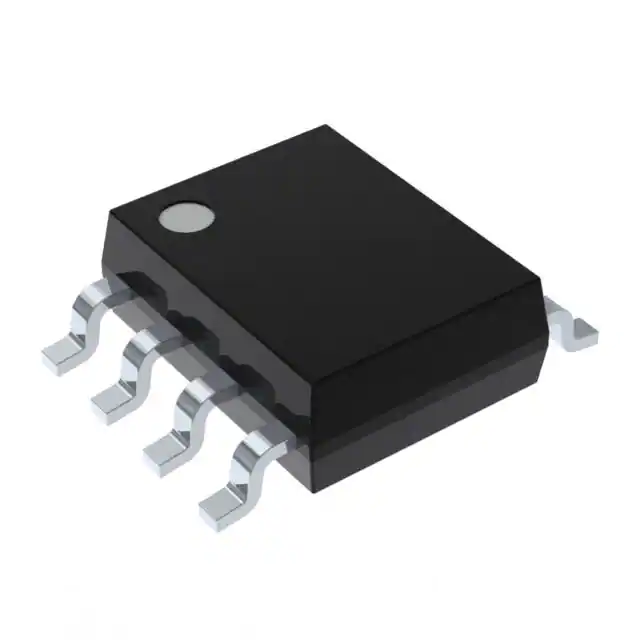
Analog Devices Inc./Maxim Integrated MAX9052AESA
- Part No.:
- MAX9052AESA
- Manufacturer:
- Analog Devices Inc./Maxim Integrated
- Category:
- Comparators
- Package:
- 8-SOIC (0.154", 3.90mm Width)
- Datasheet:
-
 MAX9052AESA.pdf
- Description:
- IC COMPARATOR 2 W/VOLT REF 8SOIC
- Quantity:
- Payment:

- Shipping:

Inventory:1,284
Please send an inquiry. Send us your inquiry, and we will respond immediately.
Product details
Overview
MAX9052AESA from Analog Devices is a dual comparator with integrated 2.500V precision voltage reference in an 8-pin SO package, consuming only 55µA at 2.7V supply. It features rail-to-rail inputs/outputs, ±3mV internal hysteresis, 400ns propagation delay, and 1.0pA typical input bias current-designed for low-power battery management and window detection circuits.
For engineers reviewing the MAX9052AESA datasheet, MAX9052AESA pinout, MAX9052AESA application, or MAX9052AESA equivalent, this page delivers verified electrical parameters, SO-package terminal mapping, A-grade (±0.4% initial accuracy, 6ppm/°C tempco) reference performance, and dual-comparator timing behavior under dynamic load conditions.
Technical Context
The MAX9052AESA integrates two independent comparators sharing a single high-accuracy 2.500V reference. Each comparator supports rail-to-rail input operation extending 250mV beyond VEE and VCC, with common-mode rejection >52dB and PSRR >55dB across 2.7V–5.5V supply range.
Its output stage delivers rail-to-rail push-pull switching capable of sinking/source up to 8mA while limiting supply-current surges during transitions-enabling stable operation without large bypass capacitors even at 1MHz switching frequency.
Key Specifications
| Parameter | Value and Actual Design Meaning |
|---|---|
| Supply Voltage Range | 2.7V to 5.5V single supply-supports direct interface with Li-ion battery systems and 3.3V/5V logic domains. |
| Supply Current (ICC) | 55µA typical at 2.7V-enables multi-year operation on coin-cell batteries in always-on monitoring applications. |
| Reference Voltage (VREF) | 2.500V ±0.4% (A grade), 6ppm/°C tempco-provides stable threshold for precision window comparators over -40°C to +85°C. |
| Propagation Delay (tPD) | 400ns at 100mV overdrive-ensures fast response to transient events in level translation and IR receiver front-ends. |
| Input Offset Voltage (VOS) | ±0.5mV typical-minimizes false triggering in low-amplitude signal detection such as sensor zero-crossing. |
| Input Bias Current (IB) | 1.0pA typical-preserves signal integrity in high-impedance source applications like photodiode amplifiers. |
| Output Drive Capability | Rail-to-rail push-pull, ±8mA-directly drives LEDs, logic gates, or MOSFET gates without external buffers. |
Pinout & Package
MAX9052AESA uses an 8-pin SO (Small Outline) package with standard 150mil body width and 0.050" lead pitch. Pin 1 is marked by a beveled corner or dot; device orientation follows JEDEC MS-012.
| Pin/Terminal | Circuit Role | Design Meaning |
|---|---|---|
| 1 (OUTA) | Comparator A Output | Rail-to-rail push-pull output; sinks/sources up to 8mA; no external pull-up required. |
| 2 (INA+) | Comparator A Noninverting Input | Accepts signals from VEE – 0.25V to VCC + 0.25V; 1.0pA bias current preserves high-Z node integrity. |
| 3 (INB–) | Comparator B Inverting Input | Independent input path; uncommitted-enables flexible hysteresis or differential configurations. |
| 4 (VEE) | Negative Supply | Ground reference for single-supply operation; also serves as return path for REF load current. |
| 5 (VCC) | Positive Supply | 2.7V–5.5V input; powers both comparators and reference; internal regulation ensures stable REF output. |
| 6 (REF) | Precision Reference Output | 2.500V ±0.4%, stable with 0–4.7nF capacitive loads; sources/sinks up to 500µA. |
| 7 (INB+) | Comparator B Noninverting Input | Full rail-to-rail common-mode range; matched offset and hysteresis to INA+ for consistent window detection. |
| 8 (OUTB) | Comparator B Output | Functionally identical to OUTA; enables independent decision outputs for dual-threshold architectures. |
Key Features
| Feature | Design Value |
|---|---|
| Dual comparator + reference integration | Reduces board space and component count vs. discrete solutions-ideal for compact battery-powered sensors. |
| Ultra-low quiescent current | 55µA at 2.7V enables >10-year shelf life in energy-harvesting nodes with microamp-level average power budgets. |
| Internal ±3mV hysteresis | Eliminates need for external feedback resistors in noisy environments-prevents chatter on slow-moving analog inputs. |
| Stable reference with curvature correction | Laser-trimmed thin-film resistors and proprietary circuitry achieve <30ppm/°C drift over full temperature range. |
| Rail-to-rail I/O with surge-limited switching | Minimizes supply-line glitches-reduces need for bulk decoupling and simplifies EMI filtering in mixed-signal PCBs. |
Applications
| Precision Battery Management | Window Comparators |
|---|---|
Use Scenario: Monitoring Li-ion cell voltage during charge/discharge cycles to enforce 2.8V–4.2V safe operating window. IC Role / Device Role / Timing Role: Dual comparator compares cell voltage against 2.500V reference-derived thresholds; REF provides stable reference for both upper/lower trip points. Use Value: Eliminates external reference IC and resistor dividers-reducing BOM cost and layout area while maintaining ±0.4% threshold accuracy over temperature. | Use Scenario: Detecting valid signal presence in industrial analog input modules where input must stay within ±5% of nominal level. IC Role / Device Role / Timing Role: One comparator monitors upper limit (REF × 1.05), the other lower limit (REF × 0.95); outputs combined via logic OR. Use Value: 400ns propagation delay ensures rapid fault detection (<1µs response), critical for protecting downstream ADCs from overvoltage damage. |
| IR Receivers | Level Translators |
Use Scenario: Demodulating 38kHz infrared carrier signals in remote control receivers where ambient light causes slow DC drift. IC Role / Device Role / Timing Role: Comparator A detects rising edge of filtered IR envelope; internal hysteresis rejects low-frequency noise from incandescent lighting. Use Value: 1.0pA input bias current prevents loading of high-impedance photodiode transimpedance amplifier output-preserving signal-to-noise ratio. | Use Scenario: Converting 5V logic signals to 3.3V domain in mixed-voltage microcontroller interfaces. IC Role / Device Role / Timing Role: Comparator A compares input against 2.5V REF; rail-to-rail output directly drives 3.3V CMOS inputs without level-shifter IC. Use Value: 8mA output drive capability ensures fast edge rates into 10pF loads-meeting setup/hold timing for SPI/I²C peripherals. |
Equivalent & Alternatives
The following parts are listed as comparable options for similar dual-comparator-with-reference applications.
| Alternative Part | Technical Difference | Application Difference | Selection Advice |
|---|---|---|---|
| MAX9052BEUA | Same dual-comparator + 2.500V reference core, but in 8-pin µMAX package; B-grade reference (±1% initial accuracy, 100ppm/°C tempco). | Lower accuracy and higher drift-suitable for cost-sensitive consumer applications where ±1% threshold tolerance is acceptable. | Select when board space is constrained and thermal stability requirements are relaxed. |
| TLV3702IDR | Dual comparator only (no integrated reference); requires external 2.5V reference; 850nA supply current; rail-to-rail I/O; 360ns propagation delay. | Higher power consumption and added BOM complexity-requires separate precision reference and layout area for decoupling. | Select when reference voltage must be programmable or shared across multiple comparators. |
Compared with MAX9052BEUA, the MAX9052AESA offers tighter reference accuracy and lower temperature drift-critical for industrial battery gauging. Against TLV3702IDR, it reduces system-level component count and improves power efficiency by integrating the reference, though at fixed 2.500V output.
Availability
MAX9052AESA is available at Aetrix Electronics and suitable for precision battery management, window comparator circuits, IR receivers, level translators, and digital line receivers requiring stable component supply across automotive, industrial, and medical OEM programs.
Supply support for MAX9052AESA includes scheduled delivery planning, volume procurement assistance, BOM continuity management, traceable sourcing, and lifecycle availability coordination for OEM customers, industrial embedded developers, connected-device designers, and electronics production programs.
Manufacturer
Analog Devices is a global leader in high-performance analog, mixed-signal, and digital signal processing semiconductors, serving industrial, automotive, communications, and healthcare markets.
The MAX9052AESA belongs to the MAX9038–MAX9053 micropower comparator + reference family, engineered for ultra-low-power sensing and threshold-detection applications in battery-constrained and thermally demanding environments.
FAQ
What is the reference voltage accuracy and temperature coefficient of the MAX9052AESA?
The MAX9052AESA features an A-grade 2.500V precision reference with ±0.4% initial accuracy over temperature and a typical temperature coefficient of 6ppm/°C. This specification is guaranteed across the full -40°C to +85°C operating range and enables stable threshold generation in precision analog monitoring applications without external calibration.
Does the MAX9052AESA require an external capacitor on the REF pin for stability?
No, the MAX9052AESA does not require an external capacitor on the REF pin for stability. It is designed to remain stable with capacitive loads from 0 to 4.7nF. An output capacitor may be added to improve transient response during step-load changes, but it is optional for steady-state operation.
What is the maximum load current the REF pin can source or sink in the MAX9052AESA?
The REF pin of the MAX9052AESA can source or sink up to ±500µA of load current while maintaining output voltage accuracy within specification. This capability allows direct driving of comparator input dividers, ADC reference inputs, or small-signal bias networks without additional buffering.
How does the MAX9052AESA minimize supply-line glitches during output switching?
The MAX9052AESA employs a unique output-stage design that limits supply current surges during transitions, virtually eliminating the supply glitches common in conventional comparators. This feature reduces or eliminates the need for large bypass capacitors-simplifying PCB layout and improving reliability in noise-sensitive mixed-signal systems.
Can the MAX9052AESA operate from a 2.5V supply?
No, the MAX9052AESA requires a minimum supply voltage of 2.7V per its specified operating range (2.7V to 5.5V). While some related devices like the MAX9040–MAX9043 support 2.5V operation, the MAX9052AESA's reference architecture and comparator core are optimized for ≥2.7V-ensuring full specification compliance including reference accuracy and propagation delay.
MAX9052AESA Specifications
- Product attributes
- Attribute value
- Manufacturer:
- Analog Devices Inc./Maxim Integrated
- Package/Case:
- 8-SOIC (0.154", 3.90mm Width)
- Series:
- -
- Packaging:
- Tube
- Product Status:
- Obsolete
- Type:
- with Voltage Reference
- Number of Elements:
- 2
- Output Type:
- CMOS, Push-Pull, Rail-to-Rail, TTL
- Voltage - Supply, Single/Dual (±):
- 2.7V ~ 5.5V
- :
- 5mV @ 5V
- Voltage - Input Offset (Max):
- 1pA @ 5V
- Current - Input Bias (Max):
- 8mA
- Current - Output (Typ):
- 85µA
- Current - Quiescent (Max):
- 80dB CMRR, 80dB PSRR
- CMRR, PSRR (Typ):
- 450ns
- Propagation Delay (Max):
- ±3mV
- Hysteresis:
- -40°C ~ 85°C
- Operating Temperature:
- -
- Grade:
- -
- Qualification:
- Surface Mount
- :
- 8-SOIC
MAX9052AESA FAQ
1.How can I place an order for MAX9052AESA through Aetrix?
Please submit a Request for Quotation (RFQ) for MAX9052AESA on Aetrix. Our sales agent will provide a competitive quotation and guide you through the order confirmation once you accept the terms.
2.Are the price and stock information for MAX9052AESA reliable?
The price and inventory of MAX9052AESA are updated periodically and may fluctuate due to market conditions. Stock and pricing data are typically refreshed every 24 hours. Quotation validity for MAX9052AESA is usually 5 days.
3.What payment methods are accepted for MAX9052AESA?
We accept Wire Transfer, PayPal, Credit Card, Western Union, MoneyGram, and Escrow for MAX9052AESA transactions.
Note: Certain payment methods may incur a processing fee.
4.How is shipping managed for MAX9052AESA?
MAX9052AESA orders can be shipped via leading logistics carriers, including DHL, UPS, FedEx, TNT, or Registered Mail.
Once your MAX9052AESA order is processed, you will receive an email with the shipment details and tracking number.
Note: Tracking information may take up to 24 hours to appear. Express delivery typically takes 3–5 business days.
5.How can I obtain technical support or documentation for MAX9052AESA?
For technical support, including MAX9052AESA datasheets, pinout diagrams, or application guidance, please contact our engineering support team. They can provide detailed documentation and assistance for your MAX9052AESA requirements.
6.How does Aetrix verify that MAX9052AESA is sourced from the original manufacturer or authorized distributors?
All MAX9052AESA products on Aetrix are procured from qualified distributors and authorized channels. Our dedicated quality assurance team conducts strict verification, including traceability checks and, if necessary, third-party testing. This ensures that MAX9052AESA meets industry standards.
7.What is the process for return or replacement of MAX9052AESA?
All MAX9052AESA units undergo pre-shipment inspection (PSI). If there is an issue with MAX9052AESA, returns or replacements are accepted under the following conditions:
1.Quantity discrepancies, incorrect items, or visible external defects (such as breakage or corrosion), acknowledged by Aetrix.
2.The issue is reported within 90 days of delivery.
3.The MAX9052AESA part is unused and in its original packaging.
Return procedure for MAX9052AESA:
1.Submit a request within 90 days.
2.Obtain a Return Material Authorization (RMA) from Aetrix.
MAX9052AESA Tags

-
LM2903DR
Texas Instruments
-
LM339DR
Texas Instruments
-
LM339PWR
Texas Instruments

-
LM393DT
STMicroelectronics
-
LM2901PWR
Texas Instruments
-
LM2903DT
STMicroelectronics
-
LM393DR
Texas Instruments
-
LM239DR
Texas Instruments
-
LM339APWR
Texas Instruments
-
LM2903P
Texas Instruments
-
LM393ADR
Texas Instruments
-
NCX2200GMAZ
NXP USA Inc.
Tech Hub

An engineering guide to LED driver operation, constant-current and constant-voltage outputs, linear and switching topologies, dimming, IC selection, calculations, replacement compatibility, and fault c…

Operational amplifier guide covering op amp basics, feedback, ideal vs real op amps, common configurations, buffer circuits, offset, bias current, gain-bandwidth, slew rate, rail-to-rail limits and sel…

Jumper cables guide covering safe connection order, red and black clamp placement, final ground connection, cable gauge, length, clamp quality, copper vs CCA cables, jump starter comparison and battery…

LDO regulator guide covering low dropout voltage, power dissipation, thermal design, PSRR, output noise, capacitor stability, adjustable LDO circuits, LDO vs buck converter and datasheet selection chec…

Conditional Access Module guide covering CAM meaning, CI/CI+ interface, smart card authorization, DVB security workflow, TV and set-top box compatibility, internal electronics, ESD protection, connecto…

Guide to electronic component obsolescence covering EOL risk, PCN/PDN notices, last-time buy planning, replacement options, form-fit-function validation, counterfeit risk and BOM lifecycle management.

18650 battery guide covering lithium-ion cell basics, 3.6V/3.7V voltage, 4.2V charging, mAh and Wh capacity, protected cells, chargers, BMS, series-parallel packs, holders, welding and sourcing checks.…

Hall effect sensor guide covering working principle, linear and digital sensors, Arduino circuits, current sensing, speed detection, automotive applications, A3144 examples, signal filtering and datash…

Product Change Notification guide for electronic components, covering PCN meaning, PCN vs PDN/EOL, common change types, risk levels, form-fit-function review, engineering validation, BOM control, LTB/L…

A practical guide to blend door actuators, covering HVAC function, symptoms, location, AC and heater issues, reset and calibration, replacement cost, electrical diagnosis, compatibility checks, and rep…


