
 My Inquiry
 My Account


Analog Devices Inc./Maxim Integrated MAX9119EXK+TG24
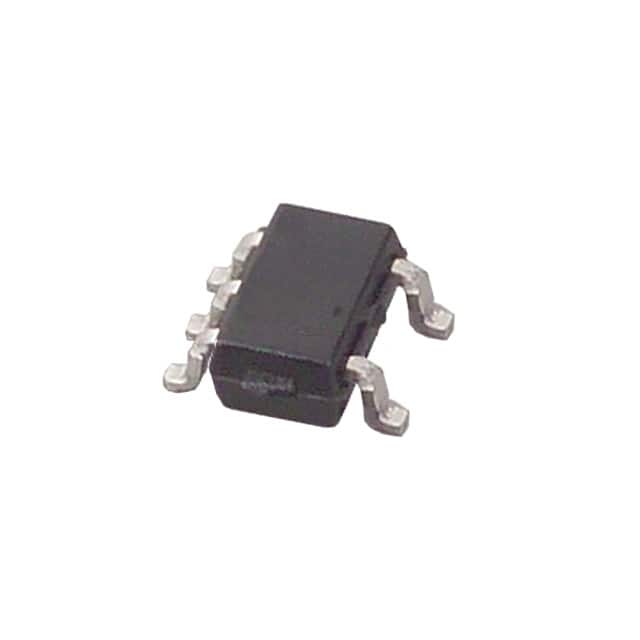
- Part No.:
- MAX9119EXK+TG24
- Manufacturer:
- Analog Devices Inc./Maxim Integrated
- Category:
- Comparators
- Package:
- -
- Datasheet:
-
 MAX9119EXK+TG24.pdf
- Description:
- INTEGRATED CIRCUIT
- Quantity:
- Payment:

- Shipping:

Inventory:4,451
Please send an inquiry. Send us your inquiry, and we will respond immediately.
Product details
Overview
MAX9119EXK+TG24 from Maxim Integrated is a nanopower, rail-to-rail input comparator without internal reference, housed in a 5-pin SC70 package. It operates from +1.6V to +5.5V, draws only 350nA supply current at 25°C, features Beyond-the-Rails™ inputs (VEE − 0.2V to VCC + 0.2V), and delivers CMOS push-pull output with ±5mA drive capability - ideal for 2-cell battery monitoring in portable medical instruments.
For engineers reviewing the MAX9119EXK+TG24 datasheet, MAX9119EXK+TG24 pinout, MAX9119EXK+TG24 application, or MAX9119EXK+TG24 equivalent, key selection criteria include ultra-low quiescent current, guaranteed operation down to 1.6V, input common-mode range extending beyond supply rails, rail-to-rail output swing under 5mA load, and absence of internal reference for flexible threshold design.
Technical Context
The MAX9119EXK+TG24 implements a break-before-make output stage that minimizes supply-current surges during switching, eliminating typical supply glitches. Its input stage supports differential operation across the full extended common-mode range and includes internal hysteresis (4mV) to prevent oscillation with slow or noisy inputs.
This device uses a dedicated push-pull output architecture - unlike open-drain variants (e.g., MAX9120) - enabling direct interfacing with CMOS logic without external pull-up resistors. It lacks an integrated voltage reference, requiring external threshold generation, distinguishing it functionally from the MAX9117/MAX9118 family members.
Key Specifications
| Parameter | Value and Actual Design Meaning |
|---|---|
| Supply Voltage Range | +1.6V to +5.5V - enables direct operation from single Li-ion or dual alkaline cells without regulation. |
| Supply Current | 350nA at +5V, +25°C - extends battery life in always-on telemetry sensors beyond 5 million hours per AA cell. |
| Input Common-Mode Range | VEE − 0.2V to VCC + 0.2V - allows sensing at ground or supply rail without level-shifting circuitry. |
| Output Type | CMOS push-pull - drives high/low actively; eliminates need for external pull-up and supports direct connection to downstream logic. |
| Output Drive Capability | ±5mA rail-to-rail swing - sustains full logic-level transitions into 5mA loads (e.g., LED indicators or gate drivers). |
| Input Offset Voltage | 1mV typical, 10mV max - ensures accurate threshold detection in precision battery voltage monitoring applications. |
| Propagation Delay | 14µs high-to-low, 40µs low-to-high at +5V - balances speed and power for sub-kHz event detection in wearables. |
Pinout & Package
MAX9119EXK+TG24 is packaged in a 5-pin SC70 (SOT-353) outline, measuring 2.0mm × 1.25mm × 0.9mm, with gull-wing leads and lead-free (Pb-free) finish per JEDEC J-STD-020.
| Pin/Terminal | Circuit Role | Design Meaning |
|---|---|---|
| 1 | OUT | CMOS push-pull output - sources/sinks up to ±5mA; swings rail-to-rail with no external components. |
| 2 | VEE | Negative supply terminal - tied to system ground in single-supply configurations; defines lower input/output voltage bound. |
| 3 | IN+ | Noninverting input - accepts signals up to VEE − 0.2V or VCC + 0.2V; used for threshold comparison against IN−. |
| 4 | NC | No internal connection - must be left floating or grounded; not bonded internally in SC70 package. |
| 5 | VCC | Positive supply terminal - powers internal circuitry; supports operation down to +1.6V for deep battery discharge tracking. |
Key Features
| Feature | Design Value |
|---|---|
| Beyond-the-Rails™ inputs | Enables direct sensing at ground or supply rail without clamping diodes or level shifters - reduces BOM count by one passive component. |
| 350nA supply current | Reduces average power to <1.8µW at 5V - permits multi-year operation on coin cells in remote sensor nodes. |
| Internal 4mV hysteresis | Suppresses chatter on slow-moving inputs (e.g., thermistor outputs), eliminating need for external positive feedback resistors. |
| Rail-to-rail push-pull output | Drives CMOS inputs directly without pull-up; avoids timing skew and leakage path issues associated with open-drain topologies. |
| No internal reference | Provides full flexibility in threshold setting - supports externally generated references, resistor dividers, or DAC-controlled trip points. |
Applications
| 2-Cell Battery Monitoring | Ultra-Low-Power Telemetry |
|---|---|
|
Use Scenario: Monitoring voltage decay across two series alkaline cells in a handheld diagnostic tool. IC Role / Device Role / Timing Role: Comparator detecting when cell stack drops below 2.4V cutoff threshold. Use Value: 350nA quiescent current enables >2.5 million hours of standby monitoring per AA cell pair. |
Use Scenario: Transmitting alert pulses from a soil moisture sensor powered by a CR2032 coin cell. IC Role / Device Role / Timing Role: Threshold detector triggering wake-up of microcontroller upon moisture threshold breach. Use Value: Push-pull output drives MCU interrupt pin directly - no pull-up required, reducing leakage and layout area. |
| Medical Wearable Sensor | Threshold Discriminator in PDAs |
|
Use Scenario: Detecting ECG signal amplitude exceedance in a patch-style cardiac monitor. IC Role / Device Role / Timing Role: Fast-response comparator with clean switching for analog envelope detection. Use Value: 4mV internal hysteresis prevents false triggers from baseline noise; 14µs tPD− ensures timely event capture. |
Use Scenario: Validating USB VBUS presence (4.75–5.25V) before enabling peripheral power in legacy PDA designs. IC Role / Device Role / Timing Role: Precision overvoltage/undervoltage discriminator with rail-compatible inputs. Use Value: Input range extending 200mV beyond rails allows direct connection to unregulated VBUS without attenuation. |
Equivalent & Alternatives
The following parts are listed as comparable options for similar comparator applications.
| Alternative Part | Technical Difference | Application Difference | Selection Advice |
|---|---|---|---|
| MAX9117EXK+TG24 | Includes 1.252V ±1.75% internal reference; 600nA supply current; same SC70-5 package. | Fixed-reference use cases (e.g., battery undervoltage lockout at 2.5V); requires no external resistor divider. | Select when reference stability and simplicity outweigh 250nA current penalty and fixed threshold constraint. |
| TLV3691IDCKR | 320nA supply current; 1.8V to 5.5V operation; rail-to-rail inputs; open-drain output; SOT-23-5 package. | Requires external pull-up; better suited for wired-OR bus interfaces or mixed-voltage logic translation. | Select for lowest possible current or open-drain compatibility; avoid when active drive or reference-free flexibility is required. |
Compared with MAX9117EXK+TG24, MAX9119EXK+TG24 trades internal reference for 250nA lower supply current and full threshold design freedom; versus TLV3691IDCKR, it offers push-pull output and tighter input offset but slightly higher current and no open-drain option.
Availability
MAX9119EXK+TG24 is available at Aetrix Electronics and suitable for 2-cell battery monitoring, ultra-low-power telemetry, and medical wearable sensor applications requiring stable component supply across long production lifecycles.
Supply support for MAX9119EXK+TG24 includes scheduled delivery planning, volume procurement assistance, BOM continuity management, traceable sourcing, and lifecycle availability coordination for OEM customers, industrial embedded developers, connected-device designers, and electronics production programs.
Manufacturer
Maxim Integrated (now part of Analog Devices) designs precision analog and mixed-signal ICs for power, sensing, and interface applications in industrial, medical, and portable systems.
The MAX9117–MAX9120 family was engineered specifically for nanopower, rail-compatible threshold detection in battery-constrained devices - emphasizing supply current minimization, extended input range, and glitch-free switching behavior.
FAQ
What is the operating supply voltage range for MAX9119EXK+TG24?
The MAX9119EXK+TG24 operates from +1.6V to +5.5V across the full temperature range (−40°C to +85°C). This wide range supports direct connection to unregulated battery sources such as single Li-ion (2.7V–4.2V) or dual alkaline (2.0V–3.0V fresh), enabling simplified power architecture in portable equipment.
Does MAX9119EXK+TG24 include an internal voltage reference?
No, MAX9119EXK+TG24 does not include an internal voltage reference. It belongs to the "without reference" variant of the MAX9117–MAX9120 family. Threshold voltages must be supplied externally via resistor dividers, DACs, or other reference sources - providing full design flexibility absent from the MAX9117/MAX9118 versions.
What is the output configuration of MAX9119EXK+TG24?
MAX9119EXK+TG24 features a CMOS push-pull output stage capable of sourcing and sinking up to ±5mA while maintaining rail-to-rail swing. Unlike open-drain variants (e.g., MAX9120), it requires no external pull-up resistor and can directly drive CMOS logic inputs, LEDs, or small capacitive loads without additional components.
How does the input common-mode range of MAX9119EXK+TG24 compare to standard comparators?
MAX9119EXK+TG24 supports a Beyond-the-Rails™ input common-mode range from VEE − 0.2V to VCC + 0.2V. This allows direct sensing at ground (VEE) or supply rail (VCC) without level-shifting circuitry - a key advantage over conventional comparators limited to the supply rails, especially in low-voltage battery monitoring.
What is the typical supply current of MAX9119EXK+TG24 at room temperature?
The typical supply current of MAX9119EXK+TG24 is 350nA at +5V and +25°C. Over temperature (−40°C to +85°C) and supply voltage (+1.6V to +5.5V), it remains ≤1.2µA - making it among the lowest-power comparators available for always-on, energy-harvested, or long-life battery-powered applications.
MAX9119EXK+TG24 Specifications
- Product attributes
- Attribute value
- Manufacturer:
- Analog Devices Inc./Maxim Integrated
- Package/Case:
- -
- Series:
- -
- Packaging:
- Tape & Reel (TR)
- Product Status:
- Obsolete
- Type:
- -
- Number of Elements:
- -
- Output Type:
- -
- Voltage - Supply, Single/Dual (±):
- -
- :
- -
- Voltage - Input Offset (Max):
- -
- Current - Input Bias (Max):
- -
- Current - Output (Typ):
- -
- Current - Quiescent (Max):
- -
- CMRR, PSRR (Typ):
- -
- Propagation Delay (Max):
- -
- Hysteresis:
- -
- Operating Temperature:
- -
- Grade:
- -
- Qualification:
- -
- :
- -
MAX9119EXK+TG24 FAQ
1.How can I place an order for MAX9119EXK+TG24 through Aetrix?
Please submit a Request for Quotation (RFQ) for MAX9119EXK+TG24 on Aetrix. Our sales agent will provide a competitive quotation and guide you through the order confirmation once you accept the terms.
2.Are the price and stock information for MAX9119EXK+TG24 reliable?
The price and inventory of MAX9119EXK+TG24 are updated periodically and may fluctuate due to market conditions. Stock and pricing data are typically refreshed every 24 hours. Quotation validity for MAX9119EXK+TG24 is usually 5 days.
3.What payment methods are accepted for MAX9119EXK+TG24?
We accept Wire Transfer, PayPal, Credit Card, Western Union, MoneyGram, and Escrow for MAX9119EXK+TG24 transactions.
Note: Certain payment methods may incur a processing fee.
4.How is shipping managed for MAX9119EXK+TG24?
MAX9119EXK+TG24 orders can be shipped via leading logistics carriers, including DHL, UPS, FedEx, TNT, or Registered Mail.
Once your MAX9119EXK+TG24 order is processed, you will receive an email with the shipment details and tracking number.
Note: Tracking information may take up to 24 hours to appear. Express delivery typically takes 3–5 business days.
5.How can I obtain technical support or documentation for MAX9119EXK+TG24?
For technical support, including MAX9119EXK+TG24 datasheets, pinout diagrams, or application guidance, please contact our engineering support team. They can provide detailed documentation and assistance for your MAX9119EXK+TG24 requirements.
6.How does Aetrix verify that MAX9119EXK+TG24 is sourced from the original manufacturer or authorized distributors?
All MAX9119EXK+TG24 products on Aetrix are procured from qualified distributors and authorized channels. Our dedicated quality assurance team conducts strict verification, including traceability checks and, if necessary, third-party testing. This ensures that MAX9119EXK+TG24 meets industry standards.
7.What is the process for return or replacement of MAX9119EXK+TG24?
All MAX9119EXK+TG24 units undergo pre-shipment inspection (PSI). If there is an issue with MAX9119EXK+TG24, returns or replacements are accepted under the following conditions:
1.Quantity discrepancies, incorrect items, or visible external defects (such as breakage or corrosion), acknowledged by Aetrix.
2.The issue is reported within 90 days of delivery.
3.The MAX9119EXK+TG24 part is unused and in its original packaging.
Return procedure for MAX9119EXK+TG24:
1.Submit a request within 90 days.
2.Obtain a Return Material Authorization (RMA) from Aetrix.
MAX9119EXK+TG24 Tags

-
LM2903DR
Texas Instruments
-
LM339DR
Texas Instruments
-
LM339PWR
Texas Instruments
-
LM393DT
STMicroelectronics
-
LM2901PWR
Texas Instruments
-
LM2903DT
STMicroelectronics
-
LM393DR
Texas Instruments
-
LM239DR
Texas Instruments
-
LM339APWR
Texas Instruments
-
LM2903P
Texas Instruments
-
LM393ADR
Texas Instruments
-
NCX2200GMAZ
NXP USA Inc.
Tech Hub

An engineering guide to LED driver operation, constant-current and constant-voltage outputs, linear and switching topologies, dimming, IC selection, calculations, replacement compatibility, and fault c…

Operational amplifier guide covering op amp basics, feedback, ideal vs real op amps, common configurations, buffer circuits, offset, bias current, gain-bandwidth, slew rate, rail-to-rail limits and sel…

Jumper cables guide covering safe connection order, red and black clamp placement, final ground connection, cable gauge, length, clamp quality, copper vs CCA cables, jump starter comparison and battery…

LDO regulator guide covering low dropout voltage, power dissipation, thermal design, PSRR, output noise, capacitor stability, adjustable LDO circuits, LDO vs buck converter and datasheet selection chec…

Conditional Access Module guide covering CAM meaning, CI/CI+ interface, smart card authorization, DVB security workflow, TV and set-top box compatibility, internal electronics, ESD protection, connecto…

Guide to electronic component obsolescence covering EOL risk, PCN/PDN notices, last-time buy planning, replacement options, form-fit-function validation, counterfeit risk and BOM lifecycle management.

18650 battery guide covering lithium-ion cell basics, 3.6V/3.7V voltage, 4.2V charging, mAh and Wh capacity, protected cells, chargers, BMS, series-parallel packs, holders, welding and sourcing checks.…

Hall effect sensor guide covering working principle, linear and digital sensors, Arduino circuits, current sensing, speed detection, automotive applications, A3144 examples, signal filtering and datash…

Product Change Notification guide for electronic components, covering PCN meaning, PCN vs PDN/EOL, common change types, risk levels, form-fit-function review, engineering validation, BOM control, LTB/L…

A practical guide to blend door actuators, covering HVAC function, symptoms, location, AC and heater issues, reset and calibration, replacement cost, electrical diagnosis, compatibility checks, and rep…


