
 My Inquiry
 My Account


Analog Devices Inc./Maxim Integrated MAX9224ETI+
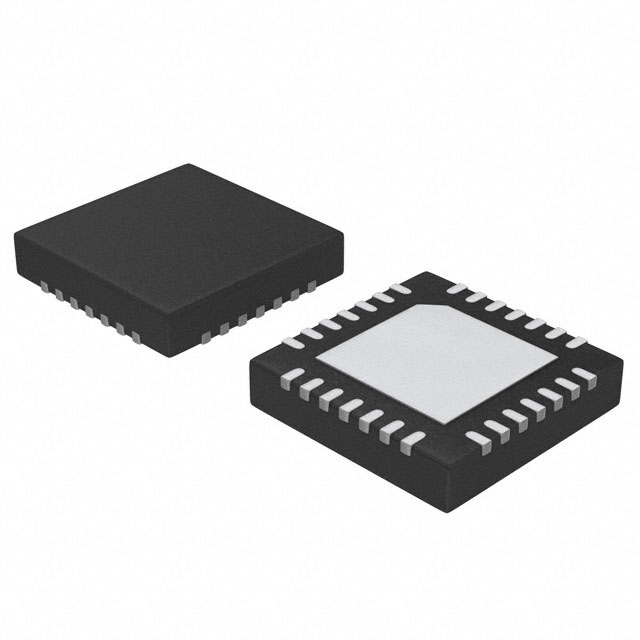
- Part No.:
- MAX9224ETI+
- Manufacturer:
- Analog Devices Inc./Maxim Integrated
- Category:
- Serializers, Deserializers
- Package:
- 28-WFQFN Exposed Pad
- Datasheet:
-
 MAX9224ETI+.pdf
- Description:
- IC DESERIALIZER LP 28-TQFN
- Quantity:
- Payment:

- Shipping:

Inventory:9,775
Please send an inquiry. Send us your inquiry, and we will respond immediately.
Product details
Overview
MAX9224ETI+ from Maxim Integrated is a 22-bit deserializer IC for high-speed serial links in mobile display interfaces, operating at 5MHz–10MHz parallel clock rates (110–220Mbps net data rate), supporting 18-bit RGB + VSYNC/HSYNC/two control signals, with ±15kV HBM ESD protection and 0.08–3µA power-down current. It is used in cell phone LCD modules to reduce hinge wiring.
For engineers reviewing the MAX9224ETI+ datasheet, MAX9224ETI+ pinout, MAX9224ETI+ application, or MAX9224ETI+ equivalent, key selection criteria include LCDS differential input compatibility, VDDO-level programmable output swing (+1.71V to +3.465V), -40°C to +85°C operation, 28-pin TQFN-EP package, and handshaking-based word-boundary recovery after signal interruption.
Technical Context
The MAX9224ETI+ recovers parallel clock (PCLKOUT) and 22-bit data (DOUT[21:0]) from a multilevel Low-Current Differential Signaling (LCDS) serial stream received on SDI+/SDI−. It implements automatic word-boundary detection using boundary bits (OH) appended by the MAX9223 serializer and performs handshaking to re-synchronize after link errors.
It features dual-supply architecture: +2.375V to +3.465V core supply (VDD) and independent +1.71V to +3.465V output buffer supply (VDDO), enabling direct interfacing with 1.8V/2.5V/3.3V logic. Ground shift tolerance is limited to ±0.2V between MAX9223 and MAX9224 grounds.
Key Specifications
| Parameter | Value and Actual Design Meaning |
|---|---|
| Serial Interface | LCDS (Low-Current Differential Signaling) - single-pair, 110–220Mbps, low-EMI, ±15kV HBM protected |
| Parallel Data Width | 22-bit DOUT[21:0] - includes 18-bit RGB, VSYNC, HSYNC, and two control signals |
| Input Clock Range | 5MHz–10MHz PCLKIN (on serializer); recovered PCLKOUT matches input frequency with DLL lock |
| Power-Down Current | 0.08–3µA - enables ultra-low-power mode when PWRDN is asserted via MAX9223 |
| VDDO Output Supply | +1.71V to +3.465V - sets logic-high level of DOUT[21:0], allowing direct interface to 1.8V/2.5V/3.3V receivers |
| Operating Temperature | -40°C to +85°C - qualified for extended industrial/mobile environments |
| Differential Input Threshold | 400µA - defines minimum detectable LCDS current swing for reliable data recovery |
Pinout & Package
The MAX9224ETI+ is housed in a 28-pin Thin Quad Flat No-lead Exposed Paddle (TQFN-EP) package measuring 4mm × 4mm × 0.8mm, with thermal pad (EP) requiring solder connection to PCB ground for optimal thermal performance and EMI control.
| Pin/Terminal | Circuit Role | Design Meaning |
|---|---|---|
| 1, 7–8, 10–28 | DOUT21–DOUT0 | 22 single-ended CMOS outputs - drive parallel data valid on rising edge of PCLKOUT; voltage levels set by VDDO |
| 2 | VDDO | Output buffer supply - independently configurable from core VDD to match downstream logic voltage |
| 3 | GND | Analog/digital ground reference - must be connected to system ground plane with low-inductance path |
| 4–5 | SDI+, SDI− | LCDS differential inputs - receive serialized data stream; require 110Ω controlled-impedance trace routing |
| 6 | VDD | Core supply - powers internal logic, DLL, and input receivers; bypass with 0.1µF + 0.01µF ceramics |
| 9 | PCLKOUT | Recovered parallel clock output - synchronous to DOUT[21:0]; used to latch data in downstream LCD controller |
| EP | Exposed Paddle | Thermal and electrical ground - must be soldered to PCB ground plane for thermal dissipation and noise immunity |
Key Features
| Feature | Design Value |
|---|---|
| LCDS interface | Single-differential-pair transmission reduces EMI and eliminates separate clock routing vs. parallel buses |
| Automatic word-boundary recovery | Uses OH boundary bits to re-synchronize after cable disconnect or noise-induced bit slip without host intervention |
| VDDO-level programmable outputs | Enables direct connection to mixed-voltage systems (e.g., 1.8V FPGA I/O or 3.3V display controller) without level shifters |
| ±15kV HBM ESD protection | Protects LCDS I/O pins against electrostatic discharge during handling and flex-cable mating/unmating |
| Ground-shift tolerance | Operates reliably with up to ±0.2V ground potential difference between serializer and deserializer PCB sections |
Applications
| Cell Phone LCD Module | Digital Camera Image Sensor Interface |
|---|---|
Use Scenario: Transmitting RGB video data across a mechanical hinge between baseband processor and LCD controller in clamshell or slider phones. IC Role / Device Role / Timing Role: Deserializes LCDS stream into 22-bit parallel pixel data and recovers pixel clock (PCLKOUT) for timing-critical LCD driver latching. Use Value: Reduces 24+ wire flex cable to 2-wire differential pair, improving reliability and reducing cost and assembly complexity. | Use Scenario: Connecting image sensor output to baseband processor or ISP in compact digital cameras with space-constrained interconnect. IC Role / Device Role / Timing Role: Receives serialized sensor pixel data and delivers synchronized parallel output to image processing pipeline with minimal skew. Use Value: Enables high-fidelity 18-bit RGB capture at QCIF/QVGA resolution while maintaining low EMI in proximity to RF sections. |
| Portable Media Player Display | Automotive Infotainment Display Link |
Use Scenario: Driving small-form-factor TFT displays in battery-powered media players where power efficiency and EMI are critical. IC Role / Device Role / Timing Role: Converts LCDS serial stream into parallel RGB+sync signals with ultra-low power-down current (≤3µA) for display sleep modes. Use Value: Extends battery life by minimizing static current during display idle periods without sacrificing wake-up latency. | Use Scenario: Interfacing head-unit graphics processor to dashboard display module through vibration-prone harnesses. IC Role / Device Role / Timing Role: Provides robust serial link with automatic re-synchronization to tolerate intermittent contact loss in connectors or flex cables. Use Value: Eliminates display artifacts caused by transient signal interruptions, meeting automotive functional safety expectations. |
Equivalent & Alternatives
The following parts are listed as comparable options for similar serializer/deserializer applications.
| Alternative Part | Technical Difference | Application Difference | Selection Advice |
|---|---|---|---|
| MAX9222ETI+ | 16-bit deserializer (vs. 22-bit); same LCDS interface, package, and VDDO range; lacks handshaking capability | Suitable only for reduced-color-depth or non-RGB interfaces (e.g., monochrome or 16-bit RGB565) | Select MAX9222ETI+ only if 22-bit data path is unnecessary and handshaking is not required for link robustness. |
| DS90CR288AMTDX/NOPB | 28-bit LVDS deserializer; requires separate clock line; no VDDO flexibility; higher 24mA active supply current | Designed for fixed-layout industrial panels with LVDS infrastructure; incompatible with LCDS physical layer | Choose DS90CR288AMTDX/NOPB only when migrating from existing LVDS designs and board layout cannot accommodate LCDS single-pair routing. |
Compared with MAX9222ETI+, the MAX9224ETI+ supports full 22-bit RGB+sync data and fault-tolerant handshaking; compared with DS90CR288AMTDX/NOPB, it offers lower EMI, lower power, and integrated clock recovery-but requires redesigning the serial interface to LCDS.
Availability
MAX9224ETI+ is available at Aetrix Electronics and suitable for cell phone LCD modules, digital camera sensor interfaces, portable media player displays, and automotive infotainment display links requiring stable component supply and long-term production support.
Supply support for MAX9224ETI+ includes scheduled delivery planning, volume procurement assistance, BOM continuity management, traceable sourcing, and lifecycle availability coordination for OEM customers, industrial embedded developers, connected-device designers, and electronics production programs.
Manufacturer
Maxim Integrated (now part of Analog Devices) designs precision analog, mixed-signal, and high-speed interface ICs for demanding industrial, automotive, and consumer applications.
The MAX9224ETI+ belongs to Maxim's high-speed serializer/deserializer chipset family, engineered specifically for low-EMI, low-power, hinge-crossing video interfaces in mobile and portable electronics.
FAQ
What is the function of the VDDO pin on the MAX9224ETI+?
The VDDO pin on the MAX9224ETI+ supplies the output buffer stage exclusively, setting the high-level voltage of all 22 DOUT[21:0] signals. It accepts +1.71V to +3.465V, enabling direct interfacing with 1.8V, 2.5V, or 3.3V logic without external level shifters. This separation from core VDD allows independent optimization of output drive strength and noise margin in mixed-voltage systems.
Does the MAX9224ETI+ require an external clock source?
No, the MAX9224ETI+ does not require an external clock source. It recovers the parallel clock (PCLKOUT) directly from the incoming LCDS serial stream using an internal DLL. The recovered PCLKOUT is synchronous to the original PCLKIN used by the MAX9223 serializer and is provided as a buffered output for downstream timing capture.
How does the MAX9224ETI+ handle signal interruptions or bit slips?
The MAX9224ETI+ uses boundary bits (OH) appended by the MAX9223 serializer to detect word-boundary misalignment. Upon detecting a mismatch, it pulls the LCDS link high, triggering the MAX9223 to power down for 1.0µs and then restart. This handshaking sequence re-establishes synchronization automatically-no host firmware or configuration is needed to recover from transient cable disconnects or EMI events.
What is the maximum allowable ground potential difference between MAX9224ETI+ and its paired MAX9223ETI+?
The MAX9224ETI+ and its paired MAX9223ETI+ must maintain a ground potential difference within ±0.2V for reliable operation. This specification ensures proper common-mode voltage tracking across the LCDS interface and prevents input receiver saturation or false data interpretation due to ground loop offset.
Can the MAX9224ETI+ operate without the MAX9223ETI+ serializer?
No, the MAX9224ETI+ is designed exclusively as the deserializer partner to the MAX9223ETI+ serializer and relies on its specific LCDS encoding scheme, boundary-bit protocol, and handshaking behavior. It does not support generic LVDS, RSDS, or other differential standards, nor does it accept arbitrary serial streams-it requires the exact framing and timing generated by the MAX9223ETI+.
MAX9224ETI+ Specifications
- Product attributes
- Attribute value
- Manufacturer:
- Analog Devices Inc./Maxim Integrated
- Series:
- -
- Package/Case:
- 28-WFQFN Exposed Pad
- Packaging:
- Bulk
- Product Status:
- Active
- Function:
- Deserializer
- Data Rate:
- 220Mbps
- Input Type:
- LCDS
- Output Type:
- LVCMOS
- Number of Inputs:
- 1
- Number of Outputs:
- 22
- Voltage - Supply:
- 2.375V ~ 3.465V
- Operating Temperature:
- -40°C ~ 85°C (TA)
- Grade:
- -
- Qualification:
- -
- Mounting Type:
- Surface Mount
- Supplier Device Package:
- 28-TQFN (5x5)
MAX9224ETI+ FAQ
1.How can I place an order for MAX9224ETI+ through Aetrix?
Please submit a Request for Quotation (RFQ) for MAX9224ETI+ on Aetrix. Our sales agent will provide a competitive quotation and guide you through the order confirmation once you accept the terms.
2.Are the price and stock information for MAX9224ETI+ reliable?
The price and inventory of MAX9224ETI+ are updated periodically and may fluctuate due to market conditions. Stock and pricing data are typically refreshed every 24 hours. Quotation validity for MAX9224ETI+ is usually 5 days.
3.What payment methods are accepted for MAX9224ETI+?
We accept Wire Transfer, PayPal, Credit Card, Western Union, MoneyGram, and Escrow for MAX9224ETI+ transactions.
Note: Certain payment methods may incur a processing fee.
4.How is shipping managed for MAX9224ETI+?
MAX9224ETI+ orders can be shipped via leading logistics carriers, including DHL, UPS, FedEx, TNT, or Registered Mail.
Once your MAX9224ETI+ order is processed, you will receive an email with the shipment details and tracking number.
Note: Tracking information may take up to 24 hours to appear. Express delivery typically takes 3–5 business days.
5.How can I obtain technical support or documentation for MAX9224ETI+?
For technical support, including MAX9224ETI+ datasheets, pinout diagrams, or application guidance, please contact our engineering support team. They can provide detailed documentation and assistance for your MAX9224ETI+ requirements.
6.How does Aetrix verify that MAX9224ETI+ is sourced from the original manufacturer or authorized distributors?
All MAX9224ETI+ products on Aetrix are procured from qualified distributors and authorized channels. Our dedicated quality assurance team conducts strict verification, including traceability checks and, if necessary, third-party testing. This ensures that MAX9224ETI+ meets industry standards.
7.What is the process for return or replacement of MAX9224ETI+?
All MAX9224ETI+ units undergo pre-shipment inspection (PSI). If there is an issue with MAX9224ETI+, returns or replacements are accepted under the following conditions:
1.Quantity discrepancies, incorrect items, or visible external defects (such as breakage or corrosion), acknowledged by Aetrix.
2.The issue is reported within 90 days of delivery.
3.The MAX9224ETI+ part is unused and in its original packaging.
Return procedure for MAX9224ETI+:
1.Submit a request within 90 days.
2.Obtain a Return Material Authorization (RMA) from Aetrix.
MAX9224ETI+ Tags
-
SN65HVS880PWPR
Texas Instruments
-
SN65HVS882PWPR
Texas Instruments
-
FIN3386MTDX
onsemi
-
FIN3385MTDX
onsemi
-
SN65LV1023ARHBR
Texas Instruments
-
SN65LV1023ADBR
Texas Instruments
-
SN65LV1224BDBR
Texas Instruments
-
SN65LVDS93ADGGR
Texas Instruments
-
SN65LVDS93DGGR
Texas Instruments
-
TDES954RGZT
Texas Instruments
-
SN65LV1224BRHBT
Texas Instruments
-
DS90UB914QSQE/NOPB
Texas Instruments
Tech Hub

A practical engineering guide to 3.3V and 5V logic compatibility, input thresholds, resistor dividers, translator ICs, MOSFET level shifting, I2C pull-ups, timing limits and power-sequencing risks.

The 74HC595 uses push-pull logic outputs, while the TPIC6B595 uses 50 V open-drain DMOS sinks for higher-power loads. This guide compares timing, current limits, 3.3 V interfacing, load wiring, thermal…

The 74HC595 converts serial data into eight stable parallel outputs. This guide covers pin functions, shift and storage timing, OE and MR behavior, drive-current limits, cascading, voltage compatibilit…

A technical comparison of level-sensitive latches and edge-triggered flip-flops, covering timing windows, setup and hold limits, master–slave operation, time borrowing, race-through, HDL inference and…

A D latch stores one bit while Enable controls when data can pass. This reference covers gate-level operation, truth tables, transparency, setup and hold timing, LE versus OE, common ICs and practical …

An SR latch stores one bit through cross-coupled feedback. This engineering reference covers NOR and NAND implementations, truth tables, forbidden-state recovery, gated operation, switch debouncing, fa…

Latch circuits retain one bit through feedback. This technical reference covers SR and D latches, truth tables, transparency, timing limits, latch-versus-flip-flop behavior, applications and common log…

An engineering guide to LED driver operation, constant-current and constant-voltage outputs, linear and switching topologies, dimming, IC selection, calculations, replacement compatibility, and fault c…

Operational amplifier guide covering op amp basics, feedback, ideal vs real op amps, common configurations, buffer circuits, offset, bias current, gain-bandwidth, slew rate, rail-to-rail limits and sel…

Jumper cables guide covering safe connection order, red and black clamp placement, final ground connection, cable gauge, length, clamp quality, copper vs CCA cables, jump starter comparison and battery…


