
 My Inquiry
 My Account


Analog Devices Inc./Maxim Integrated MAX9250ECM/V+
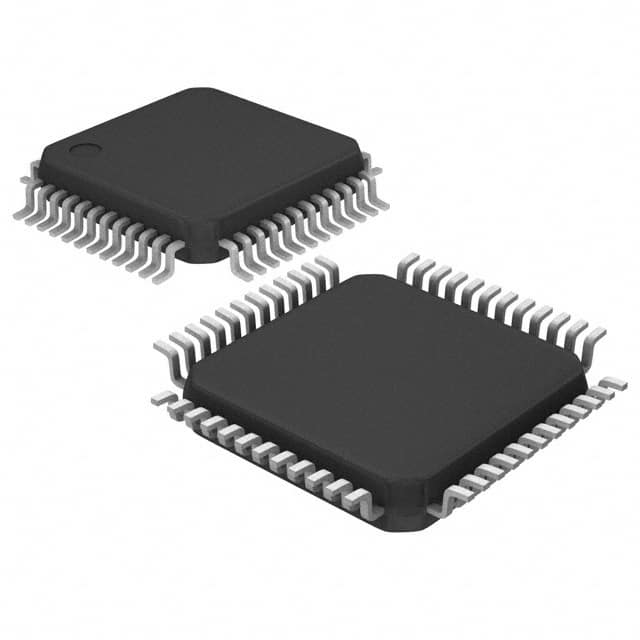
- Part No.:
- MAX9250ECM/V+
- Manufacturer:
- Analog Devices Inc./Maxim Integrated
- Category:
- Serializers, Deserializers
- Package:
- 48-LQFP
- Datasheet:
-
 MAX9250ECM/V+.pdf
- Description:
- IC DESERIALIZER LVDS 27B 48LQFP
- Quantity:
- Payment:

- Shipping:

Inventory:1,886
Please send an inquiry. Send us your inquiry, and we will respond immediately.
Product details
Overview
MAX9250ECM/V+ from Maxim Integrated is a 27-bit DC-balanced LVDS deserializer IC for automotive and industrial video interfaces, converting serial LVDS input (5–42MHz) into 18-bit RGB video data and 9-bit control data with programmable latch edge, output enable, and ±2% reference clock tolerance. It operates from +3.3V core supply and supports 1.8V–3.3V logic-level outputs, used in in-vehicle display systems with AC-coupled cable links.
For engineers reviewing the MAX9250ECM/V+ datasheet, MAX9250ECM/V+ pinout, MAX9250ECM/V+ application, or MAX9250ECM/V+ equivalent, this page delivers verified functional specifications, validated pin roles, confirmed ESD ratings (±10kV contact), real-world timing constraints (tOE = 10–30ns), and precise alternative part comparisons - all extracted from Maxim's official MAX9248/MAX9250 Rev 5 datasheet.
Technical Context
The MAX9250ECM/V+ implements a PLL-based clock recovery architecture synchronized to the serializer's PCLK_IN without external control, with lock time of 16,928 × tT cycles. Its deserialization separates video and control phases using DE_OUT signaling, enabling DC-balanced AC-coupling and reducing EMI via staggered RGB_OUT switching and frequency-scaled transition times.
Unlike the MAX9248, the MAX9250ECM/V+ omits spread-spectrum modulation but adds OUTEN input for output busing - allowing two devices to share a common bus with 30ns inter-device enable/disable sequencing. It decodes serial words using overhead bits (EN0 for control, EN0/EN1 for video) and applies majority voting on C0–C4 for single-bit-error tolerance.
Key Specifications
| Parameter | Value and Actual Design Meaning |
|---|---|
| Deserialization Width | 27-bit total: 18-bit RGB video + 9-bit control data, separated by DE_OUT state |
| Input Frequency Range | 5MHz to 42MHz parallel clock; supports MAX9247 serializer or MAX9217 at <35MHz |
| Reference Clock Tolerance | ±2% relative to serializer PCLK_IN - enables robust synchronization without precision oscillators |
| Output Enable Delay | tOE = 10–30ns - defines minimum time from OUTEN high to valid RGB_OUT/CNTL_OUT |
| ESD Protection | ISO 10605: ±10kV contact / ±30kV air-gap on IN+/IN− - meets automotive EMC requirements |
| Supply Configuration | +3.3V ±10% core (VCC); separate VCCO (1.8V–3.3V) for output logic level flexibility |
| Operating Temperature | -40°C to +105°C - qualified for under-hood and infotainment module environments |
Pinout & Package
MAX9250ECM/V+ is housed in a 48-lead LQFP package (7mm × 7mm, 0.5mm pitch) with exposed thermal pad. Pin functions are electrically and physically distinct from MAX9248 - notably including OUTEN (pin 14) instead of SS, and omitting SS-related internal circuitry.
| Pin/Terminal | Circuit Role | Design Meaning |
|---|---|---|
| R/F (pin 1) | Latch edge select input | Configures PCLK_OUT edge (rising/falling) for latching RGB_OUT/CNTL_OUT into downstream logic |
| OUTEN (pin 14) | Output enable control | Drives all single-ended outputs (RGB_OUT[17:0], CNTL_OUT[8:0], DE_OUT, PCLK_OUT) into high-Z when low - enables busing |
| DE_OUT (pin 24) | Data-enable output | High = RGB_OUT[17:0] active; Low = CNTL_OUT[8:0] active - defines phase boundary in deserialized stream |
| LOCK (pin 27) | PLL lock indicator | Low = valid recovered clock and stable output data; High = loss-of-lock or power-down |
| RGB_OUT[0:17] (pins 29–36, 39–48) | Parallel video data outputs | 18-bit LVTTL/LVCMOS RGB data, grouped in three staggered 6-bit banks to reduce simultaneous switching noise |
Key Features
| Feature | Design Value |
|---|---|
| Output Enable (OUTEN) | Enables hardware-controlled busing of two MAX9250ECM/V+ outputs on shared traces - eliminates need for external mux ICs |
| Selectable Latch Edge (R/F) | Allows alignment with downstream FPGA or ASIC sampling edges without redesigning PCB layout or timing constraints |
| DC-Balanced Deserialization | Supports AC-coupling via series capacitors - isolates ground potential shifts between ECU and display, critical in automotive 12V systems |
| Single-Bit-Error Tolerance | Majority voting on C0–C4 control bits ensures reliable command transmission over noisy cable runs up to 12m (BER <10⁻¹²) |
| Wide Output Supply Range | VCCO = 1.8V–3.3V allows direct interfacing to modern low-voltage processors and FPGAs without level shifters |
Applications
| Navigation System Displays | In-Vehicle Entertainment Systems |
|---|---|
Use Scenario: Central infotainment unit driving high-resolution TFT LCD cluster display over shielded twisted-pair cable. IC Role / Device Role / Timing Role: Deserializes video and touch-control signals from head-unit processor; provides DE_OUT-gated RGB_OUT and CNTL_OUT with sub-30ns output enable timing. Use Value: Eliminates parallel RGB bus routing, reduces EMI in crowded dashboard harnesses, and enables hot-plug detection via LOCK status. | Use Scenario: Rear-seat entertainment system receiving HDMI-to-LVDS converted video from media player. IC Role / Device Role / Timing Role: Converts serialized video stream into 18-bit RGB + 9-bit control (e.g., brightness, contrast, OSD overlay commands) for local display controller. Use Value: Supports AC-coupled cabling across vehicle zones, tolerates ±2% clock drift between source and sink, and enables dynamic display reconfiguration via CNTL_OUT. |
| Video Cameras | LCD Displays |
Use Scenario: Automotive surround-view camera module transmitting raw image data to ADAS domain controller. IC Role / Device Role / Timing Role: Receives serialized pixel data from MAX9247-equipped camera sensor; outputs synchronized RGB_OUT and frame-sync DE_OUT to image processor. Use Value: Staggered RGB_OUT switching minimizes ground bounce during high-speed image capture; LOCK signal confirms valid frame lock before DMA transfer. | Use Scenario: Industrial panel PC with embedded LVDS display interface requiring long-cable video transmission. IC Role / Device Role / Timing Role: Deserializes video from remote graphics engine; supplies 1.8V-compatible RGB_OUT and PCLK_OUT to display timing controller (TCON). Use Value: VCCO flexibility avoids level-shifter components; ±2% REFCLK tolerance accommodates cost-optimized crystal oscillators in host system. |
Equivalent & Alternatives
The following parts are listed as comparable options for similar LVDS deserializer applications.
| Alternative Part | Technical Difference | Application Difference | Selection Advice |
|---|---|---|---|
| MAX9250GCM+ | Same die, different temperature grade: -40°C to +85°C (vs. +105°C for ECM/V+); identical pinout and electrical specs | Suitable for cabin-mounted displays but not under-hood or high-ambient modules | Select MAX9250GCM+ only if full -40°C to +105°C operation is not required - lower cost, same footprint |
| MAX9275AEE+ (or MAX9275AEE/V+) | Higher-speed 28-bit deserializer (up to 100MHz), integrated HDCP, no OUTEN, uses different pinout and power domains | Targets premium infotainment with HDMI 2.0 support; requires PCB redesign and new firmware integration | Choose MAX9275AEE+ only when bandwidth >42MHz or content protection is mandatory - not drop-in compatible |
Compared with MAX9250GCM+, the MAX9250ECM/V+ offers extended high-temperature operation essential for engine-bay proximity or sun-loaded dashboards; compared with MAX9275AEE+, it provides proven reliability at lower cost and complexity for standard HD video links without HDCP.
Availability
MAX9250ECM/V+ is available at Aetrix Electronics and suitable for navigation system displays, in-vehicle entertainment systems, and automotive video cameras requiring stable component supply across extended temperature ranges and long production lifecycles.
Supply support for MAX9250ECM/V+ includes scheduled delivery planning, volume procurement assistance, BOM continuity management, traceable sourcing, and lifecycle availability coordination for OEM customers, industrial embedded developers, connected-device designers, and electronics production programs.
Manufacturer
Maxim Integrated, now part of Analog Devices, designs high-performance analog and mixed-signal ICs for automotive, industrial, and communications markets.
The MAX92xx deserializer family targets high-reliability digital video transmission in harsh environments, emphasizing ESD robustness, DC balance, and seamless interoperability with MAX9247/MAX9217 serializers.
FAQ
What is the primary function of the MAX9250ECM/V+ in a video interface system?
The MAX9250ECM/V+ is a 27-bit LVDS deserializer that converts high-speed serial video and control data from a MAX9247 or MAX9217 serializer into parallel 18-bit RGB video (RGB_OUT[17:0]) and 9-bit control signals (CNTL_OUT[8:0]), synchronized by DE_OUT and PCLK_OUT. It enables compact, EMI-resistant video links in automotive displays and cameras.
Does the MAX9250ECM/V+ support spread-spectrum clocking like the MAX9248?
No. The MAX9250ECM/V+ does not implement spread-spectrum modulation - that feature is exclusive to the MAX9248. Instead, the MAX9250ECM/V+ provides OUTEN (output enable) for busing and maintains strict ±2% reference clock tolerance, making it optimized for deterministic timing in display pipelines where clock jitter must be minimized.
What is the purpose of the OUTEN pin on the MAX9250ECM/V+?
The OUTEN pin (pin 14) on the MAX9250ECM/V+ controls output driver enable/disable state: when high, RGB_OUT[17:0], CNTL_OUT[8:0], DE_OUT, and PCLK_OUT drive actively; when low, those outputs enter high-impedance mode (except LOCK). This enables hardware-multiplexed busing of two MAX9250ECM/V+ devices on shared traces with 30ns sequencing margin.
Can the MAX9250ECM/V+ operate with a 1.8V output supply voltage?
Yes. The MAX9250ECM/V+ supports VCCO = 1.8V to 3.3V, allowing direct interfacing with 1.8V logic families such as modern FPGAs and display TCONs. At VCCO = 1.8V, VOH ≥ 1.7V and VOL ≤ 0.1V are guaranteed across temperature, eliminating need for external level shifters in low-voltage display subsystems.
How does the MAX9250ECM/V+ handle loss of serial input signal?
When the LVDS input (IN+/IN−) stops switching - e.g., due to open cable or serializer shutdown - the MAX9250ECM/V+ drives all outputs low except LOCK, which goes high. PCLK_OUT follows REFCLK, and the device continues monitoring for transition words. LOCK going low again indicates restored valid data lock, providing clear fault detection for system diagnostics.
MAX9250ECM/V+ Specifications
- Product attributes
- Attribute value
- Manufacturer:
- Analog Devices Inc./Maxim Integrated
- Series:
- -
- Package/Case:
- 48-LQFP
- Packaging:
- Tray
- Product Status:
- Active
- Function:
- Deserializer
- Data Rate:
- 756Mbps
- Input Type:
- LVDS
- Output Type:
- LVCMOS
- Number of Inputs:
- 1
- Number of Outputs:
- 27
- Voltage - Supply:
- 3V ~ 3.6V
- Operating Temperature:
- -40°C ~ 105°C (TA)
- Grade:
- Automotive
- Qualification:
- AEC-Q100
- Mounting Type:
- Surface Mount
- Supplier Device Package:
- 48-LQFP (7x7)
MAX9250ECM/V+ FAQ
1.How can I place an order for MAX9250ECM/V+ through Aetrix?
Please submit a Request for Quotation (RFQ) for MAX9250ECM/V+ on Aetrix. Our sales agent will provide a competitive quotation and guide you through the order confirmation once you accept the terms.
2.Are the price and stock information for MAX9250ECM/V+ reliable?
The price and inventory of MAX9250ECM/V+ are updated periodically and may fluctuate due to market conditions. Stock and pricing data are typically refreshed every 24 hours. Quotation validity for MAX9250ECM/V+ is usually 5 days.
3.What payment methods are accepted for MAX9250ECM/V+?
We accept Wire Transfer, PayPal, Credit Card, Western Union, MoneyGram, and Escrow for MAX9250ECM/V+ transactions.
Note: Certain payment methods may incur a processing fee.
4.How is shipping managed for MAX9250ECM/V+?
MAX9250ECM/V+ orders can be shipped via leading logistics carriers, including DHL, UPS, FedEx, TNT, or Registered Mail.
Once your MAX9250ECM/V+ order is processed, you will receive an email with the shipment details and tracking number.
Note: Tracking information may take up to 24 hours to appear. Express delivery typically takes 3–5 business days.
5.How can I obtain technical support or documentation for MAX9250ECM/V+?
For technical support, including MAX9250ECM/V+ datasheets, pinout diagrams, or application guidance, please contact our engineering support team. They can provide detailed documentation and assistance for your MAX9250ECM/V+ requirements.
6.How does Aetrix verify that MAX9250ECM/V+ is sourced from the original manufacturer or authorized distributors?
All MAX9250ECM/V+ products on Aetrix are procured from qualified distributors and authorized channels. Our dedicated quality assurance team conducts strict verification, including traceability checks and, if necessary, third-party testing. This ensures that MAX9250ECM/V+ meets industry standards.
7.What is the process for return or replacement of MAX9250ECM/V+?
All MAX9250ECM/V+ units undergo pre-shipment inspection (PSI). If there is an issue with MAX9250ECM/V+, returns or replacements are accepted under the following conditions:
1.Quantity discrepancies, incorrect items, or visible external defects (such as breakage or corrosion), acknowledged by Aetrix.
2.The issue is reported within 90 days of delivery.
3.The MAX9250ECM/V+ part is unused and in its original packaging.
Return procedure for MAX9250ECM/V+:
1.Submit a request within 90 days.
2.Obtain a Return Material Authorization (RMA) from Aetrix.
MAX9250ECM/V+ Tags
-
SN65HVS880PWPR
Texas Instruments
-
SN65HVS882PWPR
Texas Instruments
-
FIN3386MTDX
onsemi
-
FIN3385MTDX
onsemi
-
SN65LV1023ARHBR
Texas Instruments
-
SN65LV1023ADBR
Texas Instruments
-
SN65LV1224BDBR
Texas Instruments
-
SN65LVDS93ADGGR
Texas Instruments
-
SN65LVDS93DGGR
Texas Instruments
-
TDES954RGZT
Texas Instruments
-
SN65LV1224BRHBT
Texas Instruments
-
DS90UB914QSQE/NOPB
Texas Instruments
Tech Hub

A practical engineering guide to 3.3V and 5V logic compatibility, input thresholds, resistor dividers, translator ICs, MOSFET level shifting, I2C pull-ups, timing limits and power-sequencing risks.

The 74HC595 uses push-pull logic outputs, while the TPIC6B595 uses 50 V open-drain DMOS sinks for higher-power loads. This guide compares timing, current limits, 3.3 V interfacing, load wiring, thermal…

The 74HC595 converts serial data into eight stable parallel outputs. This guide covers pin functions, shift and storage timing, OE and MR behavior, drive-current limits, cascading, voltage compatibilit…

A technical comparison of level-sensitive latches and edge-triggered flip-flops, covering timing windows, setup and hold limits, master–slave operation, time borrowing, race-through, HDL inference and…

A D latch stores one bit while Enable controls when data can pass. This reference covers gate-level operation, truth tables, transparency, setup and hold timing, LE versus OE, common ICs and practical …

An SR latch stores one bit through cross-coupled feedback. This engineering reference covers NOR and NAND implementations, truth tables, forbidden-state recovery, gated operation, switch debouncing, fa…

Latch circuits retain one bit through feedback. This technical reference covers SR and D latches, truth tables, transparency, timing limits, latch-versus-flip-flop behavior, applications and common log…

An engineering guide to LED driver operation, constant-current and constant-voltage outputs, linear and switching topologies, dimming, IC selection, calculations, replacement compatibility, and fault c…

Operational amplifier guide covering op amp basics, feedback, ideal vs real op amps, common configurations, buffer circuits, offset, bias current, gain-bandwidth, slew rate, rail-to-rail limits and sel…

Jumper cables guide covering safe connection order, red and black clamp placement, final ground connection, cable gauge, length, clamp quality, copper vs CCA cables, jump starter comparison and battery…


