
 My Inquiry
 My Account


Analog Devices Inc./Maxim Integrated MAX931CSA-T
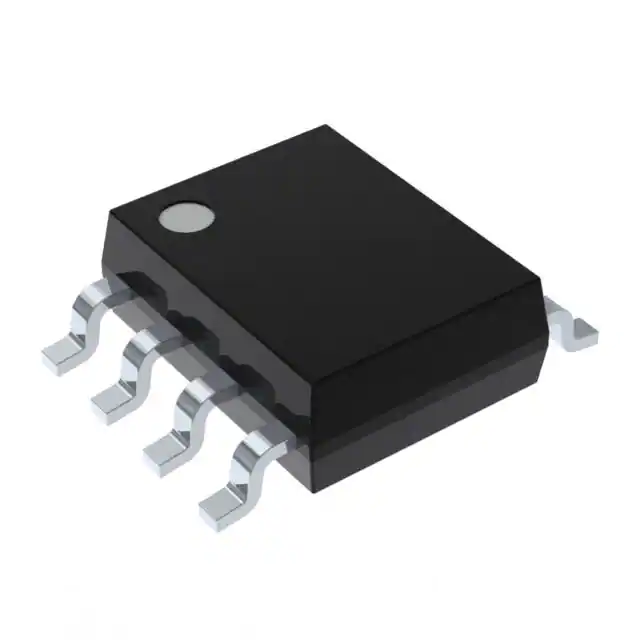
- Part No.:
- MAX931CSA-T
- Manufacturer:
- Analog Devices Inc./Maxim Integrated
- Category:
- Comparators
- Package:
- 8-SOIC (0.154", 3.90mm Width)
- Datasheet:
-
 MAX931CSA-T.pdf
- Description:
- IC COMPARATOR 1 W/VOLT REF 8SOIC
- Quantity:
- Payment:

- Shipping:

Inventory:1,675
Please send an inquiry. Send us your inquiry, and we will respond immediately.
Product details
Overview
The MAX931CSA-T from Maxim Integrated is a single micropower comparator with integrated 1.182V ±2% bandgap reference, programmable hysteresis via HYST pin, TTL/CMOS-compatible output that sources up to 40mA and sinks >5mA, and operates from +2.5V to +11V single supply (or ±1.25V to ±5.5V dual supply). It targets battery-powered threshold detection where ultra-low quiescent current (<4µA over temperature) and rail-to-rail input range (V− to V+ − 1.3V) are critical.
For engineers reviewing the MAX931CSA-T datasheet, MAX931CSA-T pinout, MAX931CSA-T application, or MAX931CSA-T equivalent, key selection criteria include its 4µA max supply current at +85°C, 12µs propagation delay (10mV overdrive), internal reference accuracy, HYST-pin hysteresis implementation, and compatibility with 3V/5V systems requiring stable low-power analog decision-making.
Technical Context
The MAX931CSA-T integrates a precision 1.182V ±2% reference referenced to V− (not GND), enabling self-contained threshold generation without external components. Its comparator features an input common-mode range extending from V− to V+ − 1.3V and eliminates crowbar current during transitions-reducing supply-line parasitic feedback and improving layout tolerance.
It supports hysteresis configuration via the HYST pin using two resistors (REF→HYST→V−), delivering adjustable hysteresis bands up to 100mV without external feedback networks. The output stage continuously sources ≥40mA while maintaining sub-4µA quiescent current, making it suitable for direct LED driving or logic-level translation in space-constrained, low-power designs.
Key Specifications
| Parameter | Value and Actual Design Meaning |
|---|---|
| Supply Current | <4µA max over −40°C to +85°C - enables multi-year battery life in always-on sensing nodes |
| Reference Voltage | 1.182V ±2% (0°C to +70°C) - provides stable, factory-trimmed threshold source without external voltage divider |
| Propagation Delay | 12µs typical (10mV overdrive) - ensures timely response in low-speed monitoring circuits like power-good detection |
| Input Voltage Range | V− to V+ − 1.3V - supports rail-to-rail input operation including signals near ground in single-supply systems |
| Output Drive | Sources ≥40mA continuously, sinks ≥5mA - drives LEDs, small relays, or logic inputs directly without buffer stages |
| Operating Supply | +2.5V to +11V single supply (or ±1.25V to ±5.5V dual) - compatible with Li-ion, alkaline, and regulated 3.3V/5V rails |
| Hysteresis Control | HYST pin accepts REF − 0.05V to REF - enables precise, resistor-programmable hysteresis up to 100mV without feedback loop design |
Pinout & Package
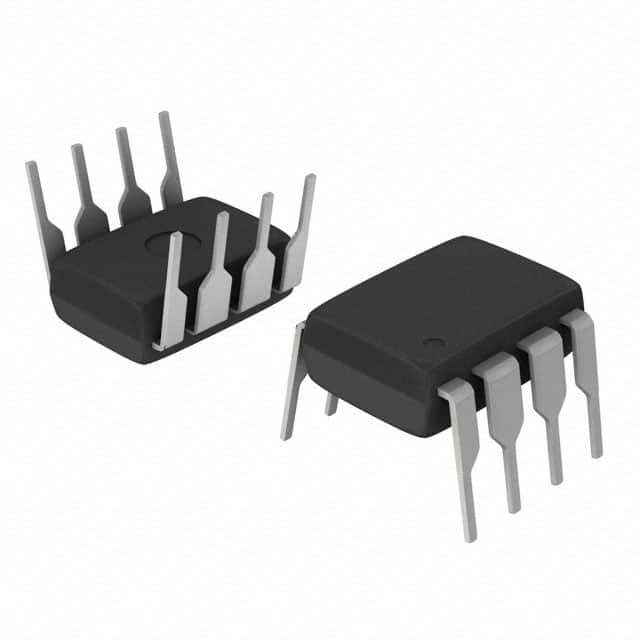
MAX931CSA-T is housed in an 8-pin plastic DIP package (0°C to +70°C operating range), with through-hole mounting and standard DIP footprint compatibility.
| Pin/Terminal | Circuit Role | Design Meaning |
|---|---|---|
| 1 | GND | Ground reference; connect to V− for single-supply operation; output swings from V+ to GND |
| 2 | V− | Negative supply rail; tied to GND in single-supply mode; reference output (REF) is referenced to this pin |
| 3 | IN+ | Noninverting input; accepts signals from V− to V+ − 1.3V; used with IN− to set trip point against internal reference |
| 4 | IN− | Inverting input; same voltage range as IN+; forms differential pair with IN+ for threshold comparison |
| 5 | HYST | Hysteresis control input; connects to REF (via R1) and V− (via R2) to program hysteresis band without external op-amp feedback |
| 6 | REF | 1.182V ±2% reference output referenced to V−; capable of sourcing 15µA/sinking 8µA; must not be bypassed |
| 7 | V+ | Positive supply rail; supports +2.5V to +11V; determines output high level (V+ − 0.4V min) |
| 8 | OUT | Push-pull output; sinks and sources current; swings from V+ to GND; drives loads directly without external pull-ups |
Key Features
| Feature | Design Value |
|---|---|
| Ultra-low quiescent current | <4µA max over full temperature range - extends battery life in portable and remote sensor applications |
| Integrated 2% reference | 1.182V ±2% referenced to V− - eliminates need for external precision reference IC or resistor divider |
| HYST-pin hysteresis | Programmable 0–100mV hysteresis using two resistors - simplifies noise-immune threshold design without feedback stability analysis |
| No crowbar current | Eliminates supply glitches during output transitions - reduces need for heavy supply decoupling and improves system stability |
| TTL/CMOS-compatible output | Drives 74HC/74AHC loads directly - supports interface with microcontrollers and logic without level-shifting circuitry |
Applications
| Battery-Powered Threshold Detector | Auto-Off Power Switch |
|---|---|
|
Use Scenario: Monitoring battery voltage to trigger shutdown before deep discharge in handheld medical devices. IC Role / Device Role / Timing Role: Single comparator compares battery voltage against internal 1.182V reference scaled by resistor divider; HYST pin adds hysteresis to prevent oscillation near cutoff. Use Value: Achieves <4µA total system quiescent current while delivering clean, glitch-free power-off signal - extends shelf life of sealed battery packs. |
Use Scenario: Enabling timed power delivery to peripheral modules (e.g., sensors, radios) in IoT edge nodes. IC Role / Device Role / Timing Role: MAX931CSA-T output controls MOSFET gate; RC network on HYST/IN+ sets auto-off delay; internal reference sets trip threshold. Use Value: Eliminates need for external timer IC or microcontroller wake-up - reduces BOM count and firmware complexity in ultra-low-power systems. |
| LED Bar-Graph Level Indicator | Low-Voltage Supervisory Circuit |
|
Use Scenario: Visual battery charge level indication in portable test equipment using discrete LEDs. IC Role / Device Role / Timing Role: Four MAX931CSA-T units (one per LED) compare scaled input against stepped thresholds derived from REF; outputs drive LEDs directly. Use Value: 40mA source capability enables bright LED illumination without current-limiting resistors or transistor buffers - saves board space and cost. |
Use Scenario: Detecting brown-out conditions in industrial controllers powered from unregulated DC rails. IC Role / Device Role / Timing Role: Comparator monitors supply rail against 1.182V reference; HYST pin configures 20mV hysteresis to reject ripple-induced false triggers. Use Value: Guarantees reliable reset assertion down to +2.5V supply - ensures deterministic behavior during input voltage sag without external supervisor IC. |
Equivalent & Alternatives
The following parts are listed as comparable options for similar comparator-with-reference applications.
| Alternative Part | Technical Difference | Application Difference | Selection Advice |
|---|---|---|---|
| MAX921CSA-T | 1% reference accuracy (vs. 2%), otherwise identical pinout, supply range, and hysteresis architecture | Required where tighter threshold tolerance is needed (e.g., precision voltage monitors), but increases cost and may require recalibration of hysteresis resistors | Select MAX921CSA-T when ±1% reference drift is mandatory; use MAX931CSA-T where 2% accuracy suffices and lower cost is prioritized |
| TLV3011IDBVR | Lower supply current (1.2µA typ), no internal reference, SOT-23-6 package, rail-to-rail input/output, 360µs propagation delay | Suitable for ultra-low-power apps without reference needs; requires external reference or resistor divider; slower response limits use in dynamic threshold detection | Choose TLV3011IDBVR only if reference-free operation and minimal current (<2µA) outweigh need for speed and integration; MAX931CSA-T remains optimal for self-contained, fast, low-power thresholding |
Compared with MAX921CSA-T and TLV3011IDBVR, the MAX931CSA-T uniquely balances ultra-low power (<4µA), integrated 2% reference, 12µs speed, and HYST-pin hysteresis in a through-hole DIP package - making it the most cost-effective, drop-in solution for battery-powered supervisory and detection functions where ±2% reference tolerance is acceptable.
Availability
MAX931CSA-T is available at Aetrix Electronics and suitable for battery-powered systems, threshold detectors, oscillator circuits, and alarm circuits requiring stable component supply across commercial temperature range (0°C to +70°C).
Supply support for MAX931CSA-T includes scheduled delivery planning, volume procurement assistance, BOM continuity management, traceable sourcing, and lifecycle availability coordination for OEM customers, industrial embedded developers, connected-device designers, and electronics production programs.
Manufacturer
Maxim Integrated (now part of Analog Devices) is a semiconductor company specializing in high-performance analog, mixed-signal, and power management ICs for industrial, communications, and consumer applications.
The MAX931CSA-T belongs to the MAX931–MAX934 micropower comparator family, designed specifically for ultra-low-power, self-contained threshold detection in battery-operated and energy-sensitive systems where integration of reference and hysteresis simplifies design.
FAQ
What is the operating temperature range for the MAX931CSA-T?
The MAX931CSA-T is specified for the commercial temperature range of 0°C to +70°C. This is confirmed by the "C" suffix in the part number and ordering information tables showing MAX931CSA (0°C to +70°C) versus MAX931ESA (−40°C to +85°C). The device's electrical characteristics-including supply current, reference voltage, and propagation delay-are guaranteed within this range.
Does the MAX931CSA-T require external bypass capacitors?
No, the MAX931CSA-T does not require power-supply bypass capacitors under low-impedance supply conditions. However, a 100nF ceramic capacitor is recommended at the V+ pin when supply impedance is high or supply leads are long. The reference output (REF) must never be bypassed, as stated in the Applications Information section, to avoid instability and increased noise.
Can the MAX931CSA-T operate from a 3V supply?
Yes, the MAX931CSA-T operates from a single +2.5V to +11V supply, so 3V is fully supported. Electrical characteristics at 3V are explicitly documented: supply current is 2.4–3.0µA (typ/max), input offset voltage remains ±10mV, and propagation delay is 14µs (typ) - all guaranteed over the full 0°C to +70°C range.
How is hysteresis implemented on the MAX931CSA-T?
Hysteresis is implemented using the HYST pin: connect resistor R1 between REF and HYST, and R2 between HYST and V− (GND in single-supply mode). The hysteresis band equals ~2 × (VREF − VHYST), adjustable from 0 to 100mV. This method avoids external positive-feedback networks and associated stability calculations, as detailed in the Applications Information section of the MAX931CSA-T datasheet.
Is the MAX931CSA-T pin-compatible with any higher-accuracy alternatives?
Yes, the MAX931CSA-T is pin-compatible with the MAX921CSA-T, which offers a 1% accurate reference instead of 2%. The datasheet explicitly states: "The MAX931, MAX933, and MAX934 are pin-compatible with the 1% accurate MAX921, MAX923, and MAX924, respectively." No PCB changes are required when upgrading for improved reference precision.
MAX931CSA-T Specifications
- Product attributes
- Attribute value
- Manufacturer:
- Analog Devices Inc./Maxim Integrated
- Package/Case:
- 8-SOIC (0.154", 3.90mm Width)
- Series:
- -
- Packaging:
- Tape & Reel (TR)
- Product Status:
- Obsolete
- Type:
- with Voltage Reference
- Number of Elements:
- 1
- Output Type:
- CMOS, TTL
- Voltage - Supply, Single/Dual (±):
- 2.5V ~ 11V, ±1.25V ~ 5.5V
- :
- 10mV @ 5V
- Voltage - Input Offset (Max):
- -
- Current - Input Bias (Max):
- 0.015mA @ 5V
- Current - Output (Typ):
- 4µA
- Current - Quiescent (Max):
- 80dB CMRR, 80dB PSRR
- CMRR, PSRR (Typ):
- 12µs
- Propagation Delay (Max):
- 50mV
- Hysteresis:
- 0°C ~ 70°C
- Operating Temperature:
- -
- Grade:
- -
- Qualification:
- Surface Mount
- :
- 8-SOIC
MAX931CSA-T FAQ
1.How can I place an order for MAX931CSA-T through Aetrix?
Please submit a Request for Quotation (RFQ) for MAX931CSA-T on Aetrix. Our sales agent will provide a competitive quotation and guide you through the order confirmation once you accept the terms.
2.Are the price and stock information for MAX931CSA-T reliable?
The price and inventory of MAX931CSA-T are updated periodically and may fluctuate due to market conditions. Stock and pricing data are typically refreshed every 24 hours. Quotation validity for MAX931CSA-T is usually 5 days.
3.What payment methods are accepted for MAX931CSA-T?
We accept Wire Transfer, PayPal, Credit Card, Western Union, MoneyGram, and Escrow for MAX931CSA-T transactions.
Note: Certain payment methods may incur a processing fee.
4.How is shipping managed for MAX931CSA-T?
MAX931CSA-T orders can be shipped via leading logistics carriers, including DHL, UPS, FedEx, TNT, or Registered Mail.
Once your MAX931CSA-T order is processed, you will receive an email with the shipment details and tracking number.
Note: Tracking information may take up to 24 hours to appear. Express delivery typically takes 3–5 business days.
5.How can I obtain technical support or documentation for MAX931CSA-T?
For technical support, including MAX931CSA-T datasheets, pinout diagrams, or application guidance, please contact our engineering support team. They can provide detailed documentation and assistance for your MAX931CSA-T requirements.
6.How does Aetrix verify that MAX931CSA-T is sourced from the original manufacturer or authorized distributors?
All MAX931CSA-T products on Aetrix are procured from qualified distributors and authorized channels. Our dedicated quality assurance team conducts strict verification, including traceability checks and, if necessary, third-party testing. This ensures that MAX931CSA-T meets industry standards.
7.What is the process for return or replacement of MAX931CSA-T?
All MAX931CSA-T units undergo pre-shipment inspection (PSI). If there is an issue with MAX931CSA-T, returns or replacements are accepted under the following conditions:
1.Quantity discrepancies, incorrect items, or visible external defects (such as breakage or corrosion), acknowledged by Aetrix.
2.The issue is reported within 90 days of delivery.
3.The MAX931CSA-T part is unused and in its original packaging.
Return procedure for MAX931CSA-T:
1.Submit a request within 90 days.
2.Obtain a Return Material Authorization (RMA) from Aetrix.
MAX931CSA-T Tags

-
LM2903DR
Texas Instruments
-
LM339DR
Texas Instruments
-
LM339PWR
Texas Instruments
-
LM393DT
STMicroelectronics
-
LM2901PWR
Texas Instruments
-
LM2903DT
STMicroelectronics
-
LM393DR
Texas Instruments
-
LM239DR
Texas Instruments
-
LM339APWR
Texas Instruments
-
LM2903P
Texas Instruments
-
LM393ADR
Texas Instruments
-
NCX2200GMAZ
NXP USA Inc.
Tech Hub

An engineering guide to LED driver operation, constant-current and constant-voltage outputs, linear and switching topologies, dimming, IC selection, calculations, replacement compatibility, and fault c…

Operational amplifier guide covering op amp basics, feedback, ideal vs real op amps, common configurations, buffer circuits, offset, bias current, gain-bandwidth, slew rate, rail-to-rail limits and sel…

Jumper cables guide covering safe connection order, red and black clamp placement, final ground connection, cable gauge, length, clamp quality, copper vs CCA cables, jump starter comparison and battery…

LDO regulator guide covering low dropout voltage, power dissipation, thermal design, PSRR, output noise, capacitor stability, adjustable LDO circuits, LDO vs buck converter and datasheet selection chec…

Conditional Access Module guide covering CAM meaning, CI/CI+ interface, smart card authorization, DVB security workflow, TV and set-top box compatibility, internal electronics, ESD protection, connecto…

Guide to electronic component obsolescence covering EOL risk, PCN/PDN notices, last-time buy planning, replacement options, form-fit-function validation, counterfeit risk and BOM lifecycle management.

18650 battery guide covering lithium-ion cell basics, 3.6V/3.7V voltage, 4.2V charging, mAh and Wh capacity, protected cells, chargers, BMS, series-parallel packs, holders, welding and sourcing checks.…

Hall effect sensor guide covering working principle, linear and digital sensors, Arduino circuits, current sensing, speed detection, automotive applications, A3144 examples, signal filtering and datash…

Product Change Notification guide for electronic components, covering PCN meaning, PCN vs PDN/EOL, common change types, risk levels, form-fit-function review, engineering validation, BOM control, LTB/L…

A practical guide to blend door actuators, covering HVAC function, symptoms, location, AC and heater issues, reset and calibration, replacement cost, electrical diagnosis, compatibility checks, and rep…


