
 My Inquiry
 My Account


Analog Devices Inc./Maxim Integrated MAX941EUA-T
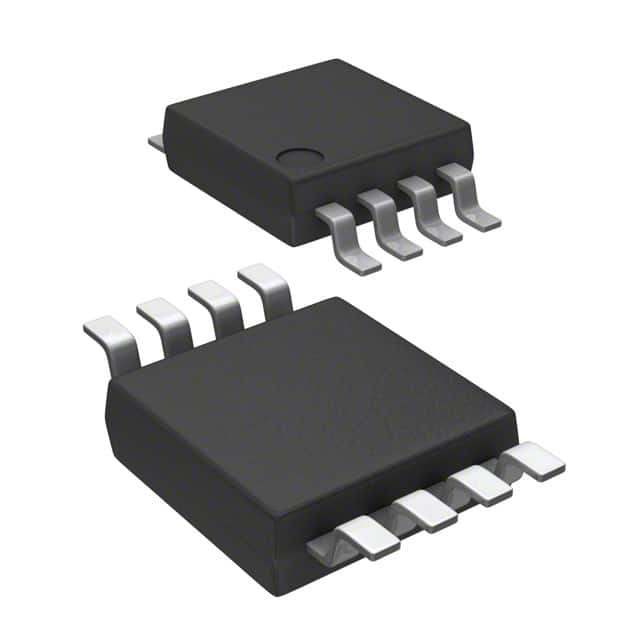
- Part No.:
- MAX941EUA-T
- Manufacturer:
- Analog Devices Inc./Maxim Integrated
- Category:
- Comparators
- Package:
- 8-TSSOP, 8-MSOP (0.118", 3.00mm Width)
- Datasheet:
-
 MAX941EUA-T.pdf
- Description:
- IC COMPARATOR 1 W/LATCH 8UMAX
- Quantity:
- Payment:

- Shipping:

Inventory:3,626
Please send an inquiry. Send us your inquiry, and we will respond immediately.
Product details
Overview
The MAX941EUA-T from Maxim Integrated is a single high-speed comparator optimized for 3V/5V single-supply systems, featuring rail-to-rail inputs, 80ns propagation delay (5mV overdrive), 350μA supply current per comparator, and internal latch/shutdown functions. It operates across –40°C to +85°C and is used in battery-powered threshold detection and zero-crossing circuits where low power and fast response are critical.
For engineers reviewing the MAX941EUA-T datasheet, MAX941EUA-T pinout, MAX941EUA-T application, or MAX941EUA-T equivalent, key selection criteria include its μMAX-8 package footprint, latch-enable timing (tS = 20ns, tH = 30ns), shutdown current <60μA, and guaranteed rail-to-rail input range extending beyond V+ and GND rails.
Technical Context
The MAX941EUA-T implements a bipolar-input comparator core with fixed internal hysteresis (1mV typical trip width), eliminating external resistor networks. Its current-driven output stage delivers VOH = V+ – 0.2V (at 400μA) and VOL = 0.2V (at 400μA), enabling direct CMOS/TTL interfacing without pull-ups.
It integrates two digital control pins-SHDN and LATCH-both with high-impedance inputs and logic thresholds at V+/2 ± 0.4V. Shutdown disables the comparator and places the output in high-impedance state; latch stores the output state when LATCH is low, with defined setup/hold timing relative to input transitions.
Key Specifications
| Parameter | Value and Actual Design Meaning |
|---|---|
| Supply Voltage Range | 2.7V to 5.5V - supports both 3V and 5V systems with margin for brownout tolerance |
| Propagation Delay | 80ns (typical, 5mV overdrive) - enables sub-12.5MHz sampling in discriminators or line receivers |
| Input Offset Voltage | 1mV (typ, +25°C); ≤5.5mV (–40°C to +85°C) - ensures accurate threshold detection down to millivolt-level signals |
| Rail-to-Rail Input Range | –0.2V to V+ + 0.2V - allows input signals to exceed supply rails without damage or inversion |
| Output Swing | VOL = 0.2V / VOH = V+ – 0.2V (400μA load) - directly drives 3.3V CMOS logic without level-shifting |
| Supply Current | 380–700μA (per comparator, V+ = 3–5V); <60μA in shutdown - extends battery life in portable systems |
| Operating Temperature | –40°C to +85°C - qualified for industrial and automotive under-hood ambient conditions |
Pinout & Package
MAX941EUA-T is housed in an 8-pin μMAX® package (0.11" × 0.11", 0.05" pitch), pin-compatible with SO-8 and PDIP-8 footprints but with significantly reduced board area (≈30% of SO-8). The μMAX package features exposed paddle for thermal enhancement and is RoHS-compliant.
| Pin/Terminal | Circuit Role | Design Meaning |
|---|---|---|
| 1 | N.C. | No internal connection - must be left floating or grounded; no routing required |
| 2 | OUT | Open-drain compatible output - sinks up to 4mA; pulls within 0.2V of GND or V+ without external components |
| 3 | GND | Analog/digital ground reference - requires low-inductance connection to PCB ground plane |
| 4 | LATCH | Digital control input - latches output when low; transparent when high (VIH ≥ V+/2 + 0.4V) |
| 5 | SHDN | Shutdown enable - comparator disabled and output tri-stated when low (VIL ≤ V+/2 – 0.4V) |
| 6 | IN− | Inverting input - accepts rail-to-rail common-mode voltage; protected against >±2.2V differential stress |
| 7 | IN+ | Noninverting input - identical protection and common-mode range as IN−; differential pair input node |
| 8 | V+ | Positive supply - must be decoupled with 0.1μF ceramic capacitor placed <2mm from pin |
Key Features
| Feature | Design Value |
|---|---|
| Internal Hysteresis | Fixed 1mV (typ) input-referred hysteresis zone - eliminates external feedback resistors and prevents oscillation on slow edges |
| Latch Function | Asynchronous edge-transparent latch with 20ns setup / 30ns hold time - captures transient comparator outputs for microcontroller polling |
| Shutdown Mode | Reduces ICC to <60μA and forces output high-Z - enables dynamic power gating in duty-cycled sensing nodes |
| Rail-to-Rail Inputs | Valid operation with inputs from –0.2V to V+ + 0.2V - supports sensor signals exceeding supply rails (e.g., thermocouples, transducer offsets) |
| CMOS/TTL-Compatible Outputs | VOH/VOL meet 3.3V CMOS VIH/VIL specs at 400μA - eliminates level translators in mixed-voltage systems |
Applications
| Battery-Powered Threshold Detector | Zero-Crossing Detector |
|---|---|
Use Scenario: Monitoring Li-ion cell voltage during charging to trigger cutoff at 4.2V with ±10mV accuracy. IC Role / Device Role / Timing Role: Single comparator compares scaled battery voltage against precision reference; latch holds trip event until MCU reads flag. Use Value: 1mV offset and rail-to-rail input allow direct sensing without op-amp buffering; 350μA quiescent current extends standby time by >2× vs. legacy comparators. |
Use Scenario: Detecting AC line zero crossings in smart metering for synchronized sampling and harmonic analysis. IC Role / Device Role / Timing Role: Comparator monitors transformer-coupled AC waveform; internal hysteresis rejects noise near zero crossing point. Use Value: 80ns propagation delay ensures timing jitter <1.3μs at 60Hz; rail-to-rail input accommodates ±12V signal swing without clamping diodes. |
| 3.3V Digital-Controlled Threshold | Industrial Line Receiver |
Use Scenario: Digitally adjustable threshold in programmable logic controllers using DAC output (e.g., MAX512) as reference. IC Role / Device Role / Timing Role: Compares analog sensor output against DAC-generated reference; shutdown mode disables during idle cycles. Use Value: 2.7V–5.5V supply range matches DAC's 3.3V rail; latch function captures first threshold breach for interrupt-driven response. |
Use Scenario: Receiving RS-422/RS-485 differential signals in factory automation I/O modules with 3.3V logic interface. IC Role / Device Role / Timing Role: Single-ended conversion of differential receiver output; CMOS-compatible output drives FPGA GPIO directly. Use Value: Output swing to 0.2V/3.1V at 3.3V supply meets FPGA VIH/VIL margins; 8-pin μMAX saves PCB space in dense backplane designs. |
Equivalent & Alternatives
The following parts are listed as comparable options for similar high-speed, low-power comparator applications.
| Alternative Part | Technical Difference | Application Difference | Selection Advice |
|---|---|---|---|
| LMV7215M5X | Higher 120ns propagation delay; no latch/shutdown; 1.8V–5.5V supply; SOT-23-5 package | Lacks digital control features; suited for always-on, ultra-low-voltage (<2V) sensing | Select when latch/shutdown not needed and board space is constrained to SOT-23 footprint |
| TLV3201DBVR | 7ns propagation delay; rail-to-rail I/O; 1.8V–5.5V; no internal hysteresis; no latch/shutdown; SOT-23-5 | Requires external hysteresis resistors; better for <100MHz timing-critical apps | Choose for highest speed where external hysteresis design overhead is acceptable |
Compared with LMV7215M5X and TLV3201DBVR, the MAX941EUA-T uniquely integrates latch and shutdown in a μMAX package while maintaining 80ns speed and rail-to-rail input - making it optimal for battery-constrained systems requiring deterministic event capture and power cycling.
Availability
MAX941EUA-T is available at Aetrix Electronics and suitable for battery-powered instrumentation, industrial line receivers, and 3.3V/5V threshold detection systems requiring stable component supply across extended temperature ranges.
Supply support for MAX941EUA-T includes scheduled delivery planning, volume procurement assistance, BOM continuity management, traceable sourcing, and lifecycle availability coordination for OEM customers, industrial embedded developers, connected-device designers, and electronics production programs.
Manufacturer
Maxim Integrated (now part of Analog Devices) is a semiconductor company specializing in high-performance analog, mixed-signal, and power management ICs for industrial, communications, and consumer applications.
The MAX941EUA-T belongs to Maxim's high-speed comparator product line, designed specifically for low-power, rail-to-rail, single-supply operation in portable and industrial systems where precision timing and supply flexibility are essential.
FAQ
What is the maximum supply voltage rating for the MAX941EUA-T?
The MAX941EUA-T has an absolute maximum supply voltage (V+ to GND) of +6.5V. However, its specified operating range is 2.7V to 5.5V. Operation above 5.5V risks violating parametric guarantees and may cause permanent damage. Always limit V+ to ≤5.5V in functional designs, and ensure transient spikes remain below +6.5V with appropriate clamping.
Does the MAX941EUA-T require external pull-up resistors on its output?
No, the MAX941EUA-T does not require external pull-up resistors. Its output stage actively drives high to V+ – 0.2V (at 400μA) and low to 0.2V (at 400μA), meeting standard CMOS/TTL logic thresholds directly. External pull-ups are unnecessary and may degrade switching speed or increase power consumption.
How does the internal hysteresis of the MAX941EUA-T improve noise immunity?
The MAX941EUA-T incorporates fixed internal hysteresis (~1mV input-referred), creating distinct upper and lower trip points. This prevents output chatter when input signals hover near the threshold - especially critical for slow-moving or noisy inputs like thermistor outputs or AC line sensing. Unlike external hysteresis networks, it requires no additional components or calculations.
Can the MAX941EUA-T operate with input voltages below ground or above V+?
Yes. The MAX941EUA-T's input common-mode range extends from –0.2V to V+ + 0.2V, allowing valid operation with inputs slightly beyond both supply rails. This enables direct interfacing with sensors whose outputs exceed the supply (e.g., piezoelectric transducers or transformer-coupled signals), provided differential input voltage stays within ±2.2V limits.
What happens to the output of the MAX941EUA-T during shutdown mode?
When SHDN is driven low, the MAX941EUA-T enters shutdown mode: supply current drops to <60μA, and the output enters a high-impedance (tri-state) condition. The output is neither driven high nor low - it floats electrically. To avoid undefined logic states, external pull-up or pull-down resistors should be used on the output if connected to downstream logic during shutdown.
MAX941EUA-T Specifications
- Product attributes
- Attribute value
- Manufacturer:
- Analog Devices Inc./Maxim Integrated
- Package/Case:
- 8-TSSOP, 8-MSOP (0.118", 3.00mm Width)
- Series:
- -
- Packaging:
- Tape & Reel (TR)
- Product Status:
- Obsolete
- Type:
- with Latch, Shutdown
- Number of Elements:
- 1
- Output Type:
- CMOS, Push-Pull, TTL
- Voltage - Supply, Single/Dual (±):
- 2.7V ~ 5.5V
- :
- 3mV @ 5.5V
- Voltage - Input Offset (Max):
- 0.15µA @ 5.5V
- Current - Input Bias (Max):
- -
- Current - Output (Typ):
- 700µA
- Current - Quiescent (Max):
- 81.94dB CMRR, 81.94dB PSRR
- CMRR, PSRR (Typ):
- 80ns
- Propagation Delay (Max):
- -
- Hysteresis:
- -40°C ~ 85°C
- Operating Temperature:
- -
- Grade:
- -
- Qualification:
- Surface Mount
- :
- 8-uMAX/uSOP
MAX941EUA-T FAQ
1.How can I place an order for MAX941EUA-T through Aetrix?
Please submit a Request for Quotation (RFQ) for MAX941EUA-T on Aetrix. Our sales agent will provide a competitive quotation and guide you through the order confirmation once you accept the terms.
2.Are the price and stock information for MAX941EUA-T reliable?
The price and inventory of MAX941EUA-T are updated periodically and may fluctuate due to market conditions. Stock and pricing data are typically refreshed every 24 hours. Quotation validity for MAX941EUA-T is usually 5 days.
3.What payment methods are accepted for MAX941EUA-T?
We accept Wire Transfer, PayPal, Credit Card, Western Union, MoneyGram, and Escrow for MAX941EUA-T transactions.
Note: Certain payment methods may incur a processing fee.
4.How is shipping managed for MAX941EUA-T?
MAX941EUA-T orders can be shipped via leading logistics carriers, including DHL, UPS, FedEx, TNT, or Registered Mail.
Once your MAX941EUA-T order is processed, you will receive an email with the shipment details and tracking number.
Note: Tracking information may take up to 24 hours to appear. Express delivery typically takes 3–5 business days.
5.How can I obtain technical support or documentation for MAX941EUA-T?
For technical support, including MAX941EUA-T datasheets, pinout diagrams, or application guidance, please contact our engineering support team. They can provide detailed documentation and assistance for your MAX941EUA-T requirements.
6.How does Aetrix verify that MAX941EUA-T is sourced from the original manufacturer or authorized distributors?
All MAX941EUA-T products on Aetrix are procured from qualified distributors and authorized channels. Our dedicated quality assurance team conducts strict verification, including traceability checks and, if necessary, third-party testing. This ensures that MAX941EUA-T meets industry standards.
7.What is the process for return or replacement of MAX941EUA-T?
All MAX941EUA-T units undergo pre-shipment inspection (PSI). If there is an issue with MAX941EUA-T, returns or replacements are accepted under the following conditions:
1.Quantity discrepancies, incorrect items, or visible external defects (such as breakage or corrosion), acknowledged by Aetrix.
2.The issue is reported within 90 days of delivery.
3.The MAX941EUA-T part is unused and in its original packaging.
Return procedure for MAX941EUA-T:
1.Submit a request within 90 days.
2.Obtain a Return Material Authorization (RMA) from Aetrix.
MAX941EUA-T Tags

-
LM2903DR
Texas Instruments
-
LM339DR
Texas Instruments
-
LM339PWR
Texas Instruments
-
LM393DT
STMicroelectronics
-
LM2901PWR
Texas Instruments
-
LM2903DT
STMicroelectronics
-
LM393DR
Texas Instruments
-
LM239DR
Texas Instruments
-
LM339APWR
Texas Instruments
-
LM2903P
Texas Instruments
-
LM393ADR
Texas Instruments
-
NCX2200GMAZ
NXP USA Inc.
Tech Hub

An engineering guide to LED driver operation, constant-current and constant-voltage outputs, linear and switching topologies, dimming, IC selection, calculations, replacement compatibility, and fault c…

Operational amplifier guide covering op amp basics, feedback, ideal vs real op amps, common configurations, buffer circuits, offset, bias current, gain-bandwidth, slew rate, rail-to-rail limits and sel…

Jumper cables guide covering safe connection order, red and black clamp placement, final ground connection, cable gauge, length, clamp quality, copper vs CCA cables, jump starter comparison and battery…

LDO regulator guide covering low dropout voltage, power dissipation, thermal design, PSRR, output noise, capacitor stability, adjustable LDO circuits, LDO vs buck converter and datasheet selection chec…

Conditional Access Module guide covering CAM meaning, CI/CI+ interface, smart card authorization, DVB security workflow, TV and set-top box compatibility, internal electronics, ESD protection, connecto…

Guide to electronic component obsolescence covering EOL risk, PCN/PDN notices, last-time buy planning, replacement options, form-fit-function validation, counterfeit risk and BOM lifecycle management.

18650 battery guide covering lithium-ion cell basics, 3.6V/3.7V voltage, 4.2V charging, mAh and Wh capacity, protected cells, chargers, BMS, series-parallel packs, holders, welding and sourcing checks.…

Hall effect sensor guide covering working principle, linear and digital sensors, Arduino circuits, current sensing, speed detection, automotive applications, A3144 examples, signal filtering and datash…

Product Change Notification guide for electronic components, covering PCN meaning, PCN vs PDN/EOL, common change types, risk levels, form-fit-function review, engineering validation, BOM control, LTB/L…

A practical guide to blend door actuators, covering HVAC function, symptoms, location, AC and heater issues, reset and calibration, replacement cost, electrical diagnosis, compatibility checks, and rep…


