
 My Inquiry
 My Account


Analog Devices Inc./Maxim Integrated MAX9526AEI+
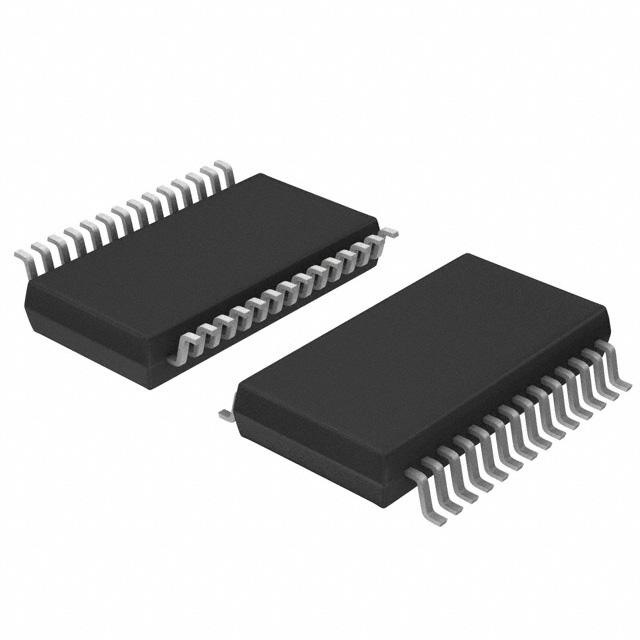
- Part No.:
- MAX9526AEI+
- Manufacturer:
- Analog Devices Inc./Maxim Integrated
- Category:
- Encoders, Decoders, Converters
- Package:
- 28-SSOP (0.154", 3.90mm Width)
- Datasheet:
-
 MAX9526AEI+.pdf
- Description:
- IC VID DECODER NTSC/PAL 28-QSOP
- Quantity:
- Payment:

- Shipping:

Inventory:1,892
Please send an inquiry. Send us your inquiry, and we will respond immediately.
Product details
Overview
The MAX9526AEI+ from Maxim Integrated is a low-power, automotive-grade NTSC/PAL video decoder IC that converts composite video (NTSC M/J/4.43, PAL B/G/H/I/D/M/N/60) into 8-bit or 10-bit ITU-R BT.656 YCbCr component output. It features a 10-bit 54Msps ADC with 4× oversampling, integrated analog anti-aliasing filter, and line-locked PLL generating 27MHz LLC clock. Designed for automotive entertainment and collision avoidance systems, it operates from -40°C to +125°C on a single 1.8V analog/digital supply.
For engineers reviewing the MAX9526AEI+ datasheet, MAX9526AEI+ pinout, MAX9526AEI+ application, or MAX9526AEI+ equivalent, key selection criteria include its automotive temperature rating, dual-input multiplexer with AGC, flexible 10-bit/8-bit BT.656 output formatting, shutdown power (<100µW), and support for both line-locked and async clock modes - all critical for robust in-vehicle video processing.
Technical Context
The MAX9526AEI+ implements a hybrid analog/digital line-locked PLL with programmable bandwidth (180Hz–2000Hz) to generate a jitter-tolerant 27MHz LLC output synchronized to incoming video timing. Its analog front-end integrates DC restoration with current DAC offset correction, analog AGC (3.5dB–12dB gain range), and a 13MHz 3dB analog LPF eliminating external filtering.
Digital processing includes a 5-line adaptive comb filter for cross-chrominance/luminance artifact reduction, digital anti-aliasing filtering (≥45dB stopband attenuation >9MHz), and configurable output formatting - either 10-bit BT.656 with embedded TRS or 8-bit parallel with separate HS/VS signals - all controlled via 16 I²C registers.
Key Specifications
| Parameter | Value and Actual Design Meaning |
|---|---|
| Video Standards | NTSC M/J/4.43 and PAL B/G/H/I/D/M/N/60 - full automatic detection and configuration without firmware intervention |
| ADC Resolution & Rate | 10-bit, 54Msps with 4× oversampling - enables high-fidelity digitization meeting ITU-R BT.601 sampling requirements |
| Output Format | Configurable 10-bit ITU-R BT.656 (embedded TRS) or 8-bit parallel (separate HS/VS) - direct interface to SoCs/FPGAs without glue logic |
| Supply Voltages | +1.8V AVDD/DVDD (analog/digital core); +1.7V to +3.45V DVDDIO (I/O voltage - supports 1.8V/3.3V processor interfacing) |
| Power Consumption | 200mW typical normal operation; <100µW shutdown - enables always-on video monitoring in automotive safety systems |
| Operating Temperature | -40°C to +125°C - qualified for under-hood and display module deployment in automotive environments |
| Input Multiplexer | 2:1 auto-selecting video mux with activity detection on VIN1/VIN2 - enables seamless source switching in multi-camera systems |
Pinout & Package
The MAX9526AEI+ is housed in a 28-pin QSOP package (5.3mm × 10.2mm, 1.0mm height) with gull-wing leads, RoHS-compliant and lead(Pb)-free.
| Pin | Circuit Role | Design Meaning |
|---|---|---|
| VIN1 / VIN2 | Composite video inputs | AC-coupled single-ended inputs supporting automatic activity-based channel selection; internal sync-tip clamp and slicer enable sleep-mode wake-up |
| VREF | Reference voltage node | Internally generated 850mV reference; requires local 0.1µF bypass to AGND for stable DC restoration and AGC accuracy |
| XTAL/OSC, XTAL2 | Clock input terminals | Supports 27MHz crystal (fundamental mode) or 27/54MHz CMOS clock; XTAL_DIS bit enables external clock mode |
| D0–D9 | Digital video outputs | 10-bit parallel YCbCr data bus; D0 = LSB; configurable as BT.656 (embedded sync) or 8-bit + discrete HS/VS via register 0x0D |
| LLC | Line-locked clock output | 27MHz output synchronized to horizontal line rate; jitter ≤160ns peak in LLC mode; derived from 54MHz sample clock in async mode |
| SDA / SCL / DEVADR | I²C interface | Standard-mode (400kHz) I²C bus; DEVADR selects one of three slave addresses (0x40/0x41/0x42) for multi-device configurations |
| IRQ | Interrupt output | Open-drain status interrupt; asserts low on unmasked status register changes (e.g., HLOCK loss, NONSTD detection) |
Key Features
| Feature | Design Value |
|---|---|
| Automated standard detection | Zero-configuration startup: detects NTSC/PAL variant and configures registers autonomously - eliminates boot-time firmware delay |
| DC restoration with DAC | Current-sourcing/sinking DAC adjusts sync level at AC-coupled inputs to maintain ADC code 32 sync reference - ensures consistent full-scale utilization |
| Adaptive 5-line comb filter | Reduces cross-luminance and cross-chrominance artifacts in real time without motion compensation - improves color fidelity on static and dynamic scenes |
| Flexible low-power states | Sleep mode (<5mW) maintains activity detection on both inputs; shutdown (<100µW) disables all circuitry except IRQ wake capability |
| Integrated analog anti-aliasing | 13MHz 3dB LPF with 0.25dB passband flatness to 5MHz and 36dB attenuation at 53MHz - removes need for external RC filters |
Applications
| Automotive Entertainment Systems | Collision Avoidance Systems |
|---|---|
Use Scenario: Rear-view camera feed integration into infotainment head units with multi-source video switching. IC Role / Device Role / Timing Role: Video decoder providing ITU-R BT.656 output synchronized to camera's line-locked timing via LLC signal. Use Value: Enables plug-and-play compatibility with legacy analog cameras while delivering 10-bit YCbCr data for high-fidelity image processing in ADAS vision pipelines. |
Use Scenario: Front-facing camera input for pedestrian detection and lane departure warning in OEM vehicle platforms. IC Role / Device Role / Timing Role: Low-latency NTSC/PAL decoding with deterministic line-locked clock (LLC) for precise frame alignment in real-time vision algorithms. Use Value: Automotive temperature rating (-40°C to +125°C) and <100µW shutdown power allow continuous camera monitoring during vehicle sleep states. |
| Security Surveillance/CCTV Systems | Televisions |
Use Scenario: Analog CCTV camera aggregation in vehicle-mounted DVRs with multi-channel recording. IC Role / Device Role / Timing Role: Dual-input 2:1 mux with automatic activity detection selects active camera channel without host CPU intervention. Use Value: Reduces system-level complexity by offloading video source arbitration to hardware - lowers MCU resource load and improves fail-safe reliability. |
Use Scenario: Legacy composite video input support in smart TVs with HDMI/USB-centric architectures. IC Role / Device Role / Timing Role: High-SNR (58.8dB) 10-bit ADC and digital comb filtering preserve color fidelity and reduce dot crawl in consumer displays. Use Value: 1.8V core supply and 1.7V–3.45V I/O voltage enable direct connection to modern low-voltage SoCs without level-shifting components. |
Equivalent & Alternatives
The following parts are listed as comparable options for similar NTSC/PAL video decoder applications.
| Alternative Part | Technical Difference | Application Difference | Selection Advice |
|---|---|---|---|
| ADV7180BCPZ | 10-bit ADC, 28MHz max input; supports CVBS/S-video; no integrated analog LPF - requires external filtering | Lacks automotive temp rating (-40°C to +105°C only); no sleep-mode activity detection on dual inputs | Choose ADV7180BCPZ for cost-sensitive consumer TV designs where external filter design is acceptable and extended temperature is not required. |
| TVP5150AM1IPBS | 10-bit ADC, 27MHz; includes on-chip VBI data extraction; higher typical power (350mW normal) | Commercial temp range only (-10°C to +70°C); no shutdown mode below 1mW - unsuitable for automotive always-on use | Prefer TVP5150AM1IPBS when VBI data parsing (closed captioning, teletext) is mandatory and thermal constraints permit higher power dissipation. |
Compared with ADV7180BCPZ and TVP5150AM1IPBS, the MAX9526AEI+ uniquely combines automotive temperature qualification, sub-100µW shutdown, integrated analog anti-aliasing, and hardware-based dual-input activity detection - making it the only option suitable for safety-critical, always-on automotive video systems requiring zero-host intervention.
Availability
The MAX9526AEI+ is available at Aetrix Electronics and suitable for automotive entertainment systems, collision avoidance systems, and security surveillance/CCTV systems requiring stable component supply across extended temperature ranges and long production lifecycles.
Supply support for MAX9526AEI+ includes scheduled delivery planning, volume procurement assistance, BOM continuity management, traceable sourcing, and lifecycle availability coordination for OEM customers, industrial embedded developers, connected-device designers, and electronics production programs.
Manufacturer
Maxim Integrated (now part of Analog Devices) is a semiconductor company specializing in high-performance analog, mixed-signal, and power management ICs for demanding industrial, automotive, and communications applications.
The MAX9526AEI+ belongs to Maxim's automotive video decoder product line, engineered specifically for robust, low-power conversion of legacy composite video signals in safety-critical in-vehicle systems - emphasizing reliability, temperature resilience, and minimal host software dependency.
FAQ
What video standards does the MAX9526AEI+ support?
MAX9526AEI+ supports all major NTSC and PAL variants: NTSC M, NTSC J, NTSC 4.43, PAL B/G/H/I/D, PAL M, PAL N, and PAL 60. It automatically detects and configures itself to the incoming standard without user intervention, leveraging internal sync processing and PLL lock detection. This full-standard coverage ensures interoperability with global broadcast, CCTV, and automotive camera sources.
How does the MAX9526AEI+ handle power management in automotive systems?
MAX9526AEI+ provides three distinct power states: normal operation (~200mW), sleep mode (<5mW with continuous VIN1/VIN2 activity detection), and shutdown (<100µW). In sleep mode, analog sync-tip clamps and slicers remain active to monitor input activity, enabling wake-up without full reinitialization - a critical feature for automotive rear-view or surround-view systems requiring instant-on response after vehicle ignition.
Can the MAX9526AEI+ operate without an external crystal?
Yes, MAX9526AEI+ can accept an external 27MHz or 54MHz CMOS clock directly on the XTAL/OSC pin when XTAL_DIS = 1 is set in register 0x0D. The internal oscillator is bypassed, and the device uses the applied clock for PLL operation. This flexibility allows integration into systems where a precision clock source is already available, reducing bill-of-materials and board space.
What is the function of the NONSTD pin/status in the MAX9526AEI+?
The NONSTD status (bit 6 of Status Register 0x00) indicates detection of nonstandard carrier frequencies - commonly found in VCR playback or poorly aligned analog sources. When asserted, MAX9526AEI+ automatically switches its PLL to asynchronous mode to maintain lock. This prevents video breakup and enables reliable decoding of degraded or non-broadcast-quality signals without manual reconfiguration.
Does the MAX9526AEI+ require external passive components for basic operation?
Yes, MAX9526AEI+ requires external 0.1µF bypass capacitors on VIN1, VIN2, VREF, AVDD, DVDD, and DVDDIO pins per layout guidelines. A 27MHz crystal (or external clock) and 10kΩ pull-up resistors on SDA, SCL, and IRQ are also mandatory. No external analog filtering is needed due to the integrated 13MHz anti-aliasing LPF - significantly simplifying front-end design compared to competing decoders.
MAX9526AEI+ Specifications
- Product attributes
- Attribute value
- Manufacturer:
- Analog Devices Inc./Maxim Integrated
- Series:
- -
- Package/Case:
- 28-SSOP (0.154", 3.90mm Width)
- Packaging:
- Tube
- Product Status:
- Discontinued at Digi-Key
- Type:
- Video Decoder
- Applications:
- Players, TV
- Voltage - Supply, Analog:
- 1.8V
- Voltage - Supply, Digital:
- 1.8V
- Grade:
- Automotive
- Qualification:
- -
- Mounting Type:
- Surface Mount
- Supplier Device Package:
- 28-QSOP
MAX9526AEI+ FAQ
1.How can I place an order for MAX9526AEI+ through Aetrix?
Please submit a Request for Quotation (RFQ) for MAX9526AEI+ on Aetrix. Our sales agent will provide a competitive quotation and guide you through the order confirmation once you accept the terms.
2.Are the price and stock information for MAX9526AEI+ reliable?
The price and inventory of MAX9526AEI+ are updated periodically and may fluctuate due to market conditions. Stock and pricing data are typically refreshed every 24 hours. Quotation validity for MAX9526AEI+ is usually 5 days.
3.What payment methods are accepted for MAX9526AEI+?
We accept Wire Transfer, PayPal, Credit Card, Western Union, MoneyGram, and Escrow for MAX9526AEI+ transactions.
Note: Certain payment methods may incur a processing fee.
4.How is shipping managed for MAX9526AEI+?
MAX9526AEI+ orders can be shipped via leading logistics carriers, including DHL, UPS, FedEx, TNT, or Registered Mail.
Once your MAX9526AEI+ order is processed, you will receive an email with the shipment details and tracking number.
Note: Tracking information may take up to 24 hours to appear. Express delivery typically takes 3–5 business days.
5.How can I obtain technical support or documentation for MAX9526AEI+?
For technical support, including MAX9526AEI+ datasheets, pinout diagrams, or application guidance, please contact our engineering support team. They can provide detailed documentation and assistance for your MAX9526AEI+ requirements.
6.How does Aetrix verify that MAX9526AEI+ is sourced from the original manufacturer or authorized distributors?
All MAX9526AEI+ products on Aetrix are procured from qualified distributors and authorized channels. Our dedicated quality assurance team conducts strict verification, including traceability checks and, if necessary, third-party testing. This ensures that MAX9526AEI+ meets industry standards.
7.What is the process for return or replacement of MAX9526AEI+?
All MAX9526AEI+ units undergo pre-shipment inspection (PSI). If there is an issue with MAX9526AEI+, returns or replacements are accepted under the following conditions:
1.Quantity discrepancies, incorrect items, or visible external defects (such as breakage or corrosion), acknowledged by Aetrix.
2.The issue is reported within 90 days of delivery.
3.The MAX9526AEI+ part is unused and in its original packaging.
Return procedure for MAX9526AEI+:
1.Submit a request within 90 days.
2.Obtain a Return Material Authorization (RMA) from Aetrix.
MAX9526AEI+ Tags
-
MCP2120T-I/SL
Microchip Technology

-
LICAL-ENC-MS001
TE Connectivity Linx
-
TW9990AT-NA1-GR
Renesas Electronics Corporation
-
TVP5151IPBSR
Texas Instruments
-
TVP5150AM1IPBSR
Texas Instruments
-
LICAL-DEC-MS001-T
TE Connectivity Linx
-
ADV7391BCPZ
Analog Devices Inc.
-
ADV7393BCPZ-REEL
Analog Devices Inc.
-
ADV7393BCPZ
Analog Devices Inc.
-
ADV7391WBCPZ
Analog Devices Inc.
-
ADV7181DBCPZ
Analog Devices Inc.
-
ADV7181CBSTZ-REEL
Analog Devices Inc.
Tech Hub

A practical engineering guide to 3.3V and 5V logic compatibility, input thresholds, resistor dividers, translator ICs, MOSFET level shifting, I2C pull-ups, timing limits and power-sequencing risks.

The 74HC595 uses push-pull logic outputs, while the TPIC6B595 uses 50 V open-drain DMOS sinks for higher-power loads. This guide compares timing, current limits, 3.3 V interfacing, load wiring, thermal…

The 74HC595 converts serial data into eight stable parallel outputs. This guide covers pin functions, shift and storage timing, OE and MR behavior, drive-current limits, cascading, voltage compatibilit…

A technical comparison of level-sensitive latches and edge-triggered flip-flops, covering timing windows, setup and hold limits, master–slave operation, time borrowing, race-through, HDL inference and…

A D latch stores one bit while Enable controls when data can pass. This reference covers gate-level operation, truth tables, transparency, setup and hold timing, LE versus OE, common ICs and practical …

An SR latch stores one bit through cross-coupled feedback. This engineering reference covers NOR and NAND implementations, truth tables, forbidden-state recovery, gated operation, switch debouncing, fa…

Latch circuits retain one bit through feedback. This technical reference covers SR and D latches, truth tables, transparency, timing limits, latch-versus-flip-flop behavior, applications and common log…

An engineering guide to LED driver operation, constant-current and constant-voltage outputs, linear and switching topologies, dimming, IC selection, calculations, replacement compatibility, and fault c…

Operational amplifier guide covering op amp basics, feedback, ideal vs real op amps, common configurations, buffer circuits, offset, bias current, gain-bandwidth, slew rate, rail-to-rail limits and sel…

Jumper cables guide covering safe connection order, red and black clamp placement, final ground connection, cable gauge, length, clamp quality, copper vs CCA cables, jump starter comparison and battery…


