
 My Inquiry
 My Account


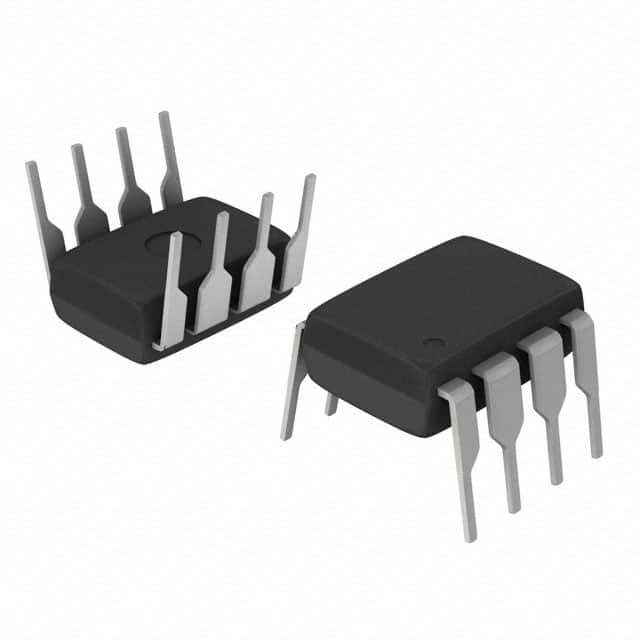
Analog Devices Inc./Maxim Integrated MAX953EPA
- Part No.:
- MAX953EPA
- Manufacturer:
- Analog Devices Inc./Maxim Integrated
- Category:
- Special Purpose Amplifiers
- Package:
- 8-DIP (0.300", 7.62mm)
- Datasheet:
-
 MAX953EPA.pdf
- Description:
- IC AMP COMP 8DIP
- Quantity:
- Payment:

- Shipping:

Inventory:3,666
Please send an inquiry. Send us your inquiry, and we will respond immediately.
Product details
Overview
MAX953EPA from Maxim Integrated is an ultra-low-power, single-supply analog IC integrating a unity-gain-stable op amp, rail-to-rail comparator, and no internal reference in an 8-pin plastic DIP package. It operates from 2.4V to 7V with 5μA typical supply current, supports common-mode input down to VSS and within 1.6V of VDD, and delivers rail-to-rail output swing - ideal for battery-powered smoke detectors requiring continuous sensing and low-quiescent alarm triggering.
For engineers reviewing the MAX953EPA datasheet, MAX953EPA pinout, MAX953EPA application, or MAX953EPA equivalent, key selection criteria include its 5μA supply current, absence of internal reference (enabling flexible external reference choice), unity-gain stability, rail-to-rail I/O, and −40°C to +85°C industrial temperature range.
Technical Context
The MAX953EPA integrates two independent signal chains: a micropower CMOS op amp optimized for unity-gain stability (20kHz GBW, 12.5V/ms slew rate) and a comparator with ±3mV internal hysteresis, 22μs propagation delay at 10mV overdrive, and rail-to-rail CMOS output capable of sourcing up to 40mA continuously. Both blocks share a common 2.4V–7V supply and feature rail-in/rail-out operation.
No internal voltage reference is included - unlike MAX951/MAX952 - making the MAX953EPA suitable for applications requiring externally set thresholds or higher-accuracy references. Input bias current is ≤0.05nA, and DC open-loop gain exceeds 100V/mV under 100kΩ load, ensuring precision in high-impedance sensor interfaces.
Key Specifications
| Parameter | Value and Actual Design Meaning |
|---|---|
| Supply Voltage Range | 2.4V to 7V - enables direct operation from single Li-ion, 3×AA, or regulated 3.3V/5V rails without LDO overhead. |
| Typical Supply Current | 5μA - allows multi-year battery life in always-on smoke detectors or remote sensors. |
| Op Amp Gain Bandwidth | 20kHz - sufficient for DC–10kHz sensor amplification (e.g., ionization chamber signals) with unity-gain stability. |
| Comparator Propagation Delay | 22μs at 10mV overdrive - ensures reliable, noise-immune threshold detection in low-frequency alarms. |
| Input Common-Mode Range | VSS to (VDD − 1.6V) - supports ground-referenced inputs and rail-sensing in single-supply systems. |
| Rail-to-Rail Output Swing | VSS + 50mV / VDD − 500mV - maximizes dynamic range and simplifies interfacing with logic or ADCs. |
| Input Bias Current | ≤0.05nA - preserves signal integrity when buffering >100MΩ sources like smoke chamber electrodes. |
Pinout & Package
MAX953EPA uses an 8-pin plastic DIP (dual in-line package) with 0.300" wide body and 0.100" lead pitch. Pin 1 is AMPOUT; pin 4 is VSS (ground); pin 5 is COMPIN+; pin 6 is COMPIN− (not REF); pin 7 is COMPOUT; pin 8 is VDD. No internal reference is present - pin 6 functions solely as inverting comparator input.
| Pin/Terminal | Circuit Role | Design Meaning |
|---|---|---|
| 1 - AMPOUT | Op amp output | Drives capacitive loads up to 1000pF; rail-to-rail swing enables full utilization of supply headroom. |
| 2 - AMPIN− | Inverting op amp input | High-impedance CMOS node; supports precision differential sensing with <0.05nA bias current. |
| 3 - AMPIN+ | Noninverting op amp input | Accepts signals from VSS to (VDD − 1.6V); used for high-Z sensor buffering (e.g., ionization chamber). |
| 4 - VSS | Negative supply / ground | Reference for all analog circuitry; must be low-impedance to minimize crosstalk and offset drift. |
| 5 - COMPIN+ | Noninverting comparator input | Threshold comparison point; accepts external reference or filtered sensor signal for clean switching. |
| 6 - COMPIN− | Inverting comparator input | Signal input for alarm triggering; internal ±3mV hysteresis prevents chatter on slow-moving inputs. |
| 7 - COMPOUT | Comparator output | Rail-to-rail CMOS output; sinks ≥200μA / sources ≥300μA at 5V - directly drives LEDs or logic inputs. |
| 8 - VDD | Positive supply | Accepts 2.4V–7V; bypassing with 0.1μF to VSS recommended for noise-sensitive applications. |
Key Features
| Feature | Design Value |
|---|---|
| Unity-gain stable op amp | Enables simple buffer/gain=1 configurations without external compensation - critical for sensor front ends. |
| Rail-to-rail input and output | Maximizes usable signal range in single-supply systems; eliminates level-shifting components. |
| ±3mV internal comparator hysteresis | Ensures glitch-free output transitions even with noisy or slowly varying inputs (e.g., smoke chamber voltage drift). |
| 5μA typical supply current | Reduces average power to ~12.5μW at 2.5V - extends shelf life and operational duration in coin-cell–powered devices. |
| No internal reference | Provides design flexibility: supports external precision references, ratiometric sensing, or custom threshold networks. |
Applications
| Smoke Detector Sensor Interface | Low-Frequency Alarm Trigger |
|---|---|
Use Scenario: Ionization chamber in residential smoke detector outputs microamp-level current; voltage on intermediate electrode rises during smoke event. IC Role / Device Role / Timing Role: MAX953EPA op amp buffers high-impedance electrode node; comparator triggers alarm when buffered voltage crosses threshold. Use Value: 5μA quiescent current enables continuous monitoring without duty cycling; rail-to-rail I/O maximizes sensitivity across full supply range. | Use Scenario: Battery-powered local-area security sensor detects door/window opening via reed switch or vibration transducer. IC Role / Device Role / Timing Role: MAX953EPA comparator monitors transducer output; op amp conditions weak analog signal before threshold comparison. Use Value: Internal hysteresis eliminates false triggers from mechanical bounce or EMI; 22μs response ensures timely alarm assertion. |
| Photodiode Preamp for IR Receivers | Smart Card Power Management |
Use Scenario: Infrared remote control receiver uses photodiode to detect 38kHz modulated pulses; ambient light rejection required. IC Role / Device Role / Timing Role: MAX953EPA op amp configured as bandpass filter; comparator digitizes filtered output into clean logic pulses. Use Value: Unity-gain stability and low input bias enable high-Z photodiode biasing; rail-to-rail output ensures TTL/CMOS compatibility. | Use Scenario: Contactless smart card reader monitors card presence via antenna voltage drop; low-power wake-up needed. IC Role / Device Role / Timing Role: MAX953EPA comparator detects antenna detuning; op amp amplifies weak RF envelope signal. Use Value: 2.4V minimum supply allows operation from partially discharged batteries; 5μA current minimizes standby drain. |
Equivalent & Alternatives
The following parts are listed as comparable options for similar op amp + comparator applications.
| Alternative Part | Technical Difference | Application Difference | Selection Advice |
|---|---|---|---|
| MAX953ESA | Same electrical specs; SO-8 package instead of PDIP - smaller footprint, better thermal performance. | Suitable for space-constrained PCBs; requires different land pattern and reflow profile. | Select MAX953ESA for surface-mount designs needing reduced board area and improved manufacturability. |
| MAX953EUA | Same functionality; μMAX-8 package (3mm × 3mm) with exposed pad - highest density, best thermal resistance. | Used in ultra-compact portable devices; requires careful layout for thermal and EMI control. | Choose MAX953EUA when miniaturization and thermal efficiency are primary constraints. |
Compared with MAX953ESA and MAX953EUA, the MAX953EPA offers through-hole mounting for prototyping and high-reliability industrial assemblies, while retaining identical electrical behavior - enabling drop-in functional replacement across packages where mechanical fit permits.
Availability
MAX953EPA is available at Aetrix Electronics and suitable for smoke detector manufacturing, battery-powered alarm systems, and infrared receiver front ends requiring stable component supply, long-lifecycle support, and RoHS-compliant packaging.
Supply support for MAX953EPA includes scheduled delivery planning, volume procurement assistance, BOM continuity management, traceable sourcing, and lifecycle availability coordination for OEM customers, industrial embedded developers, connected-device designers, and electronics production programs.
Manufacturer
Maxim Integrated (now part of Analog Devices) designs precision analog, mixed-signal, and power management ICs for industrial, medical, and consumer applications.
The MAX951–MAX954 family was engineered for ultra-low-power, single-supply sensor signal conditioning and threshold detection - targeting battery-operated safety and instrumentation systems where quiescent current and rail-to-rail operation are critical.
FAQ
Does MAX953EPA include an internal voltage reference?
No, MAX953EPA does not include an internal voltage reference. Unlike MAX951/MAX952, it omits the 1.2V bandgap reference - pin 6 is COMPIN−, not REF. This allows designers to use external references for higher accuracy or custom thresholds. The MAX953EPA datasheet explicitly states "MAX953 and MAX954 are offered without an internal reference," confirming this distinction.
What is the maximum capacitive load the MAX953EPA op amp can drive while remaining stable?
The MAX953EPA op amp is internally compensated for unity-gain stability and can drive up to 1000pF without external compensation. The datasheet specifies "Op Amp Capable of Driving up to 1000pF Load" and shows stable transient response in the Typical Operating Characteristics (TOC12). For loads >1000pF, a small series resistor (e.g., 10–50Ω) at the output is recommended to isolate capacitance.
Can MAX953EPA operate from a 2.4V supply, and what performance changes occur?
Yes, MAX953EPA is fully specified from 2.4V to 7V. At 2.4V, supply current remains ~5μA, common-mode input range is VSS to (VDD − 1.6V) = VSS to 0.8V, and rail-to-rail output swing is maintained (VOL ≈ VSS + 50mV, VOH ≈ VDD − 500mV). Gain bandwidth reduces slightly but remains adequate for DC–10kHz applications per the 20kHz GBW spec at 5V.
How does the internal hysteresis in MAX953EPA's comparator improve reliability?
The MAX953EPA comparator includes ±3mV internal hysteresis, which creates a 6mV input window between upper and lower trip points. This prevents oscillation or chatter when input signals cross the threshold slowly or contain noise - essential for reliable alarm triggering in smoke detectors or low-frequency sensors. The hysteresis is fixed and requires no external components.
Is MAX953EPA pin-compatible with other members of the MAX951–MAX954 family?
Yes, MAX953EPA shares identical pinout and package dimensions with MAX951EPA, MAX952EPA, and MAX954EPA - all use the same 8-pin plastic DIP. However, functional differences exist: MAX951/MAX952 include internal 1.2V reference (pin 6 = REF), while MAX953/MAX954 use pin 6 as COMPIN−. Swapping requires verifying reference architecture compatibility in the target circuit.
MAX953EPA Specifications
- Product attributes
- Attribute value
- Manufacturer:
- Analog Devices Inc./Maxim Integrated
- Series:
- -
- Package/Case:
- 8-DIP (0.300", 7.62mm)
- Packaging:
- Tube
- Product Status:
- Obsolete
- Type:
- Amplifier, Comparator
- Applications:
- Smart Card
- Mounting Type:
- Through Hole
- Grade:
- -
- Qualification:
- -
- Supplier Device Package:
- 8-PDIP
MAX953EPA FAQ
1.How can I place an order for MAX953EPA through Aetrix?
Please submit a Request for Quotation (RFQ) for MAX953EPA on Aetrix. Our sales agent will provide a competitive quotation and guide you through the order confirmation once you accept the terms.
2.Are the price and stock information for MAX953EPA reliable?
The price and inventory of MAX953EPA are updated periodically and may fluctuate due to market conditions. Stock and pricing data are typically refreshed every 24 hours. Quotation validity for MAX953EPA is usually 5 days.
3.What payment methods are accepted for MAX953EPA?
We accept Wire Transfer, PayPal, Credit Card, Western Union, MoneyGram, and Escrow for MAX953EPA transactions.
Note: Certain payment methods may incur a processing fee.
4.How is shipping managed for MAX953EPA?
MAX953EPA orders can be shipped via leading logistics carriers, including DHL, UPS, FedEx, TNT, or Registered Mail.
Once your MAX953EPA order is processed, you will receive an email with the shipment details and tracking number.
Note: Tracking information may take up to 24 hours to appear. Express delivery typically takes 3–5 business days.
5.How can I obtain technical support or documentation for MAX953EPA?
For technical support, including MAX953EPA datasheets, pinout diagrams, or application guidance, please contact our engineering support team. They can provide detailed documentation and assistance for your MAX953EPA requirements.
6.How does Aetrix verify that MAX953EPA is sourced from the original manufacturer or authorized distributors?
All MAX953EPA products on Aetrix are procured from qualified distributors and authorized channels. Our dedicated quality assurance team conducts strict verification, including traceability checks and, if necessary, third-party testing. This ensures that MAX953EPA meets industry standards.
7.What is the process for return or replacement of MAX953EPA?
All MAX953EPA units undergo pre-shipment inspection (PSI). If there is an issue with MAX953EPA, returns or replacements are accepted under the following conditions:
1.Quantity discrepancies, incorrect items, or visible external defects (such as breakage or corrosion), acknowledged by Aetrix.
2.The issue is reported within 90 days of delivery.
3.The MAX953EPA part is unused and in its original packaging.
Return procedure for MAX953EPA:
1.Submit a request within 90 days.
2.Obtain a Return Material Authorization (RMA) from Aetrix.
MAX953EPA Tags

-
TSM103WIDT
STMicroelectronics

-
LM392M/NOPB
Texas Instruments
-
MCP6S93T-E/UN
Microchip Technology
-
INA137UA/2K5
Texas Instruments
-
INA134UA/2K5
Texas Instruments
-
TS34118CS28 RDG
Taiwan Semiconductor Corporation
-
SI8920BC-IPR
Skyworks Solutions Inc.
-
ADUM3190ARQZ-RL7
Analog Devices Inc.
-
ADUM3190ARQZ
Analog Devices Inc.
-
AMC1311BDWVR
Texas Instruments
-
AMC1350DWVR
Texas Instruments
-
ADUM3190SRQZ-RL7
Analog Devices Inc.
Tech Hub

A practical engineering guide to 3.3V and 5V logic compatibility, input thresholds, resistor dividers, translator ICs, MOSFET level shifting, I2C pull-ups, timing limits and power-sequencing risks.

The 74HC595 uses push-pull logic outputs, while the TPIC6B595 uses 50 V open-drain DMOS sinks for higher-power loads. This guide compares timing, current limits, 3.3 V interfacing, load wiring, thermal…

The 74HC595 converts serial data into eight stable parallel outputs. This guide covers pin functions, shift and storage timing, OE and MR behavior, drive-current limits, cascading, voltage compatibilit…

A technical comparison of level-sensitive latches and edge-triggered flip-flops, covering timing windows, setup and hold limits, master–slave operation, time borrowing, race-through, HDL inference and…

A D latch stores one bit while Enable controls when data can pass. This reference covers gate-level operation, truth tables, transparency, setup and hold timing, LE versus OE, common ICs and practical …

An SR latch stores one bit through cross-coupled feedback. This engineering reference covers NOR and NAND implementations, truth tables, forbidden-state recovery, gated operation, switch debouncing, fa…

Latch circuits retain one bit through feedback. This technical reference covers SR and D latches, truth tables, transparency, timing limits, latch-versus-flip-flop behavior, applications and common log…

An engineering guide to LED driver operation, constant-current and constant-voltage outputs, linear and switching topologies, dimming, IC selection, calculations, replacement compatibility, and fault c…

Operational amplifier guide covering op amp basics, feedback, ideal vs real op amps, common configurations, buffer circuits, offset, bias current, gain-bandwidth, slew rate, rail-to-rail limits and sel…

Jumper cables guide covering safe connection order, red and black clamp placement, final ground connection, cable gauge, length, clamp quality, copper vs CCA cables, jump starter comparison and battery…


