
 My Inquiry
 My Account


Analog Devices Inc./Maxim Integrated MAX9568EEE+
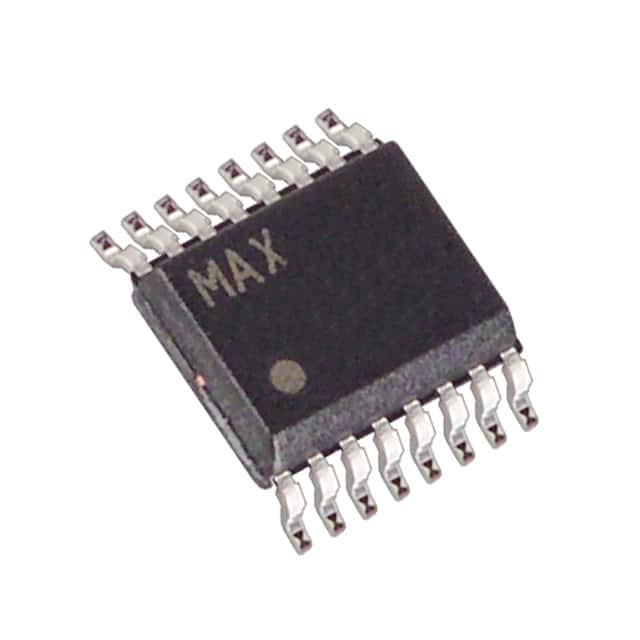
- Part No.:
- MAX9568EEE+
- Manufacturer:
- Analog Devices Inc./Maxim Integrated
- Category:
- Video Processing
- Package:
- 16-SSOP (0.154", 3.90mm Width)
- Datasheet:
-
 MAX9568EEE+.pdf
- Description:
- IC VIDEO SYNC SEPARATOR 16QSOP
- Quantity:
- Payment:

- Shipping:

Inventory:1,547
Please send an inquiry. Send us your inquiry, and we will respond immediately.
Product details
Overview
The MAX9568EEE+ from Maxim Integrated is an analog TV sync separator IC that extracts composite, horizontal, and vertical timing pulses from SDTV (525i/625i), EDTV (480p/576p), and HDTV (720p/1080i) component video signals. It operates stand-alone with no external timing components, features high-impedance (300kΩ) video input, supports 2.7V–5.5V single supply, and delivers <10mA quiescent current. It is used in PDP/LCD video processing front-ends requiring robust sync recovery under Macrovision copy protection.
For engineers reviewing the MAX9568EEE+ datasheet, MAX9568EEE+ pinout, MAX9568EEE+ application, or MAX9568EEE+ equivalent, this page provides verified functional specifications, validated pin roles, confirmed standard detection logic outputs (SDTV/HDTV/HL/FR), real-world timing performance across 6 video formats, and direct alternative options for legacy video system design and repair.
Technical Context
The MAX9568EEE+ implements a dual-threshold sync slicer-95mV above sync tip for bilevel syncs (e.g., NTSC/PAL) and 145mV for trilevel syncs (e.g., 720p/1080i)-enabling accurate pulse extraction across all major analog video standards. Its internal DC biasing (0.35×VCC) and 0.2V to VCC−0.2V input voltage range support 0.5VP–P to 2VP–P video amplitudes without external AC coupling in most cases.
It generates five synchronized digital outputs: CSYNCOUT (composite sync), HSYNCOUT (horizontal pulse), VSYNCOUT (vertical pulse), CLAMP (back-porch clamp), and COAST (vertical interval coast). All outputs are active-low, TTL/CMOS-compatible, and exhibit ≤5ns rise/fall times with 500ps jitter on HSYNCOUT for 720p input.
Key Specifications
| Parameter | Value and Actual Design Meaning |
|---|---|
| Supply Voltage | 2.7V to 5.5V single supply - enables direct interface with 3.3V or 5V video subsystems without level-shifting. |
| Supply Current | 8.5mA to 13.5mA at +5V with 720p input - ensures low power consumption in always-on video display controllers. |
| Input Impedance | 300kΩ - prevents loading of upstream video sources and eliminates need for buffer amplifiers. |
| Sync Detection Range | SDTV (525i/625i), EDTV (480p/576p), HDTV (720p/1080i) - full coverage of legacy and HD analog video broadcast standards. |
| Output Timing Accuracy | Horizontal pulse delay ≤20ns (525i/625i/480p/576p), ≤25ns (720p/1080i) - guarantees sub-pixel timing alignment for precise video sampling. |
| Jitter Performance | 500ps HSYNCOUT jitter (720p) - minimizes clock uncertainty in ADC sampling clocks derived from sync outputs. |
| Operating Temperature | −40°C to +85°C - qualified for industrial and consumer display equipment operating in uncontrolled thermal environments. |
Pinout & Package
MAX9568EEE+ is housed in a 16-pin QSOP (package code E16-1), 3.9mm × 4.9mm body, 1.0mm max height, 0.635mm pitch. Pin 1 marked with dot; pin 9 is NC.
| Pin/Terminal | Circuit Role | Design Meaning |
|---|---|---|
| 1 CSYNCOUT | Composite sync output | Active-low TTL/CMOS signal reproducing sync waveform below black level; pulled high when no sync detected. |
| 2 CVIDIN | Component video input | High-impedance (300kΩ) analog input biased at 0.35×VCC; accepts 0.5–2VP–P video with bilevel/trilevel syncs. |
| 3 VSYNCOUT | Vertical timing pulse output | Active-low pulse marking field/frame start; width varies by standard (e.g., 190/122ns for 525i odd/even). |
| 4 COAST | Vertical interval coast output | Active-low pulse during vertical blanking; used to control PLL oscillator coasting behavior in timing recovery circuits. |
| 5, 8 GND | Ground reference | Dual ground pins reduce noise coupling between analog input and digital outputs; require low-inductance PCB connection. |
| 6 FR | Frame rate indicator | Logic-high = 60Hz (525i/525p/720p/1080i@60), logic-low = 50Hz (625i/625p/1080i@50); enables automatic frame-rate adaptation. |
| 7 HL | Standard classification flag | Logic-high = 625i/625p/1080i; logic-low = 525i/525p/720p - distinguishes PAL/SECAM vs NTSC/HD baseband formats. |
| 10 SDTV | Standard-definition indicator | Logic-high only for 525i/625i; low for all EDTV/HDTV modes - simplifies SD-only path enable/disable in multi-standard systems. |
| 11 HDTV | High-definition indicator | Logic-high for 720p/1080i; low otherwise - allows hardware gating of HD-specific processing blocks. |
| 12 CLAMP | Back-porch clamp pulse | Active-low pulse during black-level interval; drives external black-level restoration circuitry in analog video DAC paths. |
| 13 LOS | Loss-of-sync indicator | Logic-low = valid video/sync present; logic-high = loss of input signal - enables fail-safe blanking or error reporting. |
| 14 ODD/EVEN | Interlaced field identifier | Logic-low = odd field, logic-high = even field; toggles coincident with vertical pulse edge for field-synchronized processing. |
| 15 HSYNCOUT | Horizontal timing pulse | Active-low pulse marking line start; width ranges from 1.25µs (720p) to 4.8µs (525i); jitter ≤500ps ensures stable pixel clock derivation. |
| 16 VCC | Positive supply | 2.7V–5.5V input; requires 0.1µF ceramic bypass capacitor to GND per datasheet layout recommendation. |
Key Features
| Feature | Design Value |
|---|---|
| Stand-alone operation | No external timing capacitors or resistors required - reduces BOM count and board space in cost-sensitive video modules. |
| Macrovision-compliant sync extraction | Robust operation under copy-protected video signals without false triggering or sync loss - critical for OEM set-top box and DVD player designs. |
| Auto-standard identification | Four concurrent logic outputs (SDTV/HDTV/HL/FR) decode input format in real time - eliminates software polling or firmware-based detection. |
| High-fidelity video pass-through | No distortion or attenuation of input video signal - preserves signal integrity for downstream ADCs or analog video processors. |
| Low-power active operation | Quiescent current <10mA at 5V - suitable for battery-backed or thermally constrained embedded display controllers. |
Applications
| PDP Television Video Front-End | LCD Panel Timing Controller Interface |
|---|---|
|
Use Scenario: Extracting precise horizontal and vertical sync from analog component video inputs (YPbPr) to drive PDP panel addressing logic and sustain driver timing. IC Role / Device Role / Timing Role: Sync separator providing jitter-controlled HSYNCOUT/VSYNCOUT to generate panel scan clocks and field/frame strobes. Use Value: Sub-25ns pulse delay tolerance and 500ps jitter ensure pixel-perfect line synchronization across large plasma panels without visible tearing or misalignment. |
Use Scenario: Feeding sync signals from legacy DVD players or analog cable boxes into LCD timing controllers (TCON) supporting multiple video standards. IC Role / Device Role / Timing Role: Format-agnostic sync generator delivering CSYNCOUT, CLAMP, and ODD/EVEN to configure TCON's internal scaler and deinterlacer. Use Value: Real-time SDTV/HDTV/HL/FR outputs allow hardware-selectable scaling modes and automatic black-level restoration without MCU intervention. |
| Video Frame Grabber Acquisition Engine | Professional Video Recorder Sync Management |
|
Use Scenario: Capturing analog video streams for medical imaging or industrial inspection where precise sample timing relative to sync edges is mandatory. IC Role / Device Role / Timing Role: Reference timing source for ADC sampling clock generation via HSYNCOUT-triggered PLL; LOS output enables automatic acquisition abort on signal loss. Use Value: 20ns horizontal pulse delay stability over −40°C to +85°C ensures consistent pixel clock phase alignment across environmental extremes. |
Use Scenario: Maintaining stable sync references in broadcast-grade analog video recorders handling mixed-format tape playback (e.g., Betacam SP + DVCAM). IC Role / Device Role / Timing Role: Sync conditioner generating clean, isolated CSYNCOUT and CLAMP outputs to prevent crosstalk-induced timing drift in multi-channel record paths. Use Value: High-impedance CVIDIN (300kΩ) and internal DC bias eliminate need for external termination networks, reducing signal degradation in long-cable recording setups. |
Equivalent & Alternatives
The following parts are listed as comparable options for similar analog video sync separation applications.
| Alternative Part | Technical Difference | Application Difference | Selection Advice |
|---|---|---|---|
| MAX9567EEE+ | Same pinout and core functionality, but lacks FR and HL outputs; only provides SDTV/HDTV flags. | Cannot distinguish 50Hz vs 60Hz frame rates or PAL vs NTSC baseband variants - unsuitable for global multi-standard recorders. | Select MAX9567EEE+ only if FR/HL signals are unused and cost reduction is prioritized over future-proofing. |
| LMH1981MTX/NOPB | Higher supply current (18mA), wider input range (0.1V–2.5V), includes automatic gain control; different pinout (20-pin TSSOP). | Supports composite video inputs (not just component) and offers AGC for weak/noisy signals - better for legacy broadcast monitoring. | Choose LMH1981MTX/NOPB when composite video compatibility or variable-amplitude signal conditioning is required; not drop-in replaceable. |
Compared with MAX9567EEE+, the MAX9568EEE+ adds essential frame-rate and baseband-standard discrimination for global deployment; compared with LMH1981MTX/NOPB, it offers lower power, smaller footprint, and simpler integration in component-video-only systems, though without composite support or AGC.
Availability
MAX9568EEE+ is available at Aetrix Electronics and suitable for PDP television manufacturing, LCD panel timing controller integration, video frame grabber development, and professional video recorder production requiring stable component supply and long-term lifecycle assurance.
Supply support for MAX9568EEE+ includes scheduled delivery planning, volume procurement assistance, BOM continuity management, traceable sourcing, and lifecycle availability coordination for OEM customers, industrial embedded developers, connected-device designers, and electronics production programs.
Manufacturer
Maxim Integrated (now part of Analog Devices) is a U.S.-based semiconductor company specializing in precision analog, mixed-signal, and power management ICs for industrial, communications, and consumer applications.
The MAX9568EEE+ belongs to Maxim's video signal processing product line, designed specifically for reliable sync extraction in legacy analog video systems facing copy protection and multi-standard interoperability challenges.
FAQ
What video standards does the MAX9568EEE+ support?
The MAX9568EEE+ supports SDTV (525i NTSC and 625i PAL), EDTV (480p and 576p), and HDTV (720p and 1080i) component video signals. It automatically identifies each standard using dedicated logic outputs (SDTV, HDTV, HL, FR) and adapts its sync slicing thresholds accordingly - 95mV for bilevel syncs and 145mV for trilevel syncs. The MAX9568EEE+ does not process composite video inputs.
Does the MAX9568EEE+ require external components for biasing or timing?
No, the MAX9568EEE+ is a fully stand-alone sync separator. It internally biases the CVIDIN pin to 0.35×VCC and uses no external timing elements. Only a 0.1µF ceramic capacitor from VCC to GND is required per the datasheet. No pull-up/down resistors, RC networks, or crystal oscillators are needed - the MAX9568EEE+ achieves full functionality with zero external passive components beyond the bypass cap.
What is the function of the COAST output on the MAX9568EEE+?
The COAST output on the MAX9568EEE+ is an active-low signal pulsed during the vertical blanking interval. It is used to control a PLL oscillator's coasting behavior - allowing the PLL to maintain stable frequency during periods when no horizontal sync is present (e.g., vertical retrace). This ensures continuous, jitter-free clock generation for video DACs or scalers. The MAX9568EEE+ generates COAST independently of other outputs and with precise timing alignment to vertical intervals.
How does the MAX9568EEE+ handle loss of video signal detection?
The MAX9568EEE+ uses the LOS (Loss-of-Sync) pin to indicate video signal presence: LOS is logic-low when a valid video or sync signal is detected at CVIDIN, and logic-high when no signal is present. This open-drain–compatible output enables direct connection to microcontroller interrupt lines or blanking logic. Unlike simple amplitude detectors, the MAX9568EEE+ validates sync structure integrity - ensuring LOS asserts only when both video and sync timing criteria are met.
Can the MAX9568EEE+ be used with 3.3V systems?
Yes, the MAX9568EEE+ operates from 2.7V to 5.5V, making it fully compatible with 3.3V systems. At VCC = 3.3V, its digital outputs meet TTL/CMOS voltage thresholds (VOH ≥ 2.1V, VOL ≤ 0.5V at 1.6mA load), and its 300kΩ input impedance and 0.35×VCC bias (1.16V) remain within specification for typical 0.5–2VP–P video signals. The MAX9568EEE+ maintains full timing accuracy and standard detection capability across the entire supply range.
MAX9568EEE+ Specifications
- Product attributes
- Attribute value
- Manufacturer:
- Analog Devices Inc./Maxim Integrated
- Series:
- -
- Package/Case:
- 16-SSOP (0.154", 3.90mm Width)
- Packaging:
- Tube
- Product Status:
- Obsolete
- Function:
- Separator
- Applications:
- Consumer Video
- Standards:
- NTSC, PAL
- Control Interface:
- Analog Voltage
- Voltage - Supply:
- 2.7V ~ 5.5V
- Mounting Type:
- Surface Mount
- Grade:
- -
- Qualification:
- -
- Supplier Device Package:
- 16-QSOP
MAX9568EEE+ FAQ
1.How can I place an order for MAX9568EEE+ through Aetrix?
Please submit a Request for Quotation (RFQ) for MAX9568EEE+ on Aetrix. Our sales agent will provide a competitive quotation and guide you through the order confirmation once you accept the terms.
2.Are the price and stock information for MAX9568EEE+ reliable?
The price and inventory of MAX9568EEE+ are updated periodically and may fluctuate due to market conditions. Stock and pricing data are typically refreshed every 24 hours. Quotation validity for MAX9568EEE+ is usually 5 days.
3.What payment methods are accepted for MAX9568EEE+?
We accept Wire Transfer, PayPal, Credit Card, Western Union, MoneyGram, and Escrow for MAX9568EEE+ transactions.
Note: Certain payment methods may incur a processing fee.
4.How is shipping managed for MAX9568EEE+?
MAX9568EEE+ orders can be shipped via leading logistics carriers, including DHL, UPS, FedEx, TNT, or Registered Mail.
Once your MAX9568EEE+ order is processed, you will receive an email with the shipment details and tracking number.
Note: Tracking information may take up to 24 hours to appear. Express delivery typically takes 3–5 business days.
5.How can I obtain technical support or documentation for MAX9568EEE+?
For technical support, including MAX9568EEE+ datasheets, pinout diagrams, or application guidance, please contact our engineering support team. They can provide detailed documentation and assistance for your MAX9568EEE+ requirements.
6.How does Aetrix verify that MAX9568EEE+ is sourced from the original manufacturer or authorized distributors?
All MAX9568EEE+ products on Aetrix are procured from qualified distributors and authorized channels. Our dedicated quality assurance team conducts strict verification, including traceability checks and, if necessary, third-party testing. This ensures that MAX9568EEE+ meets industry standards.
7.What is the process for return or replacement of MAX9568EEE+?
All MAX9568EEE+ units undergo pre-shipment inspection (PSI). If there is an issue with MAX9568EEE+, returns or replacements are accepted under the following conditions:
1.Quantity discrepancies, incorrect items, or visible external defects (such as breakage or corrosion), acknowledged by Aetrix.
2.The issue is reported within 90 days of delivery.
3.The MAX9568EEE+ part is unused and in its original packaging.
Return procedure for MAX9568EEE+:
1.Submit a request within 90 days.
2.Obtain a Return Material Authorization (RMA) from Aetrix.
MAX9568EEE+ Tags
-
HDMI2C1-6C1
STMicroelectronics
-
ADA4430-1YKSZ-R7
Analog Devices Inc.

-
LM1881MX/NOPB
Texas Instruments
-
SN75DP130SSRGZR
Texas Instruments
-
EQCO30T5.2
Microchip Technology
-
LMH1980MM/NOPB
Texas Instruments
-
EQCO30R5.D
Microchip Technology

-
SII9022ACNU
Lattice Semiconductor Corporation
-
SN65DP159RGZR
Texas Instruments
-
SN65DP159RSBR
Texas Instruments
-
SN65DP141RLJR
Texas Instruments
-
LMH0303SQ/NOPB
Texas Instruments
Tech Hub

A practical engineering guide to 3.3V and 5V logic compatibility, input thresholds, resistor dividers, translator ICs, MOSFET level shifting, I2C pull-ups, timing limits and power-sequencing risks.

The 74HC595 uses push-pull logic outputs, while the TPIC6B595 uses 50 V open-drain DMOS sinks for higher-power loads. This guide compares timing, current limits, 3.3 V interfacing, load wiring, thermal…

The 74HC595 converts serial data into eight stable parallel outputs. This guide covers pin functions, shift and storage timing, OE and MR behavior, drive-current limits, cascading, voltage compatibilit…

A technical comparison of level-sensitive latches and edge-triggered flip-flops, covering timing windows, setup and hold limits, master–slave operation, time borrowing, race-through, HDL inference and…

A D latch stores one bit while Enable controls when data can pass. This reference covers gate-level operation, truth tables, transparency, setup and hold timing, LE versus OE, common ICs and practical …

An SR latch stores one bit through cross-coupled feedback. This engineering reference covers NOR and NAND implementations, truth tables, forbidden-state recovery, gated operation, switch debouncing, fa…

Latch circuits retain one bit through feedback. This technical reference covers SR and D latches, truth tables, transparency, timing limits, latch-versus-flip-flop behavior, applications and common log…

An engineering guide to LED driver operation, constant-current and constant-voltage outputs, linear and switching topologies, dimming, IC selection, calculations, replacement compatibility, and fault c…

Operational amplifier guide covering op amp basics, feedback, ideal vs real op amps, common configurations, buffer circuits, offset, bias current, gain-bandwidth, slew rate, rail-to-rail limits and sel…

Jumper cables guide covering safe connection order, red and black clamp placement, final ground connection, cable gauge, length, clamp quality, copper vs CCA cables, jump starter comparison and battery…


