
 My Inquiry
 My Account


Analog Devices Inc./Maxim Integrated MAX96708GTJ+
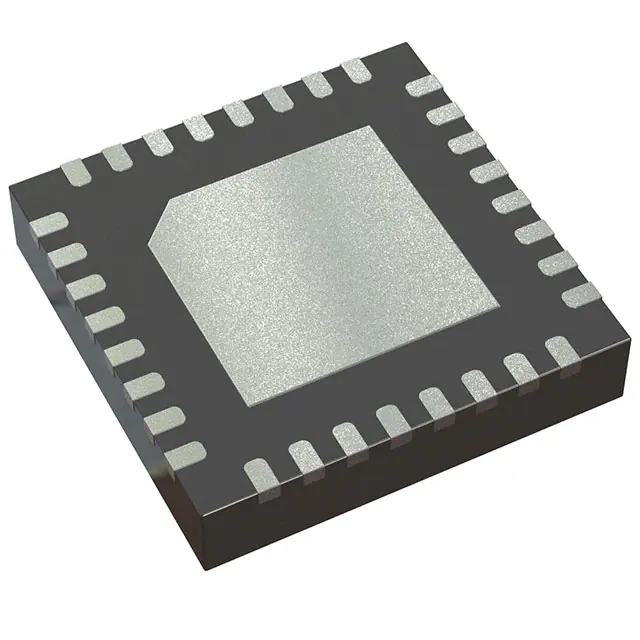
- Part No.:
- MAX96708GTJ+
- Manufacturer:
- Analog Devices Inc./Maxim Integrated
- Category:
- Serializers, Deserializers
- Package:
- 32-WFQFN Exposed Pad
- Datasheet:
-
 MAX96708GTJ+.pdf
- Description:
- IC DESERIALIZER 1.5GBPS 32TQFN
- Quantity:
- Payment:

- Shipping:

Inventory:2,779
Please send an inquiry. Send us your inquiry, and we will respond immediately.
Product details
Overview
MAX96708GTJ+ from Maxim Integrated is a 14-bit GMSL deserializer for automotive camera links, supporting up to 1.74Gbps serial-bit rate over coax or STP cable. It features adaptive equalization (enabling 15m cable reach at full speed), embedded UART/I2C control channel (9.6kbps–1Mbps), and crosspoint switch for flexible video data routing. Designed for AEC-Q100 Grade 2 (−40°C to +115°C), it serves as the parallel video interface endpoint in safety-critical ADAS camera systems.
For engineers reviewing the MAX96708GTJ+ datasheet, MAX96708GTJ+ pinout, MAX96708GTJ+ application, or MAX96708GTJ+ equivalent, key selection criteria include spread-spectrum input tracking capability, ESD robustness (±8kV contact/±15kV air), dual-supply operation (1.7V–1.9V core / 1.7V–3.6V I/O), and hardware-selectable I²C addresses (15 options).
Technical Context
The MAX96708GTJ+ implements a GMSL (Gigabit Multimedia Serial Link) deserialization architecture with spread-spectrum clock tracking, enabling high-EMI-tolerance reception from remote serializers like MAX96709. Its adaptive line equalizer dynamically compensates for cable loss across temperature and length variations.
It integrates a bidirectional control channel supporting UART, I²C (with clock stretch), and UART-to-I²C translation modes-allowing host-side configuration of both serializer and camera registers independent of video timing. The 32-pin TQFN package hosts dedicated GPI/GPO pins for frame sync triggering and error signaling (ERRB output).
Key Specifications
| Parameter | Value and Actual Design Meaning |
|---|---|
| Serial Bit Rate | Up to 1.74Gbps - supports megapixel camera video streams with minimal latency |
| Video Bus Width | 12-bit + H/V sync or 11-bit + H/V sync - enables flexible pixel depth matching for CMOS image sensors |
| Control Channel Speed | 9.6kbps to 1Mbps - allows real-time camera register programming without interrupting video flow |
| Operating Temperature | −40°C to +115°C - meets AEC-Q100 Grade 2 for under-hood and rear-view camera placement |
| ESD Protection | ±8kV contact / ±15kV air per IEC 61000-4-2 and ISO 10605 - ensures reliability in automotive harness environments |
| Core Supply Range | 1.7V to 1.9V - low-voltage operation reduces power consumption and thermal load |
| I/O Supply Range | 1.7V to 3.6V - supports interfacing with diverse parallel video receivers and microcontrollers |
Pinout & Package
The MAX96708GTJ+ is housed in a 32-pin, 5mm × 5mm TQFN-EP package with 0.5mm lead pitch and exposed thermal pad for enhanced heat dissipation in automotive modules.
| Pin/Terminal | Circuit Role | Design Meaning |
|---|---|---|
| VCC_CORE | Core power supply | 1.7V–1.9V supply for internal logic and SERDES circuitry |
| VCC_IO | I/O power supply | 1.7V–3.6V supply for parallel video bus and control interfaces |
| IN_P / IN_N | Differential serial input | Accepts GMSL-encoded coax/STP signal with spread-spectrum tracking |
| CLKOUT | Parallel clock output | Provides synchronous pixel clock to downstream video processor or FPGA |
| DATA[11:0] | Parallel video data bus | 12-bit LVCMOS video data output with HSYNC/VSYNC encoding |
| ERRB | Error indicator output | Open-drain active-low signal indicating video/control data integrity failure |
| GPI | General-purpose input | Dedicated "Up/Down" input for camera frame sync trigger or external event detection |
| I2C_SDA / I2C_SCL | I²C interface pins | Support bidirectional control channel communication with clock stretch capability |
Key Features
| Feature | Design Value |
|---|---|
| Adaptive Equalization | Compensates for up to 15m of 50Ω coax cable loss at full 1.74Gbps rate without manual tuning |
| Crosspoint Switch | Reconfigurable mapping of serialized input lanes to any parallel output lane, enabling multi-camera source flexibility |
| Embedded Control Channel | UART/I²C/mixed-mode interface operates independently of video timing, allowing runtime sensor reconfiguration |
| PRBS BER Testing | Built-in pseudo-random bit sequence receiver enables in-system link quality validation without external test equipment |
| Hardware I²C Address Selection | 15 unique device addresses set via 4-pin strap configuration - simplifies multi-deserializer system design |
Applications
| Rear-View Camera System | Surround-View Camera Hub |
|---|---|
Use Scenario: Deserializes video from rear-mounted CMOS camera over single coax cable to infotainment display unit. IC Role / Device Role / Timing Role: GMSL deserializer converting high-speed serial stream to parallel 12-bit video + H/V sync for GPU ingestion. Use Value: Enables compact, EMI-robust cabling with integrated error detection and frame-sync triggering via GPI. | Use Scenario: Aggregates video from four side cameras into a central domain controller using shared deserializer resources. IC Role / Device Role / Timing Role: Multi-input deserializer with crosspoint switch routing each camera's data to assigned memory buffers. Use Value: Reduces BOM count via 2:1 input mux and hardware-addressable I²C control, simplifying software management. |
| Front ADAS Camera Module | Driver Monitoring System (DMS) |
Use Scenario: Receives high-resolution forward-facing camera feed for lane departure and collision warning processing. IC Role / Device Role / Timing Role: Low-latency deserializer with spread-spectrum tracking ensuring reliable operation near engine EMI sources. Use Value: Maintains video integrity under harsh electrical conditions while meeting ASIL-B functional safety requirements. | Use Scenario: Interfaces with interior-facing IR camera capturing driver attention metrics in real time. IC Role / Device Role / Timing Role: Deserializer providing precise frame synchronization via GPI-triggered interrupts to application processor. Use Value: Delivers deterministic timing for eye-tracking algorithms through dedicated sync pulse handling and low-jitter clock recovery. |
Equivalent & Alternatives
The following parts are listed as comparable options for similar GMSL deserializer applications.
| Alternative Part | Technical Difference | Application Difference | Selection Advice |
|---|---|---|---|
| MAX96711GTJ+ | Higher 3.12Gbps serial rate; supports 16-bit video bus; includes integrated HDCP engine | Targeted for premium cockpit displays requiring higher resolution and content protection | Select MAX96711GTJ+ when >1.74Gbps bandwidth or HDCP compliance is required |
| DS90UB954TRGCRQ1 | FPD-Link III compatible; 3.0Gbps max; different register map and control protocol; no built-in PRBS tester | Used in TI-based ADAS platforms; requires separate error monitoring implementation | Choose DS90UB954TRGCRQ1 only when migrating from existing FPD-Link III infrastructure |
Compared with MAX96711GTJ+ and DS90UB954TRGCRQ1, the MAX96708GTJ+ offers optimal balance of cost, power (185mA max), and feature set for mainstream automotive camera nodes-especially where coax cabling, AEC-Q100 Grade 2, and embedded control-channel flexibility are critical.
Availability
MAX96708GTJ+ is available at Aetrix Electronics and suitable for rear-view camera systems, surround-view hubs, front ADAS modules, and driver monitoring systems requiring stable component supply across automotive production lifecycles.
Supply support for MAX96708GTJ+ includes scheduled delivery planning, volume procurement assistance, BOM continuity management, traceable sourcing, and lifecycle availability coordination for OEM customers, industrial embedded developers, connected-device designers, and electronics production programs.
Manufacturer
Maxim Integrated (now part of Analog Devices) designs precision analog, mixed-signal, and power management ICs for automotive, industrial, and communications markets.
The MAX967xx family delivers GMSL deserializers optimized for automotive camera links-emphasizing ESD-hardened coax interfaces, low-power operation, and robust control-channel functionality for safety-critical vision systems.
FAQ
What is the maximum supported cable length for MAX96708GTJ+ at full 1.74Gbps data rate?
The MAX96708GTJ+ supports up to 15 meters of standard 50Ω coaxial cable at its maximum 1.74Gbps serial bit rate, enabled by its adaptive equalization circuitry that dynamically compensates for frequency-dependent attenuation. This performance is validated per manufacturer specifications and applies to typical automotive-grade RG-174 or equivalent cables under AEC-Q100 operating conditions. Cable length may vary with impedance mismatch or environmental noise.
Does MAX96708GTJ+ support both UART and I²C control protocols simultaneously?
Yes, the MAX96708GTJ+ supports UART, I²C (with clock stretch), and mixed UART/I²C modes on its embedded control channel-but not simultaneously on the same physical interface. Mode selection is configured via register settings (e.g., MAIN_CONFIG register). In UART-to-I²C mode, the deserializer translates incoming UART commands into I²C transactions directed to the serializer or camera, enabling unified host-side control across heterogeneous devices.
How does the crosspoint switch in MAX96708GTJ+ improve system design flexibility?
The crosspoint switch in MAX96708GTJ+ allows programmable mapping of serialized input data lanes to any parallel output lane (e.g., DATA[11:0]), decoupling physical cable connections from logical video routing. This enables dynamic reassignment of camera sources to display pipelines or memory buffers without hardware changes-critical for multi-camera architectures like surround-view systems where camera roles may shift based on vehicle state or software-defined use cases.
What is the purpose of the ERRB pin on MAX96708GTJ+?
The ERRB pin on MAX96708GTJ+ is an open-drain, active-low output that asserts when video data corruption or control-channel communication errors are detected-including CRC failures, lock-loss events, or invalid packet structures. It provides immediate hardware-level fault signaling to the host processor or safety monitor, enabling rapid fail-safe responses such as display blanking or camera reinitialization-essential for ASIL-B compliant ADAS implementations.
Can MAX96708GTJ+ operate with different core and I/O supply voltages?
Yes, MAX96708GTJ+ supports independent supply domains: VCC_CORE accepts 1.7V–1.9V for internal logic and SERDES, while VCC_IO accepts 1.7V–3.6V for parallel video outputs and control interfaces. This dual-supply architecture allows direct interfacing with 1.8V FPGAs, 3.3V microcontrollers, or mixed-voltage SoCs without level-shifting components-reducing BOM cost and PCB area in space-constrained automotive modules.
MAX96708GTJ+ Specifications
- Product attributes
- Attribute value
- Manufacturer:
- Analog Devices Inc./Maxim Integrated
- Series:
- -
- Package/Case:
- 32-WFQFN Exposed Pad
- Packaging:
- Tray
- Product Status:
- Active
- Function:
- Deserializer
- Data Rate:
- -
- Input Type:
- CML
- Output Type:
- CML
- Number of Inputs:
- -
- Number of Outputs:
- -
- Voltage - Supply:
- 1.7V ~ 1.9V
- Operating Temperature:
- -40°C ~ 115°C (TA)
- Grade:
- Automotive
- Qualification:
- AEC-Q100
- Mounting Type:
- Surface Mount
- Supplier Device Package:
- 32-TQFN (5x5)
MAX96708GTJ+ FAQ
1.How can I place an order for MAX96708GTJ+ through Aetrix?
Please submit a Request for Quotation (RFQ) for MAX96708GTJ+ on Aetrix. Our sales agent will provide a competitive quotation and guide you through the order confirmation once you accept the terms.
2.Are the price and stock information for MAX96708GTJ+ reliable?
The price and inventory of MAX96708GTJ+ are updated periodically and may fluctuate due to market conditions. Stock and pricing data are typically refreshed every 24 hours. Quotation validity for MAX96708GTJ+ is usually 5 days.
3.What payment methods are accepted for MAX96708GTJ+?
We accept Wire Transfer, PayPal, Credit Card, Western Union, MoneyGram, and Escrow for MAX96708GTJ+ transactions.
Note: Certain payment methods may incur a processing fee.
4.How is shipping managed for MAX96708GTJ+?
MAX96708GTJ+ orders can be shipped via leading logistics carriers, including DHL, UPS, FedEx, TNT, or Registered Mail.
Once your MAX96708GTJ+ order is processed, you will receive an email with the shipment details and tracking number.
Note: Tracking information may take up to 24 hours to appear. Express delivery typically takes 3–5 business days.
5.How can I obtain technical support or documentation for MAX96708GTJ+?
For technical support, including MAX96708GTJ+ datasheets, pinout diagrams, or application guidance, please contact our engineering support team. They can provide detailed documentation and assistance for your MAX96708GTJ+ requirements.
6.How does Aetrix verify that MAX96708GTJ+ is sourced from the original manufacturer or authorized distributors?
All MAX96708GTJ+ products on Aetrix are procured from qualified distributors and authorized channels. Our dedicated quality assurance team conducts strict verification, including traceability checks and, if necessary, third-party testing. This ensures that MAX96708GTJ+ meets industry standards.
7.What is the process for return or replacement of MAX96708GTJ+?
All MAX96708GTJ+ units undergo pre-shipment inspection (PSI). If there is an issue with MAX96708GTJ+, returns or replacements are accepted under the following conditions:
1.Quantity discrepancies, incorrect items, or visible external defects (such as breakage or corrosion), acknowledged by Aetrix.
2.The issue is reported within 90 days of delivery.
3.The MAX96708GTJ+ part is unused and in its original packaging.
Return procedure for MAX96708GTJ+:
1.Submit a request within 90 days.
2.Obtain a Return Material Authorization (RMA) from Aetrix.
MAX96708GTJ+ Tags
-
SN65HVS880PWPR
Texas Instruments
-
SN65HVS882PWPR
Texas Instruments
-
FIN3386MTDX
onsemi
-
FIN3385MTDX
onsemi
-
SN65LV1023ARHBR
Texas Instruments
-
SN65LV1023ADBR
Texas Instruments
-
SN65LV1224BDBR
Texas Instruments
-
SN65LVDS93ADGGR
Texas Instruments
-
SN65LVDS93DGGR
Texas Instruments
-
TDES954RGZT
Texas Instruments
-
SN65LV1224BRHBT
Texas Instruments
-
DS90UB914QSQE/NOPB
Texas Instruments
Tech Hub

A practical engineering guide to 3.3V and 5V logic compatibility, input thresholds, resistor dividers, translator ICs, MOSFET level shifting, I2C pull-ups, timing limits and power-sequencing risks.

The 74HC595 uses push-pull logic outputs, while the TPIC6B595 uses 50 V open-drain DMOS sinks for higher-power loads. This guide compares timing, current limits, 3.3 V interfacing, load wiring, thermal…

The 74HC595 converts serial data into eight stable parallel outputs. This guide covers pin functions, shift and storage timing, OE and MR behavior, drive-current limits, cascading, voltage compatibilit…

A technical comparison of level-sensitive latches and edge-triggered flip-flops, covering timing windows, setup and hold limits, master–slave operation, time borrowing, race-through, HDL inference and…

A D latch stores one bit while Enable controls when data can pass. This reference covers gate-level operation, truth tables, transparency, setup and hold timing, LE versus OE, common ICs and practical …

An SR latch stores one bit through cross-coupled feedback. This engineering reference covers NOR and NAND implementations, truth tables, forbidden-state recovery, gated operation, switch debouncing, fa…

Latch circuits retain one bit through feedback. This technical reference covers SR and D latches, truth tables, transparency, timing limits, latch-versus-flip-flop behavior, applications and common log…

An engineering guide to LED driver operation, constant-current and constant-voltage outputs, linear and switching topologies, dimming, IC selection, calculations, replacement compatibility, and fault c…

Operational amplifier guide covering op amp basics, feedback, ideal vs real op amps, common configurations, buffer circuits, offset, bias current, gain-bandwidth, slew rate, rail-to-rail limits and sel…

Jumper cables guide covering safe connection order, red and black clamp placement, final ground connection, cable gauge, length, clamp quality, copper vs CCA cables, jump starter comparison and battery…


