
 My Inquiry
 My Account


Analog Devices Inc./Maxim Integrated MAX998ESA+T
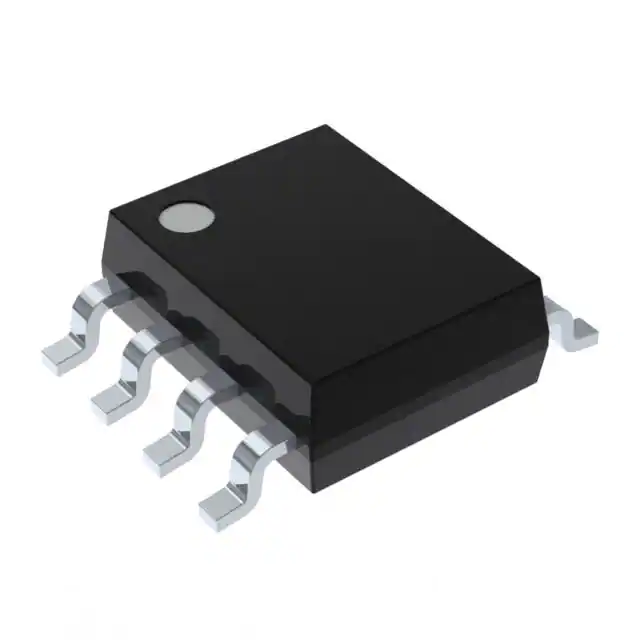
- Part No.:
- MAX998ESA+T
- Manufacturer:
- Analog Devices Inc./Maxim Integrated
- Category:
- Comparators
- Package:
- 8-SOIC (0.154", 3.90mm Width)
- Datasheet:
-
 MAX998ESA+T.pdf
- Description:
- IC COMPARATOR 1 GEN PUR 8SOIC
- Quantity:
- Payment:

- Shipping:

Inventory:1,851
Please send an inquiry. Send us your inquiry, and we will respond immediately.
Product details
Overview
MAX998ESA+T from Maxim Integrated is a single, high-speed, low-power comparator optimized for +2.7V to +5.5V single-supply operation in space-constrained systems. It delivers 20ns propagation delay, 225µA supply current per comparator, and rail-to-rail output swing without external pull-ups - enabling direct interface with CMOS/TTL logic in battery-powered threshold detection circuits.
For engineers reviewing the MAX998ESA+T datasheet, MAX998ESA+T pinout, MAX998ESA+T application, or MAX998ESA+T equivalent, key selection criteria include shutdown current (1nA), ground-sensing input range (–0.2V to VCC–1.2V), input offset voltage (±2mV), internal hysteresis (0.5–4.0mV), and SOT23-6 package compatibility with layout-sensitive IR receiver and digital line receiver designs.
Technical Context
The MAX998ESA+T employs a CMOS input stage with –0.2V to (VCC–1.2V) common-mode range, supporting ground-referenced sensing while tolerating continuous short-circuit faults to either rail. Its push-pull output drives rail-to-rail under 2mA sink/source loads without external components.
Internal hysteresis (0.5–4.0mV input-referred) ensures clean switching with slow-moving inputs, and the SHDN pin enables deterministic low-power mode: driving SHDN low reduces ICC to 1nA and places OUT in high-impedance state, with 5µs shutdown delay and 15µs wake-up time at VCC = 5V.
Key Specifications
| Parameter | Value and Actual Design Meaning |
|---|---|
| Propagation Delay | 20ns typical at 50mV overdrive - enables fast edge detection in digital receivers and timing-critical discriminators. |
| Supply Current | 225µA per comparator at +25°C - supports multi-year battery life in always-on sensor monitoring. |
| Shutdown Current | 1nA typical - allows ultra-low quiescent power during system sleep without external power gating. |
| Input Offset Voltage | ±2mV max over temperature - ensures accurate trip-point stability in precision threshold detectors. |
| Common-Mode Range | –0.2V to (VCC–1.2V) - permits direct connection to ground-referenced sensors and transducers. |
| Rail-to-Rail Output | VOH ≥ VCC–0.1V, VOL ≤ 0.4V at 2mA - eliminates need for pull-up resistors when interfacing with 3.3V/5V logic families. |
| Input Hysteresis | 0.5–4.0mV input-referred - suppresses noise-induced oscillation without requiring external feedback networks. |
Pinout & Package
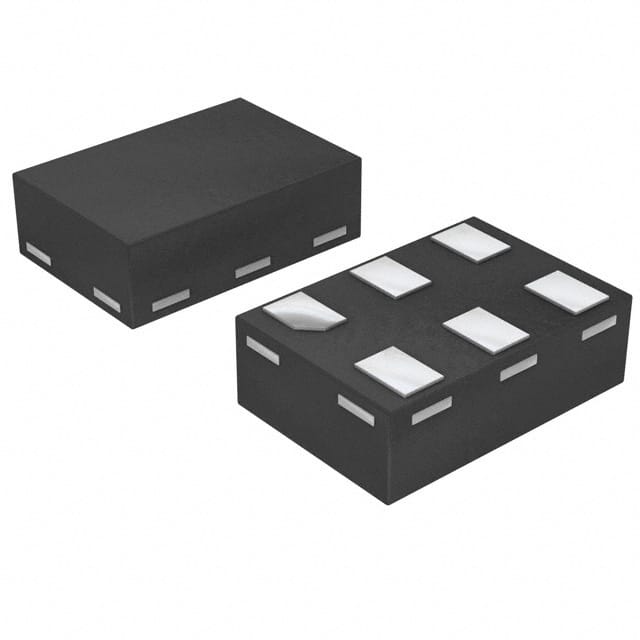
MAX998ESA+T is housed in a RoHS-compliant 6-pin SOT23 package (outline 21-0058), optimized for high-density PCB layouts and reflow-compatible assembly.
| Pin/Terminal | Circuit Role | Design Meaning |
|---|---|---|
| 1 - GND | Ground reference | Primary return path for supply and signal currents; must connect to low-impedance ground plane. |
| 2 - IN− | Inverting input | Differential input node accepting signals within –0.2V to (VCC–1.2V); tolerant of continuous rail shorts. |
| 3 - IN+ | Noninverting input | Differential input node with identical common-mode range and fault tolerance as IN−. |
| 4 - OUT | Comparator output | Push-pull rail-to-rail output; enters high-Z state during shutdown - supports wired-OR configurations. |
| 5 - VCC | Positive supply | +2.7V to +5.5V single supply; requires local 0.1µF ceramic decoupling placed adjacent to this pin. |
| 6 - SHDN | Shutdown control | Active-low enable; driven low to enter 1nA shutdown; logic thresholds scale with VCC (VIH = 0.65×VCC, VIL = 0.2×VCC). |
Key Features
| Feature | Design Value |
|---|---|
| Single-supply operation | Functional down to +2.7V - eliminates need for dual supplies in portable 3V systems. |
| Ground-sensing inputs | Common-mode range extends 200mV below GND - enables direct interface with current-output sensors and photodiodes. |
| Rail-to-rail output drive | No external pull-up required - reduces BOM count and board area in CMOS/TTL interfacing. |
| Internal hysteresis | Eliminates external positive-feedback resistors in noise-prone environments like IR receivers. |
| Low-power shutdown | 1nA ICC and high-Z output - preserves system-level power budget without compromising signal integrity during sleep. |
Applications
| IR Receiver | Digital Line Receiver |
|---|---|
|
Use Scenario: Detecting modulated infrared pulses from remote controls or proximity sensors using a photodiode and load resistor. IC Role / Device Role / Timing Role: Comparator acting as high-speed analog front-end, converting photodiode current into clean digital logic levels. Use Value: 20ns propagation delay ensures accurate pulse timing capture; rail-to-rail output directly drives microcontroller GPIOs without level-shifting. |
Use Scenario: Recovering digital data from noisy, attenuated transmission lines in industrial communication interfaces. IC Role / Device Role / Timing Role: Threshold discriminator restoring logic states from degraded waveforms with minimal jitter. Use Value: Internal hysteresis prevents chatter on slow edges; ground-sensing inputs accommodate DC-biased line voltages. |
| Battery-Powered Threshold Detector | 3V System Voltage Monitor |
|
Use Scenario: Monitoring battery voltage to trigger low-battery alerts or system shutdown before critical depletion. IC Role / Device Role / Timing Role: Precision comparator comparing battery voltage against a stable reference (e.g., MAX6120). Use Value: ±2mV offset voltage ensures consistent trip points across temperature; 225µA ICC extends operational lifetime in always-on monitoring. |
Use Scenario: Validating regulated 3.3V or 3.0V supply rails in embedded controllers and IoT endpoints. IC Role / Device Role / Timing Role: Undervoltage/overvoltage detector implementing window-comparator functionality with discrete resistors. Use Value: –0.2V to VCC–1.2V input range accepts direct connection to supply nodes; shutdown mode disables monitoring during deep sleep. |
Equivalent & Alternatives
The following parts are listed as comparable options for similar high-speed, low-power comparator applications.
| Alternative Part | Technical Difference | Application Difference | Selection Advice |
|---|---|---|---|
| LMV7215M5X | 25ns propagation delay, 120µA supply current, no shutdown pin, SC70-5 package | Lacks SHDN functionality and ground-sensing capability; common-mode range limited to 0.2V above GND | Choose when ultra-low ICC is secondary to cost and shutdown is managed externally. |
| TLV3501DBVR | 4.5ns propagation delay, 5.3mA supply current, no shutdown, SOT23-6 package | Higher speed but 23× higher ICC; no ground-sensing; requires external pull-up for open-drain output | Choose only when sub-5ns response is mandatory and power budget allows >5mA per channel. |
Compared with LMV7215M5X and TLV3501DBVR, the MAX998ESA+T uniquely balances nanosecond-speed response (20ns), ultra-low active/shutdown current (225µA/1nA), ground-sensing inputs, and integrated rail-to-rail output - making it optimal for battery-constrained, space-limited, and noise-sensitive threshold detection where both precision and power efficiency are non-negotiable.
Availability
MAX998ESA+T is available at Aetrix Electronics and suitable for battery-powered systems, IR receivers, digital line receivers, and 3V system voltage monitors requiring stable component supply across industrial and consumer production cycles.
Supply support for MAX998ESA+T includes scheduled delivery planning, volume procurement assistance, BOM continuity management, traceable sourcing, and lifecycle availability coordination for OEM customers, industrial embedded developers, connected-device designers, and electronics production programs.
Manufacturer
Maxim Integrated (now part of Analog Devices) designs precision analog and mixed-signal ICs for power, sensing, and interface applications in demanding industrial, automotive, and communications systems.
The MAX998ESA+T belongs to the MAX976/MAX978/MAX998 family of high-speed comparators engineered specifically for single-supply, low-power, space-constrained applications such as portable instrumentation and energy-harvesting sensor nodes.
FAQ
What is the maximum operating supply voltage for MAX998ESA+T?
The MAX998ESA+T supports a supply voltage range of +2.7V to +5.5V, with an absolute maximum rating of +6V on the VCC pin. Operation beyond +5.5V is not guaranteed and may impact long-term reliability or parametric performance. The MAX998ESA+T maintains full specification compliance across this entire 2.7V–5.5V range, including propagation delay, offset voltage, and hysteresis behavior.
Does MAX998ESA+T require external pull-up resistors on its output?
No, the MAX998ESA+T features a push-pull output stage capable of rail-to-rail swing without external pull-up circuitry. At VCC = 5.5V, VOH is guaranteed ≥ VCC–0.1V and VOL ≤ 0.4V with 2mA load, enabling direct interfacing with standard CMOS and TTL logic families. This eliminates BOM items and layout complexity associated with open-drain comparators.
How does the shutdown function behave on MAX998ESA+T?
Driving the SHDN pin low places the MAX998ESA+T in shutdown mode, reducing supply current to 1nA typical and forcing the output into a high-impedance state. Wake-up time is 15µs (typical) at VCC = 5V. SHDN logic thresholds scale with VCC (VIH = 0.65×VCC, VIL = 0.2×VCC), allowing reliable control even when VCC operates at 2.7V while driven by 5V logic.
Can MAX998ESA+T accept input voltages below ground?
Yes, the MAX998ESA+T inputs support a common-mode voltage range extending 200mV below ground (–0.2V minimum), enabling direct connection to ground-referenced current sources like photodiodes or shunt-based current sensors. Both inputs tolerate continuous short-circuit faults to either rail, enhancing robustness in real-world signal conditioning applications.
What is the input offset voltage specification for MAX998ESA+T over temperature?
The MAX998ESA+T guarantees input offset voltage of ±2mV maximum over the full –40°C to +85°C operating temperature range. At +25°C, typical VOS is ±0.2mV. This tight offset ensures stable, repeatable trip-point accuracy in precision threshold detection circuits without requiring calibration or trimming.
MAX998ESA+T Specifications
- Product attributes
- Attribute value
- Manufacturer:
- Analog Devices Inc./Maxim Integrated
- Package/Case:
- 8-SOIC (0.154", 3.90mm Width)
- Series:
- -
- Packaging:
- Tape & Reel (TR)
- Product Status:
- Active
- Type:
- General Purpose
- Number of Elements:
- 1
- Output Type:
- Push-Pull, Rail-to-Rail
- Voltage - Supply, Single/Dual (±):
- 2.7V ~ 5.5V
- :
- 2mV @ 5V
- Voltage - Input Offset (Max):
- 0.075µA @ 5.5V
- Current - Input Bias (Max):
- -
- Current - Output (Typ):
- 650µA
- Current - Quiescent (Max):
- 95dB CMRR, 100dB PSRR
- CMRR, PSRR (Typ):
- 28ns
- Propagation Delay (Max):
- 4mV
- Hysteresis:
- -40°C ~ 85°C
- Operating Temperature:
- -
- Grade:
- -
- Qualification:
- Surface Mount
- :
- 8-SOIC
MAX998ESA+T FAQ
1.How can I place an order for MAX998ESA+T through Aetrix?
Please submit a Request for Quotation (RFQ) for MAX998ESA+T on Aetrix. Our sales agent will provide a competitive quotation and guide you through the order confirmation once you accept the terms.
2.Are the price and stock information for MAX998ESA+T reliable?
The price and inventory of MAX998ESA+T are updated periodically and may fluctuate due to market conditions. Stock and pricing data are typically refreshed every 24 hours. Quotation validity for MAX998ESA+T is usually 5 days.
3.What payment methods are accepted for MAX998ESA+T?
We accept Wire Transfer, PayPal, Credit Card, Western Union, MoneyGram, and Escrow for MAX998ESA+T transactions.
Note: Certain payment methods may incur a processing fee.
4.How is shipping managed for MAX998ESA+T?
MAX998ESA+T orders can be shipped via leading logistics carriers, including DHL, UPS, FedEx, TNT, or Registered Mail.
Once your MAX998ESA+T order is processed, you will receive an email with the shipment details and tracking number.
Note: Tracking information may take up to 24 hours to appear. Express delivery typically takes 3–5 business days.
5.How can I obtain technical support or documentation for MAX998ESA+T?
For technical support, including MAX998ESA+T datasheets, pinout diagrams, or application guidance, please contact our engineering support team. They can provide detailed documentation and assistance for your MAX998ESA+T requirements.
6.How does Aetrix verify that MAX998ESA+T is sourced from the original manufacturer or authorized distributors?
All MAX998ESA+T products on Aetrix are procured from qualified distributors and authorized channels. Our dedicated quality assurance team conducts strict verification, including traceability checks and, if necessary, third-party testing. This ensures that MAX998ESA+T meets industry standards.
7.What is the process for return or replacement of MAX998ESA+T?
All MAX998ESA+T units undergo pre-shipment inspection (PSI). If there is an issue with MAX998ESA+T, returns or replacements are accepted under the following conditions:
1.Quantity discrepancies, incorrect items, or visible external defects (such as breakage or corrosion), acknowledged by Aetrix.
2.The issue is reported within 90 days of delivery.
3.The MAX998ESA+T part is unused and in its original packaging.
Return procedure for MAX998ESA+T:
1.Submit a request within 90 days.
2.Obtain a Return Material Authorization (RMA) from Aetrix.
MAX998ESA+T Tags

-
LM2903DR
Texas Instruments
-
LM339DR
Texas Instruments
-
LM339PWR
Texas Instruments

-
LM393DT
STMicroelectronics
-
LM2901PWR
Texas Instruments
-
LM2903DT
STMicroelectronics
-
LM393DR
Texas Instruments
-
LM239DR
Texas Instruments
-
LM339APWR
Texas Instruments
-
LM2903P
Texas Instruments
-
LM393ADR
Texas Instruments
-
NCX2200GMAZ
NXP USA Inc.
Tech Hub

An engineering guide to LED driver operation, constant-current and constant-voltage outputs, linear and switching topologies, dimming, IC selection, calculations, replacement compatibility, and fault c…

Operational amplifier guide covering op amp basics, feedback, ideal vs real op amps, common configurations, buffer circuits, offset, bias current, gain-bandwidth, slew rate, rail-to-rail limits and sel…

Jumper cables guide covering safe connection order, red and black clamp placement, final ground connection, cable gauge, length, clamp quality, copper vs CCA cables, jump starter comparison and battery…

LDO regulator guide covering low dropout voltage, power dissipation, thermal design, PSRR, output noise, capacitor stability, adjustable LDO circuits, LDO vs buck converter and datasheet selection chec…

Conditional Access Module guide covering CAM meaning, CI/CI+ interface, smart card authorization, DVB security workflow, TV and set-top box compatibility, internal electronics, ESD protection, connecto…

Guide to electronic component obsolescence covering EOL risk, PCN/PDN notices, last-time buy planning, replacement options, form-fit-function validation, counterfeit risk and BOM lifecycle management.

18650 battery guide covering lithium-ion cell basics, 3.6V/3.7V voltage, 4.2V charging, mAh and Wh capacity, protected cells, chargers, BMS, series-parallel packs, holders, welding and sourcing checks.…

Hall effect sensor guide covering working principle, linear and digital sensors, Arduino circuits, current sensing, speed detection, automotive applications, A3144 examples, signal filtering and datash…

Product Change Notification guide for electronic components, covering PCN meaning, PCN vs PDN/EOL, common change types, risk levels, form-fit-function review, engineering validation, BOM control, LTB/L…

A practical guide to blend door actuators, covering HVAC function, symptoms, location, AC and heater issues, reset and calibration, replacement cost, electrical diagnosis, compatibility checks, and rep…


