
 My Inquiry
 My Account


Analog Devices Inc./Maxim Integrated MAXQ7667AACM+T
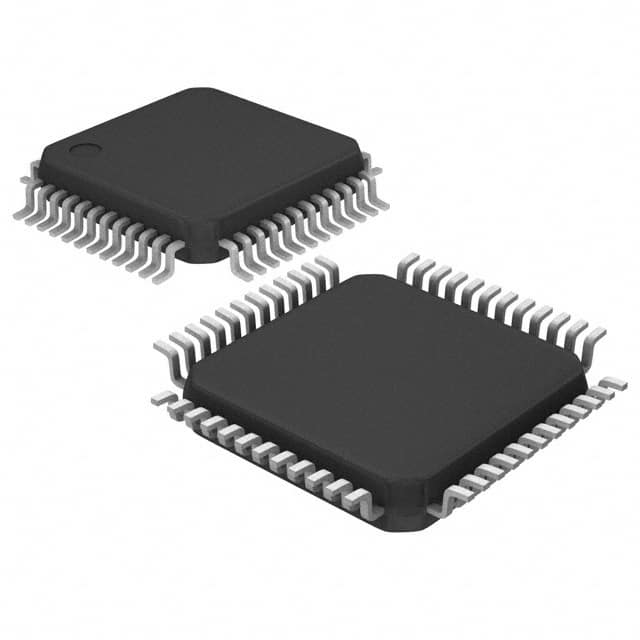
- Part No.:
- MAXQ7667AACM+T
- Manufacturer:
- Analog Devices Inc./Maxim Integrated
- Category:
- Microcontrollers
- Package:
- 48-LQFP
- Datasheet:
-
 MAXQ7667AACM+T.pdf
- Description:
- IC MCU 16BIT 32KB FLASH 48LQFP
- Quantity:
- Payment:

- Shipping:

Inventory:2,622
Please send an inquiry. Send us your inquiry, and we will respond immediately.
Product details
Overview
MAXQ7667AACM+T from Maxim Integrated is a 16-bit RISC microcontroller-based ultrasonic distance-measuring SoC optimized for large-range, weak-signal, and multi-target time-of-flight applications. It integrates a programmable burst generator (25–100 kHz), echo reception path with 0.7 µVRMS input-referred noise LNA, 16-bit sigma-delta ADC, digital bandpass/lowpass filters, and an embedded MAXQ20 core - all operating across –40°C to +125°C in a 48-pin LQFP package.
For engineers reviewing the MAXQ7667AACM+T datasheet, MAXQ7667AACM+T pinout, MAXQ7667AACM+T application, or MAXQ7667AACM+T equivalent, key selection criteria include its ultrasonic signal chain SNR, autonomous echo parameter adaptation, triple-supply operation (+2.5V/+3.3V/+5V), LIN/UART interface, and integrated 5-channel 12-bit SAR ADC with 250 ksps sampling rate.
Technical Context
The MAXQ7667AACM+T implements a closed-loop smart sensing architecture: its embedded 16-bit MAXQ20 microcontroller dynamically adjusts burst frequency and echo reception parameters per transmission based on real-time environmental feedback. Digital filtering (bandpass and lowpass) and burst synthesis operate autonomously without CPU intervention, freeing the core for optimization, diagnostics, and communication.
Its analog front end features dual ADC paths - a 16-bit sigma-delta ADC for echo digitization (80 × fBPF sampling rate) and a separate 5-channel 12-bit SAR ADC (250 ksps) - both supported by internal voltage references (2.5 V ±1%) and configurable external reference inputs. Power management includes three independent linear regulators (REG2P5, REG3P3, GATE5-controlled DVDDIO) enabling single- or multi-rail operation from +2.5V to +65V.
Key Specifications
| Parameter | Value and Actual Design Meaning |
|---|---|
| Burst Frequency Range | 25 kHz to 100 kHz - enables precise time-of-flight measurement across diverse transducer resonances and target distances. |
| Echo Input Noise | 0.7 µVRMS (min gain) - supports reliable detection of weak ultrasonic echoes in noisy industrial environments. |
| Sigma-Delta ADC Resolution | 16 bits - provides high dynamic range for accurate envelope demodulation and amplitude analysis of received echoes. |
| SAR ADC Sampling Rate | 250 ksps - allows concurrent monitoring of auxiliary analog sensors (e.g., temperature, supply rails) without compromising ultrasonic timing accuracy. |
| Operating Temperature | –40°C to +125°C - qualified for under-hood automotive parking systems and harsh industrial automation deployments. |
| Digital Interfaces | UART/LIN (1–20 kbps), SPI (up to 8 MHz master), JTAG - enables direct integration into vehicle networks and host MCU supervision. |
| Supply Flexibility | +2.5V/+3.3V/+5V native supplies; GATE5 output controls external pass transistor for +8V to +65V operation - eliminates need for external DC-DC converters in high-voltage systems. |
Pinout & Package
MAXQ7667AACM+T is housed in a 48-pin LQFP (7 mm × 7 mm, 0.5 mm pitch) package with exposed thermal pad. Pin functions are validated per Maxim's official pin description table (Rev 1, July 2009). Key terminal groups include dedicated echo inputs (ECHOP/ECHON), burst output (BURST), analog supplies (AVDD/AGND), digital I/Os (P0.x/P1.x), and regulator outputs (REG2P5/REG3P3/GATE5).
| Pin/Terminal | Circuit Role | Design Meaning |
|---|---|---|
| ECHOP / ECHON | Differential ultrasonic echo input pair | AC-coupled inputs to low-noise amplifier; enable robust common-mode noise rejection in transducer interfaces. |
| BURST | Ultrasonic transducer excitation output | Three-state capable driver supporting up to 8 mA sink/source; directly drives piezoelectric transducers without external buffer. |
| GATE5 | External pass transistor control output | Drives NPN/nMOS gate to regulate +5V DVDDIO rail from wide-input (8–65V) supply - enables single-supply system design. |
| REG2P5 / REG3P3 | +2.5V and +3.3V linear regulator outputs | Internally generated clean supplies for DVDD and AVDD domains; eliminate need for external LDOs in compact designs. |
| REF / REFBG | ADC reference input/buffered bandgap output | Supports internal 2.5 V reference (±1% initial accuracy) or external reference (1.0–3.3 V); critical for consistent SAR and sigma-delta ADC linearity. |
Key Features
| Feature | Design Value |
|---|---|
| Smart adaptive echo processing | Microcontroller autonomously optimizes burst frequency and gain per transmission - improves ranging accuracy across temperature and target variability without host intervention. |
| Dual-path ADC architecture | 16-bit sigma-delta ADC (echo path) + 5-channel 12-bit SAR ADC (auxiliary sensing) - enables simultaneous high-fidelity echo capture and system health monitoring. |
| Integrated LIN 2.0-compliant UART | Hardware-supported 1–20 kbps LIN communication - allows direct connection to automotive body control modules without external transceivers. |
| Triple-voltage regulator subsystem | On-chip +2.5V, +3.3V, and programmable +5V (via GATE5) regulators - reduces BOM count and PCB area in battery- or bus-powered ultrasonic modules. |
| Automotive-grade qualification | Specified from –40°C to +125°C with AEC-Q100 stress testing compliance - suitable for parking assist, blind-spot detection, and industrial level sensing. |
Applications
| Automotive Parking Assist | Industrial Tank Level Monitoring |
|---|---|
Use Scenario: Real-time distance measurement between vehicle rear bumper and obstacle during low-speed maneuvering. IC Role / Device Role / Timing Role: Primary ultrasonic SoC performing time-of-flight calculation, echo envelope extraction, and LIN message generation. Use Value: Achieves <1 cm resolution at 5 m range using adaptive gain and 0.7 µVRMS noise floor - meets OEM requirements for false-trigger immunity in wet/dirty conditions. |
Use Scenario: Non-contact liquid level detection in stainless steel or plastic tanks in chemical processing plants. IC Role / Device Role / Timing Role: Standalone ultrasonic controller interfacing with ruggedized transducers in explosion-proof enclosures. Use Value: Operates reliably at +125°C ambient with internal +3.3V/+2.5V regulation - eliminates external power ICs and simplifies hazardous-area certification. |
| Vehicle Security Proximity Sensing | Handheld Ultrasonic Distance Meter |
Use Scenario: Intrusion detection via ultrasonic field disturbance around parked vehicles or cargo containers. IC Role / Device Role / Timing Role: Low-power wake-on-event sensor node using SAR ADC for supply monitoring and sigma-delta ADC for continuous echo analysis. Use Value: 3 µA DVDD current in analog-disabled mode extends battery life >2 years in wireless security nodes - enabled by autonomous burst scheduling. |
Use Scenario: Portable handheld device measuring object distance with LCD display and push-button interface. IC Role / Device Role / Timing Role: Single-chip solution integrating ultrasonic signal chain, 16-bit computation, UART debug output, and power management. Use Value: 48-pin LQFP footprint with integrated regulators allows full functionality in <3 cm² PCB area - reduces bill-of-materials vs. discrete MCU + analog front-end solutions. |
Equivalent & Alternatives
The following parts are listed as comparable options for similar ultrasonic distance-measuring applications.
| Alternative Part | Technical Difference | Application Difference | Selection Advice |
|---|---|---|---|
| TIDA-01385 Reference Design (TI) | Discrete solution using MSP430FR6989 + PGA460 - requires external LDOs, transducer drivers, and layout-intensive analog section. | Targeted at cost-sensitive, lower-volume industrial meters; lacks integrated LIN and automotive temp grade. | Choose for prototyping flexibility and TI ecosystem support; avoid if AEC-Q100 compliance or single-chip integration is required. |
| STSPIN32F0B (STMicro) | Motor-control-focused SoC with basic ultrasonic timer peripherals but no integrated LNA, sigma-delta ADC, or echo DSP - requires full external analog front end. | Used in proximity-aware motor drives (e.g., robotic arms); not validated for precision time-of-flight ranging. | Choose only when ultrasonic sensing is secondary to motor control; MAXQ7667AACM+T delivers 10× better echo SNR and autonomous adaptation. |
Compared with TIDA-01385 and STSPIN32F0B, the MAXQ7667AACM+T uniquely integrates the complete ultrasonic signal chain - from burst generation and low-noise echo amplification to 16-bit digitization and envelope demodulation - within a single AEC-Q100-qualified package, reducing system-level design risk and validation effort.
Availability
MAXQ7667AACM+T is available at Aetrix Electronics and suitable for automotive parking assist, industrial tank level monitoring, vehicle security proximity sensing, and handheld ultrasonic distance meter applications requiring stable component supply over extended product lifecycles.
Supply support for MAXQ7667AACM+T includes scheduled delivery planning, volume procurement assistance, BOM continuity management, traceable sourcing, and lifecycle availability coordination for OEM customers, industrial embedded developers, connected-device designers, and electronics production programs.
Manufacturer
Maxim Integrated (now part of Analog Devices) is a semiconductor company specializing in high-performance analog, mixed-signal, and power-management ICs for industrial, automotive, and communications markets.
The MAXQ7667AACM+T belongs to Maxim's MAXQ ultrasonic SoC product line, designed specifically to replace multi-chip ultrasonic sensing subsystems with a single, temperature-resilient, LIN-enabled device for automotive and industrial time-of-flight applications.
FAQ
What is the primary function of the MAXQ7667AACM+T in ultrasonic sensing systems?
The MAXQ7667AACM+T serves as a complete time-of-flight ultrasonic distance-measuring system-on-a-chip. It integrates a programmable burst generator, low-noise echo receiver with 0.7 µVRMS input-referred noise, 16-bit sigma-delta ADC, digital filters, and a 16-bit MAXQ20 microcontroller - enabling autonomous echo parameter optimization and high-accuracy ranging without external signal conditioning components. The MAXQ7667AACM+T is engineered to replace discrete analog front ends and general-purpose MCUs in demanding ultrasonic applications.
Does the MAXQ7667AACM+T support automotive LIN communication?
Yes, the MAXQ7667AACM+T includes a hardware UART with LIN 2.0 compliance, supporting data rates from 1 kbps to 20 kbps. Its TXEN pin directly controls external LIN transceivers, and the integrated protocol engine handles synchronization, checksum, and sleep/wake framing - eliminating software overhead. This makes the MAXQ7667AACM+T suitable for automotive parking assist modules that require direct integration into vehicle LIN networks without additional interface ICs.
How does the MAXQ7667AACM+T handle power supply variations in industrial environments?
The MAXQ7667AACM+T supports three native supply domains (+2.5V DVDD, +3.3V AVDD, +5V DVDDIO) and includes on-chip regulators: REG2P5 (+2.5V), REG3P3 (+3.3V), and GATE5 (controls external pass transistor for +5V rail). When powered from a single +8V to +65V source, GATE5 drives an external transistor to generate stable DVDDIO - enabling operation in wide-input industrial bus systems. Supply supervisors monitor all rails and generate interrupts or reset events below threshold voltages, ensuring robustness against brownouts.
Can the MAXQ7667AACM+T operate without an external crystal?
Yes, the MAXQ7667AACM+T includes an internal 13.5 MHz RC oscillator with ±10.5% initial accuracy and 700 ppm temperature drift, sufficient for non-timing-critical functions like UART communication or background processing. However, for precise ultrasonic burst generation and echo timing, the device relies on its crystal oscillator (4–16 MHz) or external clock input. The PLL synthesizes stable frequencies for both burst and ADC clocks - so crystal-free operation degrades ranging accuracy and is not recommended for production time-of-flight systems.
What analog inputs does the MAXQ7667AACM+T support beyond ultrasonic echo signals?
In addition to the differential ECHOP/ECHON echo inputs, the MAXQ7667AACM+T features a 5-channel 12-bit SAR ADC with 250 ksps sampling rate. Inputs AIN0–AIN4 support single-ended or differential measurements (AIN0/AIN1, AIN2/AIN3 pairs), with programmable gain and internal 2.5 V reference (or external 1.0–3.3 V reference). These channels are commonly used for monitoring transducer temperature, supply voltages, ambient pressure, or other system-level analog signals - all processed concurrently with ultrasonic echo analysis by the same MAXQ7667AACM+T die.
MAXQ7667AACM+T Specifications
- Product attributes
- Attribute value
- Manufacturer:
- Analog Devices Inc./Maxim Integrated
- Package/Case:
- 48-LQFP
- Series:
- MAXQ®
- Packaging:
- Tape & Reel (TR)
- Product Status:
- Active
- Programmable:
- Not Verified
- Core Processor:
- -
- Core Size:
- 16-Bit
- Speed:
- 16MHz
- Connectivity:
- LINbus, SPI, UART/USART
- Peripherals:
- Brown-out Detect/Reset, POR, WDT
- Number of I/O:
- 16
- Program Memory Size:
- 32KB (16K x 16)
- Program Memory Type:
- FLASH
- EEPROM Size:
- -
- RAM Size:
- 2K x 16
- Voltage - Supply (Vcc/Vdd):
- 2.25V ~ 2.75V
- Data Converters:
- A/D 5x12b
- Oscillator Type:
- Internal
- Operating Temperature:
- -40°C ~ 125°C (TA)
- Grade:
- -
- Qualification:
- -
- Mounting Type:
- Surface Mount
- Supplier Device Package:
MAXQ7667AACM+T FAQ
1.How can I place an order for MAXQ7667AACM+T through Aetrix?
Please submit a Request for Quotation (RFQ) for MAXQ7667AACM+T on Aetrix. Our sales agent will provide a competitive quotation and guide you through the order confirmation once you accept the terms.
2.Are the price and stock information for MAXQ7667AACM+T reliable?
The price and inventory of MAXQ7667AACM+T are updated periodically and may fluctuate due to market conditions. Stock and pricing data are typically refreshed every 24 hours. Quotation validity for MAXQ7667AACM+T is usually 5 days.
3.What payment methods are accepted for MAXQ7667AACM+T?
We accept Wire Transfer, PayPal, Credit Card, Western Union, MoneyGram, and Escrow for MAXQ7667AACM+T transactions.
Note: Certain payment methods may incur a processing fee.
4.How is shipping managed for MAXQ7667AACM+T?
MAXQ7667AACM+T orders can be shipped via leading logistics carriers, including DHL, UPS, FedEx, TNT, or Registered Mail.
Once your MAXQ7667AACM+T order is processed, you will receive an email with the shipment details and tracking number.
Note: Tracking information may take up to 24 hours to appear. Express delivery typically takes 3–5 business days.
5.How can I obtain technical support or documentation for MAXQ7667AACM+T?
For technical support, including MAXQ7667AACM+T datasheets, pinout diagrams, or application guidance, please contact our engineering support team. They can provide detailed documentation and assistance for your MAXQ7667AACM+T requirements.
6.How does Aetrix verify that MAXQ7667AACM+T is sourced from the original manufacturer or authorized distributors?
All MAXQ7667AACM+T products on Aetrix are procured from qualified distributors and authorized channels. Our dedicated quality assurance team conducts strict verification, including traceability checks and, if necessary, third-party testing. This ensures that MAXQ7667AACM+T meets industry standards.
7.What is the process for return or replacement of MAXQ7667AACM+T?
All MAXQ7667AACM+T units undergo pre-shipment inspection (PSI). If there is an issue with MAXQ7667AACM+T, returns or replacements are accepted under the following conditions:
1.Quantity discrepancies, incorrect items, or visible external defects (such as breakage or corrosion), acknowledged by Aetrix.
2.The issue is reported within 90 days of delivery.
3.The MAXQ7667AACM+T part is unused and in its original packaging.
Return procedure for MAXQ7667AACM+T:
1.Submit a request within 90 days.
2.Obtain a Return Material Authorization (RMA) from Aetrix.
MAXQ7667AACM+T Tags

-
ATTINY4-TSHR
Microchip Technology
-
ATTINY10-TSHR
Microchip Technology
-
ATTINY10-TS8R
Microchip Technology

-
ATTINY202-SSNR
Microchip Technology
-
ATTINY202-SSFR
Microchip Technology
-
ATTINY402-SSNR
Microchip Technology
-
PIC16F15213T-I/MF
Microchip Technology
-
PIC16F15213-E/MF
Microchip Technology

-
PIC10F200T-I/OT
Microchip Technology
-
ATTINY412-SSNR
Microchip Technology
-
PIC10F202T-I/OT
Microchip Technology
-
ATTINY404-SSNR
Microchip Technology
Tech Hub

A practical engineering guide to 3.3V and 5V logic compatibility, input thresholds, resistor dividers, translator ICs, MOSFET level shifting, I2C pull-ups, timing limits and power-sequencing risks.

The 74HC595 uses push-pull logic outputs, while the TPIC6B595 uses 50 V open-drain DMOS sinks for higher-power loads. This guide compares timing, current limits, 3.3 V interfacing, load wiring, thermal…

The 74HC595 converts serial data into eight stable parallel outputs. This guide covers pin functions, shift and storage timing, OE and MR behavior, drive-current limits, cascading, voltage compatibilit…

A technical comparison of level-sensitive latches and edge-triggered flip-flops, covering timing windows, setup and hold limits, master–slave operation, time borrowing, race-through, HDL inference and…

A D latch stores one bit while Enable controls when data can pass. This reference covers gate-level operation, truth tables, transparency, setup and hold timing, LE versus OE, common ICs and practical …

An SR latch stores one bit through cross-coupled feedback. This engineering reference covers NOR and NAND implementations, truth tables, forbidden-state recovery, gated operation, switch debouncing, fa…

Latch circuits retain one bit through feedback. This technical reference covers SR and D latches, truth tables, transparency, timing limits, latch-versus-flip-flop behavior, applications and common log…

An engineering guide to LED driver operation, constant-current and constant-voltage outputs, linear and switching topologies, dimming, IC selection, calculations, replacement compatibility, and fault c…

Operational amplifier guide covering op amp basics, feedback, ideal vs real op amps, common configurations, buffer circuits, offset, bias current, gain-bandwidth, slew rate, rail-to-rail limits and sel…

Jumper cables guide covering safe connection order, red and black clamp placement, final ground connection, cable gauge, length, clamp quality, copper vs CCA cables, jump starter comparison and battery…


