
 My Inquiry
 My Account


Analog Devices Inc./Maxim Integrated MAXQ7667AACM/V+
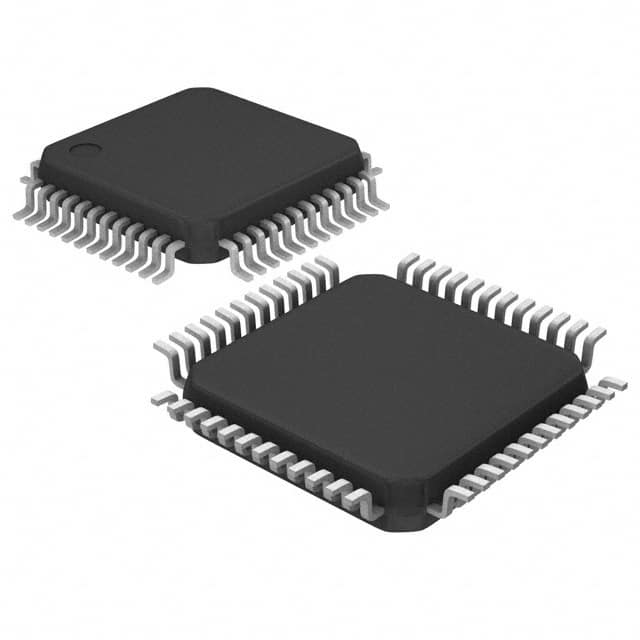
- Part No.:
- MAXQ7667AACM/V+
- Manufacturer:
- Analog Devices Inc./Maxim Integrated
- Category:
- Microcontrollers
- Package:
- 48-LQFP
- Datasheet:
-
 MAXQ7667AACM/V+.pdf
- Description:
- IC MCU 16BIT 32KB FLASH 48LQFP
- Quantity:
- Payment:

- Shipping:

Inventory:200
Please send an inquiry. Send us your inquiry, and we will respond immediately.
Product details
Overview
MAXQ7667AACM/V+ from Maxim Integrated is a 16-bit RISC microcontroller-based ultrasonic time-of-flight (ToF) distance-measuring SoC optimized for large-range, weak-signal, and multi-target applications. It integrates a programmable burst generator (25–100 kHz), echo reception path (LNA + 16-bit sigma-delta ADC), digital signal processing (bandpass/lowpass filters, envelope demodulation), and an embedded MAXQ20 core-all operating across –40°C to +125°C in automotive-grade 48-pin LQFP.
For engineers reviewing the MAXQ7667AACM/V+ datasheet, MAXQ7667AACM/V+ pinout, MAXQ7667AACM/V+ application, or MAXQ7667AACM/V+ equivalent, key selection criteria include its input-referred noise (0.7 µVRMS), programmable gain LNA (0.1–1.55 µVP-P/LSB), 5-channel 12-bit SAR ADC (250 ksps), triple-supply operation (+2.5V/+3.3V/+5V), and integrated LIN/UART interfaces for vehicle proximity sensing.
Technical Context
The MAXQ7667AACM/V+ implements a closed-loop smart sensing architecture: its embedded 16-bit MAXQ20 microcontroller dynamically adjusts burst frequency and echo reception parameters-including PLL-synthesized reference clock, VGA gain, and bandpass center frequency-in real time based on environmental and target conditions. This eliminates CPU intervention for digital filtering and burst synthesis, reserving full MCU resources for optimization, diagnostics, and communication.
Its analog front-end features dual ADC paths: a 16-bit sigma-delta ADC (80 × fBPF sampling rate) for high-resolution echo digitization and a 12-bit SAR ADC (250 ksps) with internal bandgap reference for auxiliary sensor monitoring. The device supports three independent supply domains (DVDD, AVDD, DVDDIO), each with dedicated linear regulators and brownout supervision.
Key Specifications
| Parameter | Value and Actual Design Meaning |
|---|---|
| Echo Input Noise | 0.7 µVRMS at minimum VGA gain-enables reliable detection of sub-10 µVP-P echo signals in noisy industrial environments. |
| Burst Frequency Range | 25 kHz to 100 kHz-supports wide transducer compatibility and adaptive frequency hopping to avoid interference or resonance. |
| Sigma-Delta ADC Resolution | 16 bits with 10 × fBPF output data rate-provides high dynamic range for precise echo envelope reconstruction. |
| SAR ADC Performance | 12-bit resolution, ±1 LSB INL, 250 ksps max-suitable for concurrent temperature, voltage, or bias monitoring without external converters. |
| Operating Temperature | –40°C to +125°C-qualified for under-hood automotive parking and industrial automation deployments. |
| Supply Flexibility | +2.5V/+3.3V/+5V native operation; internal REG2P5/REG3P3 regulators; GATE5-controlled external pass transistor support for +8V to +65V input. |
| LIN/UART Interface | LIN 2.0 compliant (1–20 kbps); UART with system-clock-derived baud rates up to 2 Mbps-enables direct CAN/LIN gateway integration. |
Pinout & Package
The MAXQ7667AACM/V+ is housed in a 48-pin LQFP package (7 mm × 7 mm, 0.5 mm pitch) with exposed thermal pad, rated for –40°C to +125°C operation and RoHS-compliant (denoted by '+' suffix).
| Pin/Terminal | Circuit Role | Design Meaning |
|---|---|---|
| ECHOP / ECHON | Differential ultrasonic echo inputs | AC-coupled inputs to low-noise amplifier; 14 kΩ input resistance, 14 pF capacitance, VAVDD/2 DC bias-optimized for transducer interface with minimal signal loss. |
| BURST | Ultrasonic transducer excitation output | Three-state capable, 8 mA drive strength, 45 Ω max impedance-directly drives piezoelectric transducers without external drivers in many configurations. |
| REG2P5 / REG3P3 | +2.5V and +3.3V regulator outputs | Stable, internally regulated supplies for DVDD and AVDD domains; 50 mA load capability-eliminates need for external LDOs in single-supply designs. |
| GATE5 | External pass transistor control | Drives NPN/nMOS gate to regulate DVDDIO from +8V to +65V input-enables wide-input automotive battery operation with minimal external components. |
| REF / REFBG | ADC reference buffer and bandgap output | 2.5 V ±2% internal reference; supports external reference (1.0–3.3 V); 0.47 µF bypass required-ensures stable ADC accuracy across temperature and supply variation. |
Key Features
| Feature | Design Value |
|---|---|
| Smart Adaptive Sensing | Real-time burst/reception parameter tuning via embedded MAXQ20 core-improves measurement robustness across varying temperature, target material, and ambient noise without host intervention. |
| Dual ADC Architecture | 16-bit sigma-delta ADC for echo digitization + 5-channel 12-bit SAR ADC for auxiliary sensors-enables simultaneous distance measurement and system health monitoring. |
| Integrated LIN 2.0 Interface | Hardware LIN controller with automatic sync-break detection and checksum-reduces firmware overhead for automotive proximity modules requiring ISO 17987 compliance. |
| Triple-Supply Regulator System | On-chip +2.5V (REG2P5), +3.3V (REG3P3), and +5V (GATE5-controlled) regulation-simplifies power design for mixed-signal ultrasonic systems with minimal external BOM. |
| Automotive-Qualified Operation | AEC-Q100 Grade 1 qualification (–40°C to +125°C), /V suffix, and robust supply supervisors-meets functional safety requirements for parking assist and blind-spot detection. |
Applications
| Automotive Parking Assist | Industrial Tank Level Monitoring |
|---|---|
Use Scenario: Real-time rear/front obstacle detection during low-speed vehicle maneuvering in garages or tight spaces. IC Role / Device Role / Timing Role: Primary ToF distance measurement SoC-generates ultrasonic bursts, processes returned echoes, computes distance, and communicates results via LIN bus. Use Value: Achieves >5 m range with <1 cm resolution using 0.7 µVRMS input noise floor and adaptive gain control-enables reliable detection of curbs, poles, and soft targets. |
Use Scenario: Non-contact liquid level measurement in stainless-steel or plastic tanks under variable temperature and vapor conditions. IC Role / Device Role / Timing Role: Standalone ultrasonic transducer controller-handles burst generation, echo amplification, DSP-based envelope extraction, and analog sensor interfacing. Use Value: Programmable 25–100 kHz burst frequency avoids tank resonance modes; 16-bit sigma-delta ADC resolves small echo amplitude changes caused by foam or condensation. |
| Vehicle Security Proximity Sensing | Automated Warehouse Robotics |
Use Scenario: Intrusion detection around parked vehicles using perimeter ultrasonic beams. IC Role / Device Role / Timing Role: Low-power proximity monitor-executes periodic burst-and-listen cycles, triggers alerts on echo timing shifts, and reports via UART. Use Value: 3 µA sleep current (all analog functions disabled) and fast PLL lock time (<5 ms) enable battery-operated security nodes with multi-year runtime. |
Use Scenario: Collision avoidance for AGVs navigating narrow aisles with dynamic obstacles. IC Role / Device Role / Timing Role: Real-time distance engine-performs continuous echo acquisition, multi-target echo separation, and distance output via SPI to motion controller. Use Value: Digital bandpass/lowpass filtering (–60 dB stopband rejection) suppresses motor EMI; 5-channel SAR ADC monitors wheel encoder and IMU signals on same die. |
Equivalent & Alternatives
The following parts are listed as comparable options for similar ultrasonic distance-measuring applications.
| Alternative Part | Technical Difference | Application Difference | Selection Advice |
|---|---|---|---|
| TDC1000IPWR | Separate analog front-end (no integrated MCU); requires external processor for echo processing and control logic. | Lacks embedded RISC core and LIN/UART-suitable only when host MCU handles DSP, communication, and calibration. | Select when system already includes a capable host processor and maximum flexibility in algorithm implementation is required. |
| MAX35101ETL+ | Single-chip ultrasonic SoC with ARM Cortex-M0+, but no integrated LIN interface; SAR ADC limited to 10-bit resolution. | Requires external LIN transceiver; lower ADC resolution reduces sensitivity to weak echoes in long-range applications. | Select when ARM toolchain familiarity is prioritized and LIN is not mandatory; verify echo SNR requirements against 0.7 µVRMS spec of MAXQ7667AACM/V+. |
Compared with TDC1000IPWR and MAX35101ETL+, the MAXQ7667AACM/V+ uniquely combines automotive-grade AEC-Q100 qualification, integrated LIN 2.0, 16-bit echo ADC with 0.7 µVRMS noise, and real-time adaptive parameter tuning-making it optimal for production automotive parking and industrial ToF systems requiring minimal external components and high reliability.
Availability
MAXQ7667AACM/V+ is available at Aetrix Electronics and suitable for automotive parking assist, industrial tank level monitoring, and vehicle security proximity sensing requiring stable component supply across extended temperature ranges and long product lifecycles.
Supply support for MAXQ7667AACM/V+ includes scheduled delivery planning, volume procurement assistance, BOM continuity management, traceable sourcing, and lifecycle availability coordination for OEM customers, industrial embedded developers, connected-device designers, and electronics production programs.
Manufacturer
Maxim Integrated (now part of Analog Devices) is a semiconductor company specializing in precision analog, mixed-signal, and high-reliability ICs for automotive, industrial, and communications markets.
The MAXQ7667AACM/V+ belongs to Maxim's smart sensing SoC product line, designed specifically for time-of-flight ultrasonic distance measurement in harsh environments where adaptive signal conditioning, integrated communication, and AEC-Q100 compliance are critical.
FAQ
What is the primary function of the MAXQ7667AACM/V+ in ultrasonic sensing systems?
The MAXQ7667AACM/V+ serves as a complete time-of-flight ultrasonic distance-measuring SoC. It integrates a programmable burst generator, echo reception chain (LNA + 16-bit sigma-delta ADC), digital signal processor (bandpass/lowpass filters, envelope demodulation), and an embedded 16-bit MAXQ20 microcontroller. Its core function is autonomous, adaptive echo acquisition and distance calculation-without requiring external processing for fundamental ToF operations. The MAXQ7667AACM/V+ enables robust large-range measurements even with weak input signals or multiple targets.
Does the MAXQ7667AACM/V+ support automotive-grade temperature operation?
Yes, the MAXQ7667AACM/V+ is explicitly qualified for automotive use with the '/V' suffix indicating AEC-Q100 Grade 1 compliance. It operates reliably from –40°C to +125°C across all electrical specifications, including echo input noise (0.7 µVRMS), burst frequency stability, and regulator output accuracy. Its internal supply supervisors feature temperature-compensated thresholds, and the device includes automotive-specific interfaces such as LIN 2.0-making the MAXQ7667AACM/V+ suitable for parking assist, blind-spot detection, and other under-hood or exterior vehicle applications.
How does the MAXQ7667AACM/V+ handle power supply flexibility for automotive battery inputs?
The MAXQ7667AACM/V+ supports wide-input automotive battery operation through its GATE5 terminal, which controls an external NPN or nMOS pass transistor to regulate DVDDIO from +8V to +65V. Internally, it integrates +2.5V (REG2P5) and +3.3V (REG3P3) linear regulators-enabling full functionality from a single +5V supply when external rails are unavailable. This dual-path architecture allows the MAXQ7667AACM/V+ to operate directly from raw vehicle battery while maintaining clean, isolated analog and digital domains-critical for noise-sensitive ultrasonic measurements.
What interfaces does the MAXQ7667AACM/V+ provide for system communication?
The MAXQ7667AACM/V+ provides hardware-supported LIN 2.0 and UART interfaces on dedicated pins (UTX/URX/TXEN), enabling direct connection to automotive networks without external transceivers in many cases. It also includes a full SPI master/slave interface (MOSI/MISO/SCLK/SS) and JTAG (TCK/TMS/TDI/TDO) for programming and debugging. All digital I/Os are configurable with programmable pull-ups/pull-downs and hysteresis. These interfaces allow the MAXQ7667AACM/V+ to serve as a standalone node or integrate seamlessly into larger systems-whether reporting distance over LIN or streaming raw echo data via SPI.
Can the MAXQ7667AACM/V+ process multiple ultrasonic echoes from different targets?
Yes, the MAXQ7667AACM/V+ is explicitly optimized for multiple target identification. Its digital signal processing pipeline-including programmable bandpass filtering (25–100 kHz center), lowpass filtering, and envelope demodulation-preserves echo timing and amplitude fidelity across overlapping returns. Combined with the embedded MAXQ20 microcontroller's ability to execute custom echo analysis algorithms (e.g., peak detection, time-windowed amplitude tracking), the MAXQ7667AACM/V+ can distinguish and resolve discrete echoes from multiple objects at varying distances-making it suitable for complex environments like cluttered parking lots or industrial bins with layered materials.
MAXQ7667AACM/V+ Specifications
- Product attributes
- Attribute value
- Manufacturer:
- Analog Devices Inc./Maxim Integrated
- Package/Case:
- 48-LQFP
- Series:
- MAXQ®
- Packaging:
- Tray
- Product Status:
- Not For New Designs
- Programmable:
- Not Verified
- Core Processor:
- -
- Core Size:
- 16-Bit
- Speed:
- 16MHz
- Connectivity:
- LINbus, SPI, UART/USART
- Peripherals:
- Brown-out Detect/Reset, POR, WDT
- Number of I/O:
- 16
- Program Memory Size:
- 32KB (16K x 16)
- Program Memory Type:
- FLASH
- EEPROM Size:
- -
- RAM Size:
- 2K x 16
- Voltage - Supply (Vcc/Vdd):
- 2.25V ~ 2.75V
- Data Converters:
- A/D 5x12b
- Oscillator Type:
- Internal
- Operating Temperature:
- -40°C ~ 125°C (TA)
- Grade:
- Automotive
- Qualification:
- AEC-Q100
- Mounting Type:
- Surface Mount
- Supplier Device Package:
MAXQ7667AACM/V+ FAQ
1.How can I place an order for MAXQ7667AACM/V+ through Aetrix?
Please submit a Request for Quotation (RFQ) for MAXQ7667AACM/V+ on Aetrix. Our sales agent will provide a competitive quotation and guide you through the order confirmation once you accept the terms.
2.Are the price and stock information for MAXQ7667AACM/V+ reliable?
The price and inventory of MAXQ7667AACM/V+ are updated periodically and may fluctuate due to market conditions. Stock and pricing data are typically refreshed every 24 hours. Quotation validity for MAXQ7667AACM/V+ is usually 5 days.
3.What payment methods are accepted for MAXQ7667AACM/V+?
We accept Wire Transfer, PayPal, Credit Card, Western Union, MoneyGram, and Escrow for MAXQ7667AACM/V+ transactions.
Note: Certain payment methods may incur a processing fee.
4.How is shipping managed for MAXQ7667AACM/V+?
MAXQ7667AACM/V+ orders can be shipped via leading logistics carriers, including DHL, UPS, FedEx, TNT, or Registered Mail.
Once your MAXQ7667AACM/V+ order is processed, you will receive an email with the shipment details and tracking number.
Note: Tracking information may take up to 24 hours to appear. Express delivery typically takes 3–5 business days.
5.How can I obtain technical support or documentation for MAXQ7667AACM/V+?
For technical support, including MAXQ7667AACM/V+ datasheets, pinout diagrams, or application guidance, please contact our engineering support team. They can provide detailed documentation and assistance for your MAXQ7667AACM/V+ requirements.
6.How does Aetrix verify that MAXQ7667AACM/V+ is sourced from the original manufacturer or authorized distributors?
All MAXQ7667AACM/V+ products on Aetrix are procured from qualified distributors and authorized channels. Our dedicated quality assurance team conducts strict verification, including traceability checks and, if necessary, third-party testing. This ensures that MAXQ7667AACM/V+ meets industry standards.
7.What is the process for return or replacement of MAXQ7667AACM/V+?
All MAXQ7667AACM/V+ units undergo pre-shipment inspection (PSI). If there is an issue with MAXQ7667AACM/V+, returns or replacements are accepted under the following conditions:
1.Quantity discrepancies, incorrect items, or visible external defects (such as breakage or corrosion), acknowledged by Aetrix.
2.The issue is reported within 90 days of delivery.
3.The MAXQ7667AACM/V+ part is unused and in its original packaging.
Return procedure for MAXQ7667AACM/V+:
1.Submit a request within 90 days.
2.Obtain a Return Material Authorization (RMA) from Aetrix.
MAXQ7667AACM/V+ Tags

-
ATTINY4-TSHR
Microchip Technology
-
ATTINY10-TSHR
Microchip Technology
-
ATTINY10-TS8R
Microchip Technology

-
ATTINY202-SSNR
Microchip Technology
-
ATTINY202-SSFR
Microchip Technology
-
ATTINY402-SSNR
Microchip Technology

-
PIC16F15213T-I/MF
Microchip Technology
-
PIC16F15213-E/MF
Microchip Technology

-
PIC10F200T-I/OT
Microchip Technology
-
ATTINY412-SSNR
Microchip Technology
-
PIC10F202T-I/OT
Microchip Technology
-
ATTINY404-SSNR
Microchip Technology
Tech Hub

A practical engineering guide to 3.3V and 5V logic compatibility, input thresholds, resistor dividers, translator ICs, MOSFET level shifting, I2C pull-ups, timing limits and power-sequencing risks.

The 74HC595 uses push-pull logic outputs, while the TPIC6B595 uses 50 V open-drain DMOS sinks for higher-power loads. This guide compares timing, current limits, 3.3 V interfacing, load wiring, thermal…

The 74HC595 converts serial data into eight stable parallel outputs. This guide covers pin functions, shift and storage timing, OE and MR behavior, drive-current limits, cascading, voltage compatibilit…

A technical comparison of level-sensitive latches and edge-triggered flip-flops, covering timing windows, setup and hold limits, master–slave operation, time borrowing, race-through, HDL inference and…

A D latch stores one bit while Enable controls when data can pass. This reference covers gate-level operation, truth tables, transparency, setup and hold timing, LE versus OE, common ICs and practical …

An SR latch stores one bit through cross-coupled feedback. This engineering reference covers NOR and NAND implementations, truth tables, forbidden-state recovery, gated operation, switch debouncing, fa…

Latch circuits retain one bit through feedback. This technical reference covers SR and D latches, truth tables, transparency, timing limits, latch-versus-flip-flop behavior, applications and common log…

An engineering guide to LED driver operation, constant-current and constant-voltage outputs, linear and switching topologies, dimming, IC selection, calculations, replacement compatibility, and fault c…

Operational amplifier guide covering op amp basics, feedback, ideal vs real op amps, common configurations, buffer circuits, offset, bias current, gain-bandwidth, slew rate, rail-to-rail limits and sel…

Jumper cables guide covering safe connection order, red and black clamp placement, final ground connection, cable gauge, length, clamp quality, copper vs CCA cables, jump starter comparison and battery…


