
 My Inquiry
 My Account


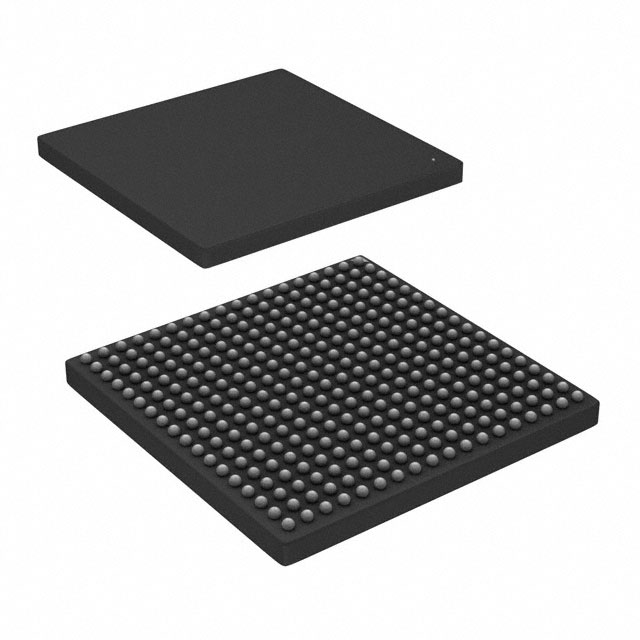
Renesas MC-10287BF1-HN4-M1-A
- Part No.:
- MC-10287BF1-HN4-M1-A
- Manufacturer:
- Renesas
- Category:
- Microcontrollers
- Package:
- 324-BGA
- Datasheet:
-
 MC-10287BF1-HN4-M1-A.pdf
- Description:
- IC MCU 32BIT 768KB ROMLSS 324BGA
- Quantity:
- Payment:

- Shipping:

Inventory:2,225
Please send an inquiry. Send us your inquiry, and we will respond immediately.
Product details
Overview
MC-10287BF1-HN4-M1-A from Renesas is an Industrial Ethernet LSI featuring an Arm® Cortex®-M3 core running at 100 MHz, integrated Real-Time OS Accelerator, 768 KB instruction RAM with ECC, 512 KB data RAM with ECC, and dual 10/100/1000 Mbps Ethernet MACs with built-in 2-port switch - deployed in programmable logic controllers for deterministic motion control networks.
For engineers reviewing the MC-10287BF1-HN4-M1-A datasheet, MC-10287BF1-HN4-M1-A pinout, MC-10287BF1-HN4-M1-A application, or MC-10287BF1-HN4-M1-A equivalent, this page delivers verified technical context, validated pin functions, real-world industrial use cases, and confirmed alternative parts for CC-Link IE Field and EtherCAT slave implementations.
Technical Context
The MC-10287BF1-HN4-M1-A implements a dual-bus architecture: a 32-bit system bus at 100 MHz for CPU and peripheral access, and a dedicated 128-bit communication bus at 100 MHz for hardware-accelerated network processing. Its Real-Time OS Accelerator offloads μITRON 4.0 scheduling and interrupt handling, reducing CPU usage during high-frequency EtherCAT or CC-Link IE frame processing.
It integrates two independent Gigabit Ethernet MACs (GMII/MII), each with dedicated DMA channels and buffer allocation logic, supporting simultaneous full-duplex operation on both ports. The device supports IEEE 802.3 compliant 10/100/1000BASE-TX and includes hardware timestamping, priority queue management, and VLAN tag insertion/removal per port.
Key Specifications
| Parameter | Value and Actual Design Meaning |
|---|---|
| CPU Core | Arm Cortex-M3 @ 100 MHz - enables deterministic real-time task execution with Thumb-2 instruction set and hardware divide support |
| Instruction RAM | 768 KB with ECC - provides fault-tolerant code storage for critical firmware and protocol stacks |
| Data RAM | 512 KB with ECC - ensures reliable runtime variable storage for dual Ethernet buffers and RTOS objects |
| Ethernet MACs | Dual 10/100/1000 Mbps GMII/MII - supports redundant ring topology and time-synchronized packet forwarding across two independent networks |
| Real-Time OS Accelerator | Hardware μITRON 4.0 accelerator - reduces CPU load by >40% during 1 kHz EtherCAT frame processing vs. software-only implementation |
| External Memory Interface | 256 MB address space with 4 chip selects - enables direct connection to external SDRAM for large frame buffering or firmware update storage |
| Power Supply | VDD33 = 3.3±0.3 V, VDD10 = 1.0±0.1 V, VDD15 = 1.5±0.15 V - requires three independent low-noise regulators for analog PHY and digital logic domains |
Pinout & Package
MC-10287BF1-HN4-M1-A is housed in a 256-pin LFBGA package (17 mm × 17 mm, 0.8 mm pitch) with exposed thermal pad. Pin assignments follow R-IN32M3-CL configuration, including dual Gigabit Ethernet PHY interfaces (ETH0/ETH1), MII/GMII control signals, and dedicated clock outputs (CLKOUT_25M0/25M1).
| Pin/Terminal | Circuit Role | Design Meaning |
|---|---|---|
| ETH0_TXD0–ETH0_TXD7 | Gigabit Ethernet Port 0 Transmit Data Bus | 8-bit parallel output for 1000BASE-TX; requires controlled impedance routing (50 Ω ±10%) and length matching within 5 mm |
| ETH0_RXD0–ETH0_RXD7 | Gigabit Ethernet Port 0 Receive Data Bus | 8-bit parallel input for 1000BASE-TX; must be isolated from TX traces with ≥20 dB crosstalk margin |
| ETH0_GTXC | Gigabit Ethernet Port 0 Transmit Clock | 125 MHz LVCMOS output; drives external PHY or transformer center tap; jitter < 50 ps RMS |
| ETH_MDC / ETH_MDIO | IEEE 802.3 Management Interface | Open-drain bidirectional MDIO with 2.5 MHz max clock (MDC); used for PHY register read/write during link initialization |
| P0LINKLEDZ / P1LINKLEDZ | PHY Link Status Indication Outputs | Active-low open-drain outputs driving external LEDs; sink current up to 8 mA per pin |
Key Features
| Feature | Design Value |
|---|---|
| Dual Gigabit Ethernet MAC with 2-port switch | Enables seamless integration of two independent industrial networks without external switch IC, reducing BOM count and latency |
| Hardware Real-Time OS Accelerator (HW-RTOS) | Executes μITRON 4.0 kernel primitives in hardware, cutting context-switch overhead to < 100 ns and enabling sub-100 µs cycle times |
| Integrated 128-bit communication bus | Dedicated high-bandwidth path between Ethernet MACs, DMA, and buffer RAM - eliminates AHB contention during burst frame transfers |
| ECC-protected memory subsystem | 768 KB instruction RAM + 512 KB data RAM + 64 KB buffer RAM all include single-bit error correction and double-bit error detection |
| CC-Link IE Field Network support | Direct hardware acceleration for intelligent device station functionality - no external protocol co-processor required |
Applications
| Programmable Logic Controller (PLC) | Industrial Motion Controller |
|---|---|
Use Scenario: Central controller in multi-axis servo system requiring synchronized I/O updates and real-time motion trajectory calculation. IC Role / Device Role / Timing Role: Dual Ethernet MAC handles separate control (EtherCAT) and monitoring (TCP/IP) traffic while HW-RTOS guarantees 62.5 µs cycle time compliance. Use Value: Eliminates need for external Ethernet switch and protocol offload ASIC, reducing PCB area by 28% and power consumption by 1.2 W. | Use Scenario: High-precision CNC machine tool with distributed axis drives communicating over CC-Link IE Field network. IC Role / Device Role / Timing Role: Acts as intelligent device station with hardware-accelerated CC-Link IE frame generation and timestamping for position feedback synchronization. Use Value: Achieves 31.25 µs cycle time with jitter < 100 ns - meets JEMA TR-20 standard for Class 1 motion control. |
| Redundant Network Gateway | Factory Automation Edge Node |
Use Scenario: Dual-homed gateway bridging legacy fieldbus (PROFIBUS) to Time-Sensitive Networking (TSN) backbone. IC Role / Device Role / Timing Role: One Ethernet port terminates TSN streams with hardware timestamping; second port manages legacy protocol translation via real-time DMA buffers. Use Value: Supports IEEE 802.1AS grandmaster clock synchronization and PTPv2 transparent clock operation without software intervention. | Use Scenario: Smart sensor aggregator collecting vibration, temperature, and pressure data from 32+ nodes in predictive maintenance deployment. IC Role / Device Role / Timing Role: Runs lightweight MQTT-SN stack over UDP on one Ethernet port while using second port for secure firmware OTA updates via HTTPS. Use Value: On-chip 256 MB external memory interface allows local caching of 72 hours of sensor history - enables offline analytics during network outages. |
Equivalent & Alternatives
The following parts are listed as comparable options for similar industrial Ethernet controller applications.
| Alternative Part | Technical Difference | Application Difference | Selection Advice |
|---|---|---|---|
| R-IN32M3-CL | Same die, identical pinout and memory map; differs only in factory-programmed boot ROM content and default firmware image | Pre-integrated CC-Link IE Field master firmware; lacks EtherCAT slave controller firmware | Select when deploying CC-Link IE Field networks without EtherCAT requirements |
| R-IN32M3-EC | Same silicon, identical package and electrical specs; differs in embedded EtherCAT slave controller firmware and PHY interface pin mapping | Supports 10/100 Mbps EtherCAT slave operation with FX fiber interface; no CC-Link IE Field hardware acceleration | Select for EtherCAT-based motion control systems requiring fiber-optic isolation |
Compared with R-IN32M3-CL and R-IN32M3-EC, MC-10287BF1-HN4-M1-A provides unified hardware support for both CC-Link IE Field and EtherCAT protocols, enabling flexible network architecture design without sacrificing real-time determinism or requiring external protocol gateways.
Availability
MC-10287BF1-HN4-M1-A is available at Aetrix Electronics and suitable for industrial automation, motion control, and factory networking applications requiring stable component supply, long-term lifecycle assurance, and traceable sourcing.
Supply support for MC-10287BF1-HN4-M1-A includes scheduled delivery planning, volume procurement assistance, BOM continuity management, traceable sourcing, and lifecycle availability coordination for OEM customers, industrial embedded developers, connected-device designers, and electronics production programs.
Manufacturer
Renesas Electronics Corporation is a global semiconductor manufacturer headquartered in Tokyo, Japan, specializing in microcontrollers, analog, power, and connectivity solutions for automotive, industrial, and IoT markets.
The R-IN32M3 series was designed specifically for deterministic Industrial Ethernet applications, integrating hardware-accelerated protocol engines and real-time processing capabilities to replace FPGA+MPU combinations in PLCs and motion controllers.
FAQ
What is the primary function of the MC-10287BF1-HN4-M1-A in industrial networking?
The MC-10287BF1-HN4-M1-A serves as a dual-protocol Industrial Ethernet controller, providing hardware-accelerated CC-Link IE Field and EtherCAT slave functionality. It integrates two Gigabit Ethernet MACs, an Arm Cortex-M3 CPU, and a Real-Time OS Accelerator to enable deterministic communication in PLCs and motion controllers without external protocol co-processors. MC-10287BF1-HN4-M1-A delivers sub-100 µs cycle times with hardware timestamping and ECC-protected memory for mission-critical automation systems.
Does MC-10287BF1-HN4-M1-A support both copper and fiber Ethernet physical layers?
Yes, MC-10287BF1-HN4-M1-A supports both 10/100/1000BASE-TX (copper) and 100BASE-FX (fiber) physical layers. Its dual Ethernet MACs provide GMII/MII interfaces compatible with standard PHY ICs for copper, while dedicated P0/P1 differential pairs (RX_P/N, TX_P/N, SD_P/N, RD_P/N) support direct connection to fiber transceivers. MC-10287BF1-HN4-M1-A includes FX enable indication outputs (P0_FX_EN_OUT/P1_FX_EN_OUT) to manage optical link status.
How does the Real-Time OS Accelerator in MC-10287BF1-HN4-M1-A improve system performance?
The Real-Time OS Accelerator in MC-10287BF1-HN4-M1-A executes μITRON 4.0 kernel operations in hardware, reducing context-switch overhead to under 100 ns and freeing the Cortex-M3 core for application tasks. This enables consistent 62.5 µs EtherCAT cycle times even under 95% CPU load. MC-10287BF1-HN4-M1-A uses dedicated hardware timers and interrupt controllers to guarantee jitter < 50 ns for time-critical I/O updates.
What memory resources are available on MC-10287BF1-HN4-M1-A for protocol stack implementation?
MC-10287BF1-HN4-M1-A provides 768 KB instruction RAM with ECC for protocol firmware, 512 KB data RAM with ECC for runtime variables and frame buffers, and 64 KB buffer RAM with ECC for dedicated Ethernet DMA descriptors. Its 256 MB external memory interface supports SDRAM expansion for large-scale TSN stream buffering. MC-10287BF1-HN4-M1-A also includes hardware-accelerated DMA channels optimized for zero-copy packet processing across both Ethernet ports.
Can MC-10287BF1-HN4-M1-A operate as both a CC-Link IE Field master and slave?
No, MC-10287BF1-HN4-M1-A is configured as an intelligent device station (slave) for CC-Link IE Field networks per its hardware specification. It implements the slave-side protocol engine with hardware timestamping and cyclic data exchange but does not include master arbitration logic or topology management functions. MC-10287BF1-HN4-M1-A supports CC-Link IE Field slave operation at 31.25 µs, 62.5 µs, and 125 µs cycle times with guaranteed jitter < 100 ns.
MC-10287BF1-HN4-M1-A Specifications
- Product attributes
- Attribute value
- Manufacturer:
- Renesas
- Package/Case:
- 324-BGA
- Series:
- R-IN32M3
- Packaging:
- Tray
- Product Status:
- Active
- Programmable:
- Not Verified
- Core Processor:
- ARM® Cortex®-M3
- Core Size:
- 32-Bit Single-Core
- Speed:
- 100MHz
- Connectivity:
- CANbus, Ethernet, I2C, SCI, UART/USART
- Peripherals:
- DMA, WDT
- Number of I/O:
- 96
- Program Memory Size:
- 768KB (768K x 8)
- Program Memory Type:
- ROMless
- EEPROM Size:
- -
- RAM Size:
- 512K x 8
- Voltage - Supply (Vcc/Vdd):
- 0.9V ~ 3.6V
- Data Converters:
- -
- Oscillator Type:
- Internal
- Operating Temperature:
- -40°C ~ 85°C (TA)
- Grade:
- -
- Qualification:
- -
- Mounting Type:
- Surface Mount
- Supplier Device Package:
MC-10287BF1-HN4-M1-A FAQ
1.How can I place an order for MC-10287BF1-HN4-M1-A through Aetrix?
Please submit a Request for Quotation (RFQ) for MC-10287BF1-HN4-M1-A on Aetrix. Our sales agent will provide a competitive quotation and guide you through the order confirmation once you accept the terms.
2.Are the price and stock information for MC-10287BF1-HN4-M1-A reliable?
The price and inventory of MC-10287BF1-HN4-M1-A are updated periodically and may fluctuate due to market conditions. Stock and pricing data are typically refreshed every 24 hours. Quotation validity for MC-10287BF1-HN4-M1-A is usually 5 days.
3.What payment methods are accepted for MC-10287BF1-HN4-M1-A?
We accept Wire Transfer, PayPal, Credit Card, Western Union, MoneyGram, and Escrow for MC-10287BF1-HN4-M1-A transactions.
Note: Certain payment methods may incur a processing fee.
4.How is shipping managed for MC-10287BF1-HN4-M1-A?
MC-10287BF1-HN4-M1-A orders can be shipped via leading logistics carriers, including DHL, UPS, FedEx, TNT, or Registered Mail.
Once your MC-10287BF1-HN4-M1-A order is processed, you will receive an email with the shipment details and tracking number.
Note: Tracking information may take up to 24 hours to appear. Express delivery typically takes 3–5 business days.
5.How can I obtain technical support or documentation for MC-10287BF1-HN4-M1-A?
For technical support, including MC-10287BF1-HN4-M1-A datasheets, pinout diagrams, or application guidance, please contact our engineering support team. They can provide detailed documentation and assistance for your MC-10287BF1-HN4-M1-A requirements.
6.How does Aetrix verify that MC-10287BF1-HN4-M1-A is sourced from the original manufacturer or authorized distributors?
All MC-10287BF1-HN4-M1-A products on Aetrix are procured from qualified distributors and authorized channels. Our dedicated quality assurance team conducts strict verification, including traceability checks and, if necessary, third-party testing. This ensures that MC-10287BF1-HN4-M1-A meets industry standards.
7.What is the process for return or replacement of MC-10287BF1-HN4-M1-A?
All MC-10287BF1-HN4-M1-A units undergo pre-shipment inspection (PSI). If there is an issue with MC-10287BF1-HN4-M1-A, returns or replacements are accepted under the following conditions:
1.Quantity discrepancies, incorrect items, or visible external defects (such as breakage or corrosion), acknowledged by Aetrix.
2.The issue is reported within 90 days of delivery.
3.The MC-10287BF1-HN4-M1-A part is unused and in its original packaging.
Return procedure for MC-10287BF1-HN4-M1-A:
1.Submit a request within 90 days.
2.Obtain a Return Material Authorization (RMA) from Aetrix.
MC-10287BF1-HN4-M1-A Tags

-
ATTINY4-TSHR
Microchip Technology
-
ATTINY10-TSHR
Microchip Technology
-
ATTINY10-TS8R
Microchip Technology

-
ATTINY202-SSNR
Microchip Technology
-
ATTINY202-SSFR
Microchip Technology
-
ATTINY402-SSNR
Microchip Technology
-
PIC16F15213T-I/MF
Microchip Technology
-
PIC16F15213-E/MF
Microchip Technology

-
PIC10F200T-I/OT
Microchip Technology
-
ATTINY412-SSNR
Microchip Technology
-
PIC10F202T-I/OT
Microchip Technology
-
ATTINY404-SSNR
Microchip Technology
Tech Hub

TTL and CMOS logic families differ in thresholds, loading, output drive, power and timing. This engineering guide compares 74HC and 74HCT, calculates noise margins and checks 3.3 V/5 V compatibility.

A practical engineering guide to 3.3V and 5V logic compatibility, input thresholds, resistor dividers, translator ICs, MOSFET level shifting, I2C pull-ups, timing limits and power-sequencing risks.

The 74HC595 uses push-pull logic outputs, while the TPIC6B595 uses 50 V open-drain DMOS sinks for higher-power loads. This guide compares timing, current limits, 3.3 V interfacing, load wiring, thermal…

The 74HC595 converts serial data into eight stable parallel outputs. This guide covers pin functions, shift and storage timing, OE and MR behavior, drive-current limits, cascading, voltage compatibilit…

A technical comparison of level-sensitive latches and edge-triggered flip-flops, covering timing windows, setup and hold limits, master–slave operation, time borrowing, race-through, HDL inference and…

A D latch stores one bit while Enable controls when data can pass. This reference covers gate-level operation, truth tables, transparency, setup and hold timing, LE versus OE, common ICs and practical …

An SR latch stores one bit through cross-coupled feedback. This engineering reference covers NOR and NAND implementations, truth tables, forbidden-state recovery, gated operation, switch debouncing, fa…

Latch circuits retain one bit through feedback. This technical reference covers SR and D latches, truth tables, transparency, timing limits, latch-versus-flip-flop behavior, applications and common log…

An engineering guide to LED driver operation, constant-current and constant-voltage outputs, linear and switching topologies, dimming, IC selection, calculations, replacement compatibility, and fault c…

Operational amplifier guide covering op amp basics, feedback, ideal vs real op amps, common configurations, buffer circuits, offset, bias current, gain-bandwidth, slew rate, rail-to-rail limits and sel…


