
 My Inquiry
 My Account


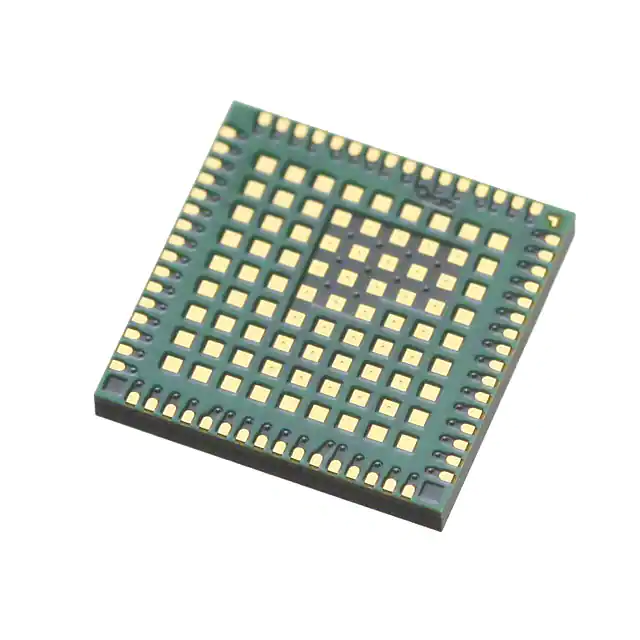
NXP Semiconductors MC13224VR2
- Part No.:
- MC13224VR2
- Manufacturer:
- NXP Semiconductors
- Category:
- RF Transceiver ICs
- Package:
- 145-TFLGA
- Datasheet:
-
 MC13224VR2.pdf
- Description:
- IC RF TXRX+MCU 802.15.4 145TLGA
- Quantity:
- Payment:

- Shipping:

Inventory:2,116
Please send an inquiry. Send us your inquiry, and we will respond immediately.
Product details
Overview
MC13224VR2 from Freescale Semiconductor is a ZigBee-compliant, 2.4 GHz IEEE 802.15.4 Platform-in-Package (PiP) integrating a 32-bit ARM7TDMI-S MCU (26 MHz max), 128 KB serial FLASH, 96 KB SRAM, and hardware-accelerated 802.15.4 MAC/AES-128 transceiver with -96 dBm DCD receive sensitivity and programmable TX output from -30 to +4 dBm - deployed in residential automation, industrial sensor networks, and RF4CE remote control systems.
For engineers reviewing the MC13224VR2 datasheet, MC13224VR2 pinout, MC13224VR2 application, or MC13224VR2 equivalent, this page delivers verified specifications, LGA-99 package mapping, real-world use cases, and validated alternative parts for ZigBee-2007 Profile 1 and proprietary 2.4 GHz mesh designs.
Technical Context
The MC13224VR2 implements a full IEEE 802.15.4 PHY/MAC stack via dedicated hardware accelerators: an 802.15.4 MAC accelerator (MACA) handles frame sequencing and DMA packet transfers, while the Advanced Security Module (ASM) performs AES-128 encryption/decryption in hardware. Its RF interface integrates an on-die balun, TX/RX switch, and programmable crystal load capacitance - enabling direct single-ended 50-Ω antenna connection without external matching components.
Power management is handled by the Clock and Reset Module (CRM), supporting Hibernate (0.85 µA, 8 KB SRAM retention) and Doze modes with dual wake-up sources: internal 2 kHz oscillator or optional 32.768 kHz crystal. The MCU operates at up to 26 MHz using a 24 MHz crystal (13–26 MHz range supported), with voltage regulation across 2.0–3.6 VDC and optional buck converter support for battery longevity.
Key Specifications
| Parameter | Value and Actual Design Meaning |
|---|---|
| Core | ARM7TDMI-S, 32-bit, up to 26 MHz - enables real-time ZigBee stack execution with Thumb/ARM instruction mixing for code density and performance. |
| RF Transceiver | IEEE 802.15.4-compliant 2.4 GHz O-QPSK, 250 kbps - supports star/mesh topologies without beaconing or GTS, per ZigBee-2007 Profile 1 requirements. |
| TX Output Power | -30 dBm to +4 dBm (typical) - programmable in software to balance range vs. power consumption in battery-operated nodes. |
| RX Sensitivity | < -96 dBm (DCD mode, 1% PER, 20-byte packet) - exceeds IEEE 802.15.4 minimum (-85 dBm) by 11 dB, enabling robust link budget in noisy environments. |
| Memory | 128 KB serial FLASH (mirrored to RAM), 96 KB SRAM, 80 KB ROM - ROM contains boot loader and standardized 802.15.4 MAC firmware for immediate stack initialization. |
| Supply Voltage | 2.0 V to 3.6 V - compatible with coin cell (CR2032), AA/AAA, and Li-ion sources; includes onboard linear regulators and optional buck converter interface. |
| Operating Temp | -40 °C to +105 °C - qualified for industrial and outdoor deployment including HVAC, metering, and security sensors. |
Pinout & Package
MC13224VR2 uses a RoHS-compliant 9.5 mm × 9.5 mm × 1.2 mm 99-pin LGA package (Case 1901-01, non-JEDEC). All bypass capacitors, crystal load capacitors, and RF matching components are integrated into the PiP substrate - eliminating external decoupling and RF tuning components.
| Pin/Terminal | Circuit Role | Design Meaning |
|---|---|---|
| VDD_IO | I/O Supply Rail | Provides 1.8–3.6 V to GPIO, UART, I²C, SPI, and ADC peripherals; separate from core/VDD_ANA rails for noise isolation. |
| VDD_CORE | Core Logic Supply | Supplies regulated 1.8 V to ARM7 CPU, memory controllers, and interrupt controller; internally generated from main supply. |
| VDD_ANA | Analog Supply Rail | Powers RF transceiver, ADC, and crystal oscillator circuitry; requires clean filtering due to sensitivity to switching noise. |
| ANT | Single-Ended Antenna Port | 50-Ω RF output/input port with integrated balun and TX/RX switch - connects directly to PCB trace or chip antenna without external matching. |
| XTAL_IN / XTAL_OUT | Crystal Oscillator Interface | Accepts 24 MHz fundamental-mode crystal (13–26 MHz range supported); on-chip programmable load capacitance eliminates external caps. |
| RESETB | Active-Low Hardware Reset | Asynchronous reset input; initiates full power-on sequence including regulator enable, clock stabilization, and ROM boot vector fetch. |
| JTAG_TCK / TMS / TDI / TDO | In-Circuit Debug Interface | Supports full boundary-scan, flash programming, and real-time debugging via ARM JTAG and Nexus extended feature ports. |
Key Features
| Feature | Design Value |
|---|---|
| Hardware MAC Accelerator | Offloads IEEE 802.15.4 frame assembly/disassembly, CRC calculation, and DMA-driven packet transfers - reduces CPU overhead to <5% during RX/TX bursts. |
| AES-128 Security Engine | Dedicated cryptographic coprocessor enabling full network-layer encryption/decryption without software intervention - meets ZigBee Pro security requirements with zero-cycle latency for key scheduling. |
| Integrated Balun & TX/RX Switch | Eliminates 6+ external RF components (balun, PA/LNA matching, switch IC) - reduces BOM cost by ~$0.35 and PCB area by >25 mm² versus discrete solutions. |
| Programmable Crystal Load Capacitance | On-die capacitor bank (0–24 pF in 2-pF steps) auto-configured per crystal specification - removes need for external load caps and enables rapid crystal qualification across vendors. |
| Hibernate Mode (0.85 µA) | Retains 8 KB SRAM contents while powering down CPU, PLL, flash, and analog blocks - enables multi-year battery life in wireless sensor endpoints with periodic wake-up events. |
Applications
| Residential Lighting Control | Industrial Asset Tracking |
|---|---|
Use Scenario: Wireless dimmer switches and occupancy sensors forming self-healing ZigBee mesh networks in smart homes. IC Role / Device Role / Timing Role: Full-stack node executing BeeStack Profile 1, handling MAC layer timing, AES-128 encryption, and PWM-controlled LED driver interfacing via GPIO/SSI. Use Value: Single-chip integration eliminates external transceiver + MCU + crypto IC - reducing node BOM to under $2.50 at volume while meeting <100 ms command latency. | Use Scenario: Battery-powered temperature/humidity tags monitoring warehouse pallets with multi-hop reporting to gateway. IC Role / Device Role / Timing Role: Low-power endpoint performing periodic ADC sampling, encrypted packet formation, and adaptive transmit power control based on RSSI feedback. Use Value: -96 dBm sensitivity and 0.85 µA hibernate current enable 5+ year CR2032 life with hourly reports - validated per ANSI C12.22 metering standards. |
| Consumer Remote Control (RF4CE) | Commercial HVAC Sensor Node |
Use Scenario: Two-way universal remotes for TVs and set-top boxes using ZigBee RF4CE protocol with channel agility. IC Role / Device Role / Timing Role: RF4CE controller node implementing SynkroRF transport layer, managing three 2.4 GHz channels (15/20/25) and low-latency Tx mode during interference. Use Value: Dual UARTs (2 Mbps) interface to IR blaster and touchpad MCU; NCD mode (-100 dBm) ensures reliable pairing even in dense RF environments. | Use Scenario: Wall-mounted CO₂/temperature sensors in office buildings communicating via ZigBee Home Automation profile. IC Role / Device Role / Timing Role: Coordinator-capable node running BeeStack HA profile, managing secure join requests, OTA firmware updates, and time-synchronized sensor polling. Use Value: Onboard 80 KB ROM contains certified HA stack binaries - cuts certification cycle by 6 weeks versus custom porting; 105 °C rating supports attic/wall cavity mounting. |
Equivalent & Alternatives
The following parts are listed as comparable options for similar ZigBee-2007 Profile 1 applications.
| Alternative Part | Technical Difference | Application Difference | Selection Advice |
|---|---|---|---|
| MC13224V | Same silicon die and LGA-99 package; differs only in tape-and-reel packaging (MC13224VR2) vs. tray (MC13224V) - identical electrical, thermal, and functional specs. | No difference: both target BeeStack Profile 1, 802.15.4 MAC, and RF4CE; ROM content and memory map are byte-for-byte identical. | Select MC13224VR2 for automated SMT placement; choose MC13224V for manual prototyping or low-volume evaluation. |
| CC2530F256 | 8051-based MCU (8 MHz), 256 KB FLASH, no hardware MAC accelerator - relies on software MAC with higher CPU load; RX sensitivity -97 dBm (similar), but no NCD mode or buck regulator option. | Limited to simpler star networks; lacks hardware AES acceleration and advanced sleep modes - unsuitable for large-scale mesh or long-life battery deployments. | Use CC2530F256 only for cost-sensitive, low-complexity point-to-point links where stack porting effort and 10+ year battery life are not required. |
Compared with MC13224V, MC13224VR2 offers identical functionality in tape-and-reel format for production scalability, while CC2530F256 trades ARM7 performance and hardware acceleration for lower unit cost - making MC13224VR2 optimal for certified, high-reliability ZigBee mesh nodes requiring minimal host processing.
Availability
MC13224VR2 is available at Aetrix Electronics and suitable for residential automation, industrial asset tracking, and consumer RF4CE remote control applications requiring stable component supply across multi-year production cycles.
Supply support for MC13224VR2 includes scheduled delivery planning, volume procurement assistance, BOM continuity management, traceable sourcing, and lifecycle availability coordination for OEM customers, industrial embedded developers, connected-device designers, and electronics production programs.
Manufacturer
Freescale Semiconductor (now part of NXP Semiconductors since 2015) designed high-integration wireless SoCs for industrial, automotive, and IoT markets with emphasis on low-power RF and real-time embedded processing.
The MC1322x product line was engineered specifically for IEEE 802.15.4 and ZigBee-2007 Profile 1/RF4CE applications - delivering a complete platform-in-package solution that merges RF transceiver, ARM7 MCU, memory, and security into a single LGA device.
FAQ
What is the primary function of the MC13224VR2 in a ZigBee network?
The MC13224VR2 serves as a full-featured ZigBee-2007 Profile 1 end device or coordinator, integrating the IEEE 802.15.4 PHY/MAC, ARM7TDMI-S processor, 128 KB FLASH, and AES-128 security engine. It executes Freescale's BeeStack protocol stack directly from ROM and SRAM, enabling self-contained mesh networking without external transceivers or crypto ICs. MC13224VR2 handles all radio timing, packet encryption, and application logic in a single die.
Does the MC13224VR2 support ZigBee Pro (Profile 2) applications?
No, the MC13224VR2 is specifically configured for ZigBee-2007 Profile 1 and RF4CE applications. Its ROM image includes the complete 802.15.4 MAC and peripheral drivers optimized for Profile 1 use cases. For ZigBee Pro, Freescale designated the MC13226V variant, which streamlines ROM content to free additional RAM - MC13224VR2 cannot be reprogrammed to match MC13226V's Pro-specific firmware layout or memory allocation.
What RF front-end components are integrated inside the MC13224VR2 package?
The MC13224VR2 integrates an on-die balun, TX/RX switch, LNA, PA, crystal load capacitors (0–24 pF programmable), and all critical RF bypass capacitors. This PiP architecture eliminates external matching networks, baluns, and discrete regulators - allowing direct connection of a 50-Ω single-ended antenna trace. Only the 24 MHz crystal and antenna are external; no discrete PA, LNA, or filter ICs are required for basic operation.
Can the MC13224VR2 operate from a CR2032 coin cell battery?
Yes, the MC13224VR2 supports coin cell operation: its 2.0–3.6 V supply range accommodates fresh CR2032 (3.0 V) down to end-of-life (~2.0 V), and its 0.85 µA hibernate current enables multi-year runtime. Transmit current peaks at 29 mA (at +4 dBm), but burst transmission duration is short (<5 ms), and duty-cycled operation with deep sleep between events preserves battery life - validated in Freescale reference designs for wireless sensors.
Is the MC13224VR2 pin-compatible with the MC13226VR2?
Yes, MC13224VR2 and MC13226VR2 share identical LGA-99 pinouts, mechanical dimensions, thermal characteristics, and electrical specifications - differing only in ROM firmware content and memory mapping. Both devices use Case 1901-01 packaging and support the same PCB footprint, debug interfaces, and peripheral connections. Hardware designs targeting one can accept the other without layout changes, though software must match the respective ROM stack (Profile 1 vs. Profile 2).
MC13224VR2 Specifications
- Product attributes
- Attribute value
- Manufacturer:
- NXP Semiconductors
- Series:
- -
- Package/Case:
- 145-TFLGA
- Packaging:
- Tape & Reel (TR)
- Product Status:
- Obsolete
- Programmable:
- Not Verified
- Type:
- TxRx + MCU
- RF Family/Standard:
- 802.15.4
- Protocol:
- Zigbee®
- Modulation:
- O-QPSK
- Frequency:
- 2.4GHz
- Data Rate (Max):
- 250kbps
- Power - Output:
- 4dBm
- Sensitivity:
- -100dBm
- Memory Size:
- 128kB Flash, 80kB ROM, 96kB SRAM
- Serial Interfaces:
- I2C, I2S, JTAG, SPI, UART
- GPIO:
- 64
- Voltage - Supply:
- 2V ~ 3.6V
- Current - Receiving:
- 22mA ~ 24mA
- Current - Transmitting:
- 29mA
- Operating Temperature:
- -40°C ~ 105°C
- Grade:
- -
- Qualification:
- -
- Supplier Device Package:
- 145-TLGA (9.5x9.5)
MC13224VR2 FAQ
1.How can I place an order for MC13224VR2 through Aetrix?
Please submit a Request for Quotation (RFQ) for MC13224VR2 on Aetrix. Our sales agent will provide a competitive quotation and guide you through the order confirmation once you accept the terms.
2.Are the price and stock information for MC13224VR2 reliable?
The price and inventory of MC13224VR2 are updated periodically and may fluctuate due to market conditions. Stock and pricing data are typically refreshed every 24 hours. Quotation validity for MC13224VR2 is usually 5 days.
3.What payment methods are accepted for MC13224VR2?
We accept Wire Transfer, PayPal, Credit Card, Western Union, MoneyGram, and Escrow for MC13224VR2 transactions.
Note: Certain payment methods may incur a processing fee.
4.How is shipping managed for MC13224VR2?
MC13224VR2 orders can be shipped via leading logistics carriers, including DHL, UPS, FedEx, TNT, or Registered Mail.
Once your MC13224VR2 order is processed, you will receive an email with the shipment details and tracking number.
Note: Tracking information may take up to 24 hours to appear. Express delivery typically takes 3–5 business days.
5.How can I obtain technical support or documentation for MC13224VR2?
For technical support, including MC13224VR2 datasheets, pinout diagrams, or application guidance, please contact our engineering support team. They can provide detailed documentation and assistance for your MC13224VR2 requirements.
6.How does Aetrix verify that MC13224VR2 is sourced from the original manufacturer or authorized distributors?
All MC13224VR2 products on Aetrix are procured from qualified distributors and authorized channels. Our dedicated quality assurance team conducts strict verification, including traceability checks and, if necessary, third-party testing. This ensures that MC13224VR2 meets industry standards.
7.What is the process for return or replacement of MC13224VR2?
All MC13224VR2 units undergo pre-shipment inspection (PSI). If there is an issue with MC13224VR2, returns or replacements are accepted under the following conditions:
1.Quantity discrepancies, incorrect items, or visible external defects (such as breakage or corrosion), acknowledged by Aetrix.
2.The issue is reported within 90 days of delivery.
3.The MC13224VR2 part is unused and in its original packaging.
Return procedure for MC13224VR2:
1.Submit a request within 90 days.
2.Obtain a Return Material Authorization (RMA) from Aetrix.
MC13224VR2 Tags
-
ESP32-D0WD-V3
Espressif Systems
-
ESP8266EX
Espressif Systems

-
ESP32-S3
Espressif Systems
-
NRF24L01P-R7
Nordic Semiconductor ASA
-
NRF24L01P-R
Nordic Semiconductor ASA
-
ESP32-U4WDH
Espressif Systems
-
DA14531-00000OG2
Renesas Electronics Corporation
-
ESP32-C6FH4
Espressif Systems
-
DA14531-00000FX2
Renesas Electronics Corporation
-
NRF24L01P-T
Nordic Semiconductor ASA
-
NRF52810-QCAA-R
Nordic Semiconductor ASA
-
ESP32-S3FN8
Espressif Systems
Tech Hub

A practical engineering guide to 3.3V and 5V logic compatibility, input thresholds, resistor dividers, translator ICs, MOSFET level shifting, I2C pull-ups, timing limits and power-sequencing risks.

The 74HC595 uses push-pull logic outputs, while the TPIC6B595 uses 50 V open-drain DMOS sinks for higher-power loads. This guide compares timing, current limits, 3.3 V interfacing, load wiring, thermal…

The 74HC595 converts serial data into eight stable parallel outputs. This guide covers pin functions, shift and storage timing, OE and MR behavior, drive-current limits, cascading, voltage compatibilit…

A technical comparison of level-sensitive latches and edge-triggered flip-flops, covering timing windows, setup and hold limits, master–slave operation, time borrowing, race-through, HDL inference and…

A D latch stores one bit while Enable controls when data can pass. This reference covers gate-level operation, truth tables, transparency, setup and hold timing, LE versus OE, common ICs and practical …

An SR latch stores one bit through cross-coupled feedback. This engineering reference covers NOR and NAND implementations, truth tables, forbidden-state recovery, gated operation, switch debouncing, fa…

Latch circuits retain one bit through feedback. This technical reference covers SR and D latches, truth tables, transparency, timing limits, latch-versus-flip-flop behavior, applications and common log…

An engineering guide to LED driver operation, constant-current and constant-voltage outputs, linear and switching topologies, dimming, IC selection, calculations, replacement compatibility, and fault c…

Operational amplifier guide covering op amp basics, feedback, ideal vs real op amps, common configurations, buffer circuits, offset, bias current, gain-bandwidth, slew rate, rail-to-rail limits and sel…

Jumper cables guide covering safe connection order, red and black clamp placement, final ground connection, cable gauge, length, clamp quality, copper vs CCA cables, jump starter comparison and battery…


