
 My Inquiry
 My Account


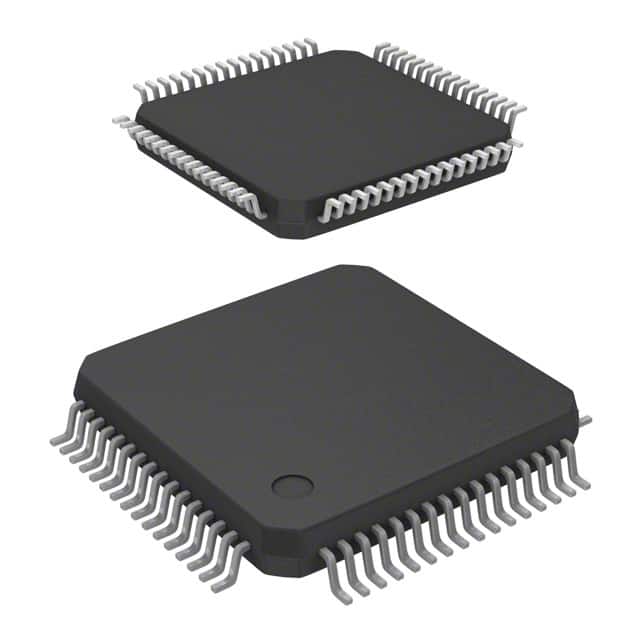
NXP Semiconductors MC145026D
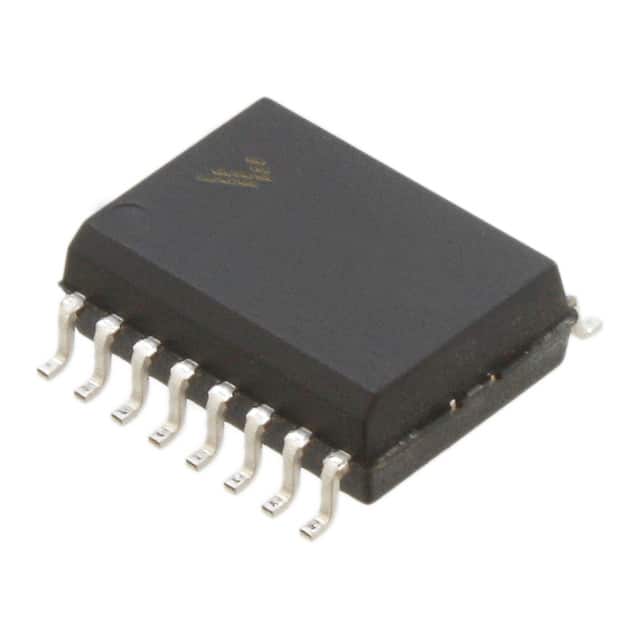
- Part No.:
- MC145026D
- Manufacturer:
- NXP Semiconductors
- Category:
- Encoders, Decoders, Converters
- Package:
- 16-SOIC (0.295", 7.50mm Width)
- Datasheet:
-
 MC145026D.pdf
- Description:
- IC ENCODER 9 LINE SMPLX 16-SOIC
- Quantity:
- Payment:

- Shipping:

Inventory:3,916
Please send an inquiry. Send us your inquiry, and we will respond immediately.
Product details
Overview
MC145026D from ON Semiconductor (formerly Motorola) is a CMOS encoder IC designed for remote control systems, serially encoding nine trinary/binary address/data lines upon TE signal assertion, operating from 2.5 V to 18 V, with 300 nA max standby current at 25°C, and used in infrared, RF, and ultrasonic transmitters.
For engineers reviewing the MC145026D datasheet, MC145026D pinout, MC145026D application, or MC145026D equivalent, this page delivers verified electrical specs, oscillator timing constraints, trinary input decoding logic, SOG package footprint, and direct alternatives for secure wireless command encoding.
Technical Context
The MC145026D implements a ring counter-based sequencer with internal RC oscillator (no crystal required), generating encoder clock frequencies from 1 kHz to 10 MHz depending on RTC/CTC values. It samples A1–A5 and A6/D6–A9/D9 inputs using weak pull-up/pull-down detection to distinguish low, high, and open states.
Each transmission consists of two identical 9-digit trinary words separated by three data periods; each digit is pulse-encoded as short-short (0), long-long (1), or long-short (open). The Dout output drives modulators directly, with transition times under 450 ns at 2.5 V and 80 ns at 15 V.
Key Specifications
| Parameter | Value and Actual Design Meaning |
|---|---|
| Supply Voltage Range | 2.5 V to 18 V - supports battery-powered remotes down to single-cell alkaline and industrial rails up to 18 V without regulation. |
| Standby Current | 300 nA max @ 25°C - enables multi-year operation on coin cells in infrequently used remote controls. |
| Input Encoding | Trinary (low/high/open) or binary - provides 19,683 unique codes with trinary addressing, eliminating need for external DIP switches in high-security applications. |
| Oscillator Type | RC-based, no crystal required - reduces BOM cost and PCB area; tolerates ±5% external R/C components. |
| Output Drive | CMOS-compatible Dout - directly interfaces with RF/IR modulator stages without level-shifting or buffering. |
| Operating Temp | –40°C to +85°C - qualified for automotive interior, industrial enclosures, and outdoor remote housings. |
| Logic Family | CMOS - ensures low power consumption and noise immunity in mixed-signal environments. |
Pinout & Package
SOG (Small Outline Gull-wing) package, Case 751B, 16-pin, surface-mount, body size 9.8 mm × 3.9 mm × 1.75 mm, lead pitch 1.27 mm.
| Pin/Terminal | Circuit Role | Design Meaning |
|---|---|---|
| 1–5, 9, 10 (A1–A5, A6/D6–A9/D9) | Address/Data Inputs | Trinary- or binary-configurable inputs sampled during encoding; open state detected via internal weak drive test. |
| 11 (RS) | Oscillator Resistor Input | Connects to external resistor setting oscillator frequency; RS ≈ 2 × RTC for stable timing. |
| 12 (CTC) | Oscillator Capacitor Input | Connects to external capacitor; fosc ≈ 1/(2.3 × RTC × CTC′), where CTC′ includes layout capacitance. |
| 13 (RTC) | Oscillator Timing Resistor | Primary timing resistor; minimum 10 kΩ, sets oscillator frequency with CTC. |
| 14 (TE) | Transmit Enable (active-low) | Internal pull-up allows momentary switch interface; initiates full two-word transmission sequence on falling edge. |
| 15 (Dout) | Serial Data Output | CMOS-level pulse-encoded output driving IR LED drivers, RF modulators, or ultrasonic transducers directly. |
| 8 (VSS) | Negative Supply | Ground reference for all internal circuitry; must be low-impedance return path. |
| 16 (VDD) | Positive Supply | Power rail for entire device; decoupling capacitor (0.1 µF) required near pin for noise immunity. |
Key Features
| Feature | Design Value |
|---|---|
| Trinary input encoding | Enables 19,683 unique address combinations using simple SPDT-center-OFF switches instead of binary DIPs. |
| Dual-word transmission | Improves security by requiring consecutive matching words before decoder validation, rejecting single-packet interference. |
| RC oscillator with wide tolerance | Accepts ±5% resistors/capacitors, simplifying BOM sourcing and reducing calibration effort in high-volume production. |
| Internal power-on reset | Forces consistent initial state on power-up, eliminating need for external POR circuitry in decoder companion devices. |
| Low-voltage operation down to 2.5 V | Supports single 3 V lithium or two 1.5 V alkaline cells, extending battery life in portable remote designs. |
Applications
| Garage Door Remote Transmitter | Wireless Security Keypad Encoder |
|---|---|
Use Scenario: Handheld transmitter sends door open/close commands via 315 MHz ASK RF link. IC Role / Device Role / Timing Role: MC145026D encodes user-selected address and command bits into pulse-modulated serial stream synchronized to internal RC oscillator. Use Value: Trinary addressing eliminates DIP switch misconfiguration; dual-word transmission prevents false triggering from noise bursts. | Use Scenario: Wall-mounted keypad transmits zone arm/disarm codes to central alarm panel over 433 MHz FSK link. IC Role / Device Role / Timing Role: MC145026D serializes 9-bit trinary address plus 4-bit command data, driven by TE signal from microcontroller GPIO. Use Value: 19,683 possible addresses prevent code collision across multiple homes; 300 nA standby current extends battery life beyond 5 years. |
| Industrial Machine Control Remote | Infrared TV Remote Encoder |
Use Scenario: Ruggedized handheld unit controls conveyor start/stop, solenoid valves, and light towers in factory environment. IC Role / Device Role / Timing Role: MC145026D converts mechanical switch states into encoded serial output routed to 433 MHz OOK transmitter IC. Use Value: –40°C to +85°C rating ensures reliable operation near motors and heat sources; 18 V max supply accommodates unregulated 12 V DC systems. | Use Scenario: Consumer IR remote sends channel/volume commands to TV using 940 nm carrier. IC Role / Device Role / Timing Role: MC145026D generates trinary-encoded data stream gated to 38 kHz IR carrier oscillator (e.g., MC14011UB). Use Value: Direct Dout-to-oscillator interface eliminates external logic; low 2.5 V operation enables use with single AAA battery. |
Equivalent & Alternatives
The following parts are listed as comparable options for similar encoder applications.
| Alternative Part | Technical Difference | Application Difference | Selection Advice |
|---|---|---|---|
| SC41343DW | Low-voltage decoder (2.8–10 V), not encoder; pinout and function incompatible with MC145026D. | Designed for paired decoding only; cannot substitute for MC145026D's encoding function. | Select only when building matched encoder/decoder pair with voltage-constrained supply. |
| PT2262 | CMOS encoder with 12 address/data pins, 2262-style encoding, 3–5.5 V operation, no internal oscillator - requires external RC or crystal. | Higher pin count, different encoding protocol, and no trinary open-state detection; requires redesign of address configuration. | Choose when needing more address bits or compatibility with existing PT2272 decoder infrastructure. |
Compared with SC41343DW and PT2262, the MC145026D uniquely integrates trinary input sampling, internal RC oscillator, and dual-word security in a single 16-pin SOG package - making it irreplaceable for legacy Motorola-compatible remote systems requiring 19,683-code addressing and ultra-low standby current.
Availability
MC145026D is available at Aetrix Electronics and suitable for garage door openers, wireless security keypads, and industrial remote controls requiring stable component supply, long-term lifecycle support, and guaranteed SOG package consistency.
Supply support for MC145026D includes scheduled delivery planning, volume procurement assistance, BOM continuity management, traceable sourcing, and lifecycle availability coordination for OEM customers, industrial embedded developers, connected-device designers, and electronics production programs.
Manufacturer
ON Semiconductor is a global semiconductor supplier delivering energy-efficient, high-performance silicon solutions for automotive, industrial, cloud, medical, and IoT applications.
The MC145026D belongs to Motorola's legacy CMOS encoder family, engineered specifically for secure, low-power wireless command transmission in cost-sensitive remote control systems using trinary addressing and RC-timed serial encoding.
FAQ
What is the minimum supply voltage for reliable operation of the MC145026D?
The MC145026D is fully specified down to 2.5 V, with guaranteed performance including 300 nA max standby current and functional trinary input detection. Below 2.5 V, oscillator startup and input sampling become unreliable; operation at 2.5 V is validated per Motorola datasheet revision 2 (1998) and supports single-cell lithium or alkaline battery use in the MC145026D.
Does the MC145026D require an external crystal or resonator?
No, the MC145026D uses an internal RC oscillator requiring only two external passive components: RTC and CTC. A third resistor (RS) improves timing stability. Crystal or ceramic resonator is not needed, reducing cost and board space - a key design feature confirmed in the oscillator section of the MC145026D datasheet.
How does the MC145026D detect "open" input states on its address pins?
The MC145026D applies weak internal drive signals to each address pin (A1–A5, A6/D6–A9/D9), first attempting to force high then low. If both states are achievable, the pin is classified as open (high-impedance); if only high or only low results, it is classified as hardwired. This trinary detection is fundamental to the MC145026D's 19,683-code capability and is explicitly detailed in the Operating Characteristics section.
What is the purpose of the dual-word transmission in the MC145026D?
The MC145026D transmits each encoded word twice consecutively to improve noise immunity and security. Decoders like MC145027/MC145028 require both words to match before asserting VT - preventing false triggers from single-packet corruption or EMI bursts. This behavior is inherent to the MC145026D's protocol and documented in Figure 10 and the Applications Information section.
Can the MC145026D operate with standard 5% tolerance resistors and capacitors?
Yes, the MC145026D's RC oscillator design explicitly accommodates ±5% external components, as stated in the datasheet's "High External Component Tolerance" feature. Example R/C values in Table on page 15 confirm use of 5% parts across multiple oscillator frequencies - a critical design advantage for high-volume manufacturing of the MC145026D.
MC145026D Specifications
- Product attributes
- Attribute value
- Manufacturer:
- NXP Semiconductors
- Series:
- 4000
- Package/Case:
- 16-SOIC (0.295", 7.50mm Width)
- Packaging:
- Tube
- Product Status:
- Obsolete
- Type:
- Encoder, Decoder
- Applications:
- Remote Control
- Voltage - Supply, Analog:
- 2.5V ~ 18V
- Voltage - Supply, Digital:
- 2.5V ~ 18V
- Grade:
- -
- Qualification:
- -
- Mounting Type:
- Surface Mount
- Supplier Device Package:
- 16-SOG
MC145026D FAQ
1.How can I place an order for MC145026D through Aetrix?
Please submit a Request for Quotation (RFQ) for MC145026D on Aetrix. Our sales agent will provide a competitive quotation and guide you through the order confirmation once you accept the terms.
2.Are the price and stock information for MC145026D reliable?
The price and inventory of MC145026D are updated periodically and may fluctuate due to market conditions. Stock and pricing data are typically refreshed every 24 hours. Quotation validity for MC145026D is usually 5 days.
3.What payment methods are accepted for MC145026D?
We accept Wire Transfer, PayPal, Credit Card, Western Union, MoneyGram, and Escrow for MC145026D transactions.
Note: Certain payment methods may incur a processing fee.
4.How is shipping managed for MC145026D?
MC145026D orders can be shipped via leading logistics carriers, including DHL, UPS, FedEx, TNT, or Registered Mail.
Once your MC145026D order is processed, you will receive an email with the shipment details and tracking number.
Note: Tracking information may take up to 24 hours to appear. Express delivery typically takes 3–5 business days.
5.How can I obtain technical support or documentation for MC145026D?
For technical support, including MC145026D datasheets, pinout diagrams, or application guidance, please contact our engineering support team. They can provide detailed documentation and assistance for your MC145026D requirements.
6.How does Aetrix verify that MC145026D is sourced from the original manufacturer or authorized distributors?
All MC145026D products on Aetrix are procured from qualified distributors and authorized channels. Our dedicated quality assurance team conducts strict verification, including traceability checks and, if necessary, third-party testing. This ensures that MC145026D meets industry standards.
7.What is the process for return or replacement of MC145026D?
All MC145026D units undergo pre-shipment inspection (PSI). If there is an issue with MC145026D, returns or replacements are accepted under the following conditions:
1.Quantity discrepancies, incorrect items, or visible external defects (such as breakage or corrosion), acknowledged by Aetrix.
2.The issue is reported within 90 days of delivery.
3.The MC145026D part is unused and in its original packaging.
Return procedure for MC145026D:
1.Submit a request within 90 days.
2.Obtain a Return Material Authorization (RMA) from Aetrix.
MC145026D Tags
-
MCP2120T-I/SL
Microchip Technology

-
LICAL-ENC-MS001
TE Connectivity Linx
-
TW9990AT-NA1-GR
Renesas Electronics Corporation
-
TVP5151IPBSR
Texas Instruments
-
TVP5150AM1IPBSR
Texas Instruments
-
LICAL-DEC-MS001-T
TE Connectivity Linx
-
ADV7391BCPZ
Analog Devices Inc.
-
ADV7393BCPZ-REEL
Analog Devices Inc.
-
ADV7393BCPZ
Analog Devices Inc.
-
ADV7391WBCPZ
Analog Devices Inc.
-
ADV7181DBCPZ
Analog Devices Inc.
-
ADV7181CBSTZ-REEL
Analog Devices Inc.
Tech Hub

A practical engineering guide to 3.3V and 5V logic compatibility, input thresholds, resistor dividers, translator ICs, MOSFET level shifting, I2C pull-ups, timing limits and power-sequencing risks.

The 74HC595 uses push-pull logic outputs, while the TPIC6B595 uses 50 V open-drain DMOS sinks for higher-power loads. This guide compares timing, current limits, 3.3 V interfacing, load wiring, thermal…

The 74HC595 converts serial data into eight stable parallel outputs. This guide covers pin functions, shift and storage timing, OE and MR behavior, drive-current limits, cascading, voltage compatibilit…

A technical comparison of level-sensitive latches and edge-triggered flip-flops, covering timing windows, setup and hold limits, master–slave operation, time borrowing, race-through, HDL inference and…

A D latch stores one bit while Enable controls when data can pass. This reference covers gate-level operation, truth tables, transparency, setup and hold timing, LE versus OE, common ICs and practical …

An SR latch stores one bit through cross-coupled feedback. This engineering reference covers NOR and NAND implementations, truth tables, forbidden-state recovery, gated operation, switch debouncing, fa…

Latch circuits retain one bit through feedback. This technical reference covers SR and D latches, truth tables, transparency, timing limits, latch-versus-flip-flop behavior, applications and common log…

An engineering guide to LED driver operation, constant-current and constant-voltage outputs, linear and switching topologies, dimming, IC selection, calculations, replacement compatibility, and fault c…

Operational amplifier guide covering op amp basics, feedback, ideal vs real op amps, common configurations, buffer circuits, offset, bias current, gain-bandwidth, slew rate, rail-to-rail limits and sel…

Jumper cables guide covering safe connection order, red and black clamp placement, final ground connection, cable gauge, length, clamp quality, copper vs CCA cables, jump starter comparison and battery…


