
 My Inquiry
 My Account


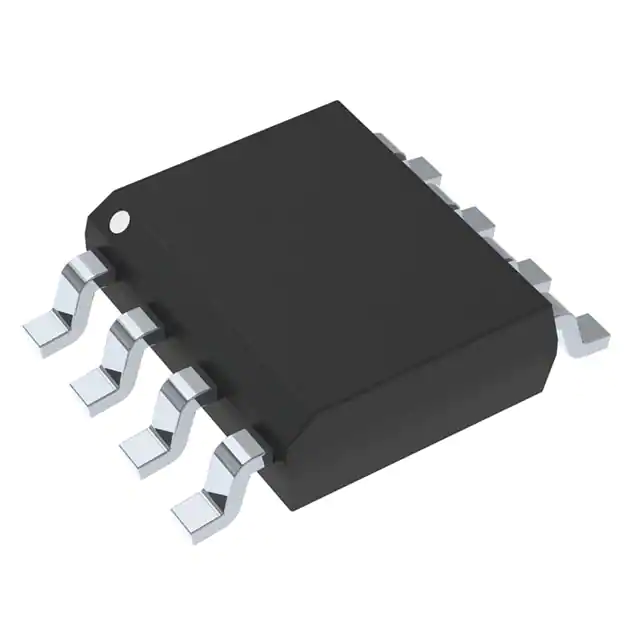
onsemi MC33375D-2.5G
- Part No.:
- MC33375D-2.5G
- Manufacturer:
- onsemi
- Package:
- 8-SOIC (0.154", 3.90mm Width)
- Datasheet:
-
 MC33375D-2.5G.pdf
- Description:
- IC REG LINEAR 2.5V 300MA 8SOIC
- Quantity:
- Payment:

- Shipping:

Inventory:588
Please send an inquiry. Send us your inquiry, and we will respond immediately.
Product details
Overview
MC33375D-2.5G from onsemi is a fixed-output 2.5 V, 300 mA low-dropout (LDO) linear voltage regulator in SOIC-8 package with logic-level ON/OFF control, 260 mV dropout at full load, ±2% output tolerance over −40 °C to +125 °C, and internal thermal/current limiting-designed for battery-powered industrial sensors and portable instrumentation.
For engineers reviewing the MC33375D-2.5G datasheet, pinout, applications, or equivalent options, this page delivers verified specifications, SOIC-8 terminal mapping, real-world use cases in low-power embedded systems, and two validated alternative parts with functional and packaging distinctions.
Technical Context
The MC33375D-2.5G employs a PNP pass transistor architecture enabling ultra-low dropout (25 mV at 10 mA), tight line regulation (≤10 mV), and stable operation with only 0.33 µF output capacitance. Its ON/OFF control pin accepts TTL/CMOS-compatible logic levels (VCTRL ≥ 2.4 V for ON, ≤ 0.5 V for OFF).
Thermal shutdown activates at 150 °C with no hysteresis, causing output oscillation until junction cools; current limit is internally set to 450 mA. Quiescent current is 125 µA in ON mode and just 0.3 µA in OFF mode-critical for standby power budgeting in energy-constrained designs.
Key Specifications
| Parameter | Value and Actual Design Meaning |
|---|---|
| Output Voltage | 2.50 V ±2% (−40 °C to +125 °C), ensuring stable rail for 2.5 V logic and analog circuitry across automotive/industrial temperature ranges |
| Max Output Current | 300 mA continuous, supporting moderate-power microcontrollers, ADCs, and RF front-ends without external boost stages |
| Dropout Voltage | 260 mV at 300 mA load, enabling operation from 2.75 V input-ideal for single-cell Li-ion or dual-cell alkaline systems |
| Quiescent Current | 125 µA (ON), 0.3 µA (OFF), minimizing battery drain during active and deep-sleep modes |
| Line Regulation | ≤10 mV (Vin = VO+1 V to 12 V), maintaining output stability despite input ripple or battery sag |
| Ripple Rejection | ≥65 dB at 120 Hz, suppressing AC noise from switching supplies or noisy DC sources |
| Thermal Shutdown | 150 °C activation, protecting against sustained overload or poor PCB heatsinking without external circuitry |
Pinout & Package
MC33375D-2.5G is housed in Pb-free SOIC-8 (Case 751), with exposed pad not electrically connected. Package dimensions: 4.9 × 3.9 × 1.5 mm (max), 1.27 mm pitch.
| Pin/Terminal | Circuit Role | Design Meaning |
|---|---|---|
| 1 | Input (Vin) | Main power input; must be ≥2.75 V for 300 mA regulation; requires local 0.33 µF bypass capacitor |
| 2 | GND | Analog ground reference; connects to system ground plane; critical for noise immunity and thermal path |
| 3 | Output (Vout) | Regulated 2.5 V supply; stable with ≥0.33 µF ceramic/tantalum output capacitor placed adjacent to pin |
| 4 | GND | Second ground terminal-must be tied to same ground net as Pin 2 to minimize ground loop impedance |
| 5 | GND | Third ground terminal-used for enhanced thermal conduction and low-impedance return path |
| 6 | ON/OFF | Active-low enable control; <0.5 V disables regulator (0.3 µA IQ); >2.4 V enables (125 µA IQ); must not float |
| 7 | GND | Fourth ground terminal-provides additional thermal mass and reduces ground bounce under transient loads |
| 8 | N/C | No connect; internally unused; leave unconnected per datasheet guidance |
Key Features
| Feature | Design Value |
|---|---|
| Logic-level ON/OFF control | Direct interface with MCU GPIOs-no level-shifting required for 3.3 V or 5 V logic families |
| Stable with 0.33 µF output cap | Reduces BOM count and board space vs. traditional LDOs requiring ≥10 µF; supports miniaturized layouts |
| Internal current limit (450 mA) | Prevents catastrophic failure during short-circuit events without external foldback or sense resistors |
| Ultra-low OFF-mode IQ (0.3 µA) | Extends shelf life and standby time in battery-operated devices-e.g., wireless sensor nodes lasting >10 years |
| AEC-Q100 qualified variant available | NCV33375D-2.5R2G offers automotive-grade reliability (Grade 1: −40 °C to +125 °C) with PPAP support |
Applications
| Portable Medical Sensors | Industrial PLC I/O Modules |
|---|---|
Use Scenario: Powering low-noise analog front-ends (AFE) and 2.5 V SAR ADCs in handheld blood glucose meters and pulse oximeters. IC Role / Device Role / Timing Role: Primary 2.5 V bias rail regulator with <65 dB PSRR to suppress switching noise from display drivers and Bluetooth radios. Use Value: Enables 16-bit measurement accuracy by delivering clean, stable 2.5 V reference voltage with <10 mV line/load regulation. |
Use Scenario: Supplying isolated 2.5 V logic rails for digital input conditioning circuits in DIN-rail mounted programmable logic controllers. IC Role / Device Role / Timing Role: Local point-of-load regulator for optocoupler biasing and FPGA configuration I/O banks operating at extended temperature. Use Value: Maintains regulation down to 2.75 V input-compatible with 3.3 V backplane rails under brownout conditions-while surviving −40 °C cold starts. |
| Wireless IoT Edge Nodes | Automotive Body Control Modules |
Use Scenario: Providing always-on 2.5 V supply to LoRaWAN transceivers and ultra-low-power MCUs in battery-powered smart agriculture gateways. IC Role / Device Role / Timing Role: System power manager with ON/OFF pin controlled by MCU sleep/wake state to cut leakage to 0.3 µA during deep sleep. Use Value: Extends 2×AA battery life beyond 5 years by minimizing quiescent draw while retaining fast wake-up (<10 µs enable response). |
Use Scenario: Regulating 2.5 V for CAN transceiver bias and EEPROM interface in door module ECUs. IC Role / Device Role / Timing Role: Secondary LDO downstream of main 5 V rail, featuring thermal shutdown to survive load-dump transients and reverse-battery faults. Use Value: Delivers AEC-Q100-compliant performance (via NCV variant) with integrated protection-eliminating need for discrete TVS and thermal cutoff. |
Equivalent & Alternatives
The following parts are listed as comparable options for similar LDO regulator applications.
| Alternative Part | Technical Difference | Application Difference | Selection Advice |
|---|---|---|---|
| NCV33375D-2.5R2G | Identical electrical specs; AEC-Q100 Grade 1 qualified, PPAP-capable, shipped in tape-and-reel (2500 pcs) | Required for automotive production; supports full automotive change control and traceability | Select when qualifying for vehicle programs-same footprint and pinout, but with automotive-specific documentation and screening |
| MCP1700T-2502E/MB | 250 mA max output, 1.6 µA IQ (ON), SOT-23-5 package, no ON/OFF pin-requires external enable circuit | Better for ultra-low-IQ wearables; unsuitable where 300 mA or logic-controlled shutdown is mandatory | Choose only if load current ≤250 mA and board space is constrained-SOIC-8 footprint cannot be reused |
Compared with MC33375D-2.5G, the NCV33375D-2.5R2G adds automotive qualification without sacrificing performance, while the MCP1700T-2502E/MB trades current capability and integrated control for lower quiescent current and smaller size-making each viable only within distinct design constraints.
Availability
MC33375D-2.5G is available at Aetrix Electronics and suitable for portable medical sensors, industrial PLC I/O modules, wireless IoT edge nodes, and automotive body control modules requiring stable component supply with long-term manufacturability.
Supply support for MC33375D-2.5G includes scheduled delivery planning, volume procurement assistance, BOM continuity management, traceable sourcing, and lifecycle availability coordination for OEM customers, industrial embedded developers, connected-device designers, and electronics production programs.
Manufacturer
onsemi (formerly ON Semiconductor) is a global semiconductor supplier specializing in energy-efficient power management, analog, sensing, and connectivity solutions for automotive, industrial, and cloud infrastructure markets.
The MC33375D-2.5G belongs to the MC33375 series of micropower LDO regulators-designed specifically for battery-powered equipment where extended runtime, wide temperature operation, and integrated protection are essential.
FAQ
What is the minimum input voltage required for MC33375D-2.5G to regulate at full 300 mA load?
The MC33375D-2.5G requires a minimum input voltage of 2.75 V to maintain 2.5 V output at 300 mA, based on its 260 mV dropout specification. Below this, output voltage drops linearly with input-verified per Figure 7 (Dropout vs. Output Current) in the datasheet. Operation below 2.75 V is permissible but results in unregulated output.
Can MC33375D-2.5G be used with ceramic output capacitors, and what is the minimum recommended value?
Yes, MC33375D-2.5G is stable with ceramic output capacitors ≥0.33 µF, as confirmed in the Applications Information section (page 9). Multilayer ceramic (MLCC) types are explicitly approved; solid tantalum is also acceptable. Lower ESR ceramics do not require series resistance-unlike many older LDOs-due to internal compensation.
Does MC33375D-2.5G have built-in reverse-polarity protection?
No, MC33375D-2.5G does not include reverse-polarity protection. The absolute maximum input voltage rating is 13 V, but reverse input voltage (e.g., −0.3 V) may damage the device. External protection-such as a series Schottky diode or PMOS FET-must be added if reverse connection risk exists in the target application.
How does the ON/OFF pin behave during power-up, and is an external pull-up required?
The ON/OFF pin of MC33375D-2.5G is not internally biased and must never be left floating. A pull-up resistor (typically 10–100 kΩ) to Vin or system Vcc is required to ensure reliable startup. Without it, indeterminate logic levels may cause erratic enable behavior or prevent regulation entirely-per datasheet Section "ON/OFF PIN" (page 10).
Is MC33375D-2.5G pin-compatible with other members of the MC33375 family, such as the 3.3 V or 5.0 V variants?
Yes, all MC33375D-x.xG variants in SOIC-8 (e.g., MC33375D-3.3G, MC33375D-5.0G) share identical pinout, package, and thermal characteristics. Only the output voltage and marking differ-enabling drop-in replacement during design iteration or voltage-scaling validation without layout changes.
MC33375D-2.5G Specifications
- Product attributes
- Attribute value
- Manufacturer:
- onsemi
- Series:
- -
- Package/Case:
- 8-SOIC (0.154", 3.90mm Width)
- Packaging:
- Tube
- Product Status:
- Active
- Output Configuration:
- Positive
- Output Type:
- Fixed
- Number of Regulators:
- 1
- Voltage - Input (Max):
- 13V
- Voltage - Output (Min/Fixed):
- 2.5V
- Voltage - Output (Max):
- -
- Voltage Dropout (Max):
- 0.5V @ 300mA
- Current - Output:
- 300mA
- Current - Quiescent (Iq):
- 200 µA
- Current - Supply (Max):
- -
- PSRR:
- 75dB (120Hz)
- Control Features:
- Enable
- Protection Features:
- Over Current, Over Temperature
- Operating Temperature:
- -40°C ~ 125°C
- Grade:
- -
- Qualification:
- -
- Mounting Type:
- Surface Mount
- Supplier Device Package:
- 8-SOIC
MC33375D-2.5G FAQ
1.How can I place an order for MC33375D-2.5G through Aetrix?
Please submit a Request for Quotation (RFQ) for MC33375D-2.5G on Aetrix. Our sales agent will provide a competitive quotation and guide you through the order confirmation once you accept the terms.
2.Are the price and stock information for MC33375D-2.5G reliable?
The price and inventory of MC33375D-2.5G are updated periodically and may fluctuate due to market conditions. Stock and pricing data are typically refreshed every 24 hours. Quotation validity for MC33375D-2.5G is usually 5 days.
3.What payment methods are accepted for MC33375D-2.5G?
We accept Wire Transfer, PayPal, Credit Card, Western Union, MoneyGram, and Escrow for MC33375D-2.5G transactions.
Note: Certain payment methods may incur a processing fee.
4.How is shipping managed for MC33375D-2.5G?
MC33375D-2.5G orders can be shipped via leading logistics carriers, including DHL, UPS, FedEx, TNT, or Registered Mail.
Once your MC33375D-2.5G order is processed, you will receive an email with the shipment details and tracking number.
Note: Tracking information may take up to 24 hours to appear. Express delivery typically takes 3–5 business days.
5.How can I obtain technical support or documentation for MC33375D-2.5G?
For technical support, including MC33375D-2.5G datasheets, pinout diagrams, or application guidance, please contact our engineering support team. They can provide detailed documentation and assistance for your MC33375D-2.5G requirements.
6.How does Aetrix verify that MC33375D-2.5G is sourced from the original manufacturer or authorized distributors?
All MC33375D-2.5G products on Aetrix are procured from qualified distributors and authorized channels. Our dedicated quality assurance team conducts strict verification, including traceability checks and, if necessary, third-party testing. This ensures that MC33375D-2.5G meets industry standards.
7.What is the process for return or replacement of MC33375D-2.5G?
All MC33375D-2.5G units undergo pre-shipment inspection (PSI). If there is an issue with MC33375D-2.5G, returns or replacements are accepted under the following conditions:
1.Quantity discrepancies, incorrect items, or visible external defects (such as breakage or corrosion), acknowledged by Aetrix.
2.The issue is reported within 90 days of delivery.
3.The MC33375D-2.5G part is unused and in its original packaging.
Return procedure for MC33375D-2.5G:
1.Submit a request within 90 days.
2.Obtain a Return Material Authorization (RMA) from Aetrix.
MC33375D-2.5G Tags
-
MIC5504-1.8YM5-TR
Microchip Technology
-
MIC5504-3.3YM5-TR
Microchip Technology
-
MIC5365-3.0YC5-TR
Microchip Technology
-
MIC5365-1.8YC5-TR
Microchip Technology
-
MIC5365-2.5YC5-TR
Microchip Technology
-
MIC5365-3.3YC5-TR
Microchip Technology
-
MIC5365-3.3YD5-TR
Microchip Technology
-
MIC5317-3.3YM5-TR
Microchip Technology
-
TLV1117LV33DCYR
Texas Instruments
-
MIC5317-3.3YMT-TZ
Microchip Technology
-
MIC5528-3.3YMT-TR
Microchip Technology
-
TLV75801PDRVR
Texas Instruments
Tech Hub

Counterfeit components can hide behind convincing markings and passing basic function tests. This engineering reference covers source traceability, external inspection, X-ray, XRF, electrical testing, …

A practical engineering and sourcing framework covering lifecycle verification, lifetime-buy calculations, replacement qualification, supplier checks and counterfeit-risk controls.

TTL and CMOS logic families differ in thresholds, loading, output drive, power and timing. This engineering guide compares 74HC and 74HCT, calculates noise margins and checks 3.3 V/5 V compatibility.

A practical engineering guide to 3.3V and 5V logic compatibility, input thresholds, resistor dividers, translator ICs, MOSFET level shifting, I2C pull-ups, timing limits and power-sequencing risks.

The 74HC595 uses push-pull logic outputs, while the TPIC6B595 uses 50 V open-drain DMOS sinks for higher-power loads. This guide compares timing, current limits, 3.3 V interfacing, load wiring, thermal…

The 74HC595 converts serial data into eight stable parallel outputs. This guide covers pin functions, shift and storage timing, OE and MR behavior, drive-current limits, cascading, voltage compatibilit…

A technical comparison of level-sensitive latches and edge-triggered flip-flops, covering timing windows, setup and hold limits, master–slave operation, time borrowing, race-through, HDL inference and…

A D latch stores one bit while Enable controls when data can pass. This reference covers gate-level operation, truth tables, transparency, setup and hold timing, LE versus OE, common ICs and practical …

An SR latch stores one bit through cross-coupled feedback. This engineering reference covers NOR and NAND implementations, truth tables, forbidden-state recovery, gated operation, switch debouncing, fa…

Latch circuits retain one bit through feedback. This technical reference covers SR and D latches, truth tables, transparency, timing limits, latch-versus-flip-flop behavior, applications and common log…


