
 My Inquiry
 My Account


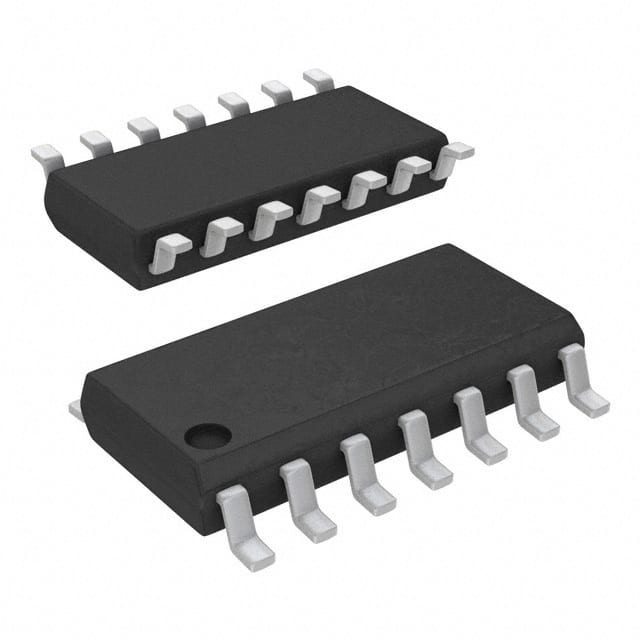
NXP Semiconductors MC33388D
- Part No.:
- MC33388D
- Manufacturer:
- NXP Semiconductors
- Category:
- Controllers
- Package:
- 14-SOIC (0.154", 3.90mm Width)
- Datasheet:
-
 MC33388D.pdf
- Description:
- IC CAN FAULT TOL INTRFACE 14SOIC
- Quantity:
- Payment:

- Shipping:

Inventory:3,230
Please send an inquiry. Send us your inquiry, and we will respond immediately.
Product details
Overview
MC33388D from NXP (formerly Freescale/Motorola) is an automotive fault-tolerant low-speed CAN physical layer transceiver in SO-14 package, supporting 10–125 kBaud operation, −40°C to +125°C ambient range, and dual-mode (differential/single-wire) bus recovery under failure. It serves as the interface between microcontroller UART/CAN peripheral and unshielded twisted-pair CAN bus in body electronics modules.
For engineers reviewing the MC33388D datasheet, MC33388D pinout, MC33388D application, or MC33388D equivalent, key selection considerations include its 15 µA sleep current, automatic bus-failure detection and mode-switching logic, VBAT-supplied wake-up capability, and integrated RTH/RTL switch control for external termination resistors.
Technical Context
The MC33388D implements a dual-path receiver architecture: differential comparator active during normal operation, with automatic fallback to single-ended CANH or CANL comparators upon wire interruption or short-circuit faults (e.g., CANH-to-battery or CANL-to-ground). Its transmitter uses high-side (CANH) and low-side (CANL) switches with internal slope control (3.5–10 V/µs) to minimize RFI on unshielded cabling.
Four operational modes-Normal, Receive Only, Standby VBAT, and Sleep-are controlled via STB and EN pins, with INH output enabling/disabling external 5V regulators. Fault detection includes eight defined wiring failures, each triggering specific internal switch actions (S1–S5), thermal shutdown at 165°C, and battery fail flag latching via NERR in Receive Only mode.
Key Specifications
| Parameter | Value and Actual Design Meaning |
|---|---|
| Baud Rate Range | 10–125 kBaud: supports full low-speed CAN protocol stack compliance for body control networks. |
| Sleep Current (VBAT) | 15 µA typical: enables ultra-low-power always-on monitoring without draining vehicle battery. |
| Operating Temperature | −40°C to +125°C: qualified for under-hood and interior automotive mounting locations. |
| Bus Fault Recovery | Automatic return to differential mode after fault clearance: eliminates need for MCU reset or reinitialization. |
| Wake-Up Sources | Dual-edge WAKE pin + dominant bus activity on CANH/CANL: supports both local switch and remote network wake events. |
| Supply Voltages | VDD = 4.75–5.25 V; VBAT = 6–27 V (40 V load dump tolerant): compatible with 12 V and 24 V vehicle systems. |
| ESD Protection | ±3 kV HBM, ±200 V MM: meets ISO 10605 requirements for automotive component robustness. |
Pinout & Package
MC33388D is housed in a plastic SO-14 narrow-body package (Case 751A-03), surface-mountable with 1.27 mm pitch, rated for 120°C/W junction-to-ambient thermal resistance.
| Pin/Terminal | Circuit Role | Design Meaning |
|---|---|---|
| 1 INH | High-side switch output | Drives external 5V regulator enable; floats in Sleep mode to cut VDD supply and reduce system power. |
| 2 TX | CMOS-compatible input | Microcontroller TX signal; internal pull-up to VDD; detects permanent dominant (>2 ms) and forces recessive recovery. |
| 3 RX | CMOS output | Receives bus state (high=recessive, low=dominant); reports wake-up events in low-power modes. |
| 4 NERR | Open-drain error flag | Active-low: signals bus faults, VBAT power-on flag (in Receive Only), or wake-up interrupt (in Standby). |
| 5 STB | Mode control input | CMOS input; combined with EN to select Normal, Receive Only, Standby VBAT, or Sleep mode per truth table. |
| 6 EN | Mode control input | CMOS input; latched internally; controls enable/disable of transmitter and receiver paths. |
| 7 WAKE | High-voltage wake input | Accepts VBAT-referenced thresholds (0.44×VBAT low-to-high, 0.57×VBAT high-to-low); requires external pull-down if unused. |
| 8 GND | Ground reference | Analog/digital common return; must be low-impedance connection to vehicle chassis ground. |
| 9 CANL | Low-side bus driver | Switches to GND in dominant state; biased via RTL resistor in recessive; protected against short-to-VBAT. |
| 10 CANH | High-side bus driver | Switches to VDD in dominant state; biased via RTH resistor in recessive; protected against short-to-GND/VBAT. |
| 11 VDD | 5 V logic supply | Powers internal logic; under-voltage lockout forces VBAT Standby if <3 V; max 5 mA draw in Normal mode. |
| 12 RTL | RTL termination switch | Internal low-side switch connecting external RTL resistor to CANL; disabled during CANL faults. |
| 13 RTH | RTH termination switch | Internal low-side switch connecting external RTH resistor to CANH; disabled during CANH faults. |
| 14 VBAT | Battery supply input | Primary power source (6–27 V); sustains 40 V load dump; supplies 15 µA sleep current; hosts battery fail flag circuitry. |
Key Features
| Feature | Design Value |
|---|---|
| Fault-tolerant dual-mode operation | Automatically switches between differential and single-wire (CANH-only or CANL-only) reception upon 8 defined bus faults, then recovers without MCU intervention. |
| Integrated termination control | RTH and RTL pins drive external termination resistors with fault-aware switching-enables dynamic biasing without external FETs or logic. |
| Ultra-low-power sleep mode | 15 µA VBAT current with full wake-up capability via bus or WAKE pin-meets OEM requirements for always-on gateway nodes. |
| Robust automotive protection | Short-circuit protection (to VBAT/GND/VDD), thermal shutdown (165°C), ±150 V transient immunity (1 nF coupled), and ESD-hardened I/O. |
| Fail-safe VDD supervision | Forced VBAT Standby mode activates if VDD drops below 3 V-ensures continued bus monitoring even during 5V rail collapse. |
Applications
| Door Control Module | Roof Module |
|---|---|
Use Scenario: Centralized control of power windows, locks, mirrors, and interior lighting via LIN/CAN gateway. IC Role / Device Role / Timing Role: MC33388D acts as the CAN physical layer interface between microcontroller and vehicle body bus, handling fault detection and wake-up signaling. Use Value: Enables reliable communication across long unshielded harness runs while surviving door slam transients and battery disconnect/reconnect cycles. | Use Scenario: Integration of sunroof, ambient lighting, rain sensor, and antenna functions into a single roof-mounted ECU. IC Role / Device Role / Timing Role: MC33388D provides low-speed CAN connectivity with automatic bus recovery during intermittent CANL short-to-ground caused by moisture ingress. Use Value: Eliminates need for manual reset or diagnostic trouble code clearing when CANL fault clears-improves field reliability and serviceability. |
| Seat Control Unit | Trunk/Liftgate Module |
Use Scenario: Motorized seat position memory, heating, and ventilation controlled over body CAN network. IC Role / Device Role / Timing Role: MC33388D interfaces microcontroller to CAN bus with wake-up triggered by seat switch closure (WAKE pin) or incoming configuration message. Use Value: Reduces standby current to 15 µA while maintaining instant response to user input-extends battery life in parked vehicle scenarios. | Use Scenario: Power liftgate actuation, obstacle detection, and anti-pinch logic coordinated via body CAN. IC Role / Device Role / Timing Role: MC33388D serves as fault-tolerant CAN transceiver with battery fail flag reporting (via NERR in Receive Only mode) during jump-start events. Use Value: Allows ECU to distinguish between true power loss and momentary voltage sag-prevents erroneous module reset or data corruption. |
Equivalent & Alternatives
The following parts are listed as comparable options for similar fault-tolerant low-speed CAN transceiver applications.
| Alternative Part | Technical Difference | Application Difference | Selection Advice |
|---|---|---|---|
| TJA1055T/3 | Higher minimum baud rate (40 kBaud vs. 10 kBaud); no RTH/RTL termination control pins; fixed internal termination. | Lacks dynamic termination switching-requires external FETs for adaptive biasing in fault conditions. | Choose TJA1055T/3 only if system operates ≥40 kBaud and does not require programmable termination control. |
| SN65HVD256 | Wider VDD range (3–5.5 V); no VBAT supply or sleep mode; no wake-up pin or battery fail flag. | Not suitable for battery-powered or always-on automotive modules requiring ultra-low-power monitoring. | Choose SN65HVD256 only for 5V-only, non-sleeping industrial CAN nodes where VBAT independence is unnecessary. |
Compared with TJA1055T/3 and SN65HVD256, the MC33388D uniquely combines VBAT-supplied 15 µA sleep current, dual-edge wake-up pin, battery fail flag latching, and RTH/RTL-controlled external termination-making it the only option among the three qualified for automotive body electronics with full fault-aware power management.
Availability
MC33388D is available at Aetrix Electronics and suitable for door control modules, roof modules, seat control units, and trunk/liftgate modules requiring stable component supply across extended automotive temperature and voltage ranges.
Supply support for MC33388D includes scheduled delivery planning, volume procurement assistance, BOM continuity management, traceable sourcing, and lifecycle availability coordination for OEM customers, industrial embedded developers, connected-device designers, and electronics production programs.
Manufacturer
NXP Semiconductors is a global semiconductor leader focused on automotive, industrial, and IoT applications, with deep heritage in automotive networking IP dating back to Motorola's CAN innovations.
The MC33388D belongs to NXP's legacy automotive CAN transceiver portfolio, specifically engineered for fault-tolerant, low-power body electronics multiplexing-prioritizing bus resilience, wake-up flexibility, and seamless integration with 5V microcontrollers and external regulators.
FAQ
What is the minimum operating baud rate supported by the MC33388D?
The MC33388D supports a minimum baud rate of 10 kBaud, as confirmed in the device description and electrical characteristics section. This enables compatibility with legacy low-speed CAN networks used in cost-sensitive automotive body applications where higher speeds are unnecessary. The MC33388D maintains full fault detection and recovery functionality across the entire 10–125 kBaud range.
How does the MC33388D handle CAN bus wire interruption faults?
The MC33388D detects CANH or CANL wire interruption (Faults #1 and #2) using edge-count difference monitoring between CANH and CANL signals. Upon detection, it automatically switches to single-ended reception on the intact line while keeping the transmitter path disabled-allowing continued message reception without disrupting network communication. The MC33388D resumes full differential operation once both lines recover.
Can the MC33388D operate without a VDD supply?
Yes-the MC33388D can operate solely from VBAT in Sleep and Standby VBAT modes, drawing as little as 15 µA. In these modes, VDD is not required; the device monitors bus activity and WAKE pin transitions to initiate wake-up. Once awakened, it asserts INH to enable the external 5V regulator, restoring VDD. The MC33388D remains fully functional-including NERR flag reporting and wake-up detection-throughout VDD-absent operation.
What is the purpose of the RTH and RTL pins on the MC33388D?
The RTH and RTL pins on the MC33388D provide controlled switching of external termination resistors to CANH and CANL, respectively. During normal operation, they connect the resistors to establish proper bus biasing; during faults (e.g., CANH short-to-battery), the internal switches open to isolate faulty lines. This eliminates need for external FETs or discrete logic, simplifying design while preserving fault-aware termination-key to the MC33388D's autonomous bus recovery capability.
Does the MC33388D support wake-up from both rising and falling edges on the WAKE pin?
Yes-the MC33388D features dual-edge sensitive wake-up logic on the WAKE pin. At entry to Sleep or Standby VBAT mode, it samples the WAKE pin voltage and stores it as a reference; any transition to the opposite state (high-to-low or low-to-high) triggers wake-up. Thresholds are VBAT-referenced (0.44×VBAT and 0.57×VBAT), with 500 mV hysteresis. This behavior is explicitly documented in the Electrical Characteristics table and Pin Function Description for the MC33388D.
MC33388D Specifications
- Product attributes
- Attribute value
- Manufacturer:
- NXP Semiconductors
- Package/Case:
- 14-SOIC (0.154", 3.90mm Width)
- Programmable:
- Not Verified
- Protocol:
- CANbus
- Function:
- Physical Layer Controller
- Interface:
- -
- Standards:
- -
- Voltage - Supply:
- 4.75V ~ 5.25V
- Current - Supply:
- 5mA
- Operating Temperature:
- -40°C ~ 125°C
- Supplier Device Package:
- 14-SO
- Grade:
- -
- Qualification:
- -
MC33388D FAQ
1.How can I place an order for MC33388D through Aetrix?
Please submit a Request for Quotation (RFQ) for MC33388D on Aetrix. Our sales agent will provide a competitive quotation and guide you through the order confirmation once you accept the terms.
2.Are the price and stock information for MC33388D reliable?
The price and inventory of MC33388D are updated periodically and may fluctuate due to market conditions. Stock and pricing data are typically refreshed every 24 hours. Quotation validity for MC33388D is usually 5 days.
3.What payment methods are accepted for MC33388D?
We accept Wire Transfer, PayPal, Credit Card, Western Union, MoneyGram, and Escrow for MC33388D transactions.
Note: Certain payment methods may incur a processing fee.
4.How is shipping managed for MC33388D?
MC33388D orders can be shipped via leading logistics carriers, including DHL, UPS, FedEx, TNT, or Registered Mail.
Once your MC33388D order is processed, you will receive an email with the shipment details and tracking number.
Note: Tracking information may take up to 24 hours to appear. Express delivery typically takes 3–5 business days.
5.How can I obtain technical support or documentation for MC33388D?
For technical support, including MC33388D datasheets, pinout diagrams, or application guidance, please contact our engineering support team. They can provide detailed documentation and assistance for your MC33388D requirements.
6.How does Aetrix verify that MC33388D is sourced from the original manufacturer or authorized distributors?
All MC33388D products on Aetrix are procured from qualified distributors and authorized channels. Our dedicated quality assurance team conducts strict verification, including traceability checks and, if necessary, third-party testing. This ensures that MC33388D meets industry standards.
7.What is the process for return or replacement of MC33388D?
All MC33388D units undergo pre-shipment inspection (PSI). If there is an issue with MC33388D, returns or replacements are accepted under the following conditions:
1.Quantity discrepancies, incorrect items, or visible external defects (such as breakage or corrosion), acknowledged by Aetrix.
2.The issue is reported within 90 days of delivery.
3.The MC33388D part is unused and in its original packaging.
Return procedure for MC33388D:
1.Submit a request within 90 days.
2.Obtain a Return Material Authorization (RMA) from Aetrix.
MC33388D Tags
-
PTN5150AHXMP
NXP Semiconductors
-
USB3740B-AI9-TR
Microchip Technology
-
USB3740B-AI2-TR
Microchip Technology
-
USB3300-EZK-TR
Microchip Technology
-
USB3300-EZK
Microchip Technology
-
FUSB340TMX
onsemi
-
FUSB302BMPX
onsemi
-
DP83826IRHBR
Texas Instruments
-
MCP2518FDT-E/QBB
Microchip Technology
-
FUSB302MPX
onsemi
-
MCP2518FDT-E/SL
Microchip Technology
-
FT260Q-R
FTDI, Future Technology Devices International Ltd
Tech Hub

A practical engineering guide to 3.3V and 5V logic compatibility, input thresholds, resistor dividers, translator ICs, MOSFET level shifting, I2C pull-ups, timing limits and power-sequencing risks.

The 74HC595 uses push-pull logic outputs, while the TPIC6B595 uses 50 V open-drain DMOS sinks for higher-power loads. This guide compares timing, current limits, 3.3 V interfacing, load wiring, thermal…

The 74HC595 converts serial data into eight stable parallel outputs. This guide covers pin functions, shift and storage timing, OE and MR behavior, drive-current limits, cascading, voltage compatibilit…

A technical comparison of level-sensitive latches and edge-triggered flip-flops, covering timing windows, setup and hold limits, master–slave operation, time borrowing, race-through, HDL inference and…

A D latch stores one bit while Enable controls when data can pass. This reference covers gate-level operation, truth tables, transparency, setup and hold timing, LE versus OE, common ICs and practical …

An SR latch stores one bit through cross-coupled feedback. This engineering reference covers NOR and NAND implementations, truth tables, forbidden-state recovery, gated operation, switch debouncing, fa…

Latch circuits retain one bit through feedback. This technical reference covers SR and D latches, truth tables, transparency, timing limits, latch-versus-flip-flop behavior, applications and common log…

An engineering guide to LED driver operation, constant-current and constant-voltage outputs, linear and switching topologies, dimming, IC selection, calculations, replacement compatibility, and fault c…

Operational amplifier guide covering op amp basics, feedback, ideal vs real op amps, common configurations, buffer circuits, offset, bias current, gain-bandwidth, slew rate, rail-to-rail limits and sel…

Jumper cables guide covering safe connection order, red and black clamp placement, final ground connection, cable gauge, length, clamp quality, copper vs CCA cables, jump starter comparison and battery…


