
 My Inquiry
 My Account


NXP Semiconductors MC33593MOD868EV
- Part No.:
- MC33593MOD868EV
- Manufacturer:
- NXP Semiconductors
- Category:
- RF, RFID, Wireless Evaluation Boards
- Package:
- Datasheet:
-
 MC33593MOD868EV.pdf
- Description:
- BOARD EVAL MC33593 ROMEO2 RF
- Quantity:
- Payment:

- Shipping:

Inventory:1,107
Please send an inquiry. Send us your inquiry, and we will respond immediately.
Product details
Overview
MC33593MOD868EV from Freescale Semiconductor (formerly Motorola) is a PLL-tuned UHF receiver IC for 868MHz ISM-band data transfer applications. It supports OOK and FSK demodulation, delivers −105dBm RF sensitivity at 4.8kBd, consumes 7mA typical in Run mode, and features fully configurable SPI interface, integrated IF bandpass filter at 660kHz, and fast 1ms wake-up time - deployed in remote keyless entry, tire pressure monitoring, and industrial telemetry systems.
For engineers reviewing the MC33593MOD868EV datasheet, MC33593MOD868EV pinout, MC33593MOD868EV application, or MC33593MOD868EV equivalent, this page provides verified technical context, validated pin functions, real-world timing and sensitivity specs, SPI configuration behavior, and direct alternatives with documented functional trade-offs.
Technical Context
The MC33593MOD868EV implements a PLL-based local oscillator referenced to a 13.5775MHz crystal, driving an image-cancelling mixer and integrated 660kHz IF bandpass filter with 500kHz bandwidth. Its dual-path demodulator supports selectable OOK/FSK via SPI, with Manchester-coded clock recovery and ID/tone detection logic managed by an on-chip Data Manager block.
Power management uses either internal strobe oscillator cycling (configurable SR=3/7/15/31) or external STROBE pin control, enabling sleep current as low as 90µA and deterministic 1ms wake-up latency. All configuration registers (CR1–CR3) are accessed via 24-bit SPI frame with CPOL=0/CPHA=1 timing, and default POR operation requires no host MCU intervention.
Key Specifications
| Parameter | Value and Actual Design Meaning |
|---|---|
| RF Frequency Band | 868MHz ISM band - fixed tuning per crystal frequency; no VCO reconfiguration required for alternate bands. |
| IF Center Frequency | 660kHz - sets baseband filtering and demodulator alignment; matched to internal passive filter. |
| IF Bandwidth | 500kHz - determines adjacent-channel rejection and maximum supported data rate (up to 10.6kBd). |
| RF Sensitivity | −105dBm at 4.8kBd (OOK) - measured with matching network; enables reliable reception at >100m range in RKE systems. |
| Supply Current (Run) | 7.7mA typical at 5V - includes LNA, mixer, VCO, IF gain, and demodulator active; excludes digital I/O loading. |
| Wake-Up Delay | 1.0ms typical (OOK) - time from STROBE high to valid DMDAT output; critical for duty-cycled sensor nodes. |
| Data Rate Range | 1.0–10.6kBd (pre-Manchester) - configured via DR0/DR1 bits; Manchester encoding halves effective throughput. |
| SPI Interface | CPOL=0, CPHA=1 - master/slave role dynamically switched: MCU configures registers, then MC33593MOD868EV masters data/clock output when DME=1. |
Pinout & Package
LQFP24 package with 0.5mm pitch, thermally enhanced exposed pad (ROMEO2 footprint), rated for −40°C to +85°C ambient operation.
| Pin/Terminal | Circuit Role | Design Meaning |
|---|---|---|
| VCC (Pins 1, 2, 18) | Primary analog power supply | 5V ±10% input shared across RF front-end; decoupling required at each pin per layout guidelines. |
| VCCLNA (Pin 3) | LNA-specific power rail | Isolated 5V supply for low-noise amplifier; separate decoupling prevents RF coupling into sensitive analog stages. |
| RFIN (Pin 4) | Differential RF input | 50Ω single-ended input port; requires external matching network for optimal −105dBm sensitivity. |
| DMDAT (Pin 13) | Digital demodulator output | Raw OOK/FSK data stream; active during Run mode regardless of DME setting; level-compatible with 5V CMOS. |
| STROBE (Pin 21) | Power-mode control input | Active-high override: forces Run mode instantly; synchronizes internal sleep/run cycles when SOE=1. |
| MISO/MOSI/SCLK (Pins 15–17) | SPI serial interface | 3-wire full-duplex bus; MOSI carries 24-bit config frames or receives data bytes; SCLK generated by MCU in config mode, by MC33593MOD868EV in run mode. |
Key Features
| Feature | Design Value |
|---|---|
| Fully integrated PLL + VCO | Eliminates external loop filter components unless optimized performance required; PFD voltage accessible at Pin 7 for external compensation. |
| Image-cancelling mixer | Improves selectivity by ≥20dB at image frequency (e.g., 844MHz for 868MHz channel), reducing need for external pre-filters. |
| Configurable strobe ratio | Four discrete sleep/run ratios (3:1 to 31:1) set via SR0/SR1 bits - enables precise average current tuning for battery lifetime optimization. |
| Manchester clock recovery | Recovers bit clock directly from data stream without external timing reference; supports 48–52% duty cycle in OOK for stable lock. |
| ID word and tone detection | Hardware-accelerated preamble/ID/tonal pattern recognition reduces MCU processing load in wake-on-RF applications. |
Applications
| Remote Keyless Entry (RKE) | Tire Pressure Monitoring System (TPMS) |
|---|---|
Use Scenario: Vehicle-mounted receiver detects encrypted OOK bursts from fob within 10–15m range, triggering door unlock without user button press. IC Role / Device Role / Timing Role: Primary UHF demodulator and data manager; handles AGC settling, ID validation, and Manchester clock recovery in <1.5ms. Use Value: −105dBm sensitivity ensures reliable operation despite car body shielding; 1ms wake-up enables sub-100µA average current in listen-before-talk mode. | Use Scenario: Central ECU receives periodic FSK-encoded pressure/temperature reports from wheel-mounted sensors operating at 4.8kBd. IC Role / Device Role / Timing Role: FSK demodulator with integrated 500kHz IF filter; recovers clock from Manchester data and validates header/EOM framing. Use Value: Built-in ID/tone detection allows selective wake-up per sensor ID, minimizing false triggers; low 7.7mA run current extends ECU battery life. |
| Industrial Sensor Network Node | Home Automation Transceiver Hub |
Use Scenario: Battery-powered environmental sensor node transmits temperature/humidity every 30s using OOK modulation to gateway. IC Role / Device Role / Timing Role: Low-power UHF receiver managing sleep/wake cycles via STROBE pin; processes preamble, ID, and payload with hardware Data Manager. Use Value: 90µA sleep current and programmable strobe ratio enable >5-year battery life on CR2032; no external crystal buffer needed. | Use Scenario: Smart home hub listens for commands from multiple 868MHz devices (light switches, motion sensors) using shared frequency plan. IC Role / Device Role / Timing Role: Multi-device correlator with configurable ID word storage (CR2); distinguishes transmissions via Manchester-encoded ID byte and complement. Use Value: Hardware ID detection offloads MCU; SPI-configurable modulation/data rate allows interoperability across vendor-specific protocols. |
Equivalent & Alternatives
The following parts are listed as comparable options for similar UHF receiver applications.
| Alternative Part | Technical Difference | Application Difference | Selection Advice |
|---|---|---|---|
| MAX1473 | 315/433/868/915MHz multi-band; no integrated Data Manager; requires external microcontroller for ID decoding. | Lacks hardware ID/tone detection and Manchester clock recovery - increases firmware complexity and latency. | Choose when multi-band flexibility outweighs autonomous wake-up capability and lower BOM count. |
| CC1101 | Sub-1GHz SoC with integrated MCU core; supports GFSK/ASK/2-FSK; higher integration but larger footprint (QFN48). | Includes packet engine and CRC; eliminates need for external MCU in simple nodes but adds software stack overhead. | Prefer when protocol stack support (e.g., TI's SimpliciTI) and embedded processing are required over pure analog receiver simplicity. |
Compared with MAX1473 and CC1101, the MC33593MOD868EV delivers dedicated, low-latency UHF receive functionality with minimal external components and deterministic 1ms wake-up - ideal for cost-sensitive, ultra-low-power applications where MCU resources are constrained and protocol handling is centralized.
Availability
MC33593MOD868EV is available at Aetrix Electronics and suitable for remote keyless entry, tire pressure monitoring, and industrial telemetry applications requiring stable component supply, long-term lifecycle assurance, and automotive-grade reliability.
Supply support for MC33593MOD868EV includes scheduled delivery planning, volume procurement assistance, BOM continuity management, traceable sourcing, and lifecycle availability coordination for OEM customers, industrial embedded developers, connected-device designers, and electronics production programs.
Manufacturer
Freescale Semiconductor (now part of NXP Semiconductors) is a global leader in automotive, industrial, and networking semiconductors, delivering high-performance analog and mixed-signal solutions.
The MC33593MOD868EV belongs to Freescale's ROMEO2 family of UHF receivers, designed specifically for low-power, high-sensitivity ISM-band data links in automotive security and wireless sensing applications.
FAQ
What is the exact RF frequency range supported by the MC33593MOD868EV?
The MC33593MOD868EV is factory-tuned for the 868MHz ISM band only, using a 13.5775MHz crystal reference. It does not support 902–928MHz operation - that variant is the MC33593FTA. The device achieves −105dBm sensitivity at 4.8kBd in this band with proper matching network and layout. No software or register change can shift its center frequency.
How does the MC33593MOD868EV handle Manchester-coded data clock recovery?
The MC33593MOD868EV performs hardware-based Manchester clock recovery without external timing sources. It locks to the data stream's zero-crossing transitions, supporting duty cycles of 48–52% (OOK) or 45–55% (FSK). When DME=1, recovered clock is output on SCLK; raw DMDAT remains available regardless of DME state. This eliminates need for MCU-level bit-synchronization logic.
Can the MC33593MOD868EV operate without an external microcontroller?
Yes - the MC33593MOD868EV supports standalone operation after Power-On Reset (POR). With default configuration (DME=0, MOD=0, SOE=1), it outputs raw demodulated data on DMDAT and MOSI, requires no SPI interaction, and enters sleep/run cycling autonomously. An external pull-up on RESETB ensures default mode activation without MCU intervention.
What is the function of Pin 7 (PFD) on the MC33593MOD868EV?
Pin 7 (PFD) provides access to the phase-frequency detector output voltage inside the PLL loop. It is used to monitor or externally compensate the VCO control loop - for example, adding an external RC filter (C1=4.7nF, C2=390pF, R=1kΩ) improves phase noise and spurious performance. Leaving PFD unconnected maintains standard operation with internal loop filtering.
Does the MC33593MOD868EV support both OOK and FSK demodulation simultaneously?
No - the MC33593MOD868EV supports OOK or FSK demodulation exclusively, selected at runtime via the MOD bit (bit 4) in Configuration Register 1. Switching modulation type requires SPI reconfiguration and full receiver reset. Each mode uses distinct AGC reference paths (CAGC capacitor) and data slicer thresholds, making concurrent operation impossible.
MC33593MOD868EV Specifications
- Product attributes
- Attribute value
- Manufacturer:
- NXP Semiconductors
- Series:
- -
- Packaging:
- Bulk
- Product Status:
- Obsolete
- Type:
- Receiver, UHF
- Frequency:
- 868MHz
- Contents:
- Board(s)
- Utilized IC / Part:
- -
MC33593MOD868EV FAQ
1.How can I place an order for MC33593MOD868EV through Aetrix?
Please submit a Request for Quotation (RFQ) for MC33593MOD868EV on Aetrix. Our sales agent will provide a competitive quotation and guide you through the order confirmation once you accept the terms.
2.Are the price and stock information for MC33593MOD868EV reliable?
The price and inventory of MC33593MOD868EV are updated periodically and may fluctuate due to market conditions. Stock and pricing data are typically refreshed every 24 hours. Quotation validity for MC33593MOD868EV is usually 5 days.
3.What payment methods are accepted for MC33593MOD868EV?
We accept Wire Transfer, PayPal, Credit Card, Western Union, MoneyGram, and Escrow for MC33593MOD868EV transactions.
Note: Certain payment methods may incur a processing fee.
4.How is shipping managed for MC33593MOD868EV?
MC33593MOD868EV orders can be shipped via leading logistics carriers, including DHL, UPS, FedEx, TNT, or Registered Mail.
Once your MC33593MOD868EV order is processed, you will receive an email with the shipment details and tracking number.
Note: Tracking information may take up to 24 hours to appear. Express delivery typically takes 3–5 business days.
5.How can I obtain technical support or documentation for MC33593MOD868EV?
For technical support, including MC33593MOD868EV datasheets, pinout diagrams, or application guidance, please contact our engineering support team. They can provide detailed documentation and assistance for your MC33593MOD868EV requirements.
6.How does Aetrix verify that MC33593MOD868EV is sourced from the original manufacturer or authorized distributors?
All MC33593MOD868EV products on Aetrix are procured from qualified distributors and authorized channels. Our dedicated quality assurance team conducts strict verification, including traceability checks and, if necessary, third-party testing. This ensures that MC33593MOD868EV meets industry standards.
7.What is the process for return or replacement of MC33593MOD868EV?
All MC33593MOD868EV units undergo pre-shipment inspection (PSI). If there is an issue with MC33593MOD868EV, returns or replacements are accepted under the following conditions:
1.Quantity discrepancies, incorrect items, or visible external defects (such as breakage or corrosion), acknowledged by Aetrix.
2.The issue is reported within 90 days of delivery.
3.The MC33593MOD868EV part is unused and in its original packaging.
Return procedure for MC33593MOD868EV:
1.Submit a request within 90 days.
2.Obtain a Return Material Authorization (RMA) from Aetrix.
MC33593MOD868EV Tags
-
113991054
Seeed Technology Co., Ltd
-
SC0918
Raspberry Pi

-
113991114
Seeed Technology Co., Ltd
-
ESP32-C6-DEVKITM-1-N4
Espressif Systems
-
ESP32-DEVKITM-1
Espressif Systems
-
C008
M5Stack Technology Co., Ltd.
-
ESP32-C3-DEVKITC-02
Espressif Systems
-
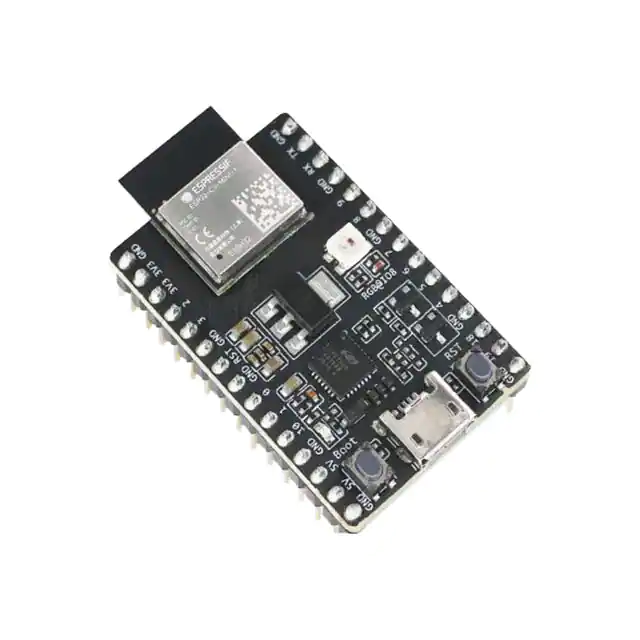
ESP32-C6-DEVKITC-1-N8
Espressif Systems
-
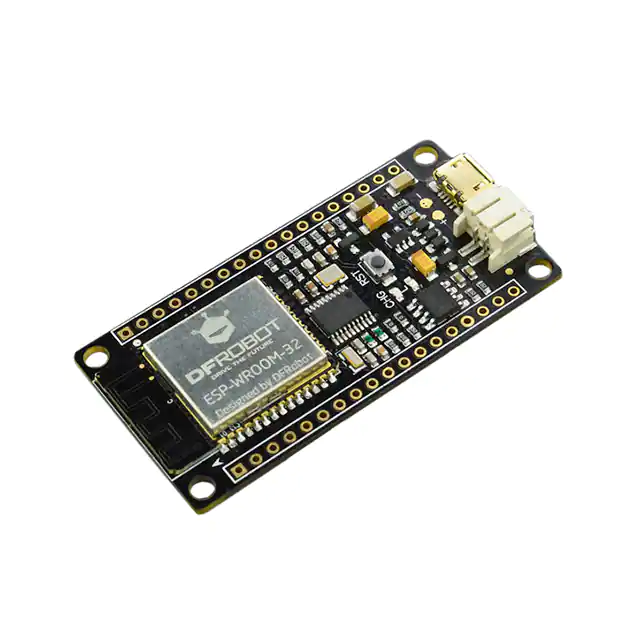
DFR0478
DFRobot
-
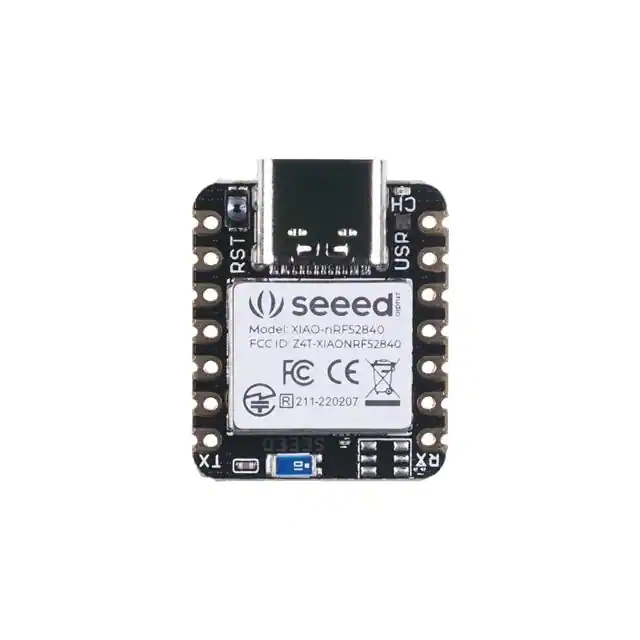
102010448
Seeed Technology Co., Ltd
-
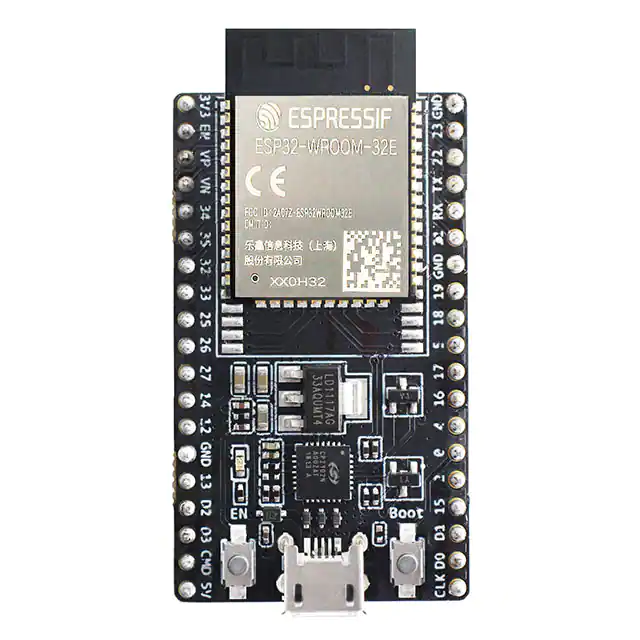
ESP32-DEVKITC-32E
Espressif Systems
-
ESP32-DEVKITC-32UE
Espressif Systems
Tech Hub

A practical engineering guide to 3.3V and 5V logic compatibility, input thresholds, resistor dividers, translator ICs, MOSFET level shifting, I2C pull-ups, timing limits and power-sequencing risks.

The 74HC595 uses push-pull logic outputs, while the TPIC6B595 uses 50 V open-drain DMOS sinks for higher-power loads. This guide compares timing, current limits, 3.3 V interfacing, load wiring, thermal…

The 74HC595 converts serial data into eight stable parallel outputs. This guide covers pin functions, shift and storage timing, OE and MR behavior, drive-current limits, cascading, voltage compatibilit…

A technical comparison of level-sensitive latches and edge-triggered flip-flops, covering timing windows, setup and hold limits, master–slave operation, time borrowing, race-through, HDL inference and…

A D latch stores one bit while Enable controls when data can pass. This reference covers gate-level operation, truth tables, transparency, setup and hold timing, LE versus OE, common ICs and practical …

An SR latch stores one bit through cross-coupled feedback. This engineering reference covers NOR and NAND implementations, truth tables, forbidden-state recovery, gated operation, switch debouncing, fa…

Latch circuits retain one bit through feedback. This technical reference covers SR and D latches, truth tables, transparency, timing limits, latch-versus-flip-flop behavior, applications and common log…

An engineering guide to LED driver operation, constant-current and constant-voltage outputs, linear and switching topologies, dimming, IC selection, calculations, replacement compatibility, and fault c…

Operational amplifier guide covering op amp basics, feedback, ideal vs real op amps, common configurations, buffer circuits, offset, bias current, gain-bandwidth, slew rate, rail-to-rail limits and sel…

Jumper cables guide covering safe connection order, red and black clamp placement, final ground connection, cable gauge, length, clamp quality, copper vs CCA cables, jump starter comparison and battery…


