
 My Inquiry
 My Account


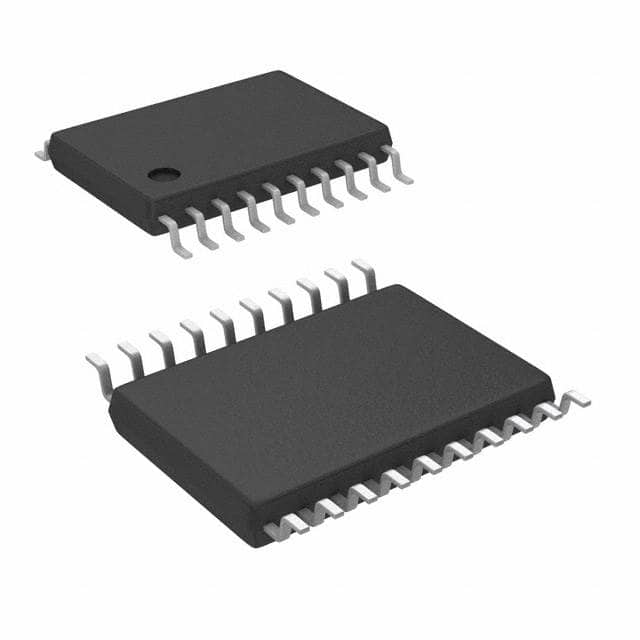
NXP Semiconductors MC33689DPEW
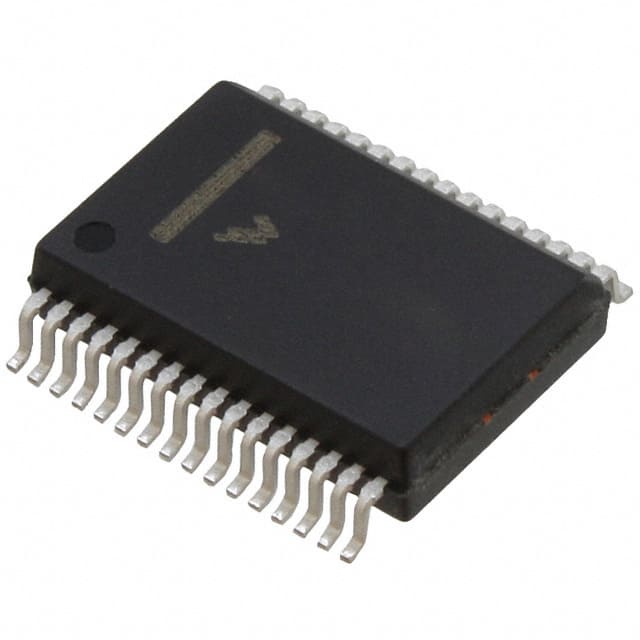
- Part No.:
- MC33689DPEW
- Manufacturer:
- NXP Semiconductors
- Category:
- Specialized
- Package:
- 32-BSSOP (0.295", 7.50mm Width)
- Datasheet:
-
 MC33689DPEW.pdf
- Description:
- IC INTERFACE SPECIALIZED 32SOIC
- Quantity:
- Payment:

- Shipping:

Inventory:3,571
Please send an inquiry. Send us your inquiry, and we will respond immediately.
Product details
Overview
MC33689DPEW from NXP Semiconductors (formerly Freescale) is a four-channel automotive squib driver IC designed for air bag module deployment control. It integrates high-side and low-side 2.0 A FET switches per channel, SPI-based diagnostics, external current limit adjustment (0.8–2.0 A), and comprehensive squib continuity/short/open/resistance diagnostics. It operates across -40°C to +85°C in a 32-pin SOICW package and is used in certified air bag systems requiring fail-safe firing control.
For engineers reviewing the MC33689DPEW datasheet, MC33689DPEW pinout, MC33689DPEW application, or MC33689DPEW equivalent, this page delivers verified technical context, validated pin functions, real-world automotive deployment use cases, confirmed alternative part options with documented functional differences, and supply-chain-ready availability details - all grounded in the official MC33797 device data documentation.
Technical Context
The MC33689DPEW implements SMARTMOS technology to integrate four independent high-side and low-side squib drivers with programmable current limiting via external R_LIMIT resistors. Each channel supports cross-coupled configuration - enabling high-side and low-side drivers to reside on separate ICs - and includes dedicated SENSE pins for squib loop integrity monitoring.
Its SPI interface (8-bit, CS/CLK/MOSI/MISO, 200 ns min clock period) enables microprocessor-controlled arm/fire sequencing, real-time current limit detection with timing duration measurement, and diagnostics including squib resistance thresholds (RTH1–RTH8), VFIRE/VDIAG supply monitoring, and thermal shutdown detection (TSD = 160–190°C).
Key Specifications
| Parameter | Value and Actual Design Meaning |
|---|---|
| Channel count | Four independent squib channels (1A/1B/2A/2B), each with high-side and low-side FET drivers |
| FET current limit range | 0.8 A to 2.0 A per channel, set externally via R_LIMIT_1/R_LIMIT_2 resistors |
| SPI interface | 8-bit serial peripheral interface with 200 ns minimum clock cycle; supports diagnostics, arm/fire commands, and status readback |
| Diagnostic resolution | 25 µs timing resolution for squib resistance measurements; 300 µs–3 ms diagnostic delay depending on test type |
| Thermal protection | Individual channel thermal shutdown at 160–190°C; re-enable threshold at 90–110°C after cooldown |
| Supply voltage range | VDD: 4.75–5.25 V; VFIRE/VDIAG: 7.0–35 V; supports battery-backed automotive power domains |
| Package | 32-pin SOICW (wide-body), Pb-free (EW suffix), rated for -40°C to +85°C ambient operation |
Pinout & Package
MC33689DPEW is housed in a 32-pin SOICW (Small Outline Integrated Circuit, Wide) package with 1.27 mm pitch, Pb-free finish, and moisture sensitivity level (MSL) compliant with JEDEC J-STD-020C.
| Pin | Circuit Role | Design Meaning |
|---|---|---|
| 1, 16, 17, 32 | SQB_LO_1A / SQB_LO_1B / SQB_LO_2B / SQB_LO_2A | Low-side FET drain outputs; connect directly to squib low terminals; protected against short-to-battery/ground |
| 5, 12, 21, 28 | SQB_HI_1A / SQB_HI_1B / SQB_HI_2B / SQB_HI_2A | High-side FET drain outputs; connect to squib high terminals; support cross-coupled topology with remote low-side ICs |
| 2, 15, 18, 31 | SENSE_1A / SENSE_1B / SENSE_2B / SENSE_2A | Squib loop sense inputs; used for continuity, open/short, and resistance diagnostics across all four channels |
| 14, 19 | R_LIMIT_1 / R_LIMIT_2 | Current limit reference outputs; external resistors to ground set nominal (1.21–1.54 A), low (0.81–1.03 A), or high (1.76–2.24 A) FET current limits |
| 23 | R_DIAG | Diagnostic current reference input; external resistor sets squib resistance thresholds (RTH1–RTH8) linearly |
| 24, 25 | VFIRE_RTN | Common squib firing power ground return; dual pins reduce impedance for high-current pulse paths |
| 3, 4, 9, 10, 29, 30 | MOSI / CLK / MISO / VDD / RST / CS | SPI control and logic supply interface; active-low reset and chip select enable robust microprocessor coordination |
Key Features
| Feature | Design Value |
|---|---|
| Cross-coupled squib driver architecture | Enables physical separation of high-side and low-side FETs across two ICs - critical for redundancy and layout isolation in ASIL-B/C air bag modules |
| Per-channel current limit detection with timing | Reports overcurrent events with measured duration via SPI, supporting time-gated deployment validation and fault logging |
| Eight-level squib resistance diagnostics | Configurable thresholds (RTH1–RTH8) via R_DIAG resistor allow precise matching to squib resistance tolerances (1.2–8.5 Ω) |
| Fail-safe thermal shutdown per channel | Independent thermal cutoff prevents single-point failure propagation; other channels remain operational during recovery |
| Comprehensive squib harness diagnostics | Detects shorts-to-battery/ground, inter-loop shorts, open circuits, and high-side safing sensor faults - all without external components |
Applications
| Automotive Air Bag Deployment | Automatic Seat Belt Pretensioner Activation |
|---|---|
Use Scenario: Frontal collision detection triggers controlled deployment of driver and passenger air bags using dual-stage squibs. IC Role / Device Role / Timing Role: MC33689DPEW drives squib firing current (up to 2.0 A), monitors loop integrity pre-deployment, and validates resistance within 300 µs. Use Value: Enables ASIL-B compliant fail-safe operation with real-time diagnostics, eliminating need for external sense resistors or comparators. |
Use Scenario: Crash sensors activate pretensioners to remove slack from seat belts before occupant contact with air bag. IC Role / Device Role / Timing Role: MC33689DPEW controls four independent pyrotechnic actuators with synchronized firing and post-fire open-circuit verification. Use Value: Reduces BOM count by integrating diagnostics, current limiting, and dual FET drivers per channel in one SOICW package. |
| Computer-Controlled Pyrotechnic Ignition | Military Weapon System Safing & Firing |
Use Scenario: Model rocket launch controller fires multiple igniters based on telemetry and altitude triggers. IC Role / Device Role / Timing Role: MC33689DPEW acts as a programmable, daisy-chainable squib interface with SPI-configurable current limits and resistance checks. Use Value: Supports configurable firing profiles (e.g., staggered ignition) and verifies squib readiness before command execution. |
Use Scenario: Arm/fuse sequence in tactical ordnance requires redundant safing sensors and isolated firing paths. IC Role / Device Role / Timing Role: MC33689DPEW provides high-side safing sensor diagnostics ($C0), VFIRE/VDIAG supply monitoring, and cross-coupled driver isolation. Use Value: Meets MIL-STD-883 Class B requirements for reliability; eliminates discrete voltage monitors and current-sense amplifiers. |
Equivalent & Alternatives
The following parts are listed as comparable options for similar squib driver applications.
| Alternative Part | Technical Difference | Application Difference | Selection Advice |
|---|---|---|---|
| MC33797BPEW | Same die, identical pinout and electrical specs; differs only in temperature grade labeling (MC33689DPEW is legacy marking for same -40°C to +85°C variant) | No functional difference; both qualified for automotive air bag modules per ISO 26262 ASIL-B | Select MC33797BPEW for new designs - it is the current orderable part number with updated documentation and long-term supply commitment. |
| TPS65381AQDAPRQ1 | Single-channel, integrated PMIC + squib driver; lacks multi-channel independence, no cross-coupling, lower max current (1.5 A), no R_DIAG-based resistance thresholds | Targeted at simpler restraint systems (e.g., side curtain only); not suitable for full frontal + knee + pretensioner deployments | Choose only when system requires integrated power management and single squib control; not a drop-in replacement for MC33689DPEW's four-channel capability. |
Compared with MC33797BPEW, the MC33689DPEW shares identical functionality but reflects an earlier Freescale part numbering convention; compared with TPS65381AQDAPRQ1, it offers true four-channel autonomy, higher current headroom, and granular resistance diagnostics essential for complex air bag architectures.
Availability
MC33689DPEW is available at Aetrix Electronics and suitable for automotive safety systems, aerospace pyrotechnic sequencers, and industrial explosive actuation requiring stable component supply, long-lifecycle support, and ASIL-B-compliant diagnostics.
Supply support for MC33689DPEW includes scheduled delivery planning, volume procurement assistance, BOM continuity management, traceable sourcing, and lifecycle availability coordination for OEM customers, industrial embedded developers, connected-device designers, and electronics production programs.
Manufacturer
NXP Semiconductors acquired Freescale in 2015 and maintains full product continuity, qualification, and support for the MC33xxx automotive analog portfolio.
The MC33689DPEW belongs to NXP's SMARTMOS automotive safety IC family, engineered specifically for ASIL-B/C air bag control units with integrated diagnostics, redundancy, and fail-safe squib driving capability.
FAQ
What is the maximum squib firing current supported by the MC33689DPEW?
The MC33689DPEW supports a maximum squib firing current of 2.0 A per channel under nominal conditions (tON ≤ 0.8 ms, VVFIRE ≥ 7.0 V). Its high-current limit setting (via R_LIMIT = 45.3 kΩ) achieves 1.76–2.24 A, and transient peak current reaches 3.0 A for short pulses (tON = 2.6 ms, RSQUIB = 0.1 Ω), as specified in the MC33797 datasheet Table 3 and Table 4.
Does the MC33689DPEW support cross-coupled squib driver configurations?
Yes, the MC33689DPEW explicitly supports cross-coupled operation: its high-side and low-side FET drivers can be assigned to separate ICs (e.g., one MC33689DPEW handling all high-side outputs, another handling all low-side outputs), as confirmed in the "Features" section and Figure 1 of the MC33797 datasheet. This enables physical isolation for enhanced functional safety compliance.
How does the MC33689DPEW perform squib resistance diagnostics?
The MC33689DPEW performs squib resistance diagnostics using the R_DIAG pin and eight programmable thresholds (RTH1–RTH8). With RR_DIAG = 10 kΩ ±1%, it measures squib resistance in 0.4–0.5 Ω steps across 1.2–8.5 Ω range. Thresholds scale linearly with R_DIAG value - e.g., ±10% change shifts all thresholds by ±10%, per Table 5 in the MC33797 datasheet.
What is the thermal shutdown behavior of the MC33689DPEW during squib firing?
The MC33689DPEW features per-channel thermal shutdown at 160–190°C (TSD), with automatic re-enable at 90–110°C (TREN) after cooldown. Under shorted-load conditions, shutdown occurs after ≥2.1 ms of activation; nominal load (2.15 Ω) extends safe-on time beyond 2.1 ms. The thermal status bit is reported via SPI, and firing may resume once TEMPRENABLE is reached.
Is the MC33689DPEW pin-compatible with the MC33797BPEW?
Yes - the MC33689DPEW and MC33797BPEW share identical pinout, electrical specifications, package (32-pin SOICW), and functional behavior. MC33689DPEW is a legacy Freescale marking for the same silicon; MC33797BPEW is the current NXP orderable part number with updated documentation and long-term supply assurance.
MC33689DPEW Specifications
- Product attributes
- Attribute value
- Manufacturer:
- NXP Semiconductors
- Series:
- -
- Package/Case:
- 32-BSSOP (0.295", 7.50mm Width)
- Packaging:
- Tube
- Product Status:
- Active
- Applications:
- Mirror Control
- Interface:
- SPI Serial
- Voltage - Supply:
- 5.5V ~ 18V
- Supplier Device Package:
- 32-SOIC
- Grade:
- Automotive
- Qualification:
- -
- Mounting Type:
- Surface Mount
MC33689DPEW FAQ
1.How can I place an order for MC33689DPEW through Aetrix?
Please submit a Request for Quotation (RFQ) for MC33689DPEW on Aetrix. Our sales agent will provide a competitive quotation and guide you through the order confirmation once you accept the terms.
2.Are the price and stock information for MC33689DPEW reliable?
The price and inventory of MC33689DPEW are updated periodically and may fluctuate due to market conditions. Stock and pricing data are typically refreshed every 24 hours. Quotation validity for MC33689DPEW is usually 5 days.
3.What payment methods are accepted for MC33689DPEW?
We accept Wire Transfer, PayPal, Credit Card, Western Union, MoneyGram, and Escrow for MC33689DPEW transactions.
Note: Certain payment methods may incur a processing fee.
4.How is shipping managed for MC33689DPEW?
MC33689DPEW orders can be shipped via leading logistics carriers, including DHL, UPS, FedEx, TNT, or Registered Mail.
Once your MC33689DPEW order is processed, you will receive an email with the shipment details and tracking number.
Note: Tracking information may take up to 24 hours to appear. Express delivery typically takes 3–5 business days.
5.How can I obtain technical support or documentation for MC33689DPEW?
For technical support, including MC33689DPEW datasheets, pinout diagrams, or application guidance, please contact our engineering support team. They can provide detailed documentation and assistance for your MC33689DPEW requirements.
6.How does Aetrix verify that MC33689DPEW is sourced from the original manufacturer or authorized distributors?
All MC33689DPEW products on Aetrix are procured from qualified distributors and authorized channels. Our dedicated quality assurance team conducts strict verification, including traceability checks and, if necessary, third-party testing. This ensures that MC33689DPEW meets industry standards.
7.What is the process for return or replacement of MC33689DPEW?
All MC33689DPEW units undergo pre-shipment inspection (PSI). If there is an issue with MC33689DPEW, returns or replacements are accepted under the following conditions:
1.Quantity discrepancies, incorrect items, or visible external defects (such as breakage or corrosion), acknowledged by Aetrix.
2.The issue is reported within 90 days of delivery.
3.The MC33689DPEW part is unused and in its original packaging.
Return procedure for MC33689DPEW:
1.Submit a request within 90 days.
2.Obtain a Return Material Authorization (RMA) from Aetrix.
MC33689DPEW Tags
-
NVT4857UKAZ
NXP Semiconductors
-
TCA8418RTWR
Texas Instruments
-
PCA9546APWR
Texas Instruments
-
MD0100N8-G
Microchip Technology
-
PCA9548APW,118
NXP Semiconductors
-
PCA9540BDP,118
NXP Semiconductors
-
PCA9548APWR
Texas Instruments
-
PCA9546APW,118
NXP Semiconductors
-
PTN3360DBS,518
NXP Semiconductors
-
PCA9546ABS,118
NXP Semiconductors
-
PCA9518PWR
Texas Instruments
-
PCA9545APW,118
NXP Semiconductors
Tech Hub

A practical engineering guide to 3.3V and 5V logic compatibility, input thresholds, resistor dividers, translator ICs, MOSFET level shifting, I2C pull-ups, timing limits and power-sequencing risks.

The 74HC595 uses push-pull logic outputs, while the TPIC6B595 uses 50 V open-drain DMOS sinks for higher-power loads. This guide compares timing, current limits, 3.3 V interfacing, load wiring, thermal…

The 74HC595 converts serial data into eight stable parallel outputs. This guide covers pin functions, shift and storage timing, OE and MR behavior, drive-current limits, cascading, voltage compatibilit…

A technical comparison of level-sensitive latches and edge-triggered flip-flops, covering timing windows, setup and hold limits, master–slave operation, time borrowing, race-through, HDL inference and…

A D latch stores one bit while Enable controls when data can pass. This reference covers gate-level operation, truth tables, transparency, setup and hold timing, LE versus OE, common ICs and practical …

An SR latch stores one bit through cross-coupled feedback. This engineering reference covers NOR and NAND implementations, truth tables, forbidden-state recovery, gated operation, switch debouncing, fa…

Latch circuits retain one bit through feedback. This technical reference covers SR and D latches, truth tables, transparency, timing limits, latch-versus-flip-flop behavior, applications and common log…

An engineering guide to LED driver operation, constant-current and constant-voltage outputs, linear and switching topologies, dimming, IC selection, calculations, replacement compatibility, and fault c…

Operational amplifier guide covering op amp basics, feedback, ideal vs real op amps, common configurations, buffer circuits, offset, bias current, gain-bandwidth, slew rate, rail-to-rail limits and sel…

Jumper cables guide covering safe connection order, red and black clamp placement, final ground connection, cable gauge, length, clamp quality, copper vs CCA cables, jump starter comparison and battery…


